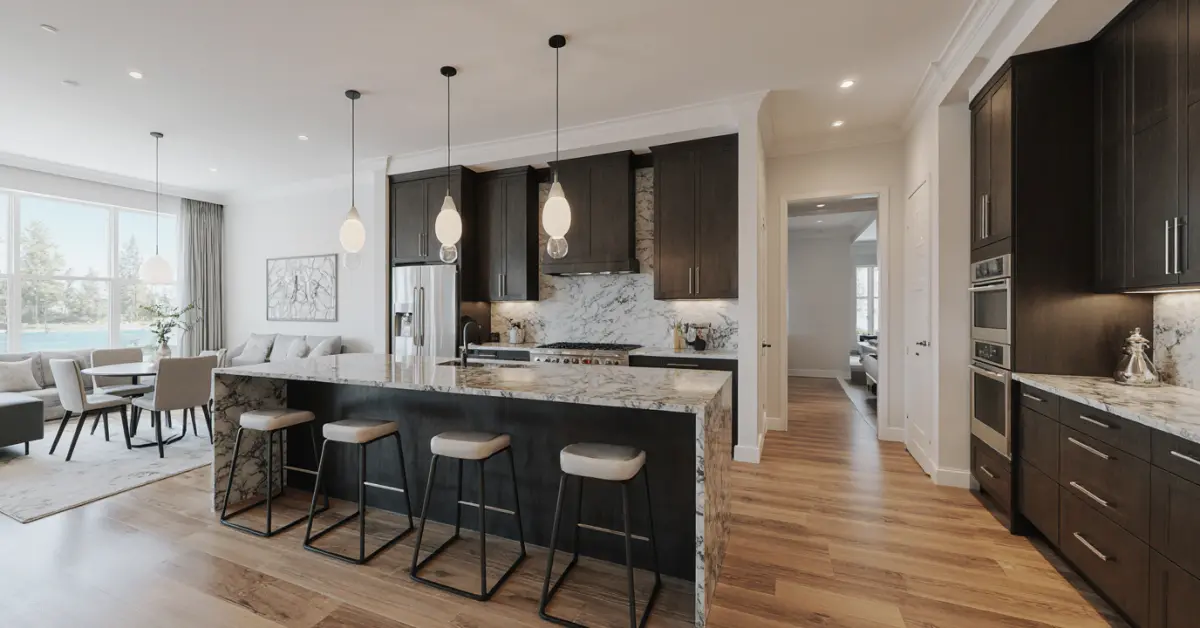
Why do so many luxury kitchens in Sarasota, designed with premium materials, begin to show signs of wear and tear years before they should? The answer rarely lies in the quality of the craftsmanship itself. Instead, it’s found in a fundamental misunderstanding of how high-end finishes interact with our specific coastal environment—an oversight that turns a dream kitchen into a maintenance burden.
Executive Summary: Achieving Lasting Luxury in a Coastal Climate
From my experience executing high-end kitchen projects from Bird Key to Longboat Key, the central challenge is not
From my experience executing high-end kitchen projects from Bird Key to Longboat Key, the central challenge is not aesthetic, but technical: creating a design that withstands Sarasota's punishing humidity and salt air without compromising on a modern, luxurious feel. The most successful projects are those where we prioritize material science and climate-appropriate engineering from the very first design conversation. This means specifying marine-grade substrates, corrosion-resistant hardware, and finishes with high UV stability as non-negotiable baselines, not as optional upgrades.
- Material Specification: The default must be marine-grade plywood or specialized MDF for all cabinet boxes, not standard particleboard which will swell in our humidity.
- Hardware & Finishes: All hardware, from hinges to pulls, must be 316-grade stainless steel or have a PVD finish to resist salt-air corrosion.
- Ventilation Engineering: Proper, powerful ventilation is not an appliance choice; it's a structural necessity to manage ambient moisture and protect the entire installation.
- Code & HOA Compliance: Projects in hurricane-prone zones require specific anchoring methods dictated by the Florida Building Code, and many Sarasota communities have stringent design review boards that add weeks to the timeline.
The Critical Planning Failures I See in Sarasota Kitchens
The most significant planning failures in this market happen long before a single cabinet is ordered. They stem from treating a Sarasota kitchen remodel like one in a less demanding climate. Clients fall in love with a design aesthetic online or in a magazine, and the focus remains on replicating the look, not on adapting it to our local reality. This leads to costly mistakes that only become apparent after the homeowner has lived with the kitchen through a full summer season.
The Most Expensive Oversight: Underestimating Humidity's Impact on Wood
The costliest mistake I consistently see is selecting wood species and cabinet construction based solely on appearance. A client once insisted on a beautiful, solid rift-sawn white oak for a large, contemporary kitchen on Casey Key, against my strong recommendation. Despite sealing, the large, flat-panel doors began to show subtle but irreversible warping within 18 months due to the constant, high humidity. The real cost wasn't just the material; it was the failure of the entire aesthetic vision, leading to a difficult conversation about replacing door and drawer fronts at a significant, unbudgeted expense.
How a High-End Kitchen Project Unfolds in Practice Here
A true luxury custom kitchen project in Sarasota is a multi-stage process heavily front-loaded with technical planning. It begins not with design, but with an environmental assessment of the home's specific location—whether it's waterfront, inland, a condo, or a single-family home. This dictates the baseline material specifications before we even discuss layout or style. The process is a collaboration between the designer, the client, and often a structural engineer to ensure compliance with local codes, especially for wall removals or window alterations that are common in major kitchen remodels.
Selection Criteria for a Sarasota-Based Team
Choosing the right partner here goes beyond their portfolio. You need a team with a deep, demonstrated understanding of our specific building science challenges. I advise clients to focus on these locally-critical criteria:
- Verifiable Longboat Key or Siesta Key Projects: Ask to see and speak with owners of kitchens they built on the barrier islands at least five years ago. This is the ultimate proof of their work's durability against salt and humidity.
- In-House Knowledge of FBC Wind-Borne Debris Regions: They must understand how code requirements for window and door replacements—common in kitchen remodels—impact the project's scope, timeline, and budget.
- Experience with Local HOAs: A team familiar with the design review boards of communities like Lakewood Ranch or The Founders Club can navigate the approval process efficiently, which can otherwise stall a project for months.
- Direct Relationships with Marine-Grade Material Suppliers: They should have established supply chains for materials like marine-grade plywood and 316 stainless steel hardware, not have to source them as a special order.
Comparing Custom Millwork to Other High-End Options
While fully custom millwork offers ultimate control, it's not the only path to a luxury kitchen. High-end European brands and semi-custom lines also compete in this space. The decision often comes down to the trade-off between design flexibility, material resilience, and project timeline. The key is to evaluate them through the lens of Sarasota's climate.
| Feature | Fully Custom Millwork | High-End European Cabinetry | Semi-Custom Cabinetry |
|---|---|---|---|
| Design Flexibility | Unlimited. Ideal for small, complex spaces or unique architectural integration. | High, but limited to their system's finishes and sizes. | Moderate. Standard sizes with options for modification. |
| Material Suitability for Sarasota | Can be specified with marine-grade cores and climate-appropriate finishes from the start. | Often requires careful vetting of core materials; many are not designed for high humidity. | Limited options for moisture-resistant cores. Often the weakest choice for our climate. |
| Typical Lead Time | 12–20 weeks, depending on the shop's backlog and material sourcing. | 16–24 weeks, plus potential for international shipping delays. | 8–12 weeks, generally the fastest option. |
When Fully Custom is Not the Right Choice
A fully custom approach is not the best fit for clients on a compressed timeline, such as a seasonal resident trying to complete a remodel between winters. The detailed design process, material sourcing, and fabrication lead time can easily consume six months or more. In these cases, a high-end semi-custom line with carefully selected moisture-resistant options may provide a faster, more predictable path to completion, even if it means compromising on some unique design elements.
A Practical Checklist for Hiring in Sarasota
Hiring a company for a luxury kitchen project here requires a deeper level of due diligence. Your checklist should be focused on verifying their technical expertise for our specific environment, not just their design awards or portfolio photos.
- Verify their Florida contractor's license is active and in good standing on the state's DBPR portal.
- Request proof of liability and workers' compensation insurance specific to projects of your budget's scale.
- Ask for specific examples of how they anchor upper cabinets and tall pantries to meet Florida Building Code requirements for wind load, especially in coastal high-velocity hurricane zones (HVHZ).
- Confirm they have a documented process for managing design submissions to demanding HOAs like those in Palmer Ranch or Prestancia.
- Inquire about their warranty specifically as it relates to warping, finish failure, or hardware corrosion due to humidity and salt air.
- Ask how they manage job site dust and debris in an occupied luxury condo building, which has its own set of rules and logistical challenges.
- Review a sample contract to ensure it clearly outlines the process for change orders, material specification, and payment schedules.
The Decisions That Truly Determine the Outcome
The success of a luxury kitchen in Sarasota is determined by decisions made in the first 30 days of planning. It's about prioritizing the unseen structural elements over the visible finishes. I've seen clients spend weeks agonizing over a countertop slab while glossing over the cabinet box material in a ten-minute conversation. This is a critical error. The substrate, the hardware, and the ventilation system are the chassis of the kitchen; the doors and counters are the paint job. Getting the chassis wrong means the entire investment is compromised, no matter how beautiful it looks on day one.
The Exact Moment Most Homeowners Get It Wrong
The critical misstep happens when the budget is allocated. Most clients allocate the bulk of their cabinet budget to the aesthetic—the door style, the wood species, the finish. The correct approach is to first budget for a non-negotiable, climate-proof foundation: marine-grade plywood boxes, Blum or Grass stainless steel hardware, and premium, low-VOC conversion varnish finishes. Whatever is left in the budget can then be allocated to the aesthetic choices. This reverses the typical process but guarantees the kitchen's longevity.
Practical Answers for Kitchen Projects in Sarasota
Navigating the local bureaucracy and logistical hurdles is a key part of any major kitchen remodel. These are not minor details; they can significantly impact your project's timeline and budget. Understanding them upfront is crucial for a smooth process.
Navigating Sarasota County Permitting for Kitchen Remodels
A permit from the Sarasota County Building Department is required if you are moving walls, altering plumbing, or changing electrical layouts—which is nearly every significant kitchen remodel. A simple cabinet replacement might not, but anything more complex will. Expect the permit review process to take 4-6 weeks after submission. This timeline must be factored into the overall project schedule before demolition begins.
HOA Design Review: The Unseen Timeline Hurdle
In master-planned communities like Lakewood Ranch or prestigious condo associations on Longboat Key, the Homeowners Association (HOA) design review can be more rigorous than the county's permit process. They may have specific requirements for contractors' working hours, noise, debris removal, and even material finishes. Submitting a complete design package and getting approval can add an additional 30 to 60 days to your pre-construction timeline. Starting work without this approval can result in fines and stop-work orders.
Florida Building Code and Cabinet Anchoring
The Florida Building Code (FBC) has specific structural requirements, particularly in coastal areas. While it doesn't dictate cabinet aesthetics, it does govern how they are secured to the structure, especially in homes within wind-borne debris regions. Proper anchoring of tall cabinets and upper units to structural studs is not just good practice; it's a code requirement designed to prevent them from becoming projectiles in a hurricane. A knowledgeable contractor will use longer, structural-grade screws and more of them than in other states, a small detail that is critical for safety and compliance.