Laundry Room Storage Design Collier County FL
Transforming the necessary laundry zone into a hub of unparalleled efficiency is paramount for any contemporary home design strategy. True mastery in this domain is dedicated to maximizing verticality and ensuring every necessary item has a designated, accessible home, going far past simple stacked units or basic shelves.
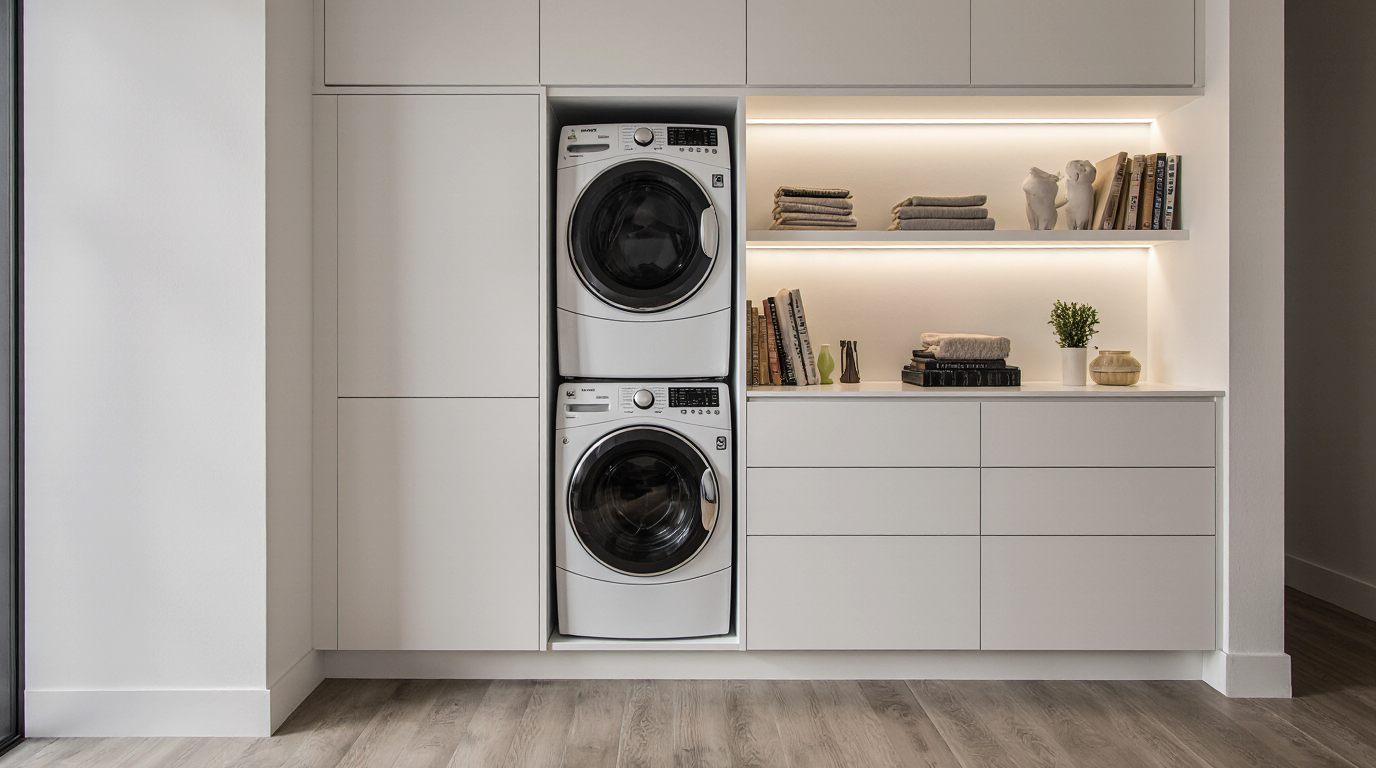
Consider the power of custom built-in cabinetry that rises from floor to ceiling, neatly concealing large containers of supplies, ironing boards, and seasonal or backup essentials, thereby promoting a clean, uncluttered aesthetic.
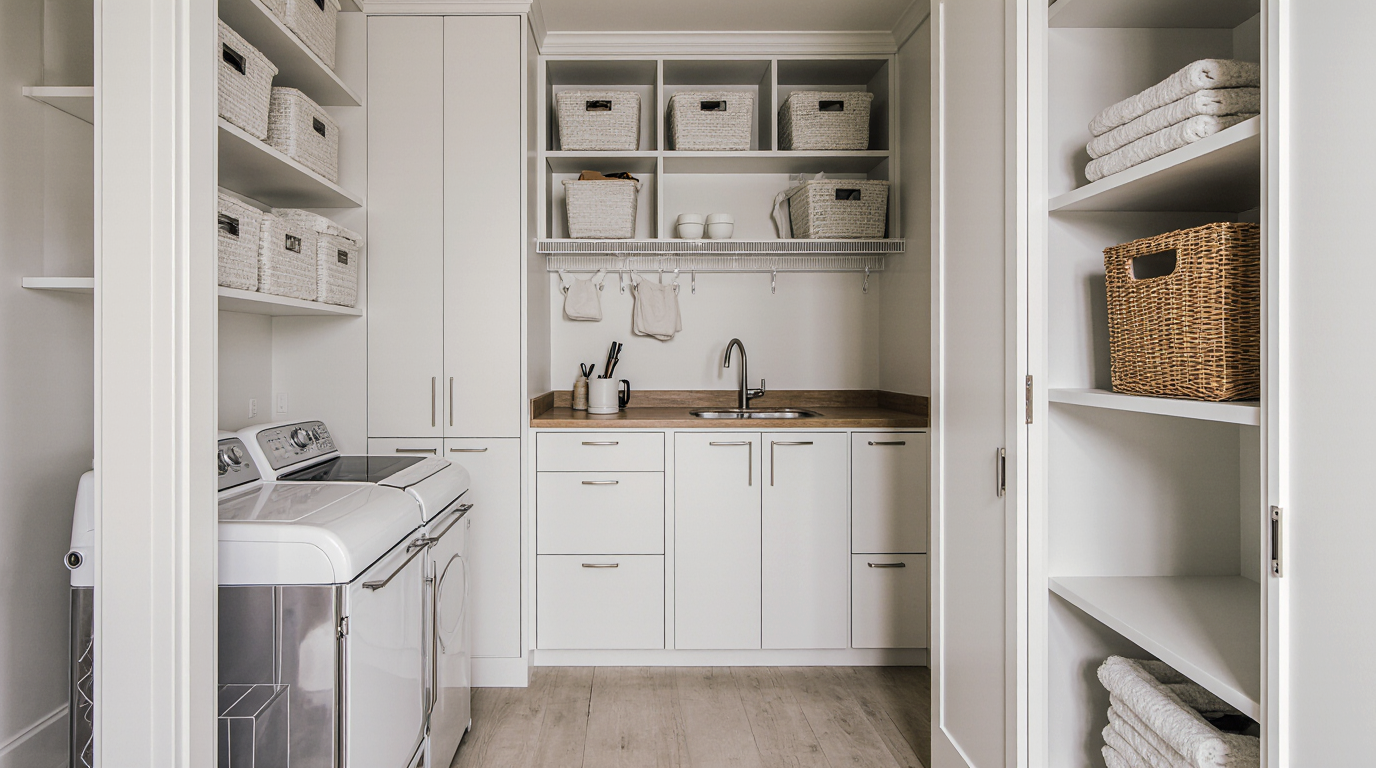
For essentials used on a regular basis, like stain removers or dryer sheets, open shelving becomes your strategic ally, most effectively utilized alongside decorative containers or attractive baskets to add a touch of curated style. The incorporation of a continuous countertop spanning across the washer and dryer not only provides an invaluable folding surface but also acts as an ideal platform for small necessities, such as a stylish countertop caddy for clothespins or specialized cleaning brushes and tools. A key element often overlooked is the narrow voids; narrow gaps between appliances and walls are ideal locations for slim, rolling utility carts that can store items like lost socks awaiting their match or specialized tools and brushes, tucking away neatly when idle.
In addition, the integration of a ceiling-mounted drying rack or a simple, durable hanging rod near the machines is a non-negotiable feature for any serious designer, allowing for the prompt hanging of sensitive garments and drastically reducing post-drying wrinkling, which in turn reduces the time spent with a steam iron. Don't forget to consider vertical storage for hampers too; building a nook specifically sized for dual-compartment hampers enables immediate sorting of loads (whites/colors, for example), improving workflow significantly from the very start. Ultimately, superior laundry room ergonomics means anticipating the entire cleaning cycle, from sorting to folding to putting away, and designing storage solutions that support that seamless flow of process. This deliberate strategy transforms the room from a necessary evil into a powerful hub of home maintenance and domestic efficiency.
Storage Ideas for Small Laundry Room Collier County FLMaking storage work in a small laundry room is all about using vertical space and clever planning. When square footage is scarce, focusing on height is your best strategy. Think about adding shelves that reach close to the ceiling for storing out-of-season goods, spare towels, or bulk supplies like detergent boxes. These upper shelves should store items you don't need on a daily basis to keep the central workspaces clear and at hand.
Wall-mounted solutions are essential in cramped environments. Pegboards or slatted boards offer great adaptability for hanging sweepers, mops, ironing boards, and even small baskets for clothespins or dryer sheets. This takes bulky things off the floor, making the room at once the room feel bigger and more walkable. Keep in mind the order of your laundry tasks and place most-used supplies at eye level or within easy reach.
Don't ignore the blank areas around or above your appliances. Over-the-door organizers designed for utility closets work perfectly on the back of a laundry room door for storing smaller cleaning supplies or stain removers. If your washer and dryer are stacked, the thin gap next to them can sometimes accommodate a slim, rolling cart for carrying supplies or folded items.
For visible storage, choose coordinating, attractive containers. Matching containers or clear, labeled bins bring a sense of calm and order to a small space, even if they are overflowing slightly. Using stackable bins on open shelving helps maximize vertical storage while maintaining a tidy aesthetic. This level of consistency reduces things that distract the eye, which is a key element in making a small room feel effective and peaceful.
Consider making use of the space underneath your sink or countertop if you have one. Drawers that slide out or stacked shelves fit perfectly into these low spaces, ensuring that bottles of bleach or fabric softener are easy to get to without having to kneel down and rummage through the back of a dark cabinet. Every inch must be treated as prime real estate in a small laundry room.
Laundry Room Cabinet Ideas Collier County FLWhen planning cabinets for a small wash space, prioritize depth and layout over sheer width. Typical large cabinets can often dominate a small room visually and physically. Consider shallower depth cabinets that still offer plenty of space for detergents and supplies but don't stick out so far into the walkway, ensuring you have space to walk around the machines.
A balance of open shelves and cabinets strikes an excellent balance for small laundry rooms. Closed cabinets tuck away supplies and maintain a clean, streamlined look. Conversely, a few open shelves above the main workspace allow for quick access to frequently used items or can be styled with attractive baskets, providing a small area for personality.
If space allows for a counter, planning cupboards that incorporate a dedicated folding area is highly beneficial. This often means a cabinet set at a standard countertop height with a durable top surface. The cabinets below can then house laundry baskets or deep storage containers, making the entire process—washing, drying, and folding—contained within one productive spot.
Making special drawer compartments is another excellent strategy. Standard cabinet shelving often leads to items being lost in the back. Instead, design drawers with dividers specifically sized for things like dryer balls, stain sticks, measuring cups, and specialized detergents. This precision organizing makes the most of the horizontal space within the cabinet structure.
Choose functional cabinet accessories that enhances functionality. Pull-out hampers integrated into the base cabinets keep dirty laundry out of sight until wash day. Rotating or carousel corner units maximize access to hard-to-reach spots, areas that are very challenging to utilize effectively in standard cabinet configurations.
Laundry Room Cabinet Design Collier County FLSuccessful laundry room cabinet design in limited spaces relies heavily on multi-functionality and ergonomic access. Avoid the impulse to install cabinets that force you to position yourself directly in front of the washer or dryer to open them, as this immediately blocks the primary pathway. Tapered or corner cabinet solutions can sometimes get around these traffic flow issues.
The material and color of your cabinet design play a significant role in the perception of space. Pale hues, such as white or light gray, reflect more light, making the room feel airy and larger than dark wood tones. Choosing contemporary pulls, or even handleless push-to-open doors, helps create a smooth, uncluttered visual appearance.
Designing around existing plumbing and venting is crucial for the structure of your cabinets. Don't install deep, fixed shelving directly where water lines or exhaust ducts are located. Alternatively, convert these spots for shallow, built-in niches that can hold decorative soap dispensers or small decorative items, transforming required elements into attractive details.
Consider integrating a narrow, built-in ironing station. This can be a slim cabinet with a pull-out ironing board stored horizontally or vertically within its structure. When not in use, it disappears entirely, freeing up floor space that a freestanding board would occupy. This element seamlessly blends storage with a necessary utility function.
For a high-impact design, consider stacking your organization. Base cabinets offer the bulk of the storage, with deep drawers being preferable to deep shelves. Mid-height sections can incorporate an open cubby system or a small workspace. Upper cabinets should be reserved for less-used items. This vertical zoning keeps the small room balanced by distributing storage types.
Laundry Room Closet Ideas Collier County FLWhen your laundry facilities are located behind doors, maximizing vertical organization is even more critical than in an open room. The first step is to discard any standard, flimsy closet rods and replacing them with sturdy, adjustable shelving systems from floor to ceiling. These should be designed to fit around the stature of your machines if they are housed within.
If the closet houses a side-by-side washer and dryer, utilize the space directly above them with a custom-built shelf or cabinet that spans the width of both appliances. This creates a dedicated staging area for folding or temporary placement of laundry baskets. Make certain it is firmly fastened to the wall studs for safety, especially if heavy items are stored there.
The closet door can serve as a valuable storage surface. Installing an over-the-door shoe organizer, but using the pockets for spray bottles, stain removers, dryer sheets, and travel-sized toiletries, keeps small necessities visible and organized without sacrificing shelf space inside.
For clothing that needs to be hung immediately after drying, make sure a slender but strong hanging bar is available placed high enough that it doesn't interfere with the tops of your machines or the shelving beneath. If possible, try a removable bar that can be pulled out slightly when needed, rather than a fixed rod taking up valuable depth.
Think about the idea of a portable laundry kit. Use deep, attractive bins that slide neatly onto shelves and can be rolled out entirely when you need to access their contents. One bin could be for 'Stains,' another for 'Donations,' and a third for 'Extra Supplies.' This ensures the closet stays organized, as the mess is contained within the sliding unit.
Laundry Ideas for Small Spaces Collier County FLThe fundamental concept for small-space laundry solutions is dual-purpose furnishings and concealed utility. If you must have a portable setup, invest in a stylish rolling cart that can serve as a pre-wash center, a temporary worktop for folding, and then be stashed into a slim storage space or corner when not in use.
Look for creative methods to handle laundry baskets. Instead of large floor-based baskets sitting on the floor, explore sacks attached to the wall that attach directly to a cabinet side or the side of a cabinet. These collapse flat when empty, immediately freeing up floor space. In another approach, use slim, vertical hampers that fit into tight gaps beside appliances.
Vertical stacking is not just for the appliances; it applies to supplies as well. Use tiered spice racks or tiny, upright shelves designed for bathrooms or pantries resting on the appliance. These are great for organizing smaller bottles and soap capsules, making necessary products accessible in a small footprint.
When dealing with hanging items, even a small space can utilize full air drying capabilities without installing permanent racks. Consider an rack that goes over the door that folds flat when not in use, or perhaps an pull-out concertina rack that pulls out only when you require space for air-drying.
Focus on simplifying the folding process. If you have a limited utility space, using a combination ironing/folding unit that hangs on the door can be a game-changer. It provides a smooth folding top when needed and then is stored entirely out of the way, making the room change seamlessly from a utility area back to a regular room.
Small Laundry Room Cabinets Collier County FLCreating an efficient laundry space, no matter its size, often hinges on smart cabinetry. For small laundry rooms, the key is to make the most of height and exploit all potential area for storage. Look into slim, tall cabinets that can house cleaning supplies, or slim cupboards placed over the washer and dryer, keeping them out of the way but easily accessible with a step stool. Custom solutions can often be a game-changer here, allowing you to create an arrangement that fits the exact dimensions of your compact area perfectly, avoiding wasted gaps.
Another effective strategy involves selecting cabinets with thoughtful interior configurations. Instead of big, shadowy cupboards where items get lost, select units with drawers or units with adjustable shelves inside. This eases retrieval of products like detergent pods, stain removers, and lint rollers much simpler and stops the mess from accumulating on top of your machines or any available counter space. Transparency can also help; consider doors with windows for aesthetic items or frequently used essentials.
When space is tight, incorporating multi-functional furniture is a must. Look for cabinets that serve dual purpose for folding—perhaps a unit with a countertop that can be slid open or folded down when needed, and smoothly concealed when laundry time is over. Open shelving combined with closed cabinets offers a balanced approach, allowing you to show off visually appealing bins for visual appeal while storing unappealing essentials behind closed doors.
The choice of material and color is also important in a small room. Bright hues, such as white or light gray, create a brighter, bigger impression, preventing the cabinets from appearing too dominant. Opt for streamlined, handle-less designs if possible, as this creates a cleaner visual line, making the room feel less cramped and more contemporary. Proper lighting installed on the interior or bottom of the units can further enhance this open feel.
Laundry Room Storage Cabinet Ideas Collier County FLWhen brainstorming laundry room storage cabinet ideas, move beyond the standard, utilitarian look and think about integrating them seamlessly with your home's overall aesthetic. Opt for shaker doors for a timeless appeal, or smooth, unadorned doors for a modern farmhouse or sleek vibe. The cabinet hardware itself—from matte black pulls to brushed brass knobs—can serve as the jewelry for the room, quickly boosting the whole design.
One excellent idea involves utilizing appliance garages or cabinets built specifically around the height of your machines. This provides a consistent horizontal flow across the room, making the space feel custom-built. Above the machines, cabinets can be installed with lift-up doors to prevent them from hitting your head when you reach in, a practical feature often forgotten in standard installations.
Don't forget the power of specialized internal storage within your cabinets. Ideas like small racks cleverly used for narrow containers of fabric softener or essential oils, dedicated lazy susans in corner cabinets, or even built-in ironing board drawers can transform a standard cabinet from a simple box into a highly organized command center for laundry care. Labeling drawers and bins clearly also is key to long-term organization success.
If you have a larger laundry room or one that doubles as a mudroom, consider incorporating locker-style cabinets. These can serve as individual drop zones for family members to store footwear, headwear, handwear, or even sports equipment, effectively separating household laundry clutter from everyday outerwear chaos. This zoning approach keeps the primary laundry function focused and tidy.
Garage Laundry Storage Ideas Collier County FLIntegrating laundry facilities into the garage presents a unique set of storage challenges, primarily due to the likelihood of dust accumulation, temperature fluctuations, and the need for more robust solutions. When selecting cabinets for this environment, prioritize durable, moisture-resistant materials like sealed lumber or heavy-duty melamine that can withstand less controlled conditions than an interior utility room. Look for sturdy hardware that won't easily rust or fail.
A very effective storage idea for a garage laundry setup is the use of heavy-duty, floor-standing base cabinets. These offer substantial enclosed storage for bulkier items like big jugs of detergent, extra paper towels, or off-season items that might temporarily reside near the machines. Using durable, easy-to-clean countertops over these base cabinets provides a practical folding or sorting area that can handle heavier use.
Since garages often house tools and automotive supplies, using a color-coding or labeling system across your cabinets is highly recommended. Dedicate one bank of cabinets strictly for laundry supplies and another for general utility items. This clear demarcation stops different items from mixing and makes finding what you need significantly faster during a quick laundry run in the garage.
Consider open shelving systems or wire shelving incorporated between cabinet units for items that need ventilation or frequent access, such as rags, reusable shopping bags, or large plastic bins containing items like pet supplies or gardening gear. This mixed approach ensures you get the enclosed protection of cabinets alongside the quick accessibility of open storage, which is ideal for a multi-purpose workspace like a garage.
Laundry and Storage Room Ideas Collier County FLA combined laundry and storage room demands a strategy that prioritizes efficiency for washing clothes with the necessity of keeping various household goods. The central idea here should be zoning: establish distinct the areas for each activity. Shelving units directly over or near the washer and dryer should be reserved only for laundry supplies, while further shelving or full-height units along an adjacent wall can be set aside for less frequently accessed items such as holiday decorations, extra linens, or large quantities of food stores.
To make the most of the shared space, employ vertical storage solutions aggressively. Look past standard wall cabinets; incorporate ceiling-height shelving units or even install a sturdy overhead rack system for air-drying clothes or storing long-term bins above the primary traffic flow area. This utilizes airspace that is often unused, especially in small pantries or larger storage rooms.
When it comes to the 'storage' aspect, modular and movable units are excellent additions. Wheeled containers or see-through, organizing boxes within shelving units make it simple to shift stored items out of the way when you require open area for folding or sorting laundry. These bins should be uniform in dimension where possible to maximize the efficiency of your shelving structure.
Include a dedicated utility sink area if space allows, and surround it with specialized cabinets. These can include integrated trash cans for lint and recycling, or deep drawers perfect for storing messy items like mop heads, buckets, or cleaning chemicals in a way that securely holds them and out of sight. Good lighting in both the laundry zone and the general storage zone promotes function and security across the entire room.
Laundry Room Cabinet Design Ideas Collier County FLThe design of your laundry room cabinets should harmonize function with aesthetics, turning a work area into a room you actually enjoy using. A popular design choice is to achieve an integrated appearance by having cabinetry run floor-to-ceiling on one wall, making it seem like the machines are integrated into the furniture instead of standing alone. This provides the greatest amount of hidden space.
Consider the countertop material as a key design element. Quartz or solid surface materials offer durability and a high-end look that is easy to wipe clean, functioning as a beautiful, continuous folding surface that spans over base cabinets and around the machines. This surface unification significantly boosts the room's visual appeal.
For doors, try combining different door types to add visual interest. For instance, use solid cabinet doors above the machines for bulk storage, but incorporate glass-fronted cabinets or open shelving lower down to display attractive items like rolled towels, matching containers, or decorative laundry baskets. This breaks up monotony and adds personality.
Under-cabinet lighting is a key element that is also very practical. Placing light bars underneath wall-mounted cabinets brightens the folding surface and adds a warm, ambient glow to the entire room. This thoughtful detail lifts the room from purely utilitarian to a well-designed extension of your home.
Laundry Room Wall Cabinet Ideas Collier County FLCreating a practical and attractive laundry room often relies on maximizing vertical space. Wall cabinets are an essential element in attaining this, delivering necessary capacity that keeps clutter out of sight and your countertop clear for folding or sorting. Consider a mix of open shelving and closed cabinetry to integrate style with utility with hidden storage for less aesthetic items like cleaning chemicals or extra detergent boxes. For smaller spaces, narrow cupboards can provide necessary storage without protruding too far into the room, maintaining necessary walking room.
Regarding material choice, prioritize moisture resistance. Laminates, thermofoil, or even painted wood are excellent choices that can withstand the occasional humidity spike common in laundry areas. Determine the configuration: installing cabinets above the washer and dryer is standard, but keep in mind the potential of a full wall of upper cabinets if the room allows, perhaps integrating a space above a utility sink. Custom sizing can be especially helpful for awkward wall spaces or oddly shaped rooms, guaranteeing maximum usage effectively for your laundry needs.
The aesthetics of your wall cabinets greatly affect the overall feel of the laundry room. White or light-colored cabinets can visually expand the space and brighter, which is an added benefit when managing washing tasks. On the other hand, incorporating a bold color or a wood grain can add a touch of sophistication or warmth. Hardware is another detail worth noting; sleek, modern pulls can complement contemporary designs, while classic knobs are ideal for standard decor.
Think functionally about the internal organization of these cabinets. Adjustable shelves allow you to customize the space for varying heights of supplies, from tall bottles of fabric softener to stacks of towels. Drawer inserts within the cabinets can be perfect for organizing smaller items like clothespins, stain remover pens, or dryer sheets, preventing them from getting lost in the back corners of a deep shelf.
Effective lighting, particularly under-cabinet lighting, can greatly enhance the function of your wall storage. This brightens the area underneath, making it simpler to find items, and also adds a welcoming glow to the room. With the use of smart storage solutions into your wall cabinetry, your laundry room evolves from a basic room to a well-organized and enjoyable area.
Small Laundry Room Closet Ideas Collier County FLTransforming a cramped laundry closet into an efficient hub requires creativity and a commitment to vertical organization. The primary challenge in a small laundry closet is fitting the necessary appliances and storage into a minimal footprint. One popular strategy is to stack the appliances, which saves a lot of room below that can then be allocated for organization or a slim pull-out hamper system.
If stacking isn't an option due to appliance size or configuration, search for smaller or apartment-sized units that are shallower or narrower than standard models. Even with a side-by-side configuration, the space above the appliances needs to be organized. Install sturdy, deep shelving units above the machines to store cleaners, bleach, and other supplies, ensuring they are accessible but not so close to the ceiling that they are difficult to reach.
A crucial element in small closet design is incorporating sliding or bi-fold doors rather than traditional swinging doors, if possible, as they require no clearance space to open. If standard doors must be used, try mounting organizers or narrow racks on the inside of the doors themselves for hanging items like lint rollers, small dustpans, or even ironing boards that can fold flat against the surface.
Consider installing a fold-down surface if the closet is wide enough. A narrow countertop or shelf that hinges down from the wall can act as a quick place to fold clothes when needed and folds neatly away when the laundry task is complete. This maximizes utility without permanently sacrificing precious closet volume.
For handling dirty clothes, don't use floor-standing bins that consume floor space. Opt instead for tall, narrow rolling hampers or built-in laundry bags that hang from sliding rods placed toward the ceiling of the closet. Color-coding these bags can even make pre-wash organization simpler before the wash even begins.
Tiny Laundry Closet Ideas Collier County FLMaximizing space is critical in an exceptionally small laundry closet, where multi-functional solutions are often required. The key is to prioritize only the necessities and construct the most space-efficient system to hold them. Appliance selection is paramount; compact or even portable washer/dryer units might be the only viable choice if the closet is truly minimal in its dimensions.
Should your closet be a deep alcove, it's essential to maximize its depth. Put in full-height shelving, preferring several slim shelves over deep, cumbersome ones, along with uniform, transparent storage containers. Uniformity in containers provides a visual calm and organization, actively fighting the sense of clutter within the small space. It is essential to clearly label these bins so items can be quickly retrieved.
Look for creative ways to incorporate hanging space, even if it’s just for temporary drying or air-drying delicate items. A tension rod installed high inside the closet can serve this purpose. When not in use for drying, this rod can hold frequently used spray bottles hanging from S-hooks, keeping them accessible from below.
Lighting in a tiny, enclosed space significantly changes the perception of size and how usable it is. Battery-operated, motion-sensing LED light strips are an ideal remedy, since they don't need wiring and light up the interior brightly when the door is opened. This prevents you from having to rummage around in the shadows to find the correct detergent.
To manage the floor space, strive to maintain a clear floor area. If you use a portable washer, make sure it features locking wheels so it can be fully stored out of sight when you are not using it. For hampers, think vertically again—maybe a vertical, slim stacking hamper that slides neatly between the wall and your units.
Washer and Dryer in Closet Ideas Collier County FLPlacing a washer and dryer in a regular closet needs meticulous planning, focusing on plumbing, electrical, and ventilation as these often govern the placement. Assuming the necessary hookups are present or can be installed, the most common and space-saving approach is placing the units side-by-side beneath a custom countertop, effectively creating a dedicated folding station above the machines.
If the closet is deep enough, think about vertically stacking the appliances. This straight away opens the floor space, letting you fit a slim shelving unit or rolling cart beside the machines for holding minor supplies. When stacking, ensure you adhere strictly to the manufacturer's installation guidelines, often requiring specific mounting brackets for safety and vibration dampening.
Ventilation is critical for the dryer; make certain the closet has proper air exchange or that the dryer vent hose is sealed correctly, short, and straight to avoid lint and moisture buildup, a major safety concern when enclosed. If you are using a ventless (condenser or heat pump) dryer, the ventilation concerns are greatly reduced, which provides greater flexibility for closet location.
The closet doors themselves need to be thought of as a design element. If space allows, standard doors work fine, but bi-fold or sliding doors are superior as they do not swing out into the room, maintaining clear pathways. For standard doors, you can attach organizers to the back of them for laundry tools.
Think about the "reveal." A well-designed closet can have a door that blends into the surrounding room when closed. Painting the interior a bright, clean color can make the space feel less claustrophobic when the doors are open, and the contrast can make the appliances look intentional rather than just squeezed in.
Washer and Dryer Closet Ideas Collier County FLDeveloping an efficient and well-organized laundry station in an enclosed space necessitates thoughtful placement of equipment and optimizing the storage capacity. When planning, the very first step should be verifying the area's building regulations concerning electrical connections, water pipes, and dryer vent requirements in a closed-off spot. Safety and compliance must lead the design process.
For maximizing storage space around the units, installing shelves high over the washer and dryer provides the greatest benefit. These shelves should be utilized for bulk items—extra laundry pods, spare towels, or off-season linens—items that don't need daily access. Use sturdy brackets, as the weight of these supplies can add up quickly.
Think about implementing a pull-out system for laundry baskets. Instead of having hampers sitting on the floor, fit a pull-out track mechanism towards the lower section of the cabinet. You can then place lightweight bins on these slides, allowing them to be extended for tossing in laundry and retracted to maintain a clean floor and tidy look.
If the closet is wide enough to accommodate a side-by-side setup without feeling cramped, think about adding clothes rods spanning the area above the machines and below the upper shelves. This provides a convenient spot for hanging shirts or textiles as soon as they exit the dryer, which cuts down on wrinkles and postpones ironing.
A highly effective technique for making a laundry closet feel less like a storage afterthought is to treat the interior walls as functional design elements. Paint the interior a brilliant, sharp white or an extremely light neutral shade. This improves light reflection, giving the area a more spacious and tidy impression when the entrance is visible.
Small Laundry Closet Ideas Collier County FLTo establish an effective laundry setup in a tiny cabinet, you need to plan tactically and exploit all vertical capacity. The key challenge in a compact area is guaranteeing that it works well without creating a feeling of being excessively crowded or difficult to access. Consider utilizing slim, rolling carts that can fit snugly between the machine and the wall when not needed, providing simple, reachable storage for cleaning products and spot treatments.
A very beneficial first action is to evaluate the current configuration and illumination. If possible, install a more powerful light fixture, maybe an LED strip that runs on batteries, to visually expand the small area and boost sight for categorization. Think about installing shelving above the appliances; this neglected height is excellent for holding items used occasionally or bulk supplies.
When selecting appliances, opt for stackable units or compact, apartment-sized models. These choices can create extra clearance on the floor, which might be allocated for a small area to fold clothes—such as a fitted sliding shelf or a simple top that covers the appliances. This dual-purpose design is crucial for small footprint solutions.
For organization within the closet itself, specialized hardware is your best friend. Install a slim tension rod above the hanging area for quick line-drying of sensitive fabrics or garments directly after the drying cycle. Utilize clear, stackable bins on shelves to store minor supplies like static sheets, scrap removers, and pegs, ensuring the space looks less busy.
Remember the entrance. The back of the laundry closet door offers a frequently neglected chance to add more storage. Installing an over-the-door organizer—one with deep pockets or hooks—can store maintenance items, pressing tools, or backup stock, ensuring every bit of space is maximized for washing needs.
Utility Room Cabinet Ideas Collier County FLThe right utility room cabinet design elevates a practical area into a remarkably neat and orderly central point. This design aims to tuck away the needed, but typically messy, goods (like chemicals, maintenance tools, and pet essentials) and simultaneously maintain close proximity to things you use often. Opting for flexible modular cabinets provides maximum adaptability, letting you modify the shelves and drawer layouts as your requirements evolve.
During the initial planning, your main concern should be long-lasting quality and resistance to humidity. Expect utility spaces to have changes in warmth and increased humidity. Therefore, selecting cabinets made from materials like moisture-resistant melamine or even sealed wood is highly recommended to ensure longevity. Consider a dark or subtle-sheen finish, which is excellent for hiding the minor damage and drips that naturally occur in a functional utility room.
It's smart to include purpose-built organizational features inside your cabinets. This could involve deep drawers for heavy items like buckets or bulk cleaning supplies, or tilt-out bins integrated directly into the base cabinets for easy disposal of trash or recycling related to household chores. Divided inserts for drawers are a must-have for organizing little essentials, including tools or various small parts.
Regarding the working area, which is vital for quick organizing or temporary tasks in the utility room, select a durable material (such as butcher block or a quality laminate) that can handle accidental exposure to laundry liquids or yard maintenance chemicals. A perfect clean-up station is established by building a generously sized and useful sink below the worktop, with convenient cabinets situated all around it.
To get the most out of the high storage space, consider using vertical space creatively with internal fittings. You can mount pegboards or magnetic tracks inside the doors of the wall cabinets to hold light gear—things like gloves, cleaning cloths, or little instruments—which frees up counter space and increases the overall capacity of the unit.
Washer Dryer Closet Ideas Collier County FLThe secret to creating a useful and attractive laundry enclosure lies in managing its limited depth and narrowness, as well as guaranteeing good airflow and easy servicing. Because these areas are typically confined, selecting the ideal appliance size is the critical starting point; be sure to measure accurately before purchasing, remembering the necessary space for connections and wiring.
You can significantly upgrade your laundry closet by making the most of the area right over your appliances. This area is prime real estate. Placing open shelving or built-in cabinets in this zone provides a place for laundry essentials—such as softener, washing capsules, and dryer sheets—in tidy containers, thereby ensuring the primary workspace is neat.
To make the space simpler to use, it's wise to add features that can be pulled or extended. Alternatively, a slim, durable drawer mounted over the units is great for quickly staging items before or after washing or for separating smaller laundry quantities. Instead, you might use a discreet, sliding laundry bin that fits into a narrow spot to store used clothes unseen until the next load.
Lighting is non-negotiable in a small, dark closet setting. Motion-sensor LED lighting strips mounted under the upper shelves or inside the cabinet framework will instantly make the space feel more open and ensure you can clearly see labels and contents without fumbling.
Address the noise and vibration factor. If possible, placing a dense, rubber anti-vibration mat underneath the washer and dryer can significantly dampen sound transfer, which is a major benefit when the laundry closet is near living areas. Using heavy-duty shelving also adds stability to the overall structure.
Laundry in Garage Ideas Collier County FLWhile establishing a laundry room in a garage allows for significant gains in space and hardiness, necessary attention must be paid to hookups and environmental elements. Since garages are often large, open spaces, you have the freedom to explore larger appliance sizes or even a dedicated laundry folding area that might not fit inside the main house.
One effective tactic is to create a designated "laundry zone" using storage units or partitions to visually separate the function from general garage storage. Custom built-in cabinets along one wall can store all your detergents, equipment, and off-season goods, keeping the washer and dryer neatly framed and accessible.
Because garage floors are typically concrete, putting in a sturdy, lifted foundation for your washer and dryer is a smart move. This not only prevents direct contact with potential moisture or cold from the slab but also lifts the appliances to a comfortable working level, reducing the need to lean over during cycles.
When considering storage, leverage the natural vertical room of a garage. Put up tall shelves over the washer/dryer or cabinets to keep things like bulk paper towels, paint supplies, or rarely used items safely out of the way, dedicating lower, more accessible cabinets for actual laundry products.
Crucially, ensure correct power and water hookups, plus good airflow. Check that your wiring can support the power demand, and make sure any dryer exhaust path is short and clear, as the garage environment can sometimes introduce dirt or fine particles that could affect venting over time.
Laundry Cabinet Design Ideas Collier County FLEffective laundry cabinet design hinges on creating a balance between concealment and accessibility for all your laundry-related paraphernalia. Cabinets should be built to withstand the specific environment of a laundry room, meaning materials that resist humidity and potential detergent splashes are essential for lasting a long time.
For base cabinets, consider incorporating large pull-out bins instead of fixed shelving wherever possible. Drawers allow you to bring everything out to you, eliminating the frustrating experience of reaching into the back of a deep cabinet only to find lost things. These are excellent for storing heavy items like bottled bleach or large packs of detergent.
Upper cabinets offer a chance to incorporate visual lightness and functionality. Incorporating glass or wire mesh inserts into a few upper doors can break up a solid wall of cabinetry, allowing you to display attractive containers of soap pods or neatly folded towels, adding a design feature to the washroom.
Think about customizing the functional zones within your design. Dedicate one specific cabinet section entirely to ironing needs, perhaps incorporating a slide-out board or shallow shelving for starch and pressing cloths. Another section could be exclusively for stain treatment tools, featuring dividers for specialized removers.
For the space directly over the machines, custom-built cabinets often outperform freestanding options because they can be perfectly flush, maximizing every inch. Integrating features like built-in charging stations or a small recessed area for hanging delicate garments directly underneath the cabinet structure adds great improvements to the washing process to the overall design.
The contemporary laundry room is rapidly transforming, moving from a purely utilitarian space tucked away in a basement or closet to a space that blends beauty and function. Central to this transformation is mastering laundry room storage design, a discipline that merges ergonomics and interior design principles, and the sheer necessity of containing an ever-growing inventory of supplies. True mastery in this area requires moving beyond simple shelving and embracing smart organizational systems that maximize every cubic inch, respecting the flow and function of this vital hub. The goal is achieving uncluttered efficiency where every bottle, cloth, and tool has a dedicated, accessible home, thereby elevating the entire chore experience making the task smoother.
One of the most significant challenges in laundry room architecture is the inherent space constraint. Many homes, even newer constructions, allocate minimal square footage to this function. Therefore, vertical utilization becomes paramount. Moving away from standard 30-inch wall cabinets, the contemporary approach favors floor-to-ceiling cabinetry. This commitment to height captures often-wasted air space above the machines and even extends above the door frame, providing a sanctuary for items used infrequently, such as seasonal stain removers, extra bulk supplies, or specialty cleaning tools. These high-level cabinets should ideally feature under-cabinet lighting, a feature that not only enhances visibility but adds a touch of designer flair, contrasting beautifully with more earthy tones or minimalist finishes popular in current design trends. This strategic use of height ensures that the floor area remains dedicated to active tasks, supporting the room's primary functions without sacrificing necessary storage capacity.
The concept of the countertop plane cannot be overstated in effective storage. A continuous work surface, perhaps wrapping around the appliances or spanning across them, is crucial for workflow. Many homeowners opt for a built-in folding station that sits atop side-by-side washers and dryers. Materials must be chosen for durability and moisture resistance; engineered quartz, solid surface materials, or even sealed butcher block (if properly maintained) offer the robustness required. More advanced designs incorporate the pull-out ironing board directly beneath this counter, often disguised as a deep drawer, promoting seamless organization and instantly deploying necessary equipment without consuming valuable floor space. This hidden feature is invaluable when a shirt needs a quick press right after coming out of the dryer.
Appliance Gap Optimization presents another prime opportunity for storage innovation. The narrow void between a standard appliance and an adjacent wall or another machine is often neglected or, worse, becomes a dust trap. This area is perfectly suited for slimline rolling carts or custom-built pull-out drawers on heavy-duty glides. These units can house tall bottles of liquid detergent, bleach, or fabric softener, keeping them off the counter but immediately accessible with a gentle tug. These customized solutions embody space optimization at its finest, transforming dead space into highly functional storage real estate. For laundry systems that include a utility sink, consider under-sink drawer systems designed specifically for plumbing clearance, often featuring U-shaped drawers that maximize the area around the basin's plumbing trap, ensuring no nook or cranny is left unused.
Sorting infrastructure must be intelligently integrated, moving beyond the simple plastic hamper. The latest in laundry room storage design incorporates built-in hamper systems. These are often deep drawers or tilt-out cabinets, frequently employing a multi-bin configuration (e.g., one for whites, one for darks, one for delicates). Utilizing decorative, woven baskets within open shelving or custom cabinetry also adds significant visual warmth and allows for easy transport of laundry to and from the folding area. For multi-level homes, the incorporation of a laundry chute leading directly into one of these dedicated sorting bins represents the peak of workflow streamlining for busy households.
The concept of open versus closed storage requires a delicate balance. While closed cabinetry excels at concealing visual clutter—essential for maintaining a serene, designer look—open shelving serves a specific purpose. Open shelves should be reserved for frequently used items that can be aesthetically pleasingly displayed, such as neatly stacked, matching white towels, glass jars filled with supplies like borax or washing soda, or small decorative elements that introduce personality. These shelves benefit greatly from floating wood designs, often in a warm wood tone that contrasts with painted cabinets, introducing the natural materials trending in 2025 design palettes. Finding this balance is key to a room that is both highly functional and visually restful.
Drying storage component demands dedicated design consideration. While many modern dryers handle most items, delicate garments, woolens, or items requiring air-drying still need a solution that doesn't impede traffic flow. The most sophisticated designs feature ceiling-mounted drying racks—often constructed from metal or wood—that can be easily raised to the ceiling when not in use via a pulley system, thus reclaiming the vertical space for other functions. Alternatively, a simple, integrated hanging rod installed high above the folding counter provides the perfect perch for shirts or dresses fresh from the dryer or a delicate cycle, ready to hang dry or be touched up with an iron. This dual approach ensures garment longevity and space efficiency.
Storage must account for the peripheral items that accumulate in a utility room: batteries, lightbulbs, extra hangers, and general household overflow. Drawer inserts are the unsung heroes here. Custom dividers within the lower cabinets can segment space for these miscellaneous items, ensuring that the primary laundry function is never compromised by household clutter. A well-designed laundry room leverages layered storage—deep bins for bulk, accessible drawers for essentials, high cabinets for reserve stock, and open displays for curated items—to achieve an environment of calm efficiency where the task of laundry becomes significantly less burdensome. This holistic approach to containing and organizing all laundry-adjacent items is the hallmark of superior laundry room design.