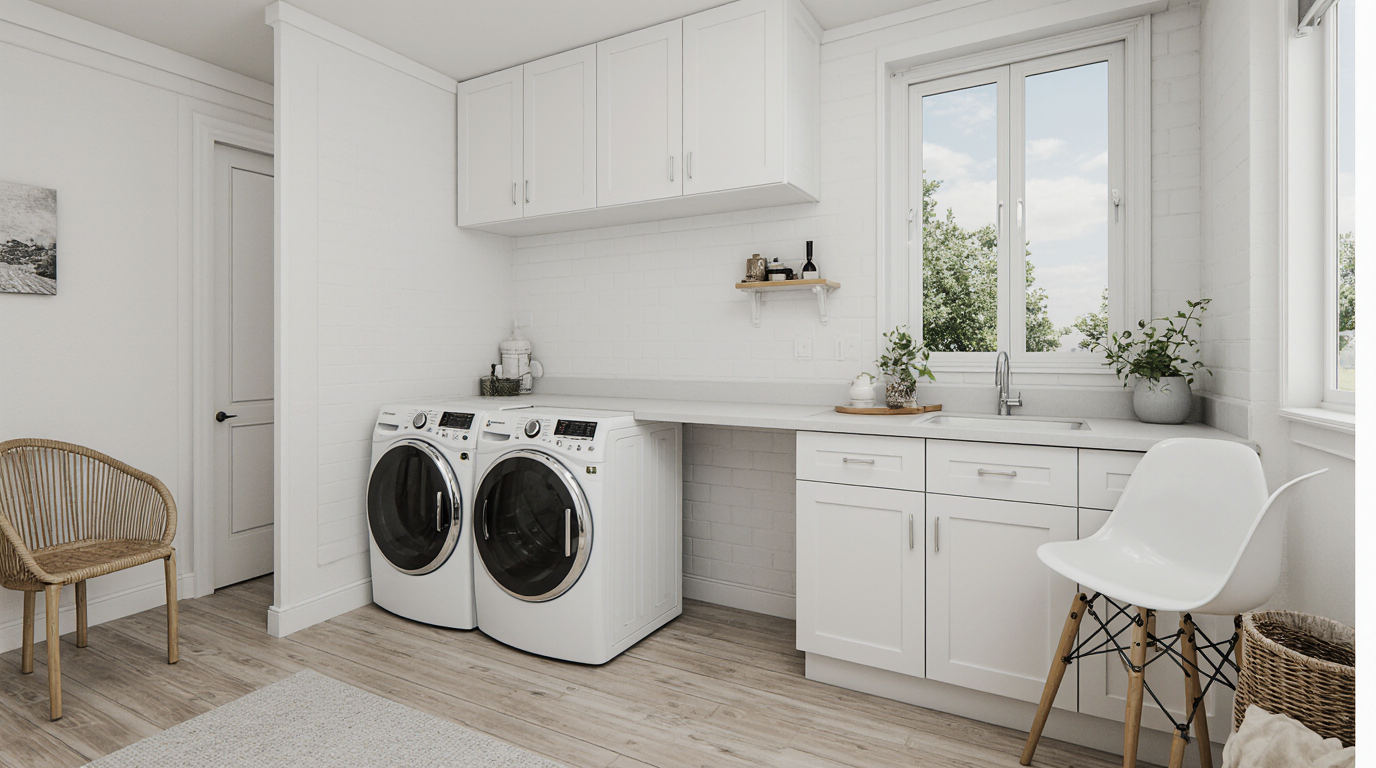
The remarkable evolution of the utility space from a strictly functional afterthought into a thoughtfully designed, high-functioning space is certainly one of the most notable shifts in modern home design and construction. This area, where a substantial amount of household time is invested, demands a layout that prioritizes workflow efficiency, optimal ergonomics, and completely integrated storage solutions. Moving a step up from the simple, arbitrary placement of a washer and dryer, contemporary laundry room design is now focused on creating distinct zones for every task: sorting, pretreating, washing, drying, folding, and storing. The total success of any chosen layout depends critically on respecting the laundry cycle sequence and curtailing unnecessary movement and back-and-forth travel, a strategic approach that can significantly cut down on the perceived drudgery or chore-like nature of the task. A well-executed blueprint treats the space as a multipurpose utility hub, not simply an alcove for machines, but an extension of the main living areas.
The initial choice of appliance configuration dictates much of the subsequent layout and design decisions. The side-by-side arrangement of a washer and dryer invariably offers the largest unbroken surface area for folding and finishing, often allowing for a generous countertop span placed directly over the units. This contiguous surface is a cornerstone of functional design, providing immediate, accessible space for both sorting incoming dirty items and for folding clean ones immediately upon removal from the dryer drum. For this particular configuration, paying close attention to the appliance and counter height is absolutely paramount for good ergonomics and user comfort. While standard counter height hovers around 36 inches, many contemporary designs advocate for raising this primary work surface, or, better yet, placing front-loading machines on sturdy pedestal drawers or custom cabinetry bases. Raising the operational height of the drum to between 30 to 39 inches—a measurement that depends greatly on the primary user's height and stature—substantially lessens the need to bend and strain the lower back when transferring heavy, wet loads from washer to dryer. This commitment to reducing physical strain elevates the room from merely functional to truly supportive and user-centric, enhancing the overall experience.
Conversely, the stacked configuration is the supreme space-saver, making it best suited for smaller homes, apartments, or when the laundry area must be integrated into a closet, bathroom, or hallway laundry nook. When appliances are stacked vertically, the continuous folding surface is lost, requiring the incorporation of a dedicated folding station elsewhere in the layout, often adjacent to the machines or utilizing a clever pull-out folding shelf installed beneath the upper cabinetry or above the appliances. In these tighter, space-constrained scenarios, vertical storage becomes the critical feature. Floor-to-ceiling cabinetry, or a considered combination of deep, closed cupboards and visually appealing open shelving, is absolutely necessary for neatly housing detergents, stain removers, and linens. Utilizing stylish airtight containers or jars on the open shelves adds a layer of visual merchandising and sophistication while simultaneously keeping necessary supplies organized, accessible, and visible, which is a key element of maintaining the room's intended streamlined and professional operation.
A essential, yet sometimes neglected, element in a high-performance laundry room is the utility sink or washbasin. Positioning the sink strategically is vital for a smooth workflow and is a major determinant of the room's effectiveness. Best practice often suggests placing it adjacent to the washer, ideally on one end of the primary work surface, to immediately create an efficient wet zone for pretreating. This dedicated area serves a multitude of purposes, including hand-washing delicates, soaking heavily soiled items, or simply filling and emptying buckets and mops. When a sink is centrally located within a long countertop run, it inevitably fragments the valuable folding space; therefore, offsetting the sink ensures maximum contiguous, uninterrupted workspace. Furthermore, considering universal design principles means ensuring the sink has clear knee space beneath it if possible, or that its depth and height are comfortable for extended leaning, an important feature that reinforces the room's commitment to accessibility and support for all household members, regardless of physical stature or ability.
The concept of the work triangle—an idea smartly borrowed and adapted from kitchen design—is highly and effectively applicable to the modern laundry room. The ideal flow of activities moves sequentially from where clothes are delivered and accumulated (sorting hampers) to where they are cleaned (washer/dryer) to where they are finished (folding surface/hanging rack). An L-shaped layout is particularly efficient at promoting this logical sequence, often allowing the shorter arm of the 'L' to house the washer/dryer stack, and the longer arm to become the expansive folding and ironing zone, perhaps incorporating the sink on the wall opposite the machines. For an even more encompassing and luxurious design, a U-shaped layout can maximise surface area and storage along three complete walls, providing a high-end, built-in feel that neatly corrals all laundry activities within a defined, aesthetically pleasing area, effectively minimizing visual clutter and promoting a neat, clean environment.
For garments that benefit from air-drying or steaming, dedicated space must be integrated from the outset of the design process. This necessary feature can be achieved through a simple, permanently installed hanging rod located above the counter or, for a more sophisticated and premium approach, a ceiling-mounted drying rack that can be easily lowered for loading and raised for drying, making excellent use of the often-neglected overhead volume. Incorporating a concealed ironing center—a dedicated wall cabinet housing a fold-down ironing board—ensures that this essential finishing task can be completed efficiently within the room itself without requiring a cumbersome, temporary setup that obstructs pathways or requires moving equipment from another room.
Beyond the fixed appliances and cabinetry elements, the choice of flooring material is foundational to longevity and safety. Given the inherent and unavoidable risk of water leaks, plumbing issues, or detergent spills, materials must be resilient and unequivocally water-resistant. High-quality porcelain tile or waterproof luxury vinyl planking are favored choices, often selected with a slight texture or subtle pattern to mask minor stains and enhance grip, which directly addresses crucial safety considerations within the wet zone. Furthermore, lighting and ambiance contribute significantly to the perceived usability and welcoming nature of the space. Layered illumination, combining bright, functional task lighting (like under-cabinet strips) placed over the folding area with softer, ambient overhead fixtures, effectively combats the often dreary or utilitarian nature of these utility spaces, actively encouraging users to keep the area tidy and actively utilize its full potential. The ultimate success of the laundry room design lies in this meticulous attention to every point of contact and interaction, ensuring that the space supports the homeowner's routine flawlessly and effortlessly.