Laundry Room Design Layout: Transforming Everyday Functionality into Elevated Home Style
Creating the ultimate laundry room design goes far beyond simply positioning a washer and dryer. It’s about elevating an often-overlooked space into a seamless blend of functionality, comfort, and beauty. A strategically designed laundry room can simplify your daily routines, maximize storage potential, and even add measurable value of your home. Whether you have a small laundry nook, every detail matters — from appliance placement and cabinetry to the spatial organization of the space.
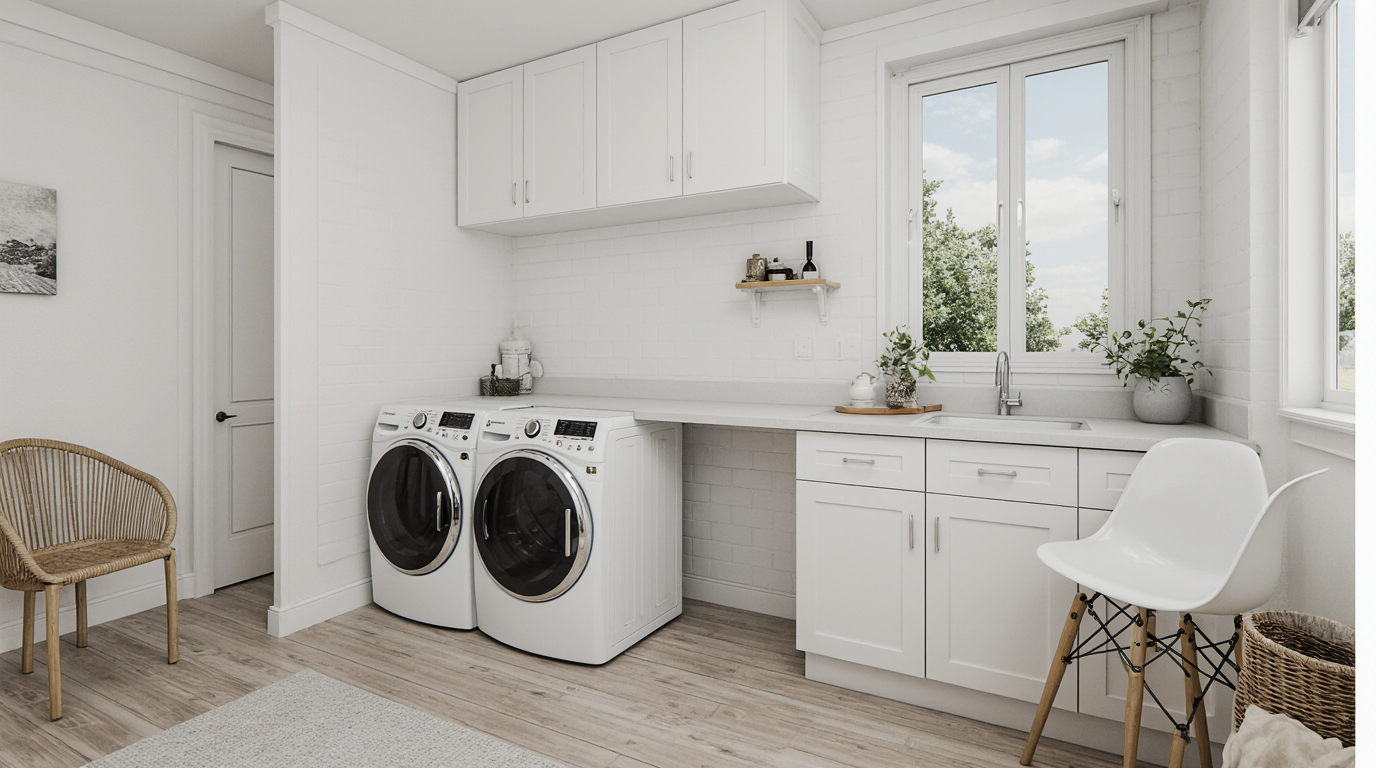
A well-planned laundry room design originates with an awareness of how the space will be used daily. The workflow should be seamless: moving clothes from sorting to washing, drying, folding, and storing with minimal effort. Many designers recommend the “three-point laundry concept”, similar to the kitchen principle, where the washer, dryer, and sink form a logical path that minimizes unnecessary movement. This layout concept ensures that usability defines the design while maintaining visual balance. For those seeking high-performance organization, compact appliances, built-in storage, and hidden baskets can make even the smallest laundry space operate like a full-scale laundry.
Creating a harmonious laundry room layout also requires careful attention to light design. Sunlight enhances the sense of cleanliness and openness, making laundry tasks feel lighter. When windows aren’t an option, multi-source illumination becomes indispensable. Combining ambient fixtures with under-cabinet lighting can illuminate every corner. Adding LED strips beneath shelves or inside cabinets provides a high-end touch while improving visibility. Designers often emphasize that light impacts emotion: a well-lit laundry room creates satisfaction, turning a daily necessity into a refreshing experience.
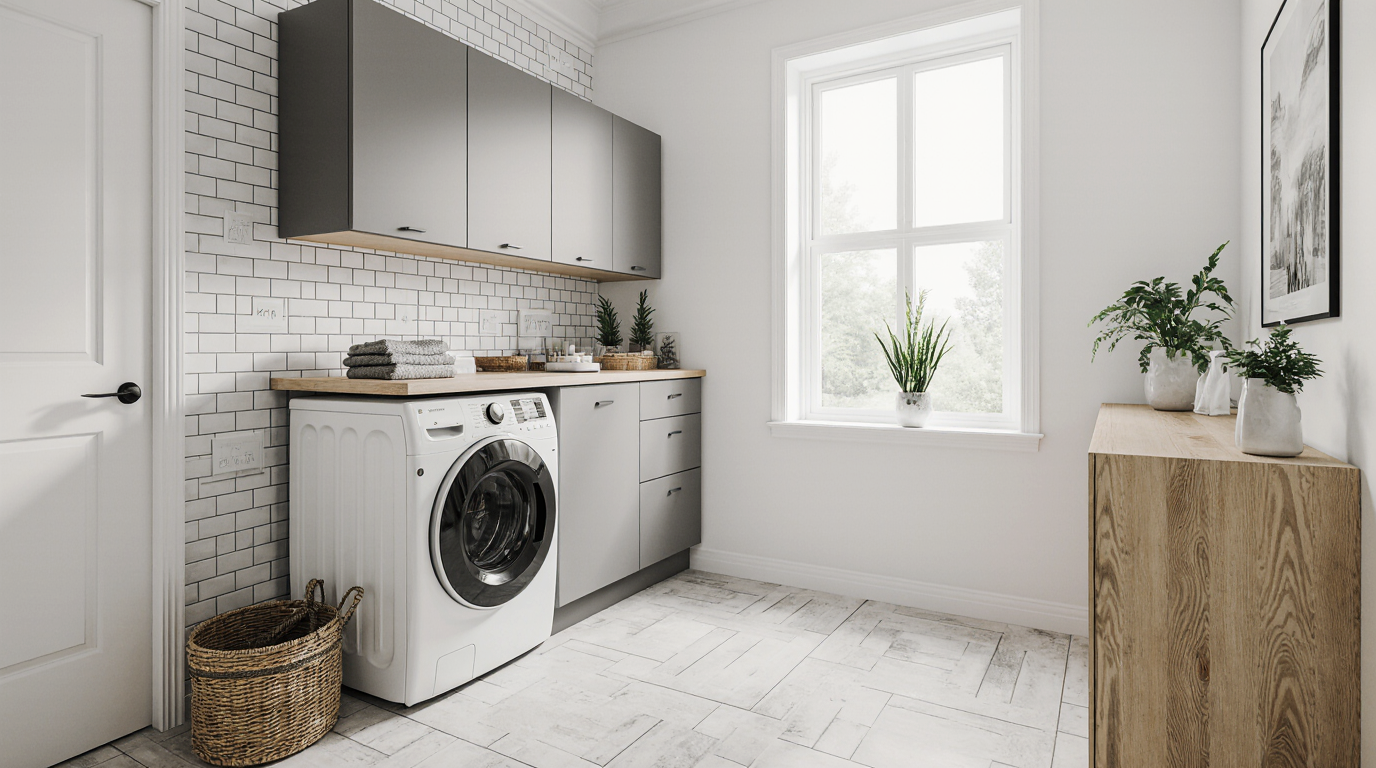
Another fundamental aspect of laundry room design is intelligent cabinetry. Without it, the space can quickly become cluttered and stressful. Custom cabinetry designed for detergents, cleaning tools, and household items creates a sense of order and structure. Tall cabinets are perfect for storing mops, brooms, and ironing boards, while deep drawers or pull-out baskets store linens and fabrics neatly. For limited spaces, combining adjustable racks with hooks or built-in cubbies enhances utility without sacrificing style. The best designs take advantage of vertical space, turning tight corners into stylish storage zones.
When selecting materials, resilience and humidity protection are non-negotiable in any laundry layout. Countertops made of solid surface resist humidity and wear, while porcelain tiles ensure years of performance. The tone selection also influences the mood — light shades like white, beige, and gray enhance brightness, while earthy tones evoke freshness. Adding metal hardware introduces contrast, reinforcing a elegant aesthetic that refines the entire design.
Ventilation remains a often-overlooked factor in effective laundry room design. Proper airflow prevents mold formation and protects the space. Installing an air outlet, ensuring clear dryer vents, and including vented skylights all contribute to a fresher laundry area. Many modern designs now integrate foldable air-drying panels that save space while minimizing energy waste. These eco-conscious upgrades not only extend garment life but also elevate the efficiency of the laundry room, making it a place of calm and order.