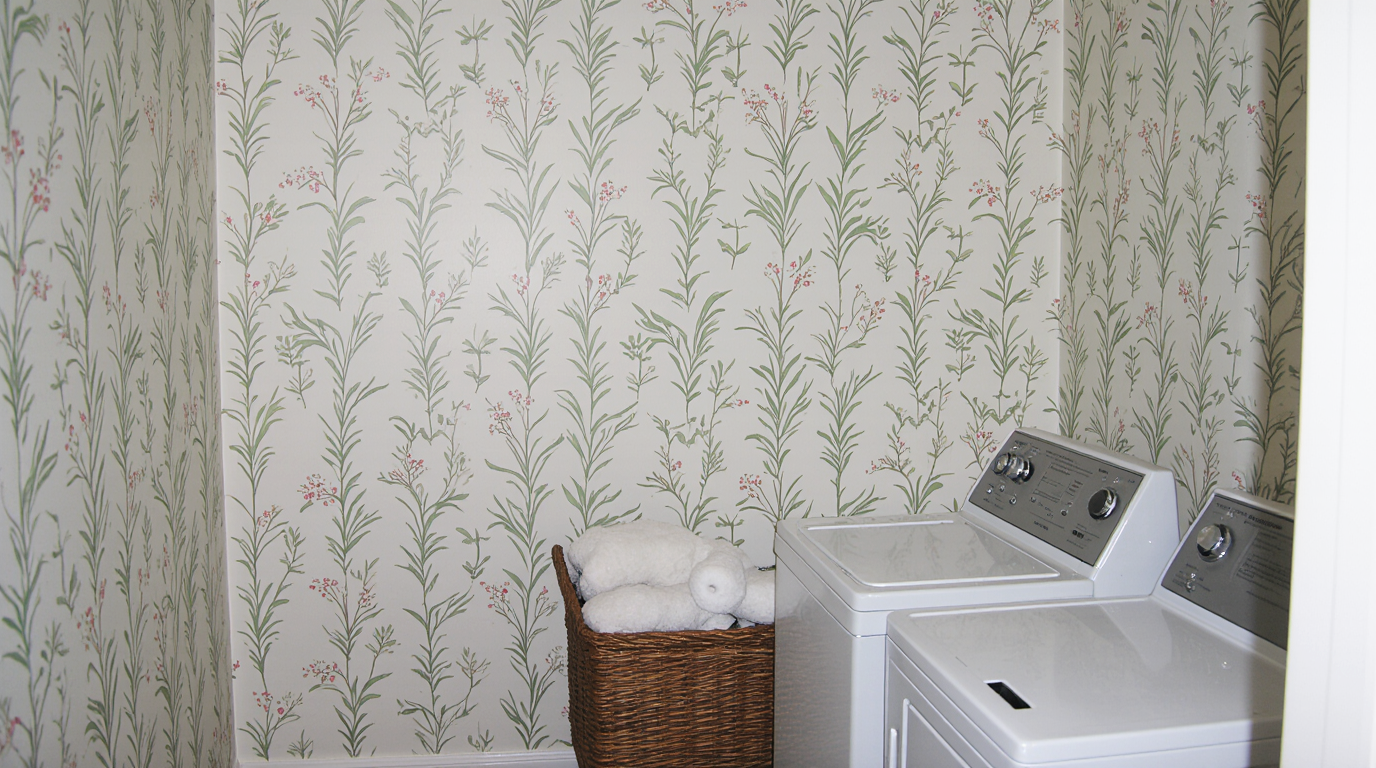
The current-day home demands that every inch of space serve a dual purpose: perfect functionality married with undeniable visual beauty. Seldom is this interplay more pronounced than in the laundry room, traditionally relegated to a purely functional corner overwhelmed by harsh white appliances and unyielding tile. Yet, this area, which sees non-stop use and repetitive tasks, offers a perfect, often unused, canvas for major design elevation. The purposeful deployment of high-quality , well-selected wallpaper is more than just an indulgence but a powerful design move that essentially redefines the chore experience. It introduces tactile interest and unique character into a room characterized by the stark lines of washer and dryer units and fixed cupboards.
When approaching this design decision, the product selection becomes paramount. Common paper is simply inadequate for an environment prone to humidity changes and the occasional splash or spill. A genuine laundry room design expert will certainly recommend vinyl-coated or robust, scrubbable wallcoverings. These options offer the design depth of traditional paper—consider intricate damasks, bright botanical motifs, or intricate geometric patterns—while possessing the necessary moisture resistance and durability to stand up to the stresses of the utility space. Notably, materials labeled as Type II commercial vinyl offer superior longevity and washability, acting as a working defense against dampness exceeding standard flat paint. This factor elevates the choice from a simple decorative update to an informed specification, matching aesthetics with long-term material performance.
The psychological impact of repeated designs in a traditionally dull area cannot be minimized. Investigations concerning environmental psychology shows that visual stimulation, particularly in earthy hues or complex, non-jarring patterns, can mitigate feelings of tedium associated with repetitive tasks. A well-chosen statement wallpaper acts as a visual anchor, turning a space of duty into a moment of design appreciation. For compact, windowless utility closets or purpose-built laundry rooms, patterns featuring lighter backgrounds or strong vertical elements can create an illusion of greater spatial volume and brightness, counteracting any sense of enclosure often associated with small utility spaces. Conversely, a moody, deep-toned pattern, perhaps a dark floral or an non-literal, rich geometric, can lend an air of unexpected luxury and intimacy, transforming a small hallway into a dramatic, jewel-box space. This deliberate use of pattern is a form of experiential design, ensuring that even the brief moments spent sorting clothes contribute positively to the homeowner's total home experience.
Thinking about where to put it, the design tactic often hinges on the concept of the focal wall. In most configurations, the wall situated right in front of the primary work surface—the folding counter or sink area—is the best spot for the most impactful design narrative. This draws the eye immediately upon entry, establishing the room’s style identity before one registers the functional components. This feature wall approach is often more practical than a full room application, especially in vintage properties where wall surfaces might be less than perfectly flat, as a single dramatic application is better at concealing minor surface imperfections than an all-over wrap. In addition, for those who favor design agility and prefer frequent updates, utilizing a peel-and-stick vinyl on a single wall allows for a low-commitment aesthetic refresh every few years, matching precisely evolving personal tastes apart from a fixed mounting.
The layering of pattern introduces a sophisticated element of textural depth that paint doesn't achieve. Just a slight grasscloth-inspired texture or a small-scale geometric repeat adds a palpable layer of visual interest. This is most notable when juxtaposed against the shiny and dull surfaces of modern appliances and stone countertops. Imagine a crisp, white shiplap or shaker-style cabinet base. Adorning the walls above with a classic toile featuring subtle indigos and olives provides an immediate counterpoint, softening the hard edges and lending a transitional design sensibility that bridges the gap between strictly practical building and curated interior living. This contrast is the hallmark of high-level residential design: making the practical beautiful through thoughtful contrast.
Moreover, the selection of pattern scale is a critical technical decision. In a small laundry nook, an too huge, busy pattern can dominate and shrink the space perceptibly. The opposite is true, a pattern that is too small or low-contrast might vanish entirely, reading as mere visual noise. The key is selecting a pattern whose repeat cycle is proportionate to the wall area it covers. For optimal visual harmony, the designer often specifies patterns with a moderate scale and a color palette that ties into other finishes in the room, perhaps echoing the veining in a quartz countertop or the undertone of the tile flooring. This creates a cohesive and intentional design ecosystem rather than an arbitrary addition of color. This level of detail distinguishes a professionally conceived space from a hastily decorated one. The commitment to visual continuity ensures that the laundry suite feels integrated into the home’s overall design language. The successful integration of decorative wall treatments transforms the laundry room from a necessary service area into a deliberate extension of the home’s sophisticated style portfolio, proving that functional spaces deserve the same level of design rigor as living areas.