Compact Laundry Room Design Concepts for Optimal Functionality and Elegance
Transforming a small laundry room into a functional and visually appealing space requires more than just selecting the right appliances. The key to an exceptional laundry room design lies in creating a balance between practicality and aesthetics. Limited laundry spaces can be transformed into ultra-efficient areas when strategic design meets inventive thinking. By combining intelligent storage, well-planned lighting, and robust surfaces, every inch of a small laundry room is maximized for practical and durable use. Thoughtful small laundry room design improves functionality and adds a sophisticated touch to the home.
One of the first steps in crafting a standout small laundry room is choosing the right appliances. Compact washers and dryers are now available in stackable formats, allowing vertical installation to save precious floor space. These modern machines often include high-efficiency features and quiet operation, which are essential for small areas that might be adjacent to living spaces. Choosing eco-friendly machines ensures lower energy bills without sacrificing washing quality. Additionally, selecting machines with sleek, contemporary finishes enhances the room’s visual appeal, ensuring the laundry area feels cohesive and polished rather than cramped.
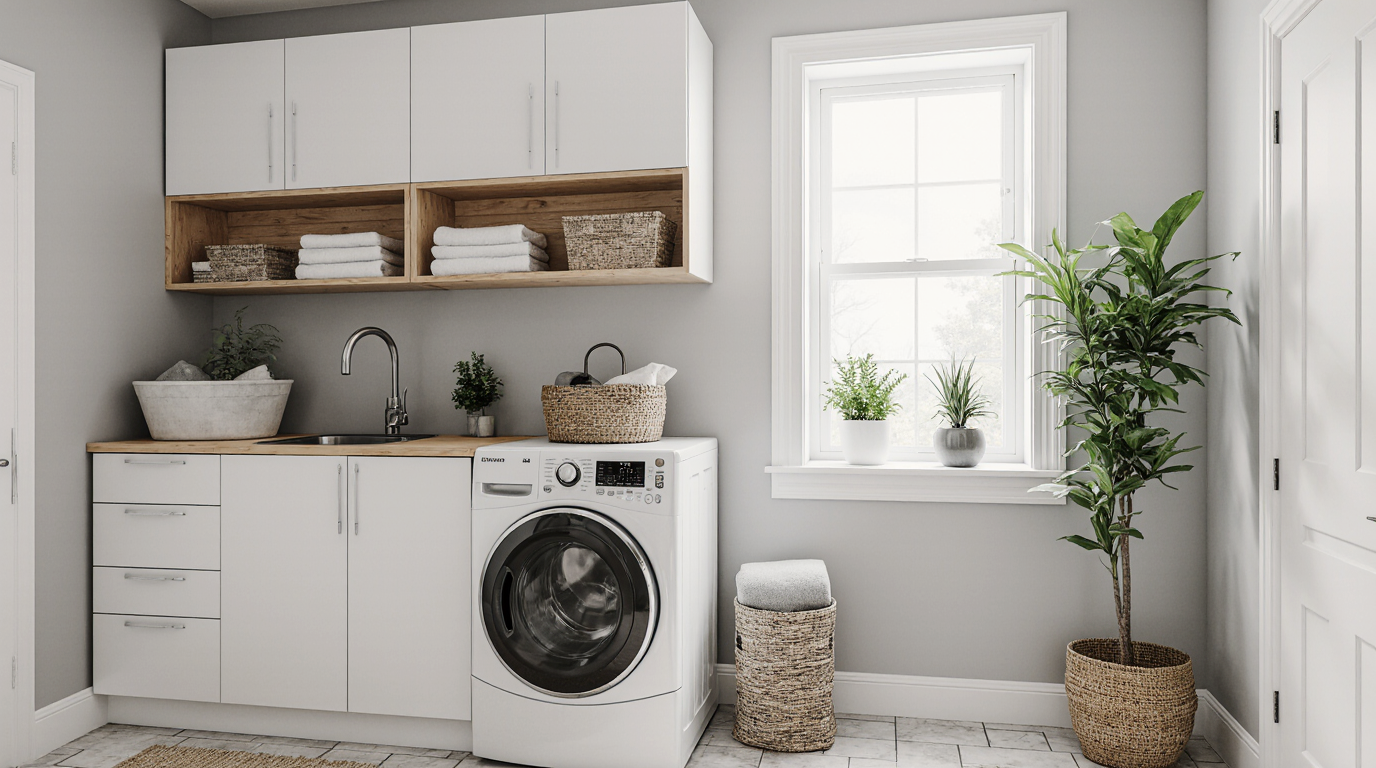
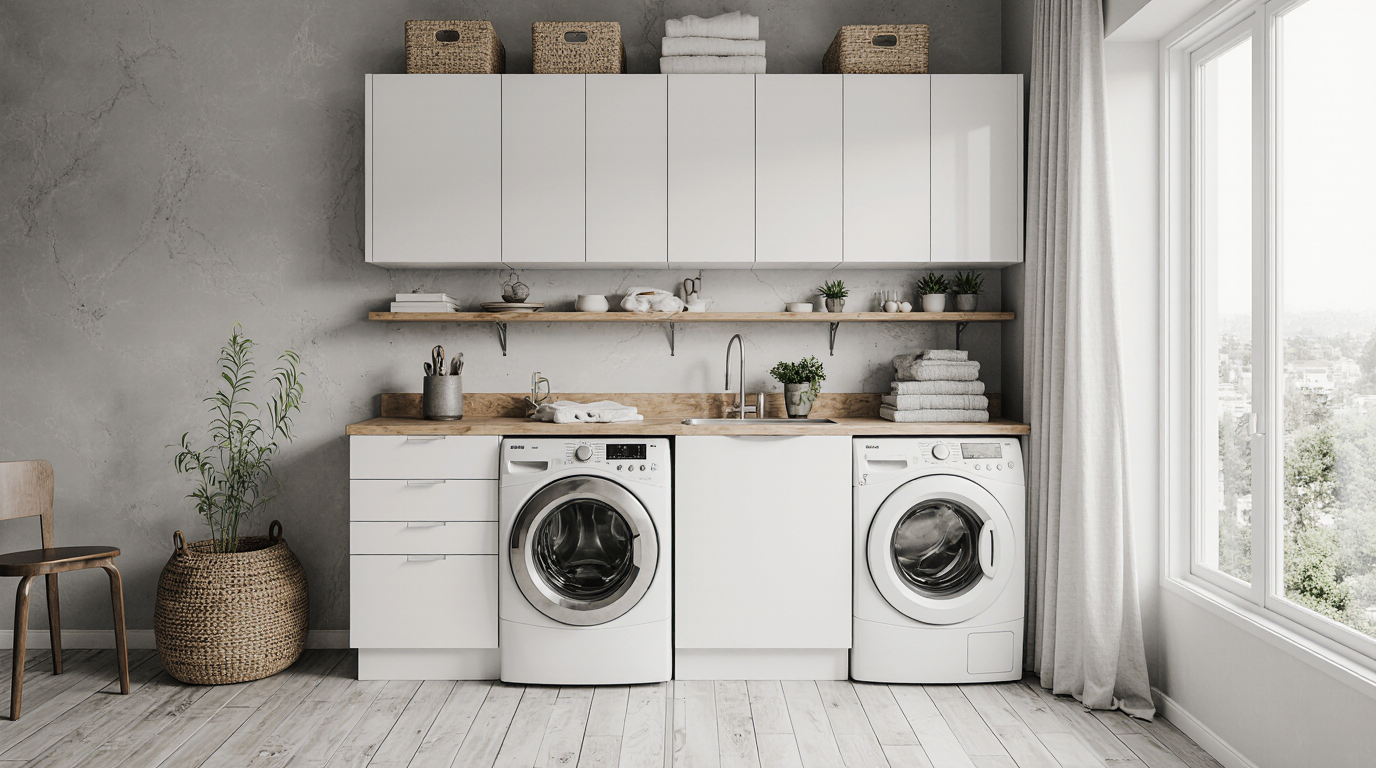
Efficient storage is a cornerstone of small laundry room planning. Custom cabinetry maximizes otherwise wasted space for optimal organization. Mounting cabinets over appliances increases storage for cleaning products and laundry necessities. Open shelving in constrained areas maintains usability while avoiding visual clutter. Labeled containers, bins, and baskets improve organization and make chores more manageable. Custom-fitted storage units exploit all available space while maintaining an upscale design feel.
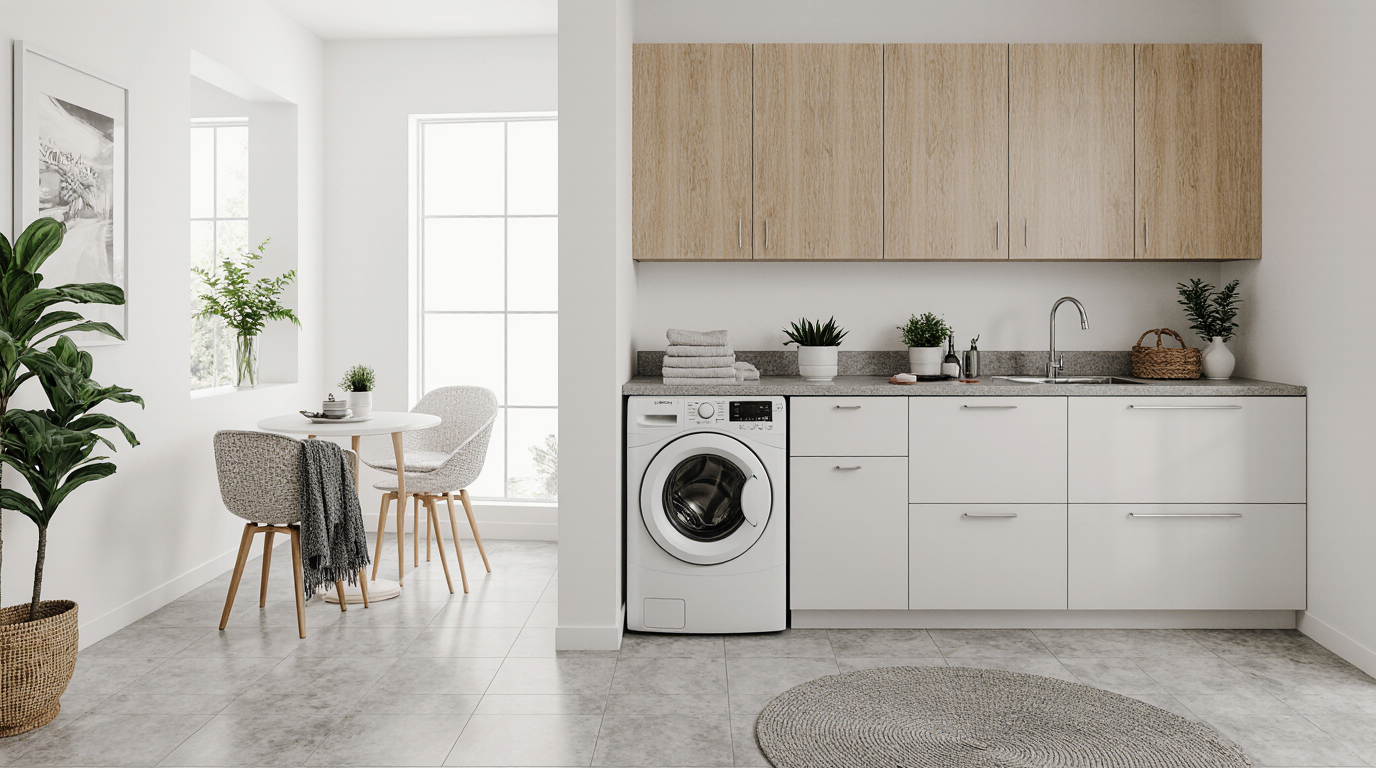
Adding functional counter space transforms efficiency in compact laundry areas. Designated folding zones optimize workflow and keep laundry tasks organized. Robust surfaces such as quartz, laminate, or wood block endure repeated use, moisture, and heat exposure. For extremely narrow spaces, pull-out countertops or collapsible surfaces provide temporary work areas without permanently occupying valuable floor space. Including a designated counter area makes laundry chores more efficient while maintaining an elegant and tidy appearance.
Lighting is often underestimated in small laundry room design, yet it plays a crucial role in functionality and ambiance. LED lighting offers brightness and energy efficiency while preventing shadows in tight laundry rooms. Under-cabinet lighting above the workspace can add extra illumination exactly where it is needed most. Maximizing sunlight through limited windows enhances the perception of space and openness. Strategic lighting elevates usability and aesthetics, transforming small laundry spaces into bright, comfortable areas.
Flooring and wall materials play a major role in practicality and visual appeal. Opting for water-resistant flooring such as ceramic tiles, vinyl, or engineered wood protects against accidental spills and humidity. Low-maintenance, easy-to-clean surfaces simplify upkeep in busy laundry areas. Light wall colors visually expand the area, and accent walls add charm without clutter. High-quality materials contribute to a professional finish, ensuring the laundry room remains stylish and durable for years.
Compact laundry spaces often need to serve multiple functions. Adding integrated ironing boards, retractable hampers, or mini sinks enhances utility. Mini utility sinks provide essential convenience for specialized laundry tasks. Efficiently arranged spaces can accommodate multiple features without feeling crowded. Incorporating multifunctional elements maximizes the potential of even the smallest laundry areas while maintaining an organized and aesthetically pleasing environment.
Even practical laundry rooms benefit from stylistic touches. Adding touches like stylish hooks for hanging clothes, decorative containers for detergents, or small potted plants can bring warmth and personality to the room. Mirrors strategically placed can reflect light and give the illusion of more space, enhancing the perception of size. Small but thoughtful design accents contribute to a cohesive look that turns an ordinary laundry room into a room that is both functional and inviting. Thoughtful choices in design elements ensure the room is purposeful and polished.
Optimizing compact laundry rooms requires smart flow and organization in addition to storage. Designating specific zones for washing, drying, folding, and ironing creates a logical flow that reduces time and effort. Hanging solutions make full use of vertical space while preserving room circulation. Proper planning and attention to workflow optimization allow even the most compact laundry rooms to function seamlessly, turning what is typically a mundane chore into an organized, stress-free experience.
Color schemes and textures can subtly influence the feel of a small laundry room. Neutral and pastel tones enhance openness, complemented by selective color highlights. Contrasting textures, from polished surfaces to woven accents, enrich design complexity. Cohesive material choices link the laundry room to broader home design, reinforcing intentionality.
Incorporating smart tech transforms compact laundry areas into advanced, convenient environments. Smart appliances and adaptive illumination optimize convenience and energy efficiency. Incorporating motion-sensor lights or touchless faucets enhances both convenience and hygiene. Tech integration boosts performance, minimizes labor, and imparts a high-end, modern atmosphere.
Effective small laundry design merges efficiency, elegance, and clever use of space. From machines to cabinetry, illumination, and accents, each detail ensures utility and harmony. Through strategic design, tiny laundry areas become organized, efficient, and attractive spaces, demonstrating that size does not limit style.