Laundry Room Closet Design: Innovative Ideas for a Functional and Stylish Space
Reimagining your laundry closet as a space that merges efficiency and style requires a delicate balance of smart layout planning and aesthetic ingenuity. Optimizing a laundry closet enhances workflow while transforming routine chores into a more enjoyable and organized experience. Regardless of the closet size, the objective is to harmonize storage solutions, essential appliances, and ergonomic workflow while preserving a sleek and stylish appearance. Smart utilization of vertical space is a cornerstone strategy in designing efficient and visually pleasing laundry closets. Installing full-height cabinets provides room for open shelving, concealed storage, and hanging racks, keeping essentials organized and within reach. The use of adjustable shelving adds flexibility, allowing the closet to adapt to changing needs, whether it’s accommodating bulkier items or seasonal linens.
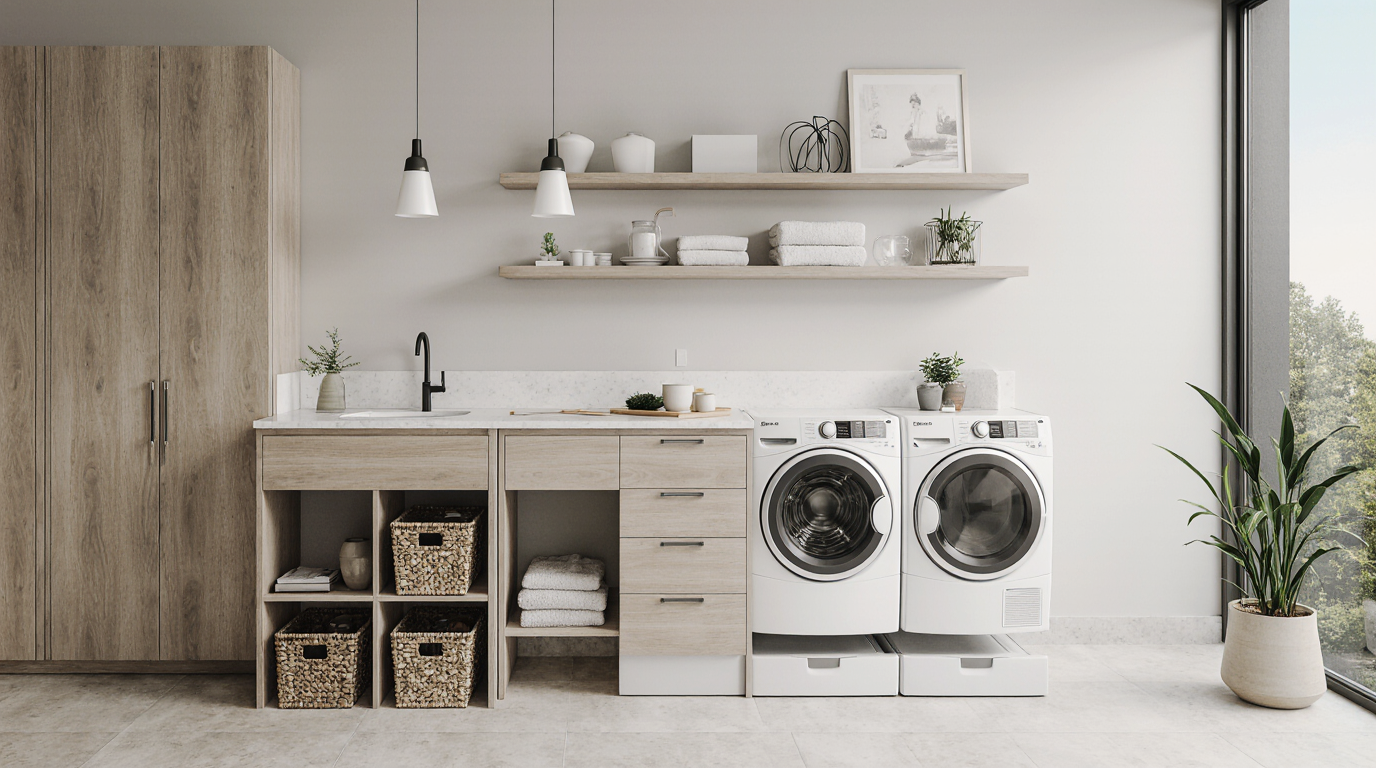
Closet layout significantly impacts both convenience and productivity. Placing appliances side by side forms an uninterrupted counter area, perfect for immediate folding or pre-sorting laundry. On the other hand, stacking appliances is a smart solution for tight spaces, freeing up room for additional cabinetry or a built-in ironing station. Experts frequently advise hidden laundry hampers to streamline workflow and minimize visible clutter. Concealed hampers ensure dirty laundry stays out of sight, enhancing both tidiness and visual appeal. Tailored cabinets allow for precise use of available space, accommodating appliances while maintaining a seamless aesthetic.
A versatile countertop enhances both utility and style in a laundry closet. Such countertops double as folding areas, stain treatment stations, or organizational zones for sorting garments. Materials like quartz or laminate are particularly recommended for their resistance to moisture and stains, ensuring longevity even in a high-use environment. Countertop sinks enhance functionality, providing convenient washing and pre-treatment zones for a variety of fabrics. Effective lighting solutions transform the laundry closet, highlighting design elements while improving task efficiency. LED strip lighting under shelves or above counters ensures visibility in every corner, reducing errors like missing socks or misplaced detergent, while also highlighting the design elements of the cabinetry.
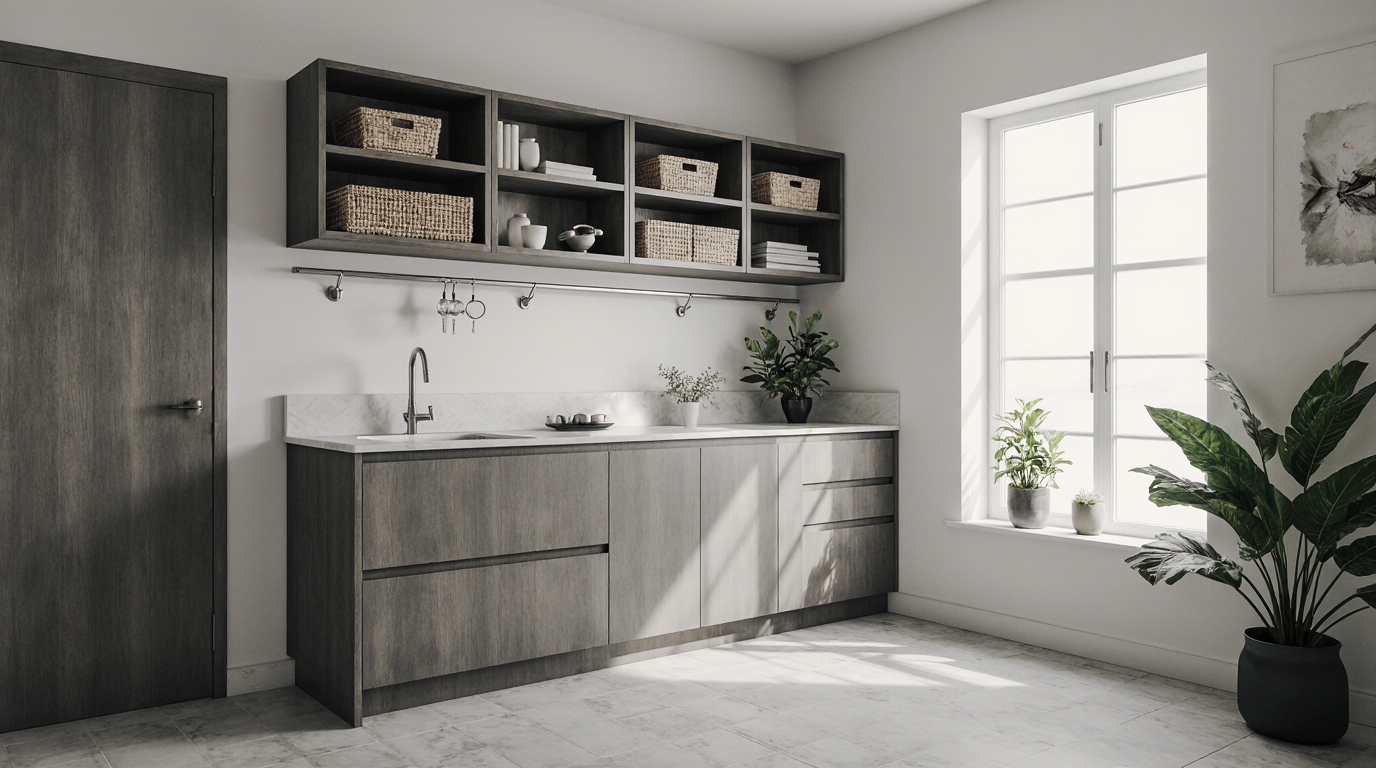
Storage solutions in a laundry room closet can be both creative and highly effective. Adjustable rods facilitate immediate hanging, preserving the shape of delicate fabrics post-wash. Open or wire baskets provide easy monitoring and retrieval of essential items. Some homeowners incorporate sliding doors or bi-fold panels to conceal clutter while keeping the space visually cohesive with the rest of the home. Compact areas gain functionality through concealed storage, magnetic organizers, and versatile hooks. Mixing exposed and concealed storage achieves both functionality and elegance.
Color and material selection are integral aspects of laundry closet design. Light-colored cabinetry and walls can make the space feel larger and more welcoming, while darker tones add a sense of luxury and sophistication. Protective finishes guard against humidity-related issues, extending the life of cabinetry. Incorporating natural textures, such as wood veneer or stone accents, can soften the space and create a connection with the adjacent bathroom or hallway. Decorative surfaces elevate aesthetic impact while maintaining practicality. Finishing touches like hardware can transform cabinetry from functional to fashionable.
Prioritizing ergonomic layout improves efficiency and reduces physical strain. Drawer and shelf placement improves accessibility and minimizes effort. Close-proximity folding areas streamline tasks and workflow. Concealed ironing boards optimize space and keep the closet sleek. Ventilation is another critical factor; a properly ventilated closet prevents moisture buildup, protects cabinetry, and reduces odors, keeping the area fresh and hygienic. Experts often recommend installing small exhaust fans or louvered doors to maintain airflow without sacrificing design integrity.
Smart systems streamline laundry processes while enhancing convenience. Connected appliances enable remote operation, cycle optimization, and progress alerts. Sensor-activated systems enhance sustainability and user-friendliness. Automated storage technologies enhance organization, reduce clutter, and save time. Merging technology with bespoke layout planning produces a cutting-edge, efficient, and personalized laundry closet.
Achieving cohesion with surrounding spaces involves strategic design choices and material selection. Coordinating cabinetry with adjacent bathroom or hallway finishes maintains continuity and cohesion throughout the living space. Open shelving can display neatly folded towels or decorative storage containers, while closed cabinets conceal bulkier or less attractive items. Glass and mirrored elements visually enlarge and illuminate the closet area. Waterproof, durable flooring materials support daily use and maintain aesthetic consistency.
Ultimately, a thoughtfully designed laundry room closet goes beyond mere storage; it transforms a mundane task into an organized, aesthetically pleasing experience. Integrated design elements ensure the closet is efficient, user-friendly, and stylish. Optimizing vertical storage, flexible counters, hidden features, and ergonomic solutions harmonizes practicality with elegance. Tech integration combined with thoughtful finishes enhances usability and design quality. This approach results in a laundry room closet that maximizes space, enhances workflow, and provides a visually cohesive and sophisticated environment, transforming the everyday chore of laundry into a streamlined, enjoyable experience.