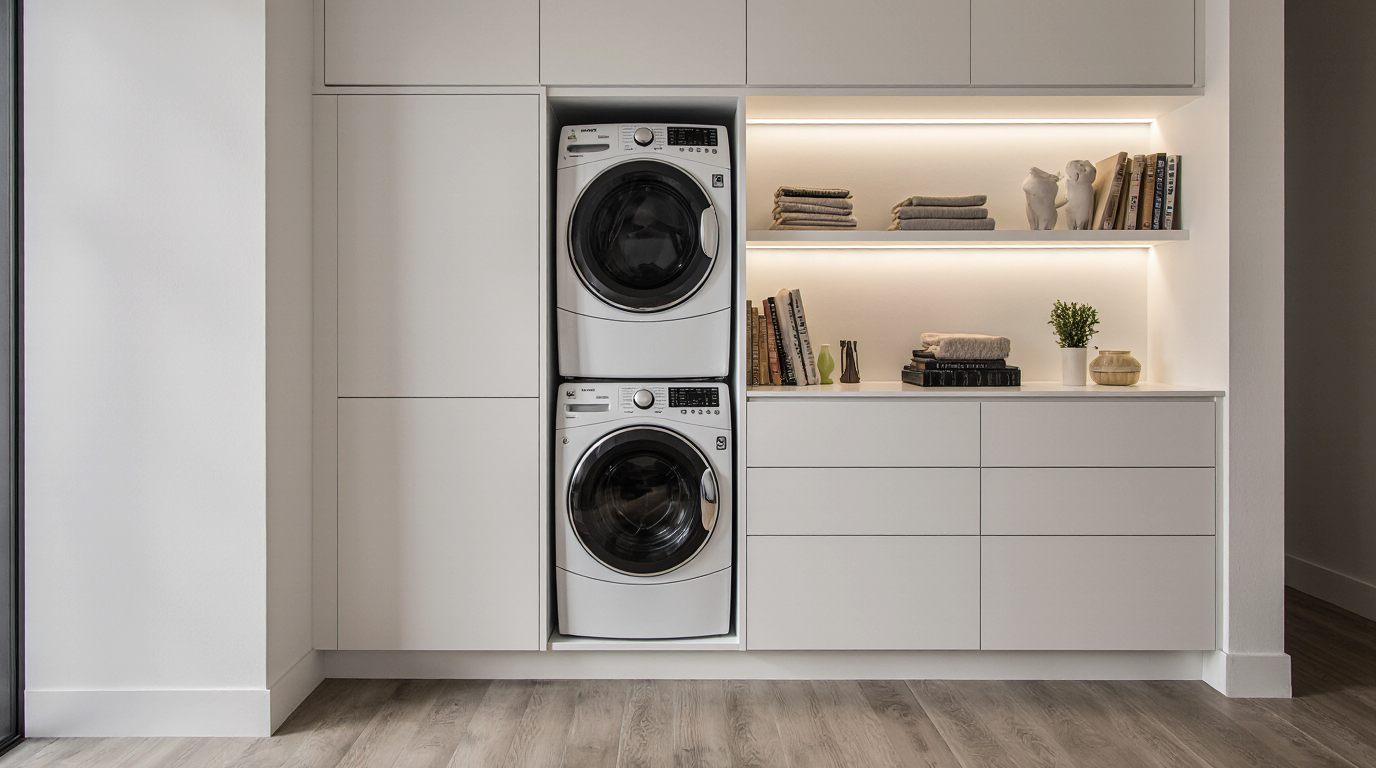
The modern laundry room is no longer a hidden, utilitarian closet; it is evolving into a sophisticated extension of the home’s overall design scheme, demanding both ergonomic efficiency and enhanced aesthetics. Achieving this balance requires a deep dive into workflow optimization and material selection, demanding careful consideration of how the space will be utilized on a daily basis. The primary function—washing, drying, sorting, and folding—must dictate the layout before any decorative elements are considered, ensuring the structure supports the process rather than hindering it. For spaces large enough to dedicate solely to this purpose, a L-shaped counter configuration can maximize work surface area, which is absolutely crucial for the folding process, which is often the most time-consuming non-machine task. Where square footage is a premium, compact tower installations become an absolute necessity, immediately freeing up floor space that can then be dedicated to high-capacity shelving or a compact utility sink.
The surface upon which laundry is processed is a key element in the room's long-term success and appearance. For lasting resilience and resistance to accidental spills of harsh chemicals, engineered stone, particularly quartz, stands out as a top-tier choice. Its sealed surface means it resists stains, moisture absorption, and bacterial growth far better than materials like marble, which demand frequent maintenance and specialized care. While natural stone offers inherent beauty and a unique veining pattern, quartz provides that luxurious look with significantly lower upkeep, aligning perfectly with the need for a hassle-free chore space. Conversely, butcher block countertops offer a warmth and organic texture that complements contemporary design trends leaning towards Japandi influences. When using wood, however, a robust finish is mandatory to guard against water damage and swelling, and one must accept that it will require regular refreshing treatments to maintain its structural integrity and beauty. For cost-effective upgrades, high-quality laminate remains a viable option, offering vast aesthetic variety, though its heat resistance should be noted if ironing is frequently performed directly on the surface.
Smart Storage Solutions define the success of every utility space, regardless of overall size. The focus must be unwavering on maximizing vertical space. Bespoke cupboards that extend fully to the ceiling ensures that bulk supplies are completely out of sight, promoting an airy, clean appearance. Within these cabinets, specialized organizational inserts are invaluable assets. Think about implementing drawer-mounted fold-away ironing surfaces—a true space-saver compared to free-standing or wall-mounted alternatives. Similarly, utilizing segmented deep storage for sorting laundry by color, soil level, or textile type before it even reaches the machines simplifies pre-wash preparation. Don't overlook the often-ignored rear panel; implementing hanging caddies—perhaps originally intended for closets—is an ingenious way to stash small necessities like stain sticks, measuring cups, lint rollers, or specialty detergent pods.
The adoption of modern features is another defining characteristic of high-performance laundry design today. High-tech washers and dryers offer features like remote diagnostics, self-dosing liquid delivery, and fabric-sensing wash cycles that maximize resource efficiency—key aspects of green home practices. Placing these modern units on risers incorporating hidden compartments is a double win: it raises the machines to a more comfortable working level, reducing the need to bend excessively, and adds hidden capacity below. For areas requiring garment care beyond simple machine drying, a dedicated, tall, narrow cabinet housing a built-in, fold-down drying rack keeps delicate items safely away from foot traffic and maintains the room's uninterrupted aesthetic.
The general ambiance profoundly impacts the daily interaction. While functionality is paramount, the room should not feel impersonal. Embracing soothing hues—such as serene blues, calming greens, or earthy tones mentioned in current design discourse—paired with luxurious elements elevates the space significantly. Selecting striking hardware in finishes like brushed brass or matte black turns these necessary components into deliberate design features. Furthermore, considering the multi-purpose zone idea, where the laundry seamlessly connects to a entryway transition area, adds immense multifunctionality. In this integrated zone, durable, waterproof flooring is non-negotiable, and a built-in bench with integrated hamper access facilitates easy transition from outdoor activities to chore management. Thoughtful design acknowledges the potential for dual use, perhaps incorporating a thin pull-out work surface tucked away behind cabinet doors, transforming the utility space into a temporary auxiliary zone. Lighting also plays a crucial role; multi-level illumination—bright, task lighting directly over the folding counter, combined with ambient overhead fixtures—ensures clarity and reduces visual fatigue, making time spent in the space more pleasant and productive. Ultimately, a successful laundry room marries durable, easy-to-clean surfaces with clever, customized vertical storage to create a zone of calm efficiency.