The 21st-century laundry room has transcended its strictly utilitarian origins, evolving from a forgotten corner often relegated to the basement to a essential, holistic space within the new-age home's blueprint. As a specialized in Laundry Room Design, I can unequivocally state that the cabinetry is the absolute core of a successful room, determining workflow, organizational potential, and the style quotient. Moving past the point of mere appliance housing, well-conceived laundry cabinets are the critical linchpin of laundry room luxury and operational efficiency. Our primary goal here is a comprehensive examination of expertly crafting this vital space, always adhering to principles that guarantee a people-first content approach and deep-seated depth.
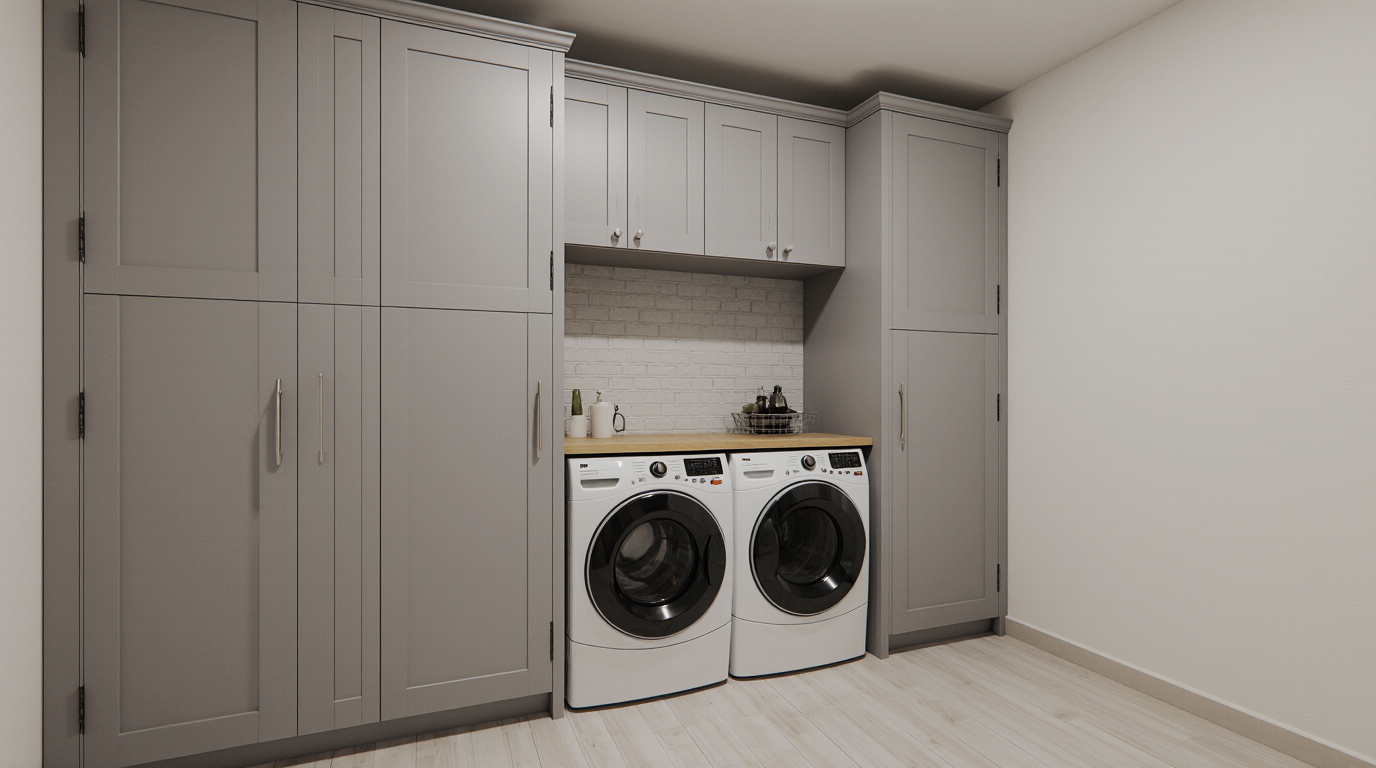
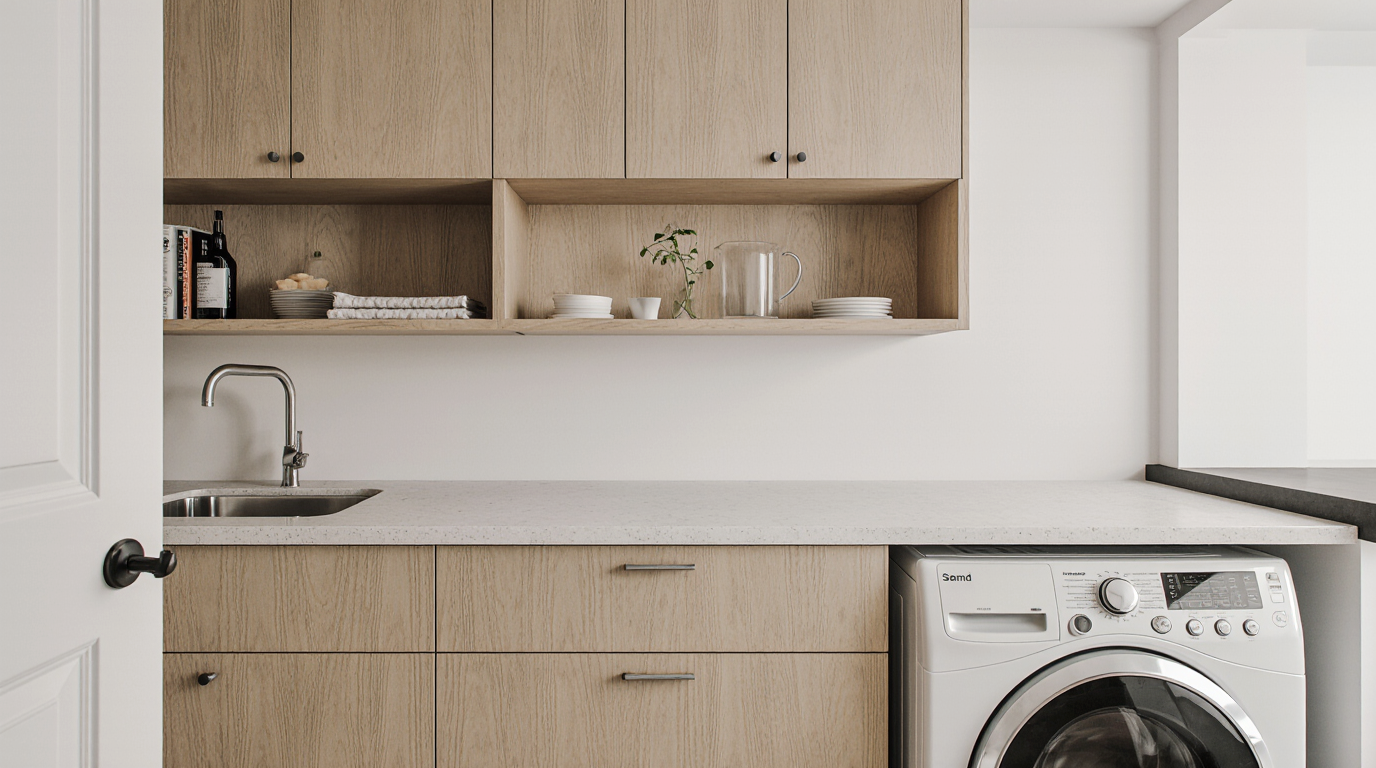
The initial journey commences with a rigorous assessment of the spatial constraints inherent to the room and the family's unique laundering volume and practices. This initial phase is the point at which space planning transitions from purely theoretical to paramount. It’s wise to the work triangle concept—a principle typically applied in kitchens; a parallel logic is relevant here: the necessary path from the dirty hamper to the washer to the sorting area to the dryer and ultimately to the folding/storage zone must be intelligently streamlined. Inadequate counter space available above the machines for the task of folding is a pervasive design pitfall. To remedy this hurdle, look into full-depth upper cabinetry rather than the often-shallow units frequently used in sub-optimal designs. This design choice makes it possible for the concealment of less attractive items—such as detergent pods, various stain removers, and small tools—while simultaneously helping to maintain a clean, uncluttered aesthetic.
Cabinet material selection is paramount for long-term resilience, especially given the humid environment that is typically associated with laundry tasks. While standard particleboard is often considered budget-friendly, for a high-performance laundry space, opt for moisture-resistant MDF or, in the best-case scenario, solid wood construction treated with robust, moisture-resistant finishes. The specific choice of finish is critically important for meeting the humidity challenge; thermofoil or a durable thermofoil application provides excellent resistance to swelling and warping, frequently proving standard laminate in wet zones. For a luxurious finish, explore lacquered cabinets, taking care they are thoroughly sealed against moisture ingress at the seams and edges.
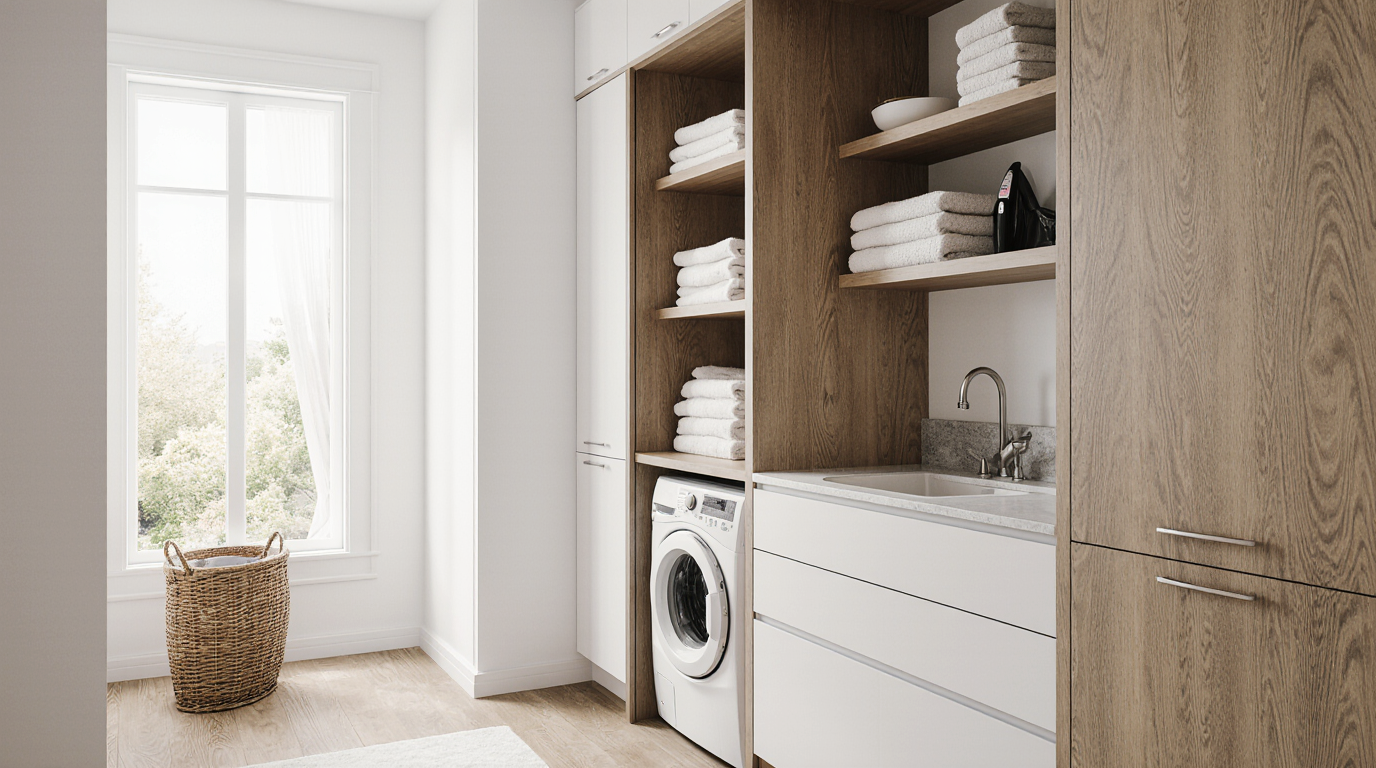
Storage is the place where bespoke cabinet solutions shine brightest. Think vertically to maximize every inch. Tall utility cabinets deliver exceptional vertical storage for items like brooms, ironing boards (frequently accessorized integrated ironing board drawers or custom interior fittings), and bulk supplies. For the base units, try to avoid standard deep shelving if space permits. The drawer system is king. Deep, sturdy drawers facilitate logical categorization: one for laundry additives (bleach, softeners, scent boosters), a second for rags and cleaning cloths, and perhaps a shallow drawer can be dedicated to organizing mesh bags used with delicates. Implementing drawer organizers made for small bottles stops that unavoidable avalanche as soon as a drawer is opened.
A defining element that significantly separates an average laundry room from an masterfully designed one is the dedicated folding station. If space generously allows, an extended countertop that stretches over the washer and dryer furnishes the necessary surface. If the machines are stacked, this crucial surface must be expertly cantilevered or supported by surrounding cabinetry. To further enhance this station, include a pull-out sorting system. These are typically heavy-duty wire baskets or bins, sometimes fitted glides, engineered to store three categories: Whites, Colors, and Delicates. This smart design strategy removes the necessity multiple freestanding hampers, greatly improving floor space utilization.
Furthermore, it is vital to the often-overlooked necessity of air-drying solutions. A beautiful laundry room should not give up functionality for those garments that require hanging. Incorporating a retractable drying rack that folds flush discreetly into the upper cabinetry is a designer's trusted for preserving that visual coherence. Alternatively, a custom-built drying rod installed within a niche, perhaps one that vents lightly or includes a humidity sensor, provides an excellent solution for cashmere or structured items needing to maintain their proper shape.
Illumination is a major role in both functionality and mood. Aside from general ambient lighting, task lighting within the cabinetry itself is invaluable. Installing LED strip lighting under upper cabinets ideally illuminates the folding surface, making it considerably easier to spot stains or check fabric care labels. For a touch of sophisticated detailing, consider opting for glass-front cabinets for artfully displaying folded linens or attractive, matching storage canisters, as long as the contents are kept impeccably organized—this highlights how visual merchandising within the room comes into play.