The Definitive Guide to Contemporary Laundry Room Design: Utility Meets Aesthetics
The contemporary laundry room is progressing from a purely utilitarian closet tucked away in a basement to a sophisticated, holistic design feature within the home. Current homeowners and designers alike understand this space as a essential element of a smooth-running home environment, demanding both peak efficiency and a high degree of aesthetic appeal. Achieving this harmony requires meticulous attention to spatial organization, finish procurement, and the seamless integration of intelligent systems.
Central to any well-designed laundry room arrangement is the workflow choreography. Consider the sequence of laundry steps: movement from bedrooms, categorization, washing, dehydration, folding, and finally, storage or placement. An comfort-focused layout emphasizes streamlining paths and straining motions. This is where the lifting of appliances takes center stage. Placing washers and dryers on bases is no longer a luxury reserved for high-end renovations; it’s a practical requirement that caters to the user's well-being, especially for tasks involving heavy lifting or prolonged standing. Beyond pedestals, the strategic placement of the service basin—ideally deep enough for pre-treating or manually cleaning fragile items—must be immediately beside or opposite to the main flat area for folding. This closeness creates an streamlined process for damp items.
Top surfaces serve as the workhorse surface of the laundry room, and their selection indicates quality about the room's expected lifespan and style. While laminate offers cost-effectiveness, quartz and natural stone, like calacatta or gabbro, provide excellent resistance to marks and a high-quality look and feel. For a look embracing contemporary natural design movements, materials with slight lines or honed finishes provide sophistication without demanding excessive maintenance. In addition, designers are more often selecting surfaces with varying heights or pull-out extensions that can be unfolded to create large work areas when needed and retracted to reclaim valuable floor space, a vital factor in smaller utility nooks.
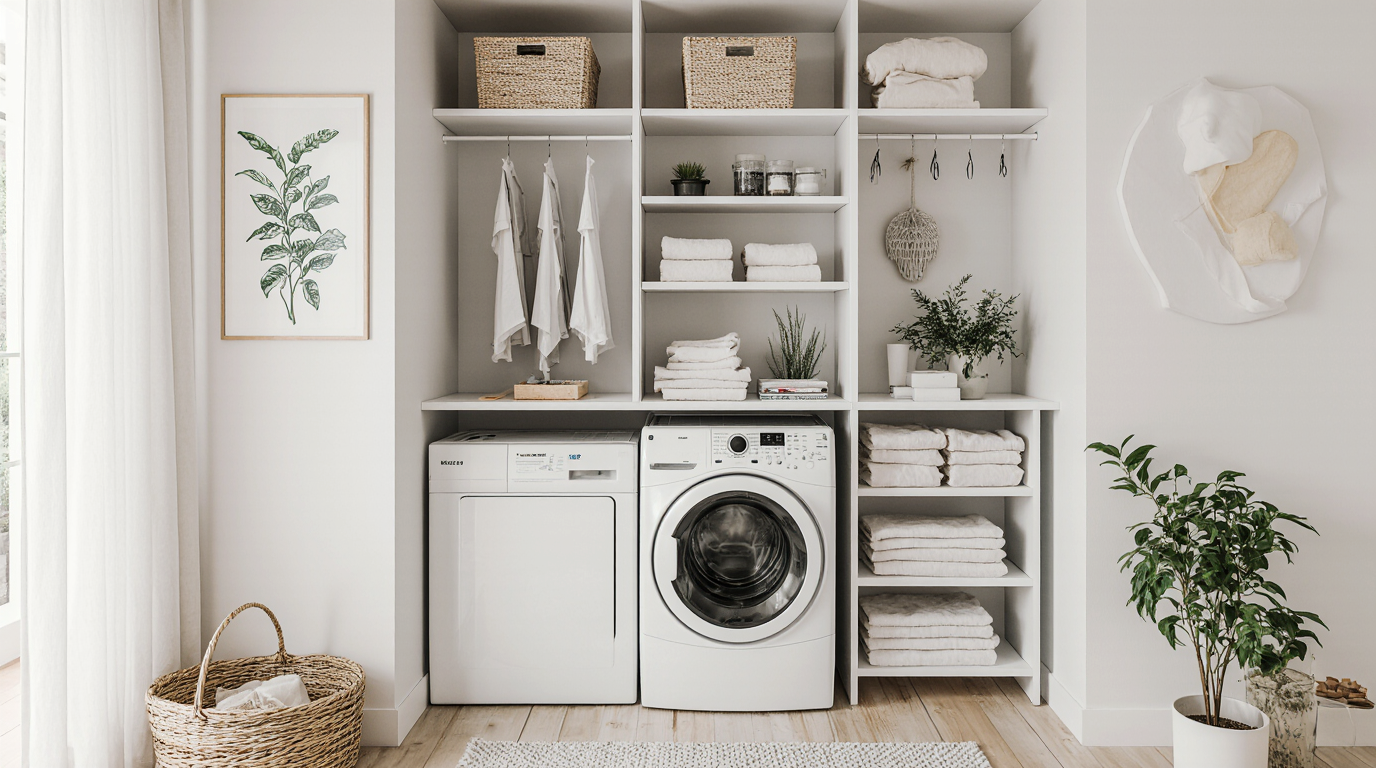
Storage architecture is arguably most impactful feature in contemporary laundry design. The goal is clutter mitigation through clever enclosure. Moving past basic metal racks, the trend heavily favors bespoke units with varied internal configurations. Consider more than standard shelving to include elements such as bins that flip out to sort dirty clothes right away, narrow, pull-out drawers specifically sized for detergents and softeners, and vertically oriented storage for pressing boards or cleaning tools. For those adopting sustainable building practices, making use of materials like reclaimed wood or woodwork coated in low-emission paint aligns functionality with sustainability goals. Exposed racks, when used, should be styled with thoughtful vignettes—using attractive containers like glass or bamboo jars for supplies—to enhance the space rather than overwhelm it.
Lighting design elevates the laundry room out of its dreary role to a luminous, inviting area. Layered lighting is the gold standard here. Main lighting should come from overhead recessed LED lighting, providing clear, low-power background light. Essentially, focused light for work—such as lights placed beneath upper cabinets—must be placed over every usable area. This eliminates shadows cast by the user, guaranteeing accurate spot checks and tidy folding. If the room has architectural character, statement pendant lighting over an central workspace or basin can add a stylish touch, adding a layer of design personality.
The merging of the laundry space with other home zones is a major movement. The combined entry and cleaning space takes advantage of serving two purposes, particularly in family homes. This requires careful selection of water-repellent floor coverings, such as oversized ceramic tiles or premium synthetic floorboards, alongside built-in benches and robust wall hooks for coats and athletic equipment. Alternatively, in open-concept dwellings, the hidden laundry nook—where machines are completely hidden by fitted doors or sliding panels—maintains clean sightlines, promoting a sense of spaciousness when the area is not in use. This demands accuracy in unit sizing and airflow setup to control moisture build-up.
Machine incorporation is more complex. The move towards smart appliances offers remote diagnostics, cycle monitoring via smartphone applications, and significant gains in water and energy efficiency. In addition to the primary machines, the adding specific supplementary tools, like tall drying cupboards or built-in drying racks that retract flush into the millwork, showcases a commitment to streamlined processes that honor the room's uncluttered look.
Tonal schemes in 2025 lean towards creating a calming atmosphere. Earthy shades, serene blues, and soft green tints are popular, frequently combined with the visual feel of stone or concrete on the ground. This creates a pleasing difference against crisp white cabinetry or the deep comfort of moderately dark wood features. The goal is creating an environment that seems less like a utility zone and more like a curated extension of the home’s main living spaces, encouraging users to linger and attend to tasks without feeling rushed or burdened by a dreary environment. The well-executed utility space embodies operational intelligence presented inside a thoughtfully designed structure.