
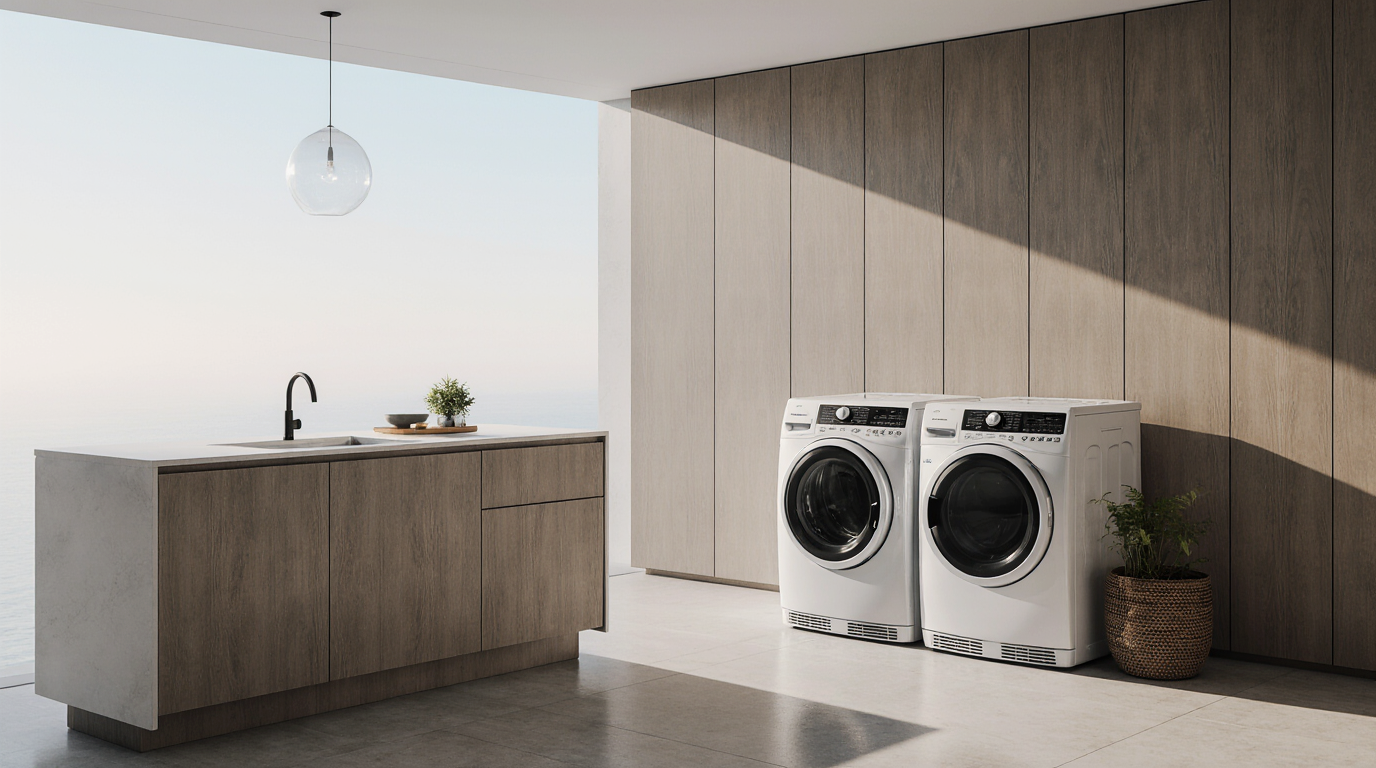
The contemporary house changes, and consequently, the standards for each specific zone. Once consigned to a dim, serviceable corner of the basement, the laundry room has seen a significant transformation, rising as a super-efficient, masterfully crafted Sanctuary of Cleanliness. The idea of Contemporary Laundry Design moves far beyond **simple efficiency; it is an integration of ergonomics, aesthetics, and smart technology into a space that deserves as much thoughtful consideration as the kitchen or the primary bathroom. Achieving this elevated status requires a deep dive into construction components, spatial planning, and the incorporation of user-focused design principles.
The foundation of any effective cutting-edge laundry room rests upon careful spatial planning. The best-suited layout should allow for a seamless workflow, usually called the Laundry Chore Cycle: separating, washing, drying, folding, and storing. In larger spaces, this might translate to an L-shape or perhaps a U-shape configuration to make the most of counter space and cabinet access. For more compact areas, a galley or single-wall layout must be carefully maximized. Vertical space utilization is crucial, relocating supplies from floor-cluttering stacks to sleek, high-reaching cabinetry. These cabinets, commonly using push-to-open mechanisms or minimalist, integrated pulls, keep up the clean, uncluttered look at the core of contemporary style. The picking of a cabinetry finish is a pivotal aesthetic decision; matte laminates, high-gloss lacquers, or natural wood veneers with a subdued stain all contribute to a refined, non-institutional feel.
At the heart of the contemporary laundry experience is the choice of countertops. Distancing itself from cheap laminate, designers now favor materials that deliver durability and visual continuity with the rest of the home. Quartz is a top-tier choice due to its non-porous nature, remarkable stain resistance—vital when handling pre-treatment products—and variety of gentle veining patterns that look like natural stone. Solid surface materials are likewise preferred for their potential to be invisibly attached with a built-in sink. The countertop depth must be carefully calibrated to house the front-loading appliances, making sure that the door swing radius is unimpeded and that there is sufficient depth for a easy folding area.
The core appliances shapes much of the design. The move to high-efficiency front-loaders gives way to the important design move of appliance stacking or, more favorably in contemporary design, arranging the washer and dryer side-by-side atop purpose-built pedestals. These pedestals, typically corresponding to the base cabinetry, perform two tasks: lifting the machines to an comfortable working height (minimizing pressure on the lower back) and supplying integrated drawer storage for detergents, dryer sheets, and accessory items. When space permits, the finest contemporary setup positions the units under a continuous counter run, resulting in a visually unified work surface that masks the practical purpose of the appliances.
Illumination is sometimes neglected but is a key differentiator in a high-end laundry design. Standard overhead fixtures are insufficient. The contemporary standard calls for a layered lighting approach. This starts with ample ambient lighting, usually recessed LED cans on a dimmer switch to set the mood. This must be supplemented with task lighting—LED strip lighting fixed to the bottom of upper cabinets to remove dim areas on the folding surfaces. For a real luxury element, look into adding decorative sconces on beside a window or a statement pendent fixture over a central island, if the ceiling height allows. The color temperature of the bulbs should lean toward a crisp white ($\textaround 4000\textK$) to verify true color rendition, which is essential when inspecting stains or sorting whites and colors.
Flooring choices must weigh moisture resistance with style. Large-format porcelain or ceramic tiles are a pragmatic luxury, offering patterns that include everything from matte concrete looks to refined marble facsimiles, at the same time being impervious to water leaks. For a cozier, more sophisticated aesthetic, luxury vinyl plank (LVP) in a high-quality wood look is increasingly popular; it is structurally sound and quiet underfoot, adding to the room's serene atmosphere. The visual connection between the laundry room and adjacent spaces, including a mudroom or hallway, is important for design cohesion, commonly done by mirroring the flooring material.
The functional elements include sophisticated water management and ventilation. For homes requiring gas dryers, proper venting must be engineered to maintain the clean sightlines—this requires tucking away the ductwork within the wall cavities rather than routing bulky pipes externally across finished surfaces. Smart plumbing considerations entail placing a leak detection system connected to the main water shutoff valve, a non-negotiable feature for any premium utility space.
The accessory integration sets the standard for the contemporary execution. This is the point where tailoring elevates the design from functional to bespoke. Custom inclusions are comprised of a built-in drying rack that telescopes from a ceiling cavity, deep utility sinks made of granite composite or enameled cast iron, and hidden ironing centers that retract completely when not in use. Open shelving is used sparingly, reserved only for beautiful organizational items—consider woven baskets for unmatched socks or clear airtight canisters for laundry pods. The goal is to store all equipment and materials behind closed doors, guaranteeing that the end result is one of understated elegance and absolute order. The contemporary laundry room is more than a place where clothes get clean; it is a carefully considered environment that supports the household’s rhythms with grace and cutting-edge functionality. This meticulous attention to detail mutates a chore zone into a significant component within the modern domestic landscape, indicating a prioritization of holistic home functionality.



