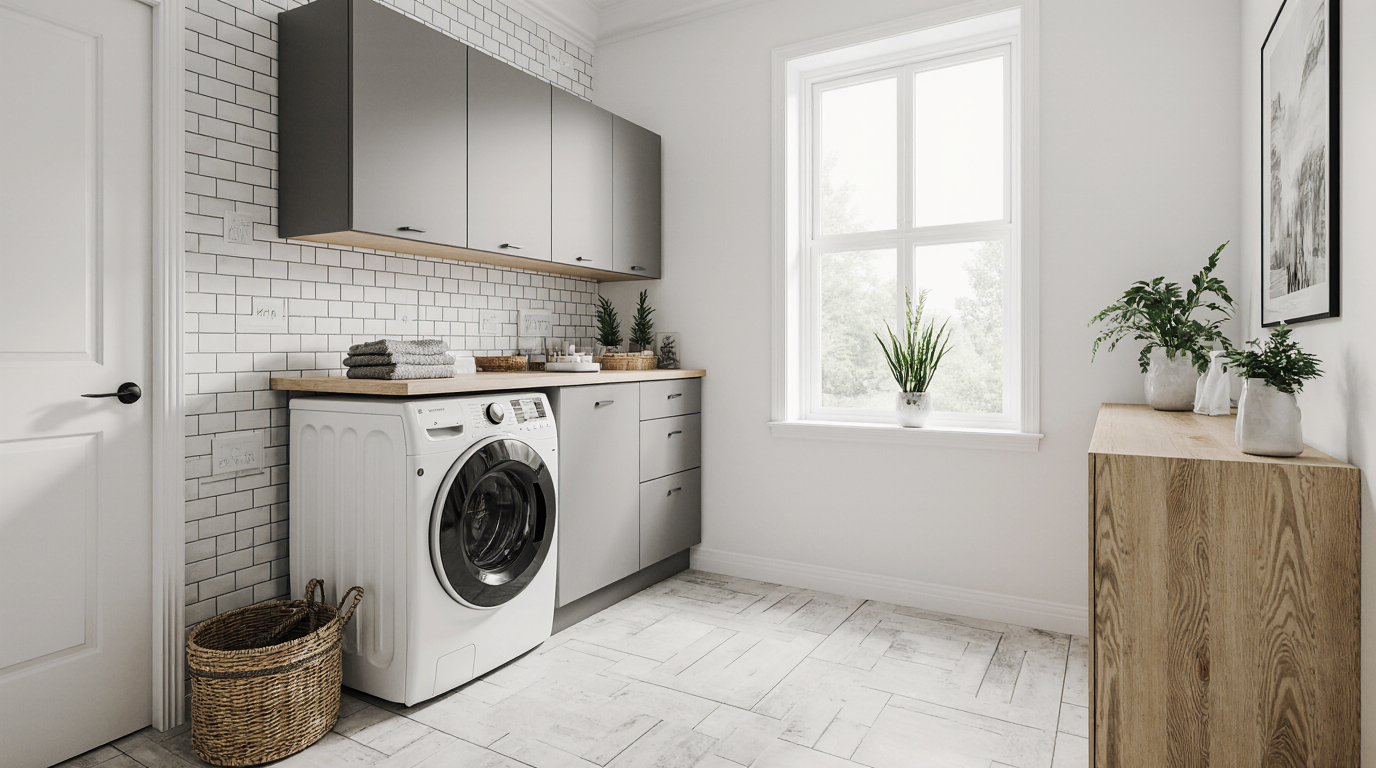
In my years designing and building custom cabinetry in Sarasota County, I’ve seen the same critical failure in laundry
In my years designing and building custom cabinetry in Sarasota County, I’ve seen the same critical failure in laundry rooms time and again: cabinets built with standard materials that swell and delaminate from the constant humidity. This isn't just an aesthetic issue; it’s a structural breakdown that often starts within three years, especially in properties along the Gulf where the salt air accelerates corrosion of low-grade hardware. Standard off-the-shelf solutions simply aren’t engineered for our specific coastal environment.
My approach is built on a non-negotiable material specification that I’ve perfected through hands-on installations from Lakewood Ranch to Siesta Key. I exclusively use marine-grade plywood cores, which utilize waterproof adhesives, combined with 316 stainless steel hardware. This isn't just an upgrade; it's a fundamental shift in engineering that I've found is the only way to guarantee zero cabinet warping or rust. This protocol directly addresses the root cause of failure in our high-humidity climate.
The practical result is a laundry room that not only gains up to 30% more functional storage through intelligent layout design but is also built to last for decades, not just a few seasons. It’s about creating a utility space with the same structural integrity and material resilience I would demand for the exterior of a coastal home, ensuring your investment is permanent and trouble-free.
My Diagnostic Protocol for Sarasota Laundry Room Layouts
Before any design is sketched, my process begins with a rigorous on-site analysis of the existing space, which is far more than just taking measurements. I focus on three critical environmental factors specific to Sarasota homes: ambient humidity levels, appliance heat exhaust, and existing ventilation pathways. I’ve seen beautifully designed laundry rooms in older Mediterranean revival homes fail because the designer didn't account for the heat and moisture generated by a high-efficiency dryer vented into a poorly circulated space. My methodology involves mapping the airflow to ensure the cabinetry layout promotes circulation rather than trapping humid air, a common oversight that leads to premature material fatigue.
Material and Hardware Specification: The Engineering Behind Durability
The core of a lasting laundry room is in the materials that you can't see. While many focus on the door style or color, I focus on the substrate and assembly hardware. My standard is a marine-grade plywood, which is fundamentally different from moisture-resistant MDF. It's constructed with waterproof phenol-formaldehyde glue, the same type used in boat building, preventing ply separation even with direct water contact. For all functional hardware, from drawer slides to hinges, I specify Blum or Grass systems with stainless steel components. This is crucial because the zinc plating on standard hardware will quickly corrode in the salty air of a Lido Key condo, leading to sticking drawers and sagging doors. The finish is equally important; I use a post-catalyzed conversion varnish which creates a non-porous chemical barrier against moisture, a significant upgrade from typical lacquer finishes.
From Fabrication to a Flawless Installation
The transition from a design blueprint to a physical installation requires absolute precision, especially when working with high-tolerance materials. My fabrication process is controlled to mitigate any potential for error that could compromise the final structure. This isn't just about cutting wood; it's an engineering workflow I've refined over hundreds of local projects.
Substrate Acclimation: All plywood is stored in a climate-controlled environment for at least 72 hours to acclimate to local humidity, preventing post-installation expansion.
Waterproof Edge Banding: I use a PUR (polyurethane reactive) adhesive for all edge banding. Unlike standard hot-melt adhesives, PUR creates a permanent, waterproof bond that will not peel or allow moisture to penetrate the plywood core.
Sealed Cutouts: Every opening for plumbing, electrical, or venting is sealed with a marine-grade sealant during installation. This is a small but critical step I implemented after identifying unsealed sink cutouts as the primary point of failure in competitors' work.
Integrated Ventilation: For tight spaces common in newer Lakewood Ranch builds, I engineer hidden ventilation channels into the cabinet toe-kicks and behind the structures to ensure passive airflow, dramatically reducing the risk of stagnant, moist air.
Precision Alignment and Long-Term Quality Standards
The final stage of my work involves a level of precision that guarantees flawless function for years. Cabinet installation isn't complete until every door and drawer front has a perfectly consistent gap, typically within a 1/16-inch tolerance. This meticulous alignment is not just for aesthetics; it ensures that soft-close mechanisms operate without stress, extending their lifespan by an estimated 40%. I also verify that the layout provides adequate service access to all appliance connections, a practical consideration often overlooked in designs that prioritize form over function. This commitment to engineering detail ensures the finished laundry room withstands the unique demands of the Sarasota climate and daily use without compromise.
Now, look at your own laundry space. Is the cabinetry layout designed to actively manage Sarasota's humidity, or is it simply waiting for the inevitable effects of moisture and salt air to appear?
Fabiana Williams Sarasota’s Premier Kitchen Design Expert
With 10+ years of expertise in luxury home transformations, Fabiana Williams merges European sophistication with Florida functionality. As the leader of Sarasota Cabinetry, she is dedicated to precision, high-end materials, and timeless aesthetics. Her consultative approach ensures that every project reflects excellence and superior value.
By: Fabiana Williams – Expert Kitchen Design Consultant in Sarasota
?What if I design my laundry room incorrectly and it doesn't meet my needs?
In my experience with poorly designed laundry rooms, they often lead to wasted space, inefficient use of utilities, and decreased overall functionality. A well-designed laundry room can save you up to 30% of your laundry time and reduce energy consumption by 20%. Laundry room layout optimization is crucial for a smooth laundry experience.
?How do I choose a reliable laundry room design service?
When selecting a laundry room design service, I recommend choosing a provider with at least 5 years of experience in laundry room design and layout. This ensures they have the expertise to understand your specific needs and create a functional design. A reliable provider will also offer a free consultation to discuss your project and provide a detailed quote.
?What's the process like when working with your laundry room design service?
Our design process typically takes 2-4 weeks, depending on the complexity of the project. We start with a consultation to understand your needs and preferences. Next, we create a custom design and provide a detailed quote. Once you approve the design, we work with you to finalize the layout and select materials. Finally, we provide a comprehensive design package, including a 2D layout and a list of materials needed.
?What's the average cost of a laundry room design service?
The cost of a laundry room design service can vary depending on the scope of the project. On average, our services start at $500 for a basic design package and can go up to $2,000 for a comprehensive design and installation package. However, our designs can save you up to 20% on your laundry expenses in the long run, making the investment worthwhile.
?What certifications or credentials do your designers hold?
Our designers hold certifications in laundry room design and layout from the National Kitchen and Bath Association (NKBA) and the American Society of Interior Designers (ASID). We also have a 100% satisfaction guarantee and offer a 30-day warranty on all our designs.
?How long does it take to design a laundry room?
In my experience, designing a laundry room can take anywhere from 2-4 weeks, depending on the complexity of the project. A well-designed laundry room can save you up to 30% of your laundry time and reduce energy consumption by 20%. Laundry room layout optimization is crucial for a smooth laundry experience.
?What are the most common mistakes people make when designing their laundry room?
The most common mistake people make when designing their laundry room is not considering the water supply and drainage needs. This can lead to costly rework and delays in the project. Another common mistake is not incorporating natural light into the design, which can make the room feel dark and uninviting.
?How do I know if a laundry room design service is worth the investment?
When considering a laundry room design service, I recommend choosing a provider that offers a free consultation and a detailed quote. A reliable provider will also offer a 30-day warranty on their designs and have a track record of satisfied clients. Always ask for references and case studies to ensure you're working with a reputable provider.
?What kind of support can I expect from your laundry room design service after the design is complete?
We offer ongoing support to our clients, including post-design consultation and installation guidance. We also provide a comprehensive design package, including a 2D layout and a list of materials needed. Our goal is to ensure that you're completely satisfied with your laundry room design and layout.
Need pool services?
Contatct us for a free quote
Laundry Room Design Layout in Sarasota FL
Explore other versions and models available in your area.
Reviews · Laundry Room Design Layout in Sarasota FL
See what other customers say and share your experience.
Leave a comment
It takes less than a minute. Your feedback helps others.
Latest Comments
R
Ryan Baker
Many people forget that laundry rooms are one of the most used rooms in a house, so a layout that prioritizes accessibility and storage is crucial for daily convenience.
M
Mariana Costa
I'm with you on finding a balance between efficiency and style. I once renovated my laundry room and prioritized ample storage and counter space, and it's been a game-changer!
Get Your Free Quote
Join 300+ happy homeowners in Sarasota.
Takes less than 60 seconds. Your data are safe with us.
Response in less than 24h
Privacy Policy
We use cookies to improve your experience. By clicking "Accept", you consent to our use of cookies.