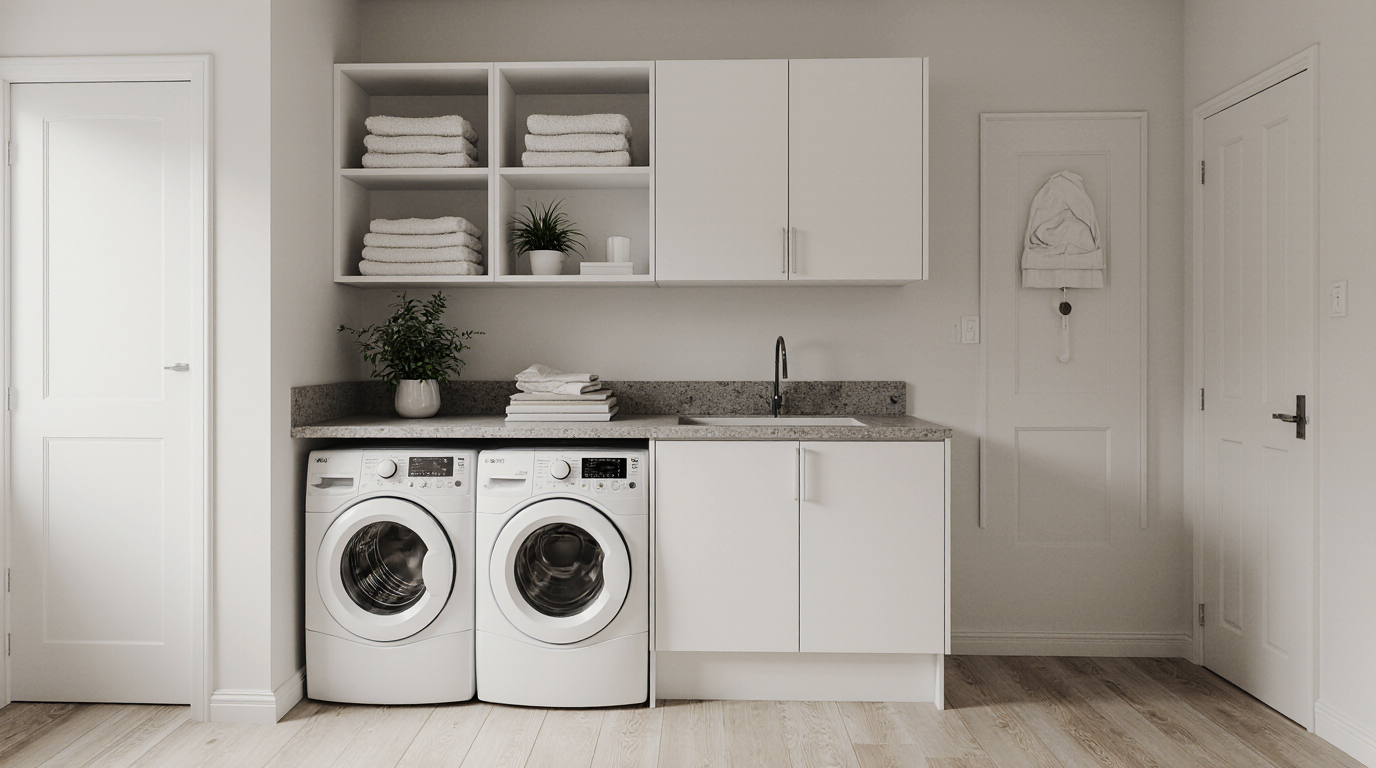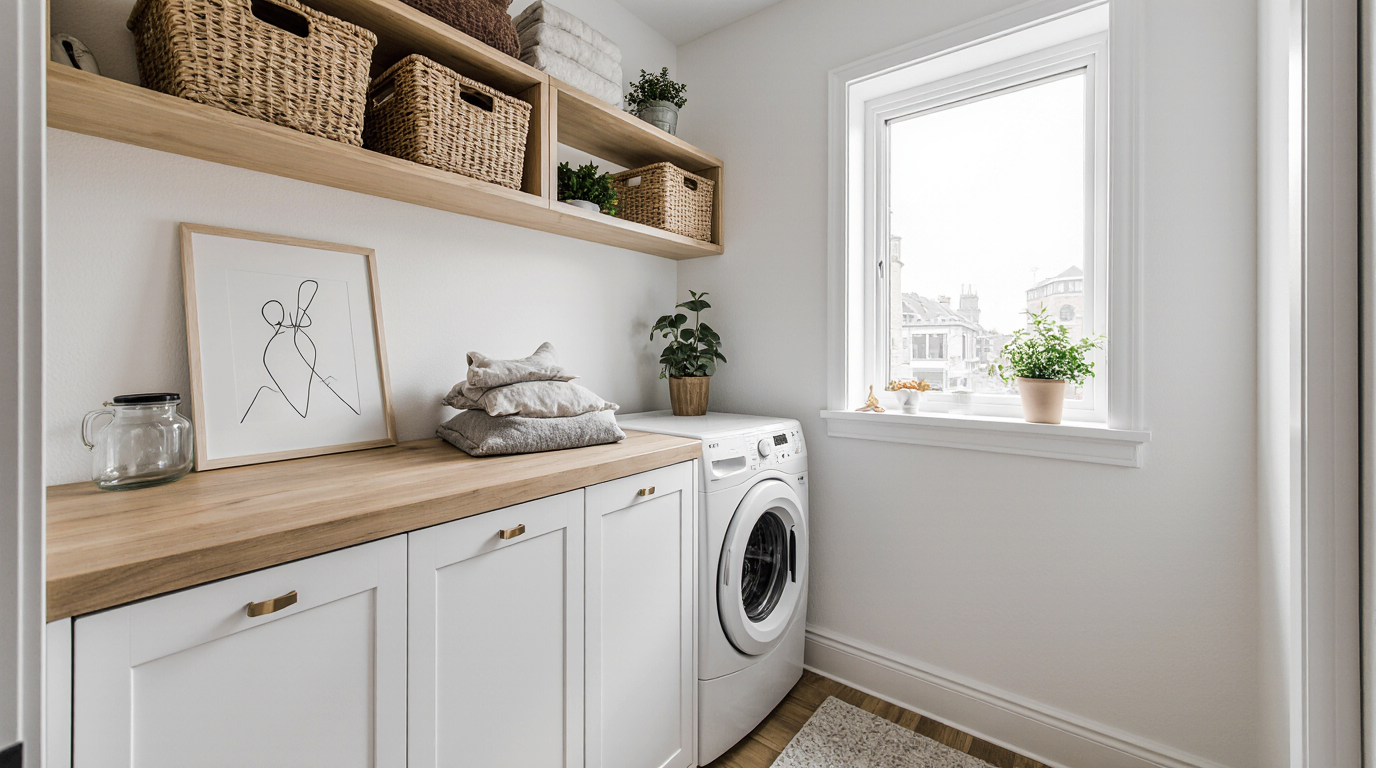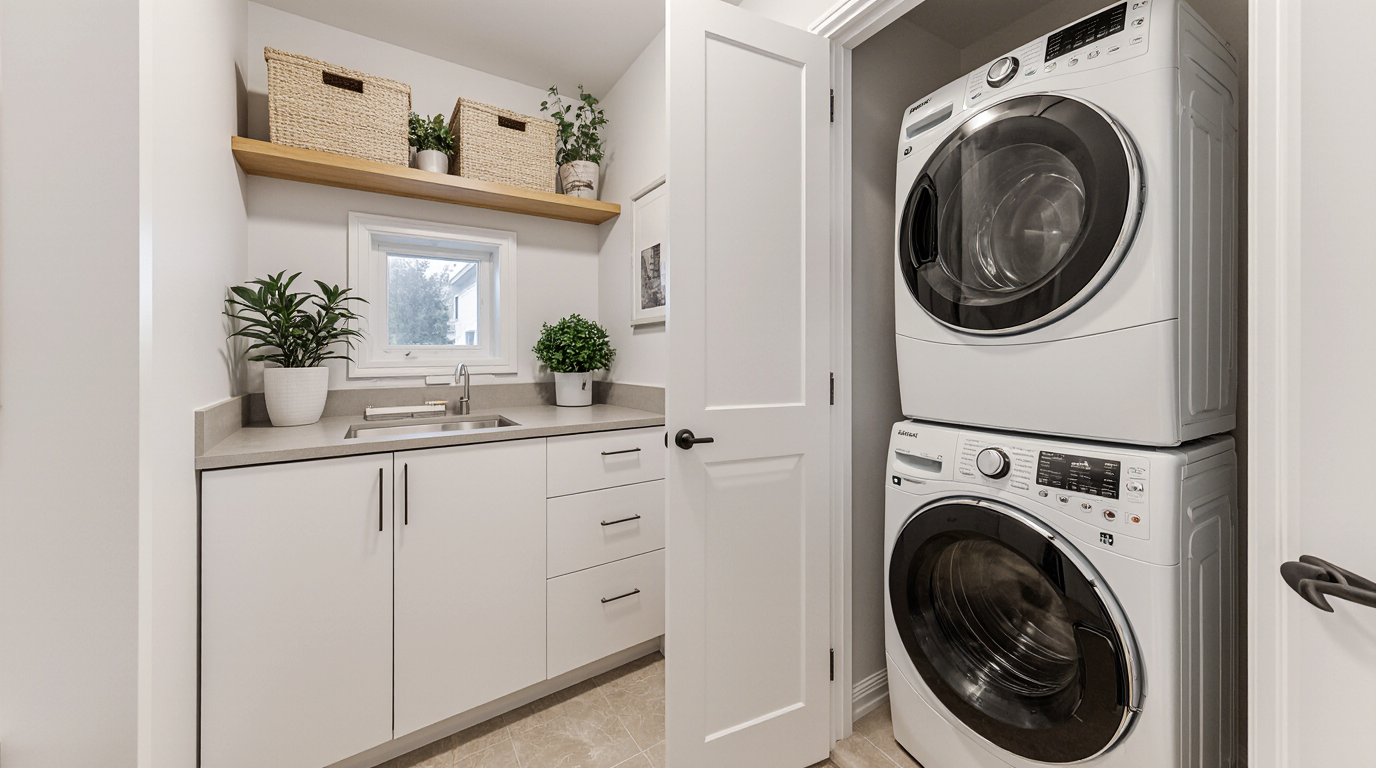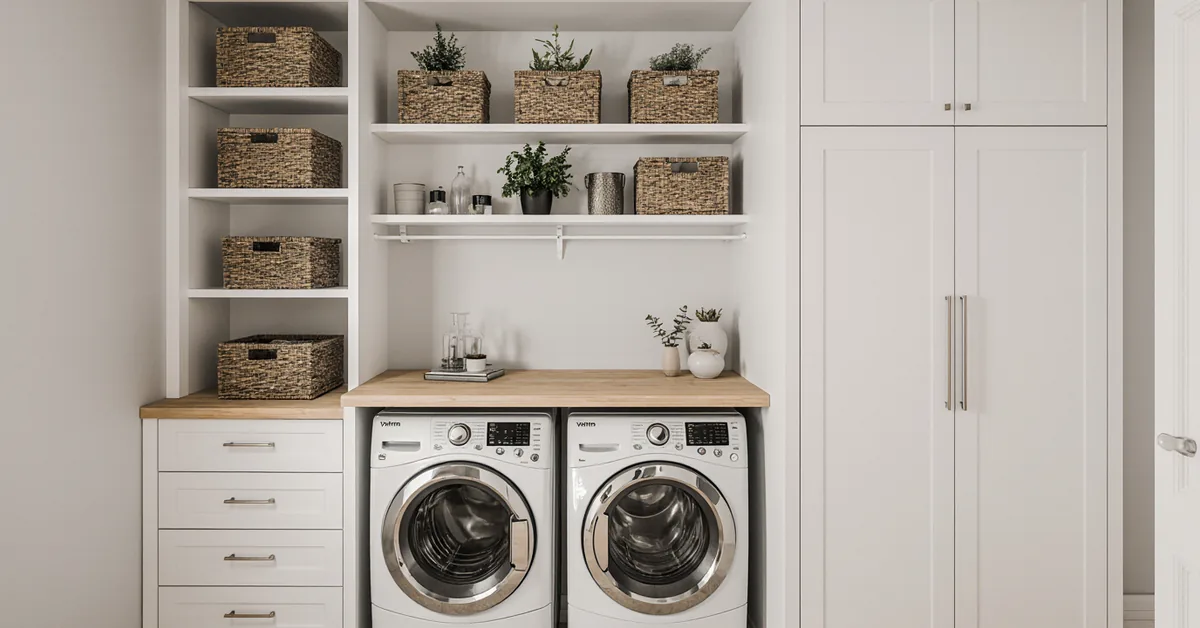
Compact Laundry Room Cabinetry: A Millwork Protocol for Maximizing Space in Sarasota County
The Spatial Diagnosis: Beyond Simple Measurements
When I first assess a compact laundry area, whether in a new Lakewood Ranch build or a renovated Lido Key condominium, my process goes far beyond a tape measure. I begin with a thermal and airflow analysis. Where is the dryer vent located? How much radiant heat does it produce? Is there adequate passive ventilation? Answering these questions informs the fundamental structure of the cabinetry. I’ve seen designs fail because the cabinet box itself traps heat, accelerating material fatigue and even posing a risk to the appliance's longevity. This is why I develop a “functional clearance envelope” around the machines, ensuring serviceability and airflow are engineered into the design from day one, not treated as an afterthought.
The Material and Hardware Specification Protocol
While the description touched on my core material choice, the specifics are critical. For cabinet boxes, the marine-grade plywood is ideal for its structural stability and moisture impermeability. However, for the doors in a Coastal Contemporary design that demand a perfect, paint-grade finish, I often specify Medex MDF. Unlike standard MDF, Medex is an engineered wood panel with no added formaldehyde that is specifically designed for high-moisture areas. For hardware, the selection process is even more granular. I use fully adjustable soft-close concealed hinges from Blum, not just for their smooth operation, but because their nickel-plating over steel provides a robust secondary defense in our humid environment. For integrated features like pull-out drying racks or sorting bins, I exclusively use full-extension undermount drawer slides with a high weight capacity, ensuring they never sag or bind, even when fully loaded with wet towels.
Fabrication and Integration Strategy
The transition from design to a physical product is where my workshop’s precision becomes paramount. My fabrication process follows a strict sequence to guarantee durability against Sarasota's climate:
- Engineered Joinery: All cabinet box components are cut on a CNC router to ensure perfect tolerances. I utilize locked dado and rabbet joints, which provide immense shear strength and rigidity, a significant upgrade from the simple butt joints held by screws that I often find in production cabinetry.
- Sealed Edges: Every cut edge of the plywood or Medex is sealed using a PUR (polyurethane reactive) adhesive during the edge-banding process. This creates a permanent, waterproof bond that is impervious to the steam and moisture that would cause a standard EVA hot-melt glue to peel and fail.
- Pre-Finishing Protocol: I finish every component with a multi-part catalyzed varnish *before* assembly. This ensures that every single surface, including those hidden within the final assembly, is fully sealed against moisture intrusion. It's a time-consuming step that many shops skip, but it's essential for long-term survival in Florida.
Precision Tolerances and Climate Resilience Standards
The final installation is about precision and future-proofing. My standard is to maintain a consistent 3mm gap tolerance around all door and drawer fronts. This creates a clean, architectural aesthetic and allows for infinitesimal seasonal wood movement without compromising function. More importantly, for cabinets that fully enclose a dryer, I engineer passive ventilation solutions. This might involve integrated vents in the toe-kick, subtle routing on the back of cabinet doors, or specifying louvered panels to allow heat to dissipate naturally. This design detail prevents the laundry closet from becoming a sauna, protecting both the cabinetry and the appliances it houses.
Considering the high heat and moisture your own laundry space generates, is its current cabinetry designed to actively manage that environment, or is it simply waiting to fail?