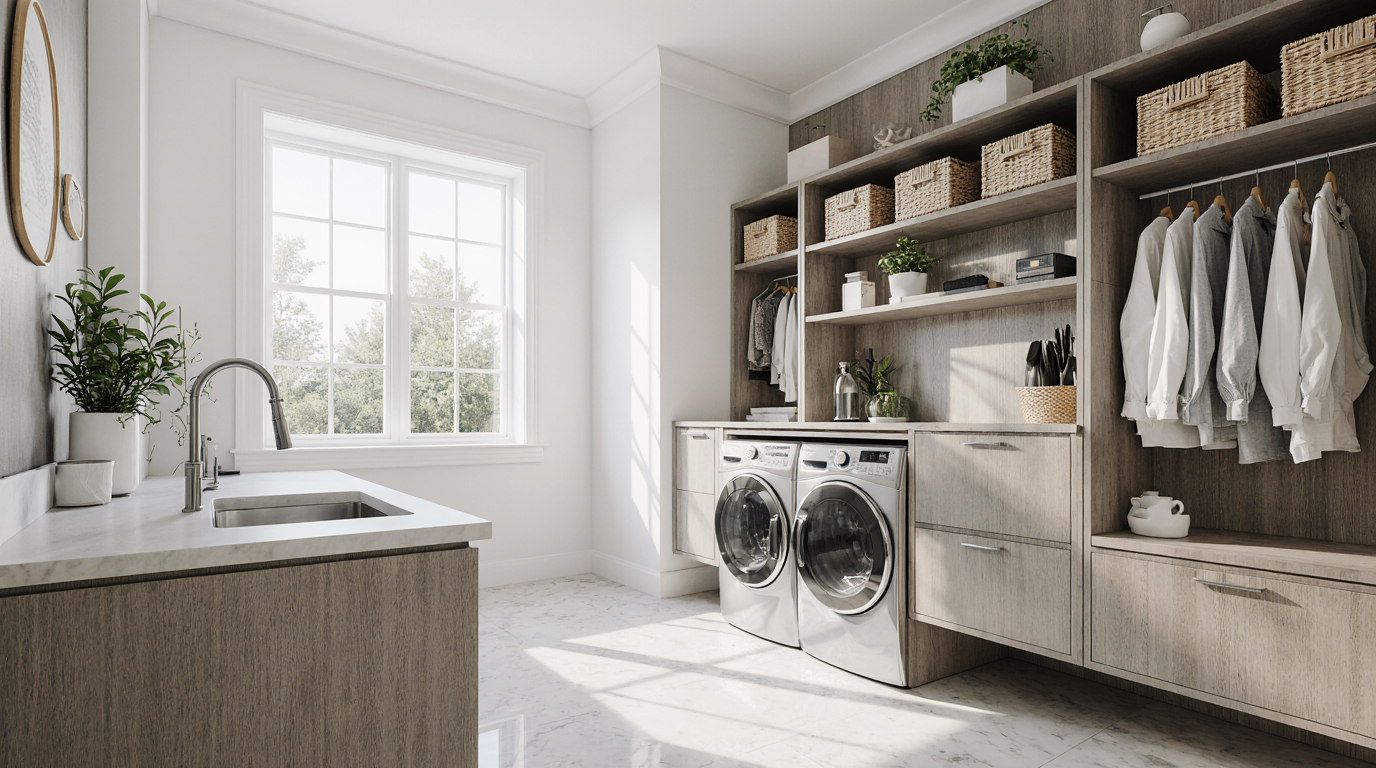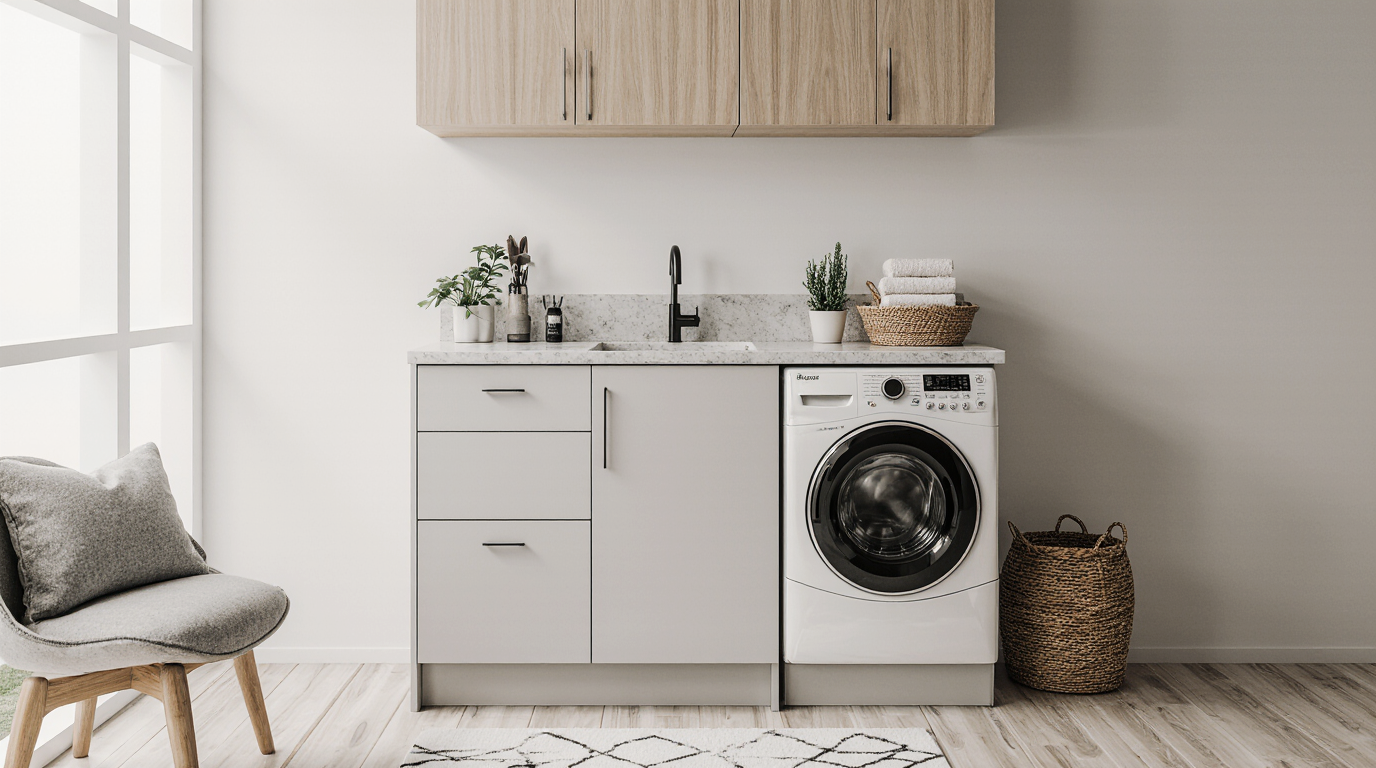
Diagnosing the Architectural and Environmental Constraints
Before any design is drafted, my process begins with a rigorous on-site analysis of the existing space. I'm not just looking at dimensions; I'm evaluating airflow, proximity to exterior walls, and the specific micro-climate within the home. In a luxury condo on Lido Key, for example, the ambient salinity and humidity are far more aggressive than in a newer build in an inland community like Lakewood Ranch. I check for existing signs of moisture, the efficiency of the dryer venting, and access points for plumbing, as these factors dictate the core engineering of the cabinetry.
A Deep Dive into Material and Hardware Specifications
The term 'moisture-resistant' is often misused. Standard MDF, even with a moisture-resistant rating, acts like a sponge over time in Florida's humidity. My primary material is a marine-grade plywood, which uses waterproof glue in its lamination process, preventing the layers from separating. But the material itself is only half the battle. Every panel is finished with a post-catalyzed conversion varnish, a two-part finish that creates a chemical- and water-impermeable barrier. Unlike simple paint or lacquer, this finish doesn't just sit on the surface; it chemically bonds with the wood fibers.
For hardware, the selection is even more critical. I’ve seen standard zinc-plated hinges show rust spots within a single summer. My specification is exclusively 316-grade stainless steel for all hinges, drawer slides, and fasteners. This specific alloy contains molybdenum, which provides superior resistance to chlorides found in salt air, preventing the rust bleed and operational failure that plagues lower-grade metals. It’s an industrial standard for marine applications, and I apply that same level of durability to residential interiors.
The Framework for Functional and Durable Design
Once the material science is settled, the functional design can take shape. An effective laundry closet is a machine for living, and every component must have a purpose. My designs focus on integrating high-functionality hardware that maximizes utility without sacrificing aesthetics. This often includes:
- Ventilated Cabinetry: I engineer discreet ventilation channels into the cabinet structure itself, allowing heat and moisture from the appliances to escape, which extends the life of both the machines and the millwork.
- Integrated Pull-Outs: Utilizing a cabinet’s full depth with heavy-duty, soft-close pull-out shelves for detergent, or specialized racks for air-drying clothes, can increase usable storage by over 30% in a compact footprint.
- Concealed Tasking: A pull-out folding surface or a drop-down ironing board can be integrated directly into the cabinet system, remaining completely invisible until needed.
Precision Fabrication and On-Site Sealing
The final stage is where precision ensures longevity. Cabinet boxes are constructed using dado joinery and specialized waterproof adhesives, creating a monolithic structure. During installation, I meticulously scribe each cabinet to the wall for a seamless, built-in look that leaves no gaps for moisture to collect. The final and most critical step happens after installation: I apply a final seal of clear, marine-grade silicone to the interior of every plumbing and electrical cutout, ensuring the encapsulated integrity of the cabinet box remains unbroken. This is a small detail that prevents the most common point of water-related failure I see in mass-produced cabinetry.
After seeing the granular details of this process, does your current laundry setup feel engineered for Sarasota, or is it merely installed there?