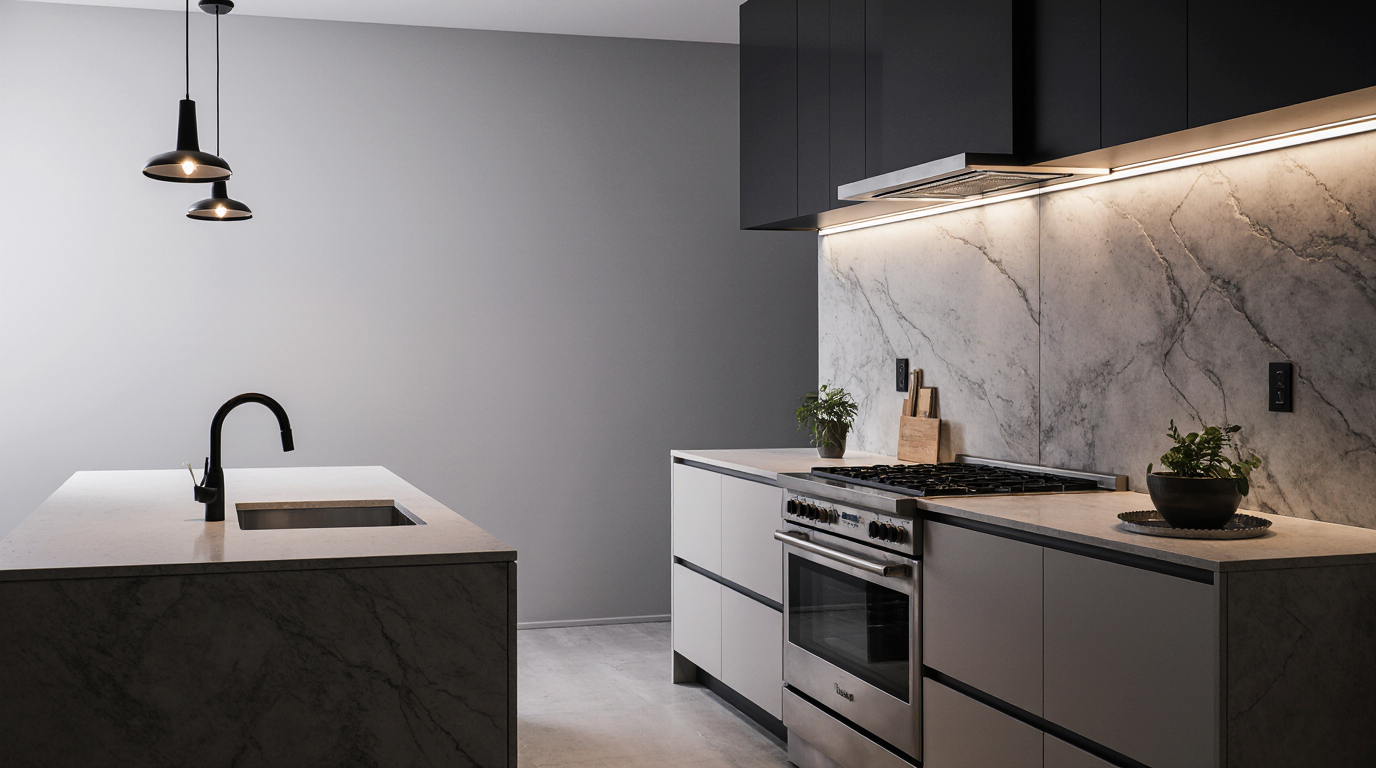
Why do so many Sarasota kitchen renovations that look perfect on paper end up costing 15-20% more than the signed contract? The issue is rarely the contractor or the materials. The real problem is a planning process that treats a Sarasota kitchen like one in Ohio, completely ignoring the three silent partners in every coastal Florida project: humidity, salt air, and stringent building codes that dictate everything from cabinet anchoring to ventilation.
Executive Summary: The Sarasota Kitchen Renovation Reality
From my direct experience managing projects from The Landings to Lakewood Ranch, a successful kitchen renovation in
From my direct experience managing projects from The Landings to Lakewood Ranch, a successful kitchen renovation in this market hinges on preemptively addressing our unique coastal conditions. It’s not about aesthetics alone; it's a technical exercise in material science and regulatory compliance. An oversight in specifying marine-grade plywood for sink bases or failing to account for the HOA’s six-week design review timeline are the kinds of details that derail budgets and schedules before the first hammer swings.
- Material Specification: The default choice must be materials resistant to moisture and salt air, not an upgrade.
- Structural Integrity: Florida Building Code requirements for wind load impact how cabinets, especially heavy islands, are secured.
- Timeline Buffering: Permitting with Sarasota County and mandatory HOA architectural reviews add non-negotiable weeks to any schedule.
- Ventilation Strategy: A high-CFM range hood isn't a luxury; it's a critical tool for moisture control that protects the entire material investment.
The Planning Failures That Inflate Your Budget After Sign-Off
The most common financial pain points I see in Sarasota kitchen projects stem from underestimating our environment. Clients focus on the visual elements—countertops, backsplash, appliance models—while the costliest mistakes are hidden in the specifications for what’s behind the walls and under the surface. A budget that looks affordable initially can quickly escalate when reality hits.
The Most Expensive Oversight: Ignoring Humidity's Impact on Materials
The single costliest mistake is specifying standard MDF (medium-density fiberboard) for cabinet boxes or island components to save a few thousand dollars upfront. I managed a project on Siesta Key where a client insisted on standard-grade cabinetry against my advice. Within three years, the doors near the dishwasher were swelling and the sink base had visible warping from ambient humidity, requiring a premature and costly replacement. The savings were erased four times over by the repair and replacement costs, not to mention the disruption.
The Renovation Process in Practice for a Sarasota Home
A Sarasota kitchen renovation follows a distinct path dictated by local regulations. The process begins not with demolition, but with a deep dive into material science and a formal submission to any governing bodies, like a condo association or HOA. Expect a multi-stage process where design, regulatory approval, and procurement happen long before any on-site work begins.
Selection Criteria for a Sarasota Renovation Partner
Choosing the right team here is less about a beautiful portfolio and more about their technical fluency with our coastal challenges. A contractor’s familiarity with the local permit runners at the Sarasota County administration building on Ringling Boulevard can be as valuable as their carpentry skills.
- Demonstrated experience with projects on the barrier islands (Lido Key, Siesta Key) and knowledge of marine-grade materials.
- A clear process for managing HOA/Condo Association design review board submissions, including providing required material samples and architectural drawings.
- Verifiable relationships with local suppliers who stock moisture-resistant substrates and exterior-grade finishes.
- Proof of proper licensing and, crucially, liability and worker's compensation insurance compliant with Florida standards.
Comparing Renovation Approaches for Your Sarasota Kitchen
A full-gut renovation is not the only path. Homeowners often consider refacing or a more limited cosmetic upgrade. However, in our climate, superficial fixes can hide deeper moisture-related issues. The decision depends heavily on the age of the home and the condition of the underlying cabinet structures.
| Indicator | Full Renovation | Cabinet Refacing | Cosmetic Update (Paint & Hardware) |
|---|---|---|---|
| Longevity in High Humidity | High (with proper materials) | Low to Medium (veneer can peel) | Low (paint chips, moisture can get trapped) |
| Initial Cost | High | Medium | Low |
| HOA Approval Complexity | High (requires full plan review) | Medium (may require review) | Low (usually not required) |
| Opportunity to Address Mold/Moisture | Excellent | None (covers up existing issues) | None |
When a Full Renovation Is the Wrong Choice
If your primary residence is elsewhere and you use your Sarasota property for only a few weeks a year, a full, high-cost renovation may not provide a return on investment or enjoyment. For a property intended for short-term rental or infrequent use, a more budget-friendly approach like a professional-grade cabinet refinishing combined with new counters and a backsplash often makes more financial sense. The key is ensuring the existing cabinet boxes are sound.
A Safe Hiring Checklist for Your Sarasota Project
Vetting a contractor in Florida requires more than checking references. You are hiring a partner to navigate a complex regulatory and environmental landscape. An error in their paperwork or process becomes your liability.
- Verify their state license (CGC, CRC, or CBC) is active and in good standing on the Florida Department of Business and Professional Regulation (DBPR) website.
- Request a Certificate of Insurance showing both General Liability and Worker's Compensation coverage and call the insurance agent to confirm the policy is active.
- Ask for a project example that required a permit from Sarasota County and was subject to an HOA review, and speak to that client.
- Ensure the contract specifies the exact grade of materials, such as “marine-grade plywood for sink base” or “solid wood dovetail drawer boxes,” not just “custom cabinets.”
- Confirm they understand the Florida Building Code’s requirements for anchoring tall cabinets and kitchen islands, especially in homes built to newer wind-load standards.
- Clarify who is responsible for pulling the permit; it should always be the licensed contractor, never the homeowner.
- Discuss their material acclimation process—bringing wood and cabinet components to the site to adjust to the home's specific humidity level before installation.
Decisions That Determine the Final Outcome
The success of a kitchen remodel here is sealed in the first few decisions, long before colors are chosen. It's about prioritizing the unseen elements—the cabinet box material, the ventilation system, and the right finish—over purely cosmetic choices. I've seen beautiful, expensive kitchens start to fail functionally in under five years because these foundational choices were wrong for our climate.
The Exact Moment Most Homeowners Get It Wrong
The critical mistake happens during the material selection phase. Most people fall in love with a door style or a finish and then ask, “How can we make this fit the budget?” This forces compromises on the cabinet construction itself. The correct approach is to first establish a non-negotiable budget for moisture-resistant cabinet boxes (like marine-grade or exterior-grade plywood) and a robust ventilation system. Only after that foundational investment is secured should you select the door styles and finishes that fit the remaining budget.
Practical Answers About Operations in Sarasota
Navigating the local system is key to a smooth project. Timelines and requirements here are not suggestions; they are rigid constraints that can add significant delays if not managed proactively.
Navigating the Sarasota County Permitting Process
Any kitchen renovation involving moving plumbing, electrical, or walls requires a permit from the Sarasota County Planning and Development Services. A simple kitchen remodel permit can take 3 to 6 weeks for review and approval after submission. This is a hard timeline that cannot be expedited, so it must be factored into the project schedule from day one.
Meeting HOA Requirements in Communities like Lakewood Ranch
Master-planned communities and high-end condo buildings have Architectural Review Boards (ARBs) or Design Review Committees (DRCs). Submissions often require detailed drawings, material samples, and contractor credentials. The review process can take anywhere from 30 to 60 days, and work cannot begin without their written approval. Starting work prematurely can result in stop-work orders and hefty fines.
Florida Building Code and Coastal Kitchens
While not in the High-Velocity Hurricane Zone (HVHZ), Sarasota is in a wind-borne debris region, and the Florida Building Code has specific structural requirements. For kitchens, this can influence how a heavy granite-topped island must be secured to the floor or how upper cabinets are anchored to the wall structure to resist shifting or failure during a high-wind event. A knowledgeable contractor will build this into their installation method automatically.