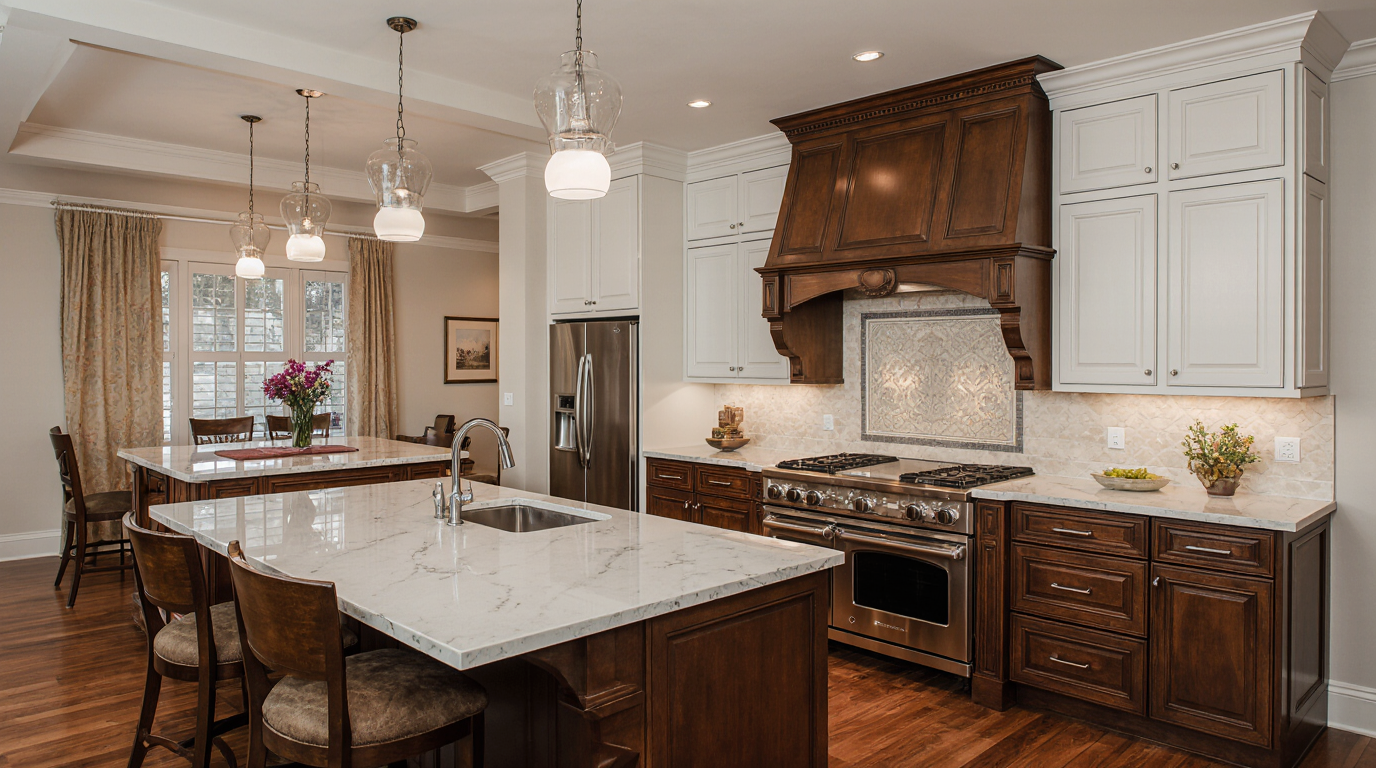
Executive Summary: Your Sarasota Kitchen Upgrade Roadmap
From my direct experience managing kitchen projects from Palmer Ranch to Lido Key, a successful upgrade in this market
From my direct experience managing kitchen projects from Palmer Ranch to Lido Key, a successful upgrade in this market hinges on mitigating environmental factors, not just on design. The relentless humidity and salt air are not abstract concepts; they are active agents of decay that will compromise standard-grade materials within a few years. A smart renovation plan for Sarasota prioritizes durability and moisture resistance from the substrate up, ensuring the long-term value of a significant financial investment.
- Material Selection is Climate-Driven: Prioritize marine-grade plywood or high-density furniture board for cabinet boxes. Standard MDF is a non-starter in this climate.
- HOA Pre-approval is Paramount: In communities like Lakewood Ranch or The Landings, the Design Review Board's approval process can add 45 to 60 days to your timeline before any permits are even filed.
- Ventilation is Not an Option: A high-CFM, properly ducted range hood is critical to expel moisture and grease, protecting your investment from the inside out.
- Code Compliance is Non-Negotiable: All electrical and plumbing work requires licensed professionals and will be inspected by the Sarasota County Building Department. Unpermitted work is a major liability.
The Planning Failures That Inflate Remodel Costs
The most significant cost overruns I see in Sarasota kitchen projects stem from decisions made, or not made, long before demolition begins. Homeowners often focus intently on the visible finishes, underestimating the foundational elements that are far more expensive to correct later. This is especially true for those undertaking a high-end kitchen remodel where custom elements and integrated appliances leave little room for error.
The Most Expensive Mistake: Ignoring Your HVAC System
The costliest error is assuming your existing air conditioning can handle the new reality of your kitchen. I worked on a project in a waterfront home on Bird Key where the client invested heavily in a beautiful, open-concept kitchen. We specified premium materials, but within 18 months, the custom pantry doors wouldn't close properly. The issue wasn't the cabinetry; it was that the old, undersized HVAC unit couldn't adequately dehumidify the now larger, open space. The cost to retrofit a properly sized HVAC system and repair the warped millwork far exceeded the initial savings of not addressing it upfront.
How a Kitchen Remodel Unfolds in Sarasota
A structured kitchen upgrade is a multi-stage process involving design, procurement, permitting, and execution, all choreographed to minimize disruption. The process begins with a detailed assessment of the existing space, structural limitations, and the homeowner's goals. In Sarasota, this initial phase must include a frank discussion about budget realities, especially when considering a complete kitchen remodel cost versus a more limited renewal.
Key Selection Criteria for a Local Contractor
Choosing the right team here is different than in an inland city. Your vetting process must account for the specific challenges of our coastal environment. When you evaluate potential partners, your checklist should be uniquely tailored to Sarasota.
- Verifiable Experience on Barrier Islands: Ask for project addresses on Siesta Key, Longboat Key, or Lido Key. A contractor who has navigated the logistics and material challenges of these areas is better prepared.
- Established Relationships with Local HOAs: A firm familiar with the architectural review boards in communities like Prestancia or The Oaks will streamline the approval process, which is often a major bottleneck.
- Proof of Proper Licensing and Insurance: Demand a copy of their Florida Certified General Contractor license (or specialty license) and proof of liability and worker's compensation insurance. Verify it on the Florida DBPR website.
- Hurricane Mitigation Expertise: They should be able to explain how they anchor cabinetry to meet Florida Building Code standards and how their window/door installations comply with wind-load requirements.
Comparing Remodel Approaches for Your Sarasota Home
Deciding on the scope of your kitchen upgrade involves trade-offs between cost, disruption, and final value. A simple renewal is very different from a full-scale remodel, and understanding the implications is crucial for setting a realistic budget, whether it's a low-budget kitchen remodel or a high-end custom project.
| Factor | Kitchen Renewal (Refacing/Painting) | Standard Remodel (Stock Cabinets) | Custom High-End Remodel |
|---|---|---|---|
| Humidity/Salt Resistance | Low. Addresses surfaces only. Core materials remain vulnerable to warping and corrosion. | Moderate. Depends on stock material quality. Often requires upgrades to hardware and box construction. | High. Specified with marine-grade materials, stainless steel hardware, and moisture-resistant finishes. |
| Typical Timeline | 1-3 weeks | 6-10 weeks | 4-9 months (including design/permitting) |
| HOA Approval Difficulty | Low. Often no approval needed if layout and exterior views are unchanged. | Moderate. Requires submission if plumbing or electrical is moved. | High. Requires extensive review by architectural boards, especially in planned communities. |
| Return on Investment | Good for immediate sale. Poor for long-term durability in this climate. | Good. A solid mid-range choice if materials are carefully selected for the climate. | Excellent. Provides the best long-term performance and value, especially in luxury properties. |
When a Full Remodel is Not the Right Choice
A complete, down-to-the-studs remodel is not always the best path. If you have a small kitchen in a condominium with concrete block walls, moving plumbing or electrical is extremely expensive and invasive. In such cases, a high-quality kitchen renewal focusing on premium refacing, new countertops, a functional backsplash, and upgraded appliances can deliver 80% of the aesthetic impact for less than half the cost and disruption.
Safe Hiring and Project Vetting Checklist
Protecting your investment starts with diligent vetting. A slick portfolio means nothing if the contractor isn't properly licensed, insured, and familiar with local codes. I have seen projects stalled for months due to permit issues that should have been addressed before a single hammer was swung.
- Confirm their license is active and in good standing with the Florida Department of Business and Professional Regulation (DBPR).
- Request a Certificate of Insurance directly from their insurance agent, not a copy from the contractor.
- Check Sarasota County's online permit portal for their project history. Do they consistently pass inspections?
- Insist on a detailed, itemized contract that specifies all materials, including brand, model numbers, and finishes. Vague terms like “high-quality cabinets” are red flags.
- Verify their plan for dealing with debris removal and site protection, especially in a condo building with shared access.
- Discuss the payment schedule. A demand for more than 10-15% upfront before any materials are delivered is a major warning sign.
- Ask how they handle material selections for coastal environments. If they don't immediately talk about marine-grade plywood or stainless steel hardware, they may lack critical local experience.
The Decisions That Define a Successful Outcome
The success of a kitchen upgrade is determined by a few key decisions made early in the process. While color and style are important, choices regarding layout, material composition, and mechanical systems have a far greater impact on daily function and long-term durability. These are the areas where my most satisfied clients have been deeply involved.
The Exact Moment Most Homeowners Get It Wrong
The critical error happens when homeowners finalize their appliance selections after the cabinet design is complete. They fall in love with a layout and then try to shoehorn in the appliances. You must select every single appliance—and have the manufacturer's spec sheets in hand—before your cabinet maker draws a single line. A pro-style 48-inch range has different ventilation, electrical, and gas requirements than a standard 30-inch model. Changing this decision mid-stream triggers a cascade of costly changes to cabinetry, countertops, and mechanical rough-ins.
Practical Answers for Your Sarasota Project
Navigating the operational side of a remodel here involves specific local entities and regulations. Understanding these processes is key to setting a realistic timeline and budget, whether you are renovating a small kitchen or embarking on a major overhaul.
Navigating the Sarasota County Permitting Process
Any kitchen remodel that involves moving or adding electrical outlets, altering plumbing supply or drain lines, or changing walls requires a permit from Sarasota County. The permit review for a straightforward kitchen can take 3 to 5 weeks after submission. This does not include any prior HOA review. The final electrical and plumbing inspections must be passed before you can close up the walls, which is a critical scheduling milestone.
HOA and Condo Association Design Review Boards
In almost every master-planned community or condo building in Sarasota, your project must first be approved by an architectural review committee. They scrutinize everything from the finish selections to the contractor you've hired. You will need to submit your full design package, material samples, and contractor's credentials. This process is separate from county permitting and, as mentioned, can easily add two months to your pre-construction timeline.
Florida Building Code and Coastal Construction
For homes located in designated wind-borne debris regions (common along the keys and coastline), the Florida Building Code has specific requirements. While this mostly impacts windows and doors, it also influences how cabinets are secured to the structure. Inspectors will want to see proper anchoring into studs or concrete block, not just drywall. This is a non-issue for experienced local contractors but a frequent point of failure for those unfamiliar with our codes.