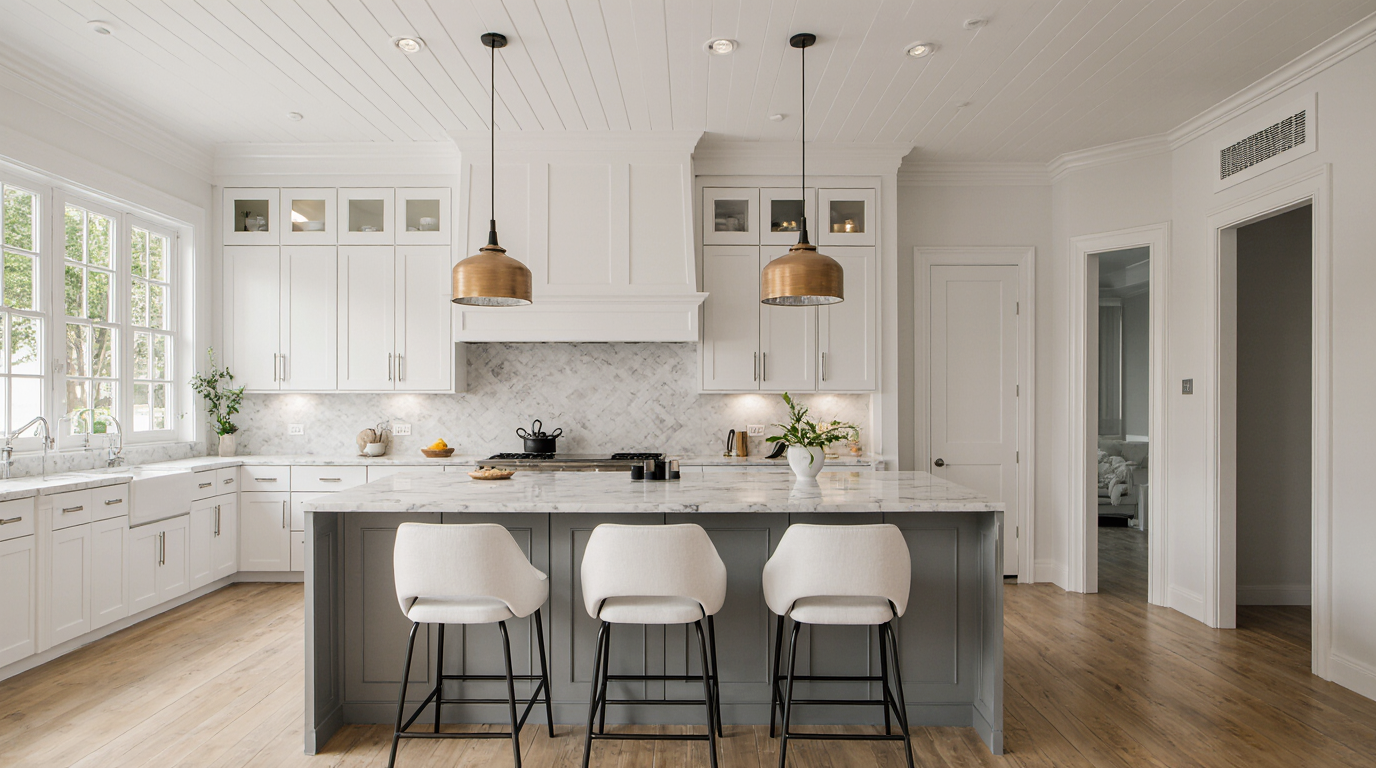
Why does a kitchen refresh in Sarasota, a project meant to be a budget-friendly alternative to a full remodel, often spiral into unexpected costs? It’s because the standard 'paint the cabinets, change the countertops' formula fails to account for the three silent budget killers here: humidity, HOA design review boards, and the specific material science required for coastal living. The real cost is determined not by the upgrades you choose, but by the local conditions you ignore.
Executive Summary: The Financial Reality of a Sarasota Kitchen Refresh
From my direct experience executing projects from Palmer Ranch to Lido Key, a kitchen refresh in Sarasota is a
From my direct experience executing projects from Palmer Ranch to Lido Key, a kitchen refresh in Sarasota is a specialized task where climate dictates more than aesthetics. The goal is to maximize visual impact and functionality without altering the core layout, but the humid, salty air forces non-negotiable material choices that don't exist in inland cities. A successful, durable refresh here requires a budget that accounts for moisture-resistant materials and skilled labor accustomed to coastal construction nuances.
- Core Cost Driver: The battle against humidity. Standard MDF cabinets and cheap hardware will fail. The primary cost is often in labor and materials engineered to resist moisture and salt air, like marine-grade plywood substrates and corrosion-resistant hardware.
- Regulatory Bottleneck: Homeowners' Association (HOA) and condo board approvals, especially in communities like Lakewood Ranch or on Longboat Key, can add weeks or even months to a timeline and dictate material and color palettes.
- Insurance and Code Nexus: Even minor work can trigger scrutiny. If you touch plumbing or electrical for a new sink or appliance, you must bring it up to the current Florida Building Code, which has specific requirements for coastal high-velocity hurricane zones (HVHZ).
- Labor Market Reality: The demand for skilled tradespeople who understand coastal conditions in Sarasota is high, particularly during the peak season (October-April). Labor rates reflect this scarcity and expertise.
The Planning Failures That Inflate Refresh Budgets
The most common financial pitfall in a Sarasota kitchen refresh is underestimating the pre-existing conditions of the home. Homeowners see a cosmetic project, but I often find underlying issues stemming from years of exposure to the coastal environment. Ignoring these issues during the planning phase means they become expensive emergencies mid-project.
The Most Expensive Failure: Ignoring the 'Substrate'
The costliest mistake is focusing solely on the cabinet doors and ignoring the boxes. I had a client with a beautiful waterfront condo on Siesta Key who wanted to reface their cabinets. The doors looked fine, but upon inspection, the particleboard cabinet boxes had swelled from humidity intrusion through a poorly sealed window. The budget for a simple refacing project instantly tripled because the foundational structure was compromised and had to be replaced, turning a 'refresh' into a partial remodel. This is a pattern I see constantly in homes built before modern moisture-management techniques were standard.
How a Kitchen Refresh Unfolds in Practice
A kitchen refresh project in Sarasota is a logistical exercise that balances client vision with environmental reality and local regulations. It's far more than a simple cosmetic upgrade. The process involves a deep diagnostic of the existing kitchen's health before any aesthetic decisions are finalized, ensuring the investment lasts.
Selection Criteria for Sarasota Homeowners
Choosing the right approach and team involves looking beyond portfolios. Your primary filter should be a contractor's documented experience with our specific coastal challenges.
- Humidity Mitigation Strategy: Ask potential contractors to explain their specific process for sealing and preparing cabinet surfaces to fight moisture. Do they use moisture-resistant primers? Do they recommend specific paint formulations like acrylic enamels?
- HOA Navigation Experience: A contractor who has worked extensively in your specific community (e.g., The Founders Club, University Park) will know the design review board's preferences and submission process, saving you months of delays. Their familiarity is worth a premium.
- Supplier Relationships for Coastal-Grade Materials: Do they have established accounts with suppliers for marine-grade plywood or stainless steel hardware? A 'yes' indicates they aren't learning on your project.
- Transparent Change Order Process: Given the potential for discovering moisture damage, their contract must clearly outline how unforeseen issues are priced and approved. A vague clause is a major red flag.
Comparing a Refresh with Other Kitchen Upgrades
A refresh is an excellent value proposition, but it's not a universal solution. Understanding its place among other options like a full remodel or a simple DIY paint job is key to aligning your budget with your goals and your property's value in the competitive Sarasota market.
| Upgrade Type | Typical Cost Range | Key Benefit for Sarasota | Primary Drawback |
|---|---|---|---|
| Kitchen Refresh | $8,000 - $25,000 | High ROI, minimal disruption, perfect for seasonal residents. | Doesn't fix poor layout; dependent on existing cabinet integrity. |
| Full Gut Remodel | $60,000 - $150,000+ | Corrects all functional flaws; maximizes property value. | Long timeline (4-9 months), requires extensive permitting. |
| DIY Painting / Hardware | $500 - $2,000 | Lowest initial cost for an immediate visual change. | High failure rate due to improper prep for humidity; peels quickly. |
When a Refresh Is the Wrong Choice
A refresh is not the right investment if your kitchen's core layout is fundamentally dysfunctional. If you have poor workflow, inadequate storage, or appliances crammed into illogical spaces, spending $15,000 on new surfaces is a waste. You are simply making a bad kitchen look prettier. In these cases, the smarter financial move is to wait and save for a full remodel that addresses the foundational problems, which will add far more long-term value to your Sarasota home.
A Safe Hiring Checklist for Your Project
Vetting a contractor in Florida requires more than checking reviews. It involves verifying their credentials against state and local requirements designed to protect homeowners, especially in our hurricane-prone region. A legitimate professional will have all this information ready for you.
- Verify their license is active and in good standing on the Florida Department of Business and Professional Regulation (DBPR) portal.
- Confirm they carry both General Liability and Workers' Compensation insurance. Ask for the certificates and call the insurance agent to verify the policies are current.
- Request at least three references from projects completed in Sarasota County within the last 18 months, preferably in a home similar to yours (e.g., waterfront, historic, planned community).
- Review their standard contract for clauses on material specifications. It should explicitly state the grade of materials, such as “3/4-inch marine-grade plywood for sink base” or “316 stainless steel hardware.”
- Ensure the payment schedule is milestone-based. A large upfront deposit (beyond 10% or for special order materials) is a warning sign.
- Clarify who is responsible for pulling any necessary permits. Even a refresh might require a minor permit if plumbing or electrical is moved, and the Sarasota County permitting office is exacting.
Decisions That Determine the Outcome of Your Refresh
The success of a kitchen refresh hinges on a few critical decisions made before a single hammer swings. As a professional who has seen these projects succeed and fail, the dividing line is almost always in the material selection phase, where long-term performance must win out over short-term aesthetic trends.
The Exact Moment the Majority Gets It Wrong
The critical mistake most homeowners make is choosing their countertops and backsplash first. They fall in love with a slab of quartz or a unique tile and then try to force the cabinet finish to match. The correct, and safer, approach is to finalize your cabinet finish first. The cabinet finish is the most labor-intensive part of the project and the most susceptible to failure from humidity. Once you have a durable, well-executed cabinet base, selecting a countertop to complement it is a much simpler and lower-risk decision.
Practical Answers About Operations in Sarasota
Navigating a kitchen project here involves interacting with specific local rules and entities. Understanding these operational details in advance prevents delays and budget overruns that are common in Sarasota County, especially when dealing with condo associations or historic properties.
HOA and Condo Association Design Review
Most master-planned communities and nearly all condos in Sarasota have an Architectural or Design Review Board. You cannot simply start work. You must submit a package with paint color chips, material samples, and your contractor's license/insurance. Approval can take anywhere from two weeks to 60 days. Starting work without written approval can result in fines and a stop-work order.
Permitting Nuances for a 'Minor' Refresh
While a simple cabinet painting job doesn't require a permit, the scope can quickly change. If you decide to replace a sink and faucet, a plumbing permit is technically required. If you add under-cabinet lighting, you need an electrical permit. A reputable contractor will know when these lines are crossed and handle the process with the Sarasota County Building Department to ensure your project is compliant.
Material Choices for Waterfront and Barrier Island Homes
If your home is on Lido Key, Siesta Key, or Longboat Key, your material selection is non-negotiable. The salt spray will corrode standard hardware in months. You must specify marine-grade (316) stainless steel for all exterior hardware like pulls and hinges. For cabinetry, especially under sinks, using marine-grade plywood instead of particleboard or even standard plywood is a wise investment against inevitable moisture exposure.