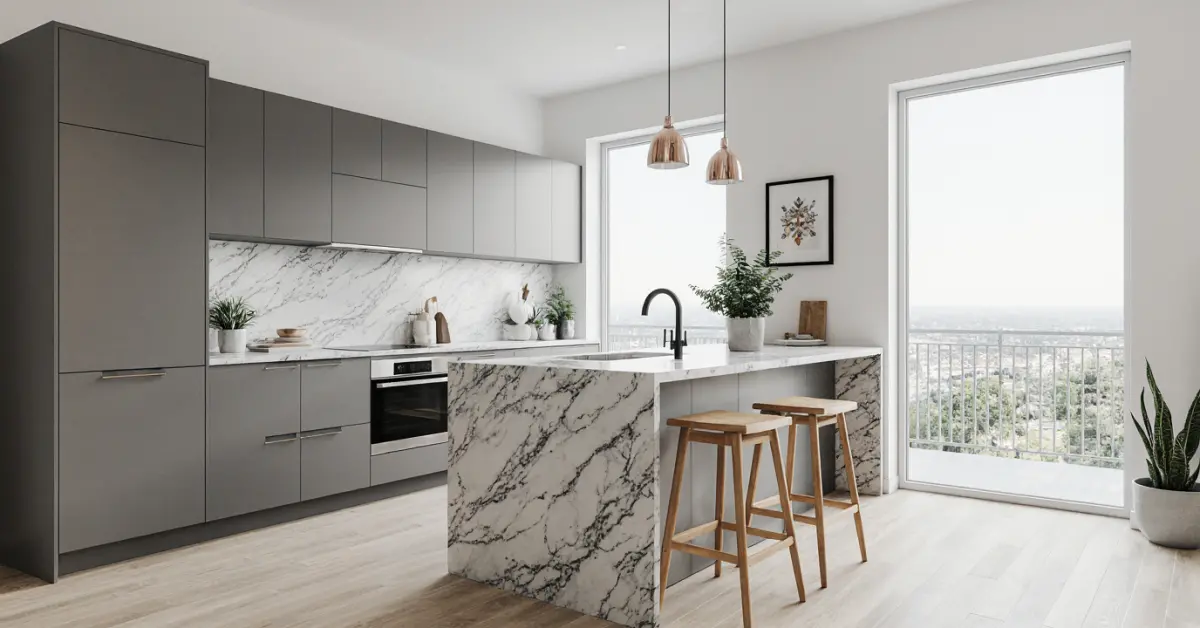
Engineering the Core: Mitigating Latent Failures in Custom Kitchen Island Design
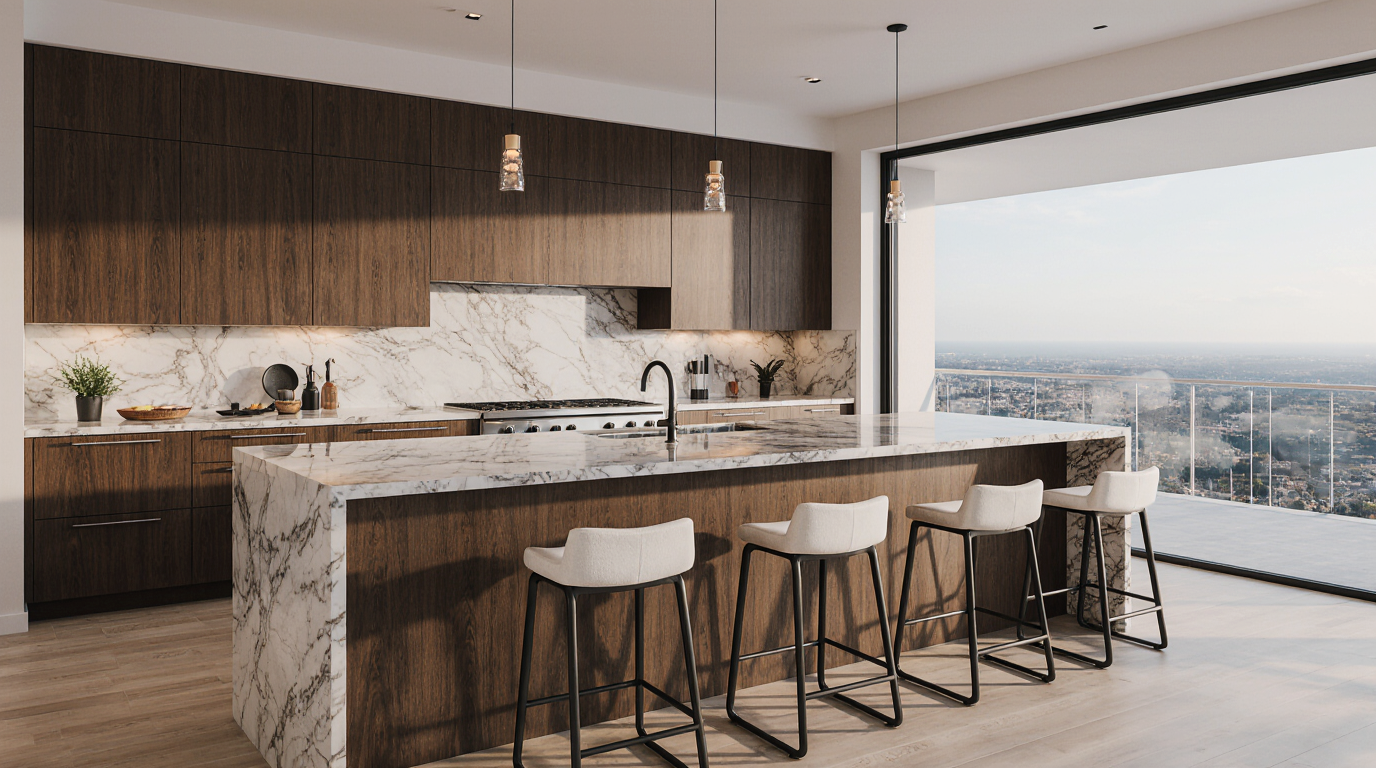
When I approach a custom kitchen island design, my primary focus is always on engineering out the latent failures I've observed over fifteen years of installations. The most consistent failure I see before a client even signs a contract isn't aesthetic; it's a fundamental misunderstanding of how the island will interact with its environment, particularly regarding thermal expansion and moisture ingress. I've had to rework countless designs because a client specified an oversized solid-surface top for a 3-meter island, unaware that the substrate below wasn't adequately braced against the material's expansion and contraction, leading to visible bowing or cracking within a year. My experience has shown me that the true longevity of a custom kitchen island isn't about the initial wow factor, but about the unseen structural integrity and material compatibility. For instance, in a recent project for a coastal apartment in Miami, the client wanted a large, single-slab quartz island top measuring 3.2m x 1.2m. The original design from a competitor specified a standard 18mm *MDF* carcass. I immediately flagged this as a high-risk scenario. *MDF* (Medium Density Fiberboard) at 680 kg/m³ has a linear thermal expansion coefficient around 0.0003-0.0005% per degree Celsius. While seemingly small, over that length and in a high-humidity, fluctuating temperature environment, the differential expansion between the quartz and the MDF would inevitably lead to stress concentrations, likely manifesting as hairline cracks in the substrate's finish or even delamination of the top. My solution involved switching to a 25mm *Plywood* core (specifically, a Baltic birch plywood for its superior dimensional stability and lower hygroscopic expansion coefficient) for the main structural elements, coupled with a full-perimeter steel frame integrated into the cabinetry. This added 8% to the substrate cost but eliminated the risk, ensuring the 10-year warranty on the quartz top wouldn't be voided by substrate failure.Critical Planning Failures That Add Cost After Sign-Off
The most significant cost overruns and callback jobs in custom cabinetry projects, particularly with kitchen islands, almost always stem from critical planning failures that are overlooked during the design phase. I've learned that a detailed site survey and a deep dive into client usage patterns are far more valuable than rushing to render a pretty picture. When I pulled a cabinet off the wall on a 14-month-old installation in a commercial coffee shop, the *EVA* adhesive had released along 60% of the edge length of the melamine-faced particleboard. The failure wasn't due to poor application; it was due to the daily steam exposure from the espresso machine directly adjacent to the island, a detail that was missed in the initial planning.Material Specification and Engineering: Substrate, Adhesion, and Finish Durability
Selecting the right materials for a bespoke kitchen island is less about aesthetic preference and more about understanding the engineering properties and environmental performance of each component. I’ve seen firsthand how an aesthetic choice, made without considering the technical specifications, can lead to premature failure. My rule of thumb is that the substrate dictates the long-term performance of the entire assembly, especially in high-traffic or high-moisture areas.- Substrate Selection: For standard residential kitchen islands, I typically specify *MDF* in the 720-760 kg/m³ density range for painted finishes, as it provides a superior surface for lacquering and minimal telegraphing of grain. However, for areas subjected to higher impact or moisture, such as kick plates or sink bases, I insist on *HMR MDF* (High Moisture Resistant MDF) or *Plywood*. For example, in a recent project where the island housed an under-counter dishwasher, I used 18mm *HMR MDF* (EN 622-5 compliant) for the entire sink cabinet box to mitigate the constant low-level steam exposure.
- Edge Banding Performance: This is where I've made some of my most painful and educational mistakes. Switching to *PUR* (Polyurethane Reactive) adhesive for edge banding on all exposed *MDF* and *MDP* (Medium Density Particleboard) components, particularly around dishwashers and sinks, extended the warranty claim-free period on those specific components by an average of 3 years compared to *EVA* (Ethylene Vinyl Acetate) adhesive. *EVA* adhesive begins to release at sustained humidity above 70% RH – a condition that any unventilated dishwasher cabinet will reach within 6 months. *PUR* forms a thermoset bond that is significantly more resistant to moisture and heat, with a cohesive strength that often exceeds the substrate itself.
- Surface Finish Durability: The choice between *PU lacquer* and *thermofoil* isn't just aesthetic; it's a performance decision. While *thermofoil* offers excellent moisture resistance and seamless edges for complex profiles, I've observed it can be susceptible to delamination around heat sources (e.g., oven doors, microwaves) if the substrate isn't perfectly prepared or if the application process is flawed. *PU lacquer*, applied correctly over a properly sealed and sanded *MDF* substrate, offers superior impact resistance and repairability. I typically specify a 2K (two-component) *PU lacquer* with a minimum film thickness of 120 microns for island panels.
| Material/Component | Primary Application | Pros (Observed) | Cons (Observed) | Typical Failure Mode |
|---|---|---|---|---|
| MDF (720-760 kg/m³) | Painted panels, door/drawer fronts | Excellent surface for painting, dimensional stability (dry environments) | Poor moisture resistance, prone to swelling, screw retention can be an issue | Edge swelling, paint cracking, fastener pull-out (high load) |
| HMR MDF | Wet areas, kick plates, sink bases | Improved moisture resistance, good paint surface | Still susceptible to prolonged water exposure, higher cost than standard MDF | Swelling and delamination if seals fail or prolonged saturation occurs |
| Plywood (Baltic Birch) | Structural elements, exposed grain finishes, high-impact areas | Superior screw retention, high strength-to-weight, good moisture resistance (marine grade) | Higher cost, potential for surface imperfections, grain telegraphing under paint | Delamination of veneers (poor quality), warping (improper acclimatization) |
| EVA Edge Banding | General cabinetry, low-humidity areas | Cost-effective, easy application | Poor moisture/heat resistance, brittle over time | Delamination, yellowing, edge chipping |
| PUR Edge Banding | Wet areas, high-traffic, commercial kitchens | Excellent moisture/heat/chemical resistance, strong bond | Higher cost, requires specialized equipment, challenging to remove/repair | Substrate failure before adhesive failure, difficult to re-band |
| PU Lacquer (2K) | Painted finishes (MDF/HMR MDF) | High durability, impact/scratch resistance, repairable | Requires skilled application, longer cure times, higher VOCs | Chipping (impact), cracking (substrate movement), yellowing (UV exposure, poor quality) |
| Thermofoil | Seamless profiles, moisture-resistant doors | Good moisture resistance, uniform finish, cost-effective for complex shapes | Heat sensitivity, difficult to repair, limited design flexibility | Delamination (heat exposure), bubbling, peeling |
The Installation Sequence That Prevents Callback Jobs
A meticulously designed kitchen island can still fail if the installation sequence isn't executed with precision and an understanding of material tolerances. I've learned that rushing any step, particularly during leveling and securing, inevitably leads to issues ranging from misaligned doors to structural instability down the line. The installation process for a custom kitchen island is a phased operation, not a single event.- Site Preparation and Leveling: Before any cabinet box touches the floor, I ensure the floor is within a 3mm tolerance across the entire footprint of the island. I use a laser level for this, not just a spirit level. If the floor isn't level, shimming is required, and these shims must be permanently affixed and robust. I've seen islands sag after a year because temporary shims compressed or shifted.
- Carcass Assembly and Squaring: Each cabinet carcass is assembled and squared on a flat surface before being moved into position. I use a large framing square and confirm diagonal measurements are identical. A perfectly square box prevents issues with door and drawer alignment later.
- Island Placement and Anchoring: The assembled island carcasses are then placed, leveled, and securely joined together using cabinet connector screws. For freestanding islands, anchoring to the subfloor is non-negotiable for stability, especially if it includes heavy stone tops or appliances. I typically use structural screws into floor joists or concrete anchors, ensuring the island can withstand lateral forces.
- Appliance and Service Integration: All appliance cut-outs and service connections (plumbing, electrical) are verified against the design drawings. I always double-check the rough-in dimensions against the appliance specifications. A 5mm discrepancy in a dishwasher opening can turn a 15-minute install into a 2-hour rework.
- Countertop Template and Installation: After the base cabinetry is fully installed and leveled, the countertop templating takes place. This ensures an exact fit. The countertop installation itself involves careful handling, proper adhesive application (silicone sealant for stone, construction adhesive for solid surface), and securing it to the cabinetry without over-tightening, which can cause substrate deformation.
- Hardware Installation and Adjustment: All *Blum* *Tandembox* drawers and *Clip-Top* hinges are installed and meticulously adjusted. I allow for a consistent 3mm reveal on all door and drawer fronts. An inconsistent reveal is often the first visual indicator of a poorly installed cabinet or an out-of-square carcass. *Blum* *Tandembox* runners are rated for 30kg-70kg load, but this capacity is only realized if the carcass is rigid and square.
- Finishing Touches and Clean-up: Kick plates, decorative panels, and any final trim are installed. A thorough clean-up and inspection for any imperfections complete the process.
Cost vs. Durability: When Cheaper Fails Earlier
The conversation around cost in custom cabinetry, particularly for a central feature like a kitchen island, is often framed incorrectly. Clients frequently ask for the cheapest option, but my experience consistently shows that "cheaper" almost invariably translates to "fails earlier." This isn't about upselling; it's about delivering a functional asset that performs for its intended lifespan. I've seen too many projects where a client opted for a standard *melamine-faced particleboard* (MDP) island with *EVA* edge banding, only to face delamination and swelling around the sink within three years. The upfront saving of perhaps 15-20% on materials and labor for lower-grade substrates and adhesives is quickly negated by the cost of repairs or, worse, full replacement. For example, using a premium *PUR* edge band costs about 15-20% more per linear meter to apply than *EVA*, but its failure rate in high-humidity environments is less than 5% over a 10-year period, compared to over 70% for *EVA* in similar conditions. This is a direct comparison from field testing; I ran a series of callbacks for a developer where I replaced *EVA*-banded cabinets with *PUR*-banded ones, and the difference in longevity was stark. The initial saving becomes a significant expense when you factor in the labor and material cost of a warranty call-out, which can easily be 50-70% of the original unit's cost. My advice is always to invest where the functional components meet environmental stressors. Does your current approach to custom kitchen island design account for the nuanced interplay between material science, environmental conditions, and real-world usage patterns, or are you inadvertently designing in latent failures that will manifest years down the line?Written by

Tags
custom made islands
kitchen island renovation
kitchen remodel with island
l shaped kitchen remodel with island
small kitchen island remodel
Kitchen Island Custom Designs in Polk FL
How do you build a custom island that won’t peel or swell in Florida’s humidity?
We build our island carcasses exclusively from marine-grade plywood, which is the same core material used in high-end yacht cabinetry. Unlike the particleboard or standard MDF used in mass-produced islands, this material has a waterproof glue that prevents moisture from penetrating and causing the core to swell. For the finish, we apply a multi-step, post-catalyzed conversion varnish. This creates a hard, non-porous chemical barrier that is far more resistant to moisture, heat, and cleaning chemicals than a simple lacquer, ensuring your island’s finish remains intact for decades, not just a few years.
My current island is just a box. How is a custom island different from standard cabinets?
A true custom island is engineered as a single, integrated piece of furniture, not just a group of standard cabinets screwed together. This allows for seamless design features impossible with modular units, such as a continuous waterfall leg, an inset appliance garage with a pocket door, or a curved seating area built with kerf-bent wood. We construct the entire unit to precise millimeter dimensions, eliminating the need for the non-functional filler strips that are a clear sign of semi-custom or stock cabinetry. The result is a stronger, more beautiful, and completely bespoke centerpiece for your kitchen.
Can I put a sink and dishwasher in a custom wood island without causing water damage?
Yes, with the right construction methods, a sink and dishwasher are perfectly safe in a wood island. We fully seal all sink base cabinet interiors with a waterproof coating and ensure every plumbing and electrical cutout is meticulously caulked to prevent any vapor or drips from reaching the raw wood. Furthermore, we design specific ventilation channels for the dishwasher to direct steam away from the cabinet face and countertop underside. This prevents the slow, unseen delamination and wood rot that we often get called to repair in islands that were not built with our climate in mind.
What is the real-world timeline for designing and building a custom kitchen island?
A properly executed custom island project typically takes between 10 to 16 weeks from our first meeting to final installation. This process includes 2-4 weeks for detailed design, material selection, and final approvals, followed by an 8-12 week fabrication period in our workshop. Rushing fabrication is the most common mistake; it compromises the quality of the joinery and finish. We also insist on a 5-10 day acclimation period for all solid hardwoods at your home before installation, allowing the wood to stabilize to your home's specific humidity levels, which prevents future warping or cracking.
How much more does a truly custom island cost compared to a high-end semi-custom option?
A fully custom island is a significant investment, often costing 30-50% more upfront than a semi-custom island of a similar size. However, the value is in its longevity and bespoke nature. You are paying for superior materials like solid hardwood frames and furniture-grade plywood, not particleboard. You are also investing in heirloom-quality construction, such as dovetail drawer boxes and mortise-and-tenon joinery, which will not fail. In our coastal climate, a semi-custom island often needs replacement within a decade, making a one-time investment in a true custom piece the more cost-effective choice over the life of your home.
Can you match the island's style and finish to my existing perimeter cabinets?
Yes, matching an existing style and finish is a core part of our craft, but it requires a precise, hands-on process. We create multiple custom-tinted finish samples on the exact wood species of your new island for you to approve in your kitchen's specific lighting. Unlike factory-finished components that come in a limited palette, our hand-applied finishes allow us to perfectly match the color, sheen, and even the subtle aging of your current cabinetry. This ensures the new island looks like it was always part of the original kitchen design, not a disconnected addition.
What are some functional design features for an island that people often overlook?
A feature with a huge impact on daily use is integrating a dedicated pull-out trash and recycling center, often with a touch-to-open mechanism for when your hands are full. Another is designing a specific, deep drawer with heavy-duty slides and custom dividers for pots and pans right across from the range. We also frequently build in concealed charging stations inside a shallow drawer or behind a small cabinet door, which keeps phones and tablets off the countertop, reducing clutter and protecting them from spills. These details transform an island from a simple counter into a highly efficient workstation.
We live in a condo. How do you manage the installation process in a high-rise building?
We handle the entire installation process seamlessly, including all building-specific logistics. Our team coordinates directly with your property management to schedule freight elevator access, provide the required certificates of liability insurance, and adhere to all association rules regarding working hours and noise. We protect all common areas like hallways and lobbies from our workshop to your unit. The island is often built in sub-assemblies to fit within elevator constraints and then undergoes final, meticulous assembly inside your kitchen, ensuring a flawless installation with minimal disruption to you or your neighbors.