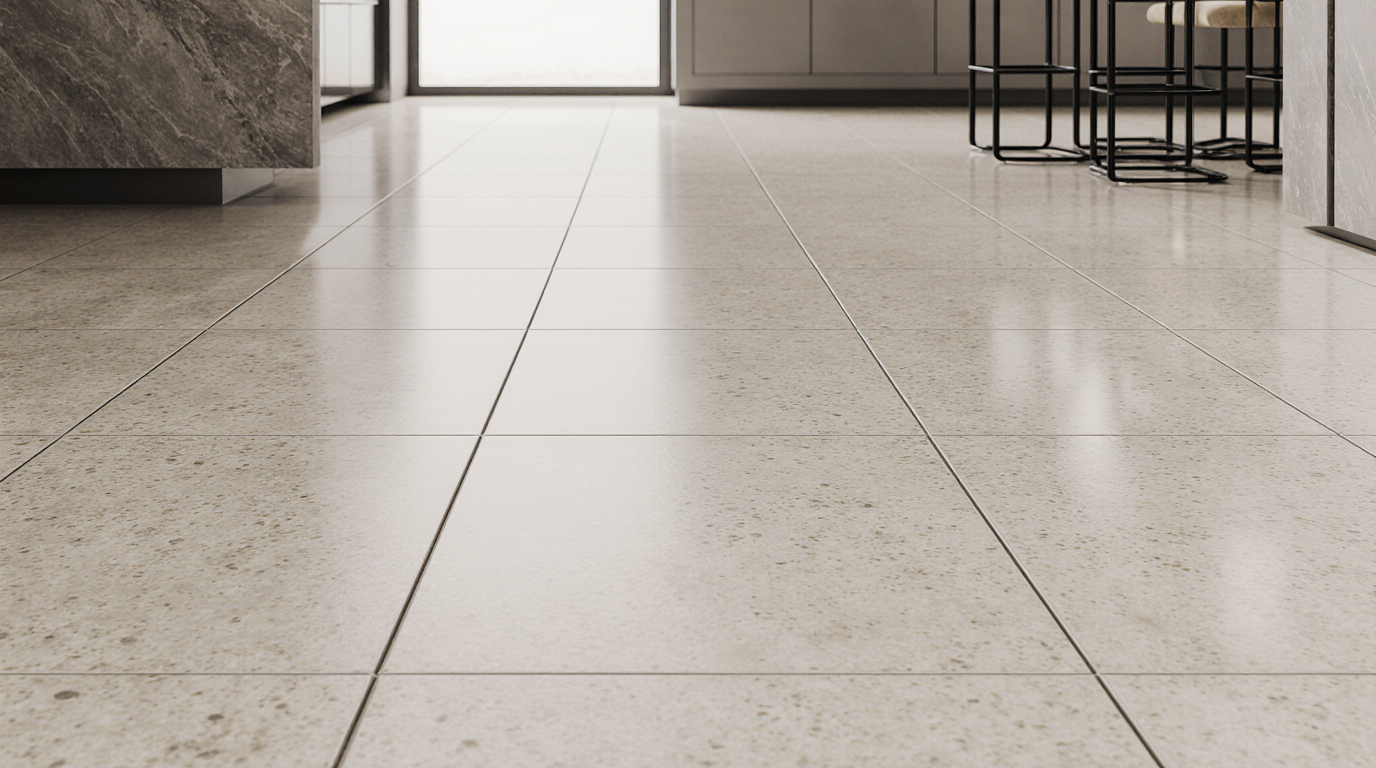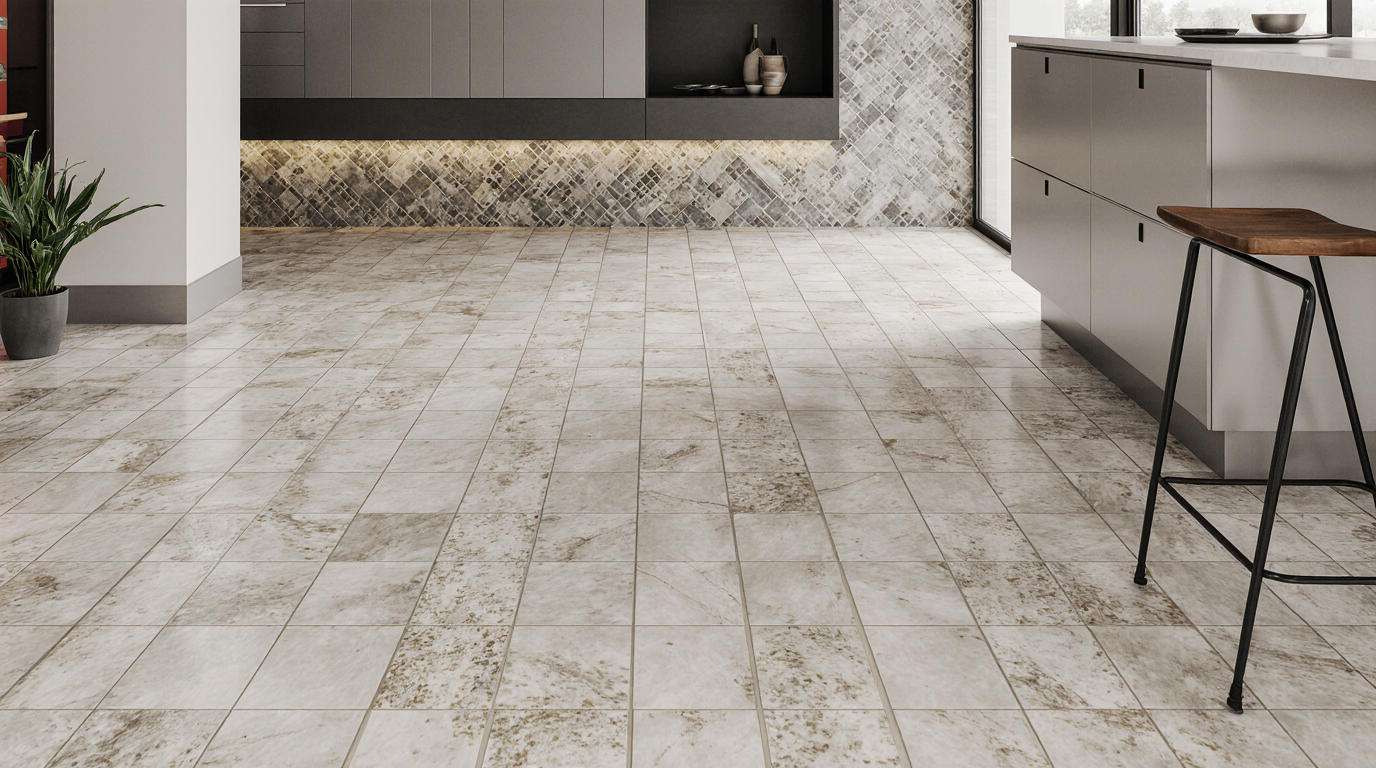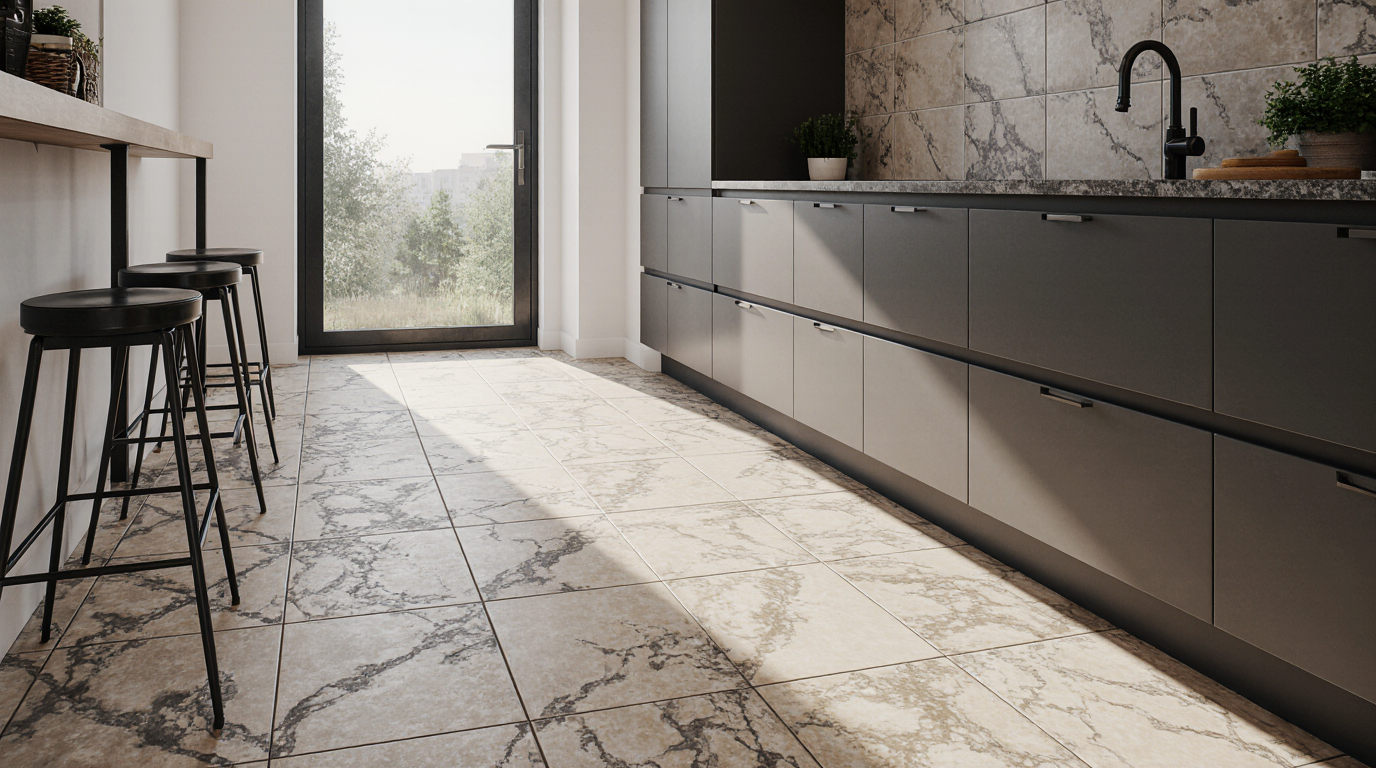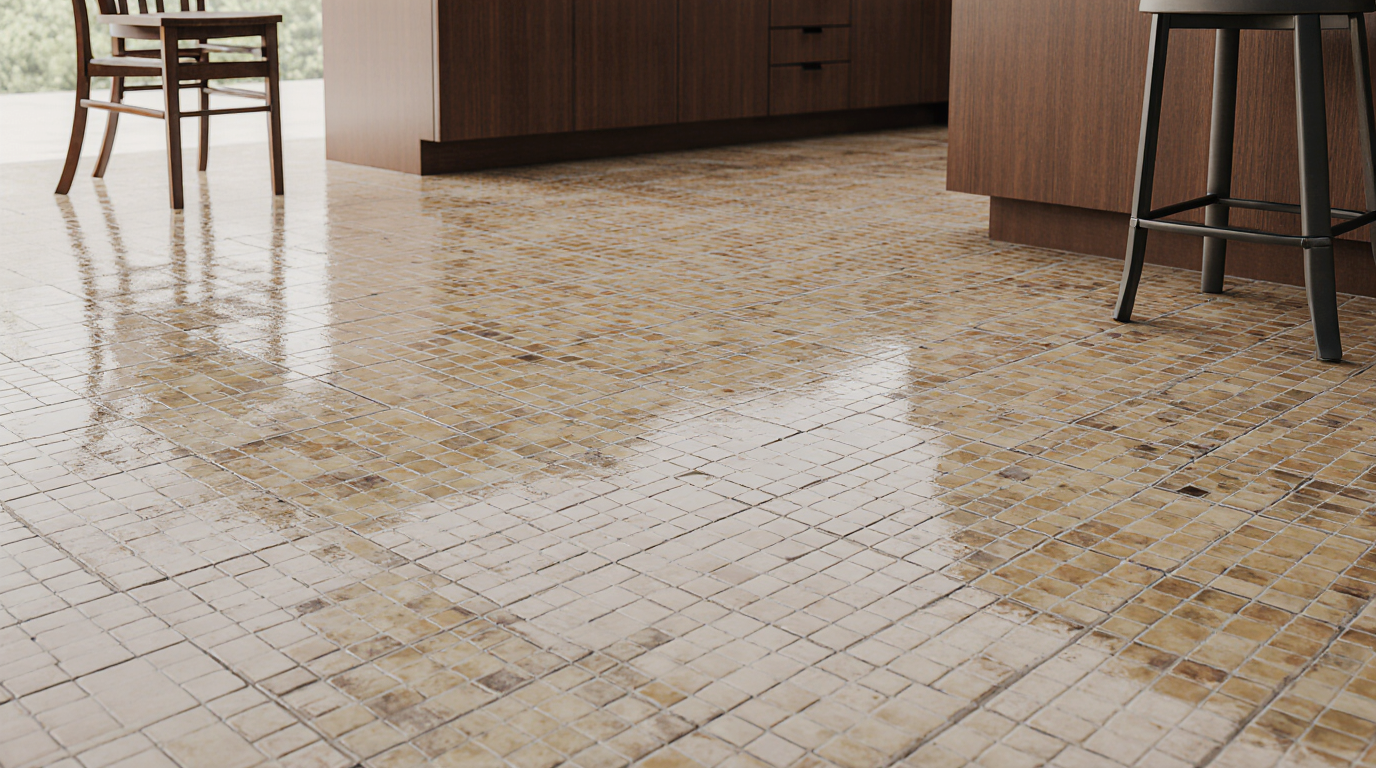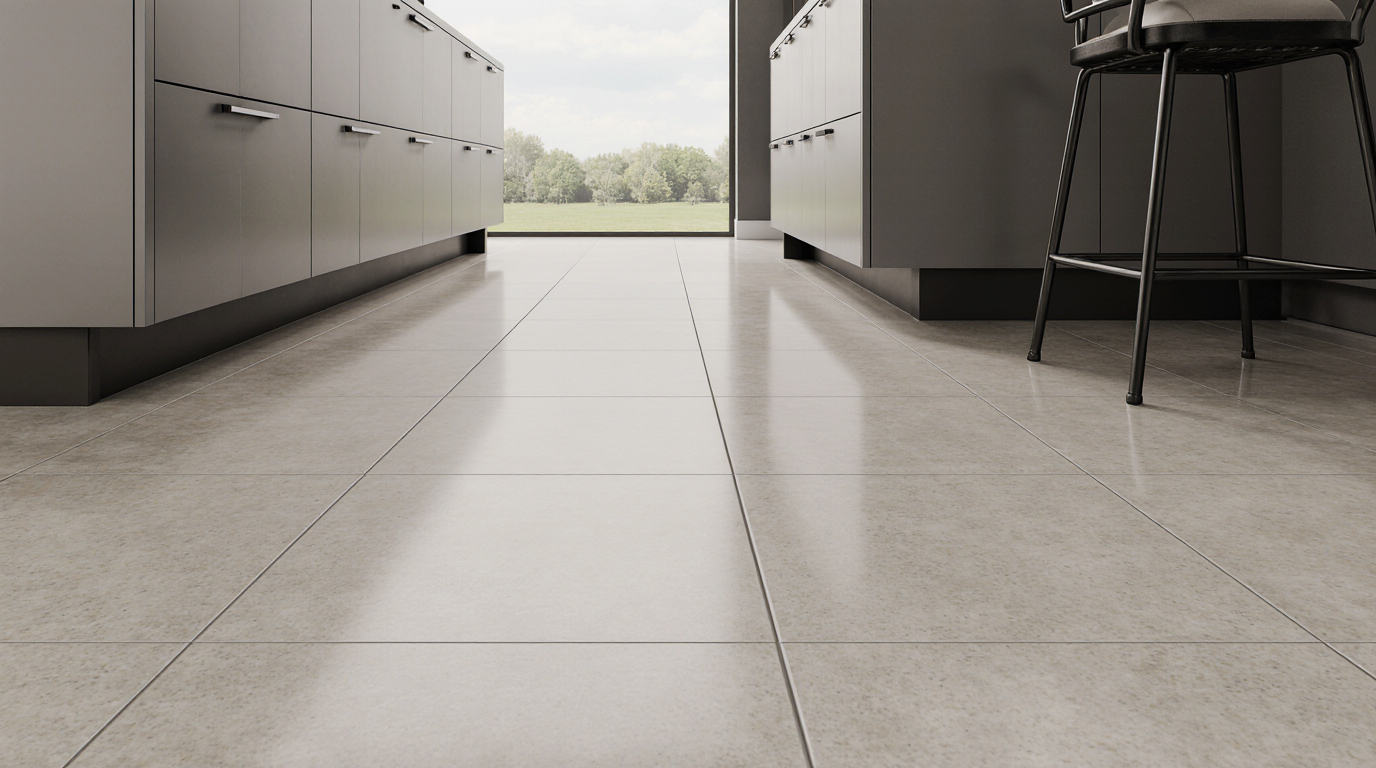
Choosing a kitchen floor tile in Sarasota often starts with a trip to a showroom, where beautiful porcelain and natural stone displays catch the eye. The problem is, most of these displays don't come with a warning label for our climate. The tile that looks stunning under showroom lights can become a maintenance nightmare when exposed to the daily reality of Sarasota's humidity, sand tracked in from Siesta Key Beach, and the intense UV rays that stream through lanai doors. The most critical factor isn't the tile's color; it's its porosity and slip resistance, two details that are rarely the focus of a design conversation but determine the floor's entire lifespan here.
Executive Summary for Sarasota Homeowners
From my direct experience installing kitchen floors across Sarasota County, the key to a lasting and beautiful result
From my direct experience installing kitchen floors across Sarasota County, the key to a lasting and beautiful result is prioritizing performance over pure aesthetics. The humid, salt-laden air and indoor-outdoor lifestyle demand materials that resist moisture absorption, staining, and slipperiness when wet. A tile that works perfectly in a dry climate can fail spectacularly here, leading to grout issues, hazing, and safety concerns.
- Material Suitability: Porcelain tile is the superior choice for Sarasota kitchens due to its extremely low water absorption rate (less than 0.5%), which prevents moisture damage and mildew growth in grout lines.
- Slip Resistance (DCOF): For any area that might get wet—which includes nearly every kitchen with a pool or near the coast—look for a Dynamic Coefficient of Friction (DCOF) rating of 0.42 or higher.
- Grout Selection: Using a high-performance, stain-resistant grout like an epoxy or a premium urethane is non-negotiable to combat mold and mildew in our high-humidity environment. Standard cementitious grout is a recipe for problems.
- Indoor-Outdoor Flow: If planning a seamless look to a lanai or outdoor kitchen, you must select a tile rated for exterior use, which means it's frost-proof and has a higher DCOF rating to handle rain.
The Planning Failures I See Most Often
The costliest mistakes in selecting kitchen floor tile happen long before the first tile is laid. They are decisions made based on incomplete information about how materials behave in our specific coastal Florida climate. These errors often lock homeowners into years of frustrating maintenance or a premature and expensive replacement.
The Most Expensive Failure: Ignoring Porosity for a “Natural” Look
I worked with a client in a beautiful home near Southside Village who fell in love with a honed travertine for their kitchen. It had the perfect warm, earthy feel they wanted. Despite my warnings, they proceeded. Within two years, the floor was a constant source of stress. The porous stone absorbed a spilled glass of red wine almost instantly, leaving a permanent stain. More insidiously, the high humidity caused persistent dark spots as moisture wicked up through the unsealed stone, and the grout lines were a constant battle against mildew. The failure wasn't the stone itself; it was choosing a highly porous material for a humid, high-traffic environment. They ultimately spent nearly double the initial installation cost to have it professionally stripped, cleaned, and sealed annually, a cost that was never factored into the original budget.
How Tile Selection and Installation Works in Practice
A successful tile flooring project follows a clear sequence that balances design with technical requirements. It begins with understanding the home's specific environment and usage patterns, then moves to material selection, proper substrate preparation, and finally, installation with the right setting materials. In Sarasota, skipping any of these steps to rush the process is a guarantee of future problems.
Selection Criteria for Sarasota Kitchens
Choosing the right tile here is different. You're not just picking a color; you're selecting a high-performance building material. I guide my clients to evaluate options based on a specific hierarchy of needs for our area.
- Water Absorption Rate: This is the first filter. I recommend porcelain (less than 0.5%) almost exclusively. Ceramic is acceptable in some inland areas, but for any home on the keys or near water, porcelain's density is a must.
- PEI Wear Rating: For a residential kitchen, which is a high-traffic area, a tile should have a PEI rating of at least Class 3. A Class 4 rating is even better, especially for busy families or homes where sand is frequently tracked inside.
- DCOF Rating for Safety: This is a critical safety measure. I will not install a tile with a DCOF below 0.42 in a kitchen, especially if it connects to a pool area. This is a non-negotiable standard to prevent slips and falls.
- Grout Joint Size and Type: For a cleaner, more modern look, many clients want minimal grout lines. This requires a rectified tile (mechanically finished on all sides for uniformity). Regardless of size, we must use an epoxy or high-performance polymer-modified grout to prevent mildew.
Comparing Tile with Other Flooring Alternatives
While tile is often the default choice for Sarasota kitchens, it's essential to understand its trade-offs compared to other popular options like Luxury Vinyl Plank (LVP) and Engineered Hardwood. Each has distinct advantages and disadvantages in our coastal environment.
When Tile Is Not the Right Choice
Tile is not the best fit for every situation. If a homeowner prioritizes comfort underfoot and sound absorption above all else, tile is the wrong choice. It is hard, cold, and unforgiving—dropped glasses will shatter instantly. In open-concept homes common in Palmer Ranch, the acoustics of a fully tiled floor can create an echo-chamber effect. In these cases, a high-quality LVP or even cork flooring might provide a better living experience, even if it compromises on the ultimate durability of porcelain.
| Feature | Porcelain Tile | Luxury Vinyl Plank (LVP) | Engineered Hardwood |
|---|---|---|---|
| Humidity & Water Resistance | Excellent. Impervious to water damage. | Excellent. 100% waterproof core. | Poor to Fair. Prone to warping and cupping in high humidity. |
| Durability & Scratch Resistance | Excellent. Highly resistant to scratches and dents. | Good. Can be scratched or dented by heavy objects. | Fair. Susceptible to scratches and dings from sand and dropped items. |
| Maintenance in Coastal Areas | Easy to clean, but grout lines require sealing/specialized grout. | Very easy. No grout lines to maintain. | Difficult. Requires climate control and specific cleaners. |
| Comfort & Acoustics | Poor. Hard, cold underfoot, and reflects sound. | Good. Softer, warmer, and quieter. | Good. Warmer underfoot than tile. |
Safe Hiring and Installation Checklist
Ensuring your tile floor is installed correctly is just as important as choosing the right material. A beautiful, expensive tile can fail due to poor workmanship. I've been called in to fix far too many jobs where the previous installer took shortcuts that weren't apparent for months.
- Verify the installer is licensed and carries both General Liability and Worker's Compensation insurance in Florida. Ask for the certificate.
- Confirm they will use a crack-isolation membrane over the concrete slab. In Florida, concrete slabs can shift and develop hairline cracks, and this membrane prevents those cracks from telegraphing through to your tile.
- Specify in the contract the exact brand and type of thin-set mortar and grout to be used. For large format tiles (anything over 15 inches on one side), a Large and Heavy Tile (LHT) mortar is required by industry standards.
- Ensure the proposal includes floor leveling. A flat substrate is mandatory for a professional installation, especially with large tiles. The standard is a maximum deviation of 1/8 inch over 10 feet.
- If your home is in a designated wind-borne debris region, confirm the installer understands how flooring interacts with requirements for sliding glass door tracks and thresholds, which are part of the building envelope's integrity.
- For condo renovations, especially in buildings along Gulf Stream Avenue, get written confirmation that the installer will comply with the building's rules for work hours, debris removal, and soundproofing underlayments.
Decisions That Determine the Final Outcome
Two clients can start with the same budget and the same tile but end up with dramatically different results. The difference almost always comes down to a few key decisions made during the planning phase. These choices have a compounding effect on the quality, longevity, and satisfaction with the final floor.
The Exact Moment the Majority Gets It Wrong
The critical mistake happens when a homeowner finalizes their tile choice before they have finalized their cabinet layout, especially the kitchen island. They fall in love with a large-format tile, say a 24x48 inch plank. Then, weeks later, the cabinet plan is set, and we discover the island's placement will create awkward, sliver-thin cuts of tile along its entire length. The solution is to create a to-scale floor plan with the cabinet layout FIRST, and then overlay tile grid options onto it. This allows you to visualize the flow and grout lines, ensuring the tile pattern complements the room's architecture rather than fighting it. This simple step prevents the most common aesthetic regrets I see.
Practical Answers About Operations in Sarasota
Navigating a flooring project in Sarasota involves more than just design and installation. You have to account for local regulations, building-specific rules, and our unique construction environment. Here are the answers to the operational questions that often surprise homeowners.
What Are the HOA Design Review Requirements in Lakewood Ranch?
In master-planned communities like Lakewood Ranch, you cannot simply start work. Any exterior-facing change, which can include flooring visible through large lanai doors, may require submission to your neighborhood's Architectural Review Committee (ARC) or Design Review Committee (DRC). You typically need to provide a sample of the tile, its specifications, and the installer's license and insurance. The approval process can take anywhere from two to six weeks. Starting work without approval can result in fines and a stop-work order.
Do I Need a Permit for Just a Tile Floor Replacement?
According to the Sarasota County permitting office, replacing the floor finish material (like-for-like) generally does not require a building permit. However, the situation changes if the project involves altering the subfloor, moving non-load-bearing walls (common in kitchen remodels), or changing plumbing and electrical layouts. If your remodel is comprehensive, the flooring will be included as part of the overall master permit. Always verify with the city or county building department, as regulations can be updated.
How Do Condominium Rules on Longboat Key Impact Installation?
High-rise condominiums, particularly on Longboat Key and Lido Key, have some of the strictest renovation rules in the area. Most associations require the installation of a specific sound-dampening underlayment beneath hard surface flooring to prevent noise transmission to the unit below. They often specify a minimum Impact Insulation Class (IIC) rating for the entire floor assembly. Your installer must provide proof of the underlayment used and adhere to strict work hours, typically 9 AM to 4 PM on weekdays only, with no work on weekends or holidays. This can extend the project timeline significantly compared to a single-family home.