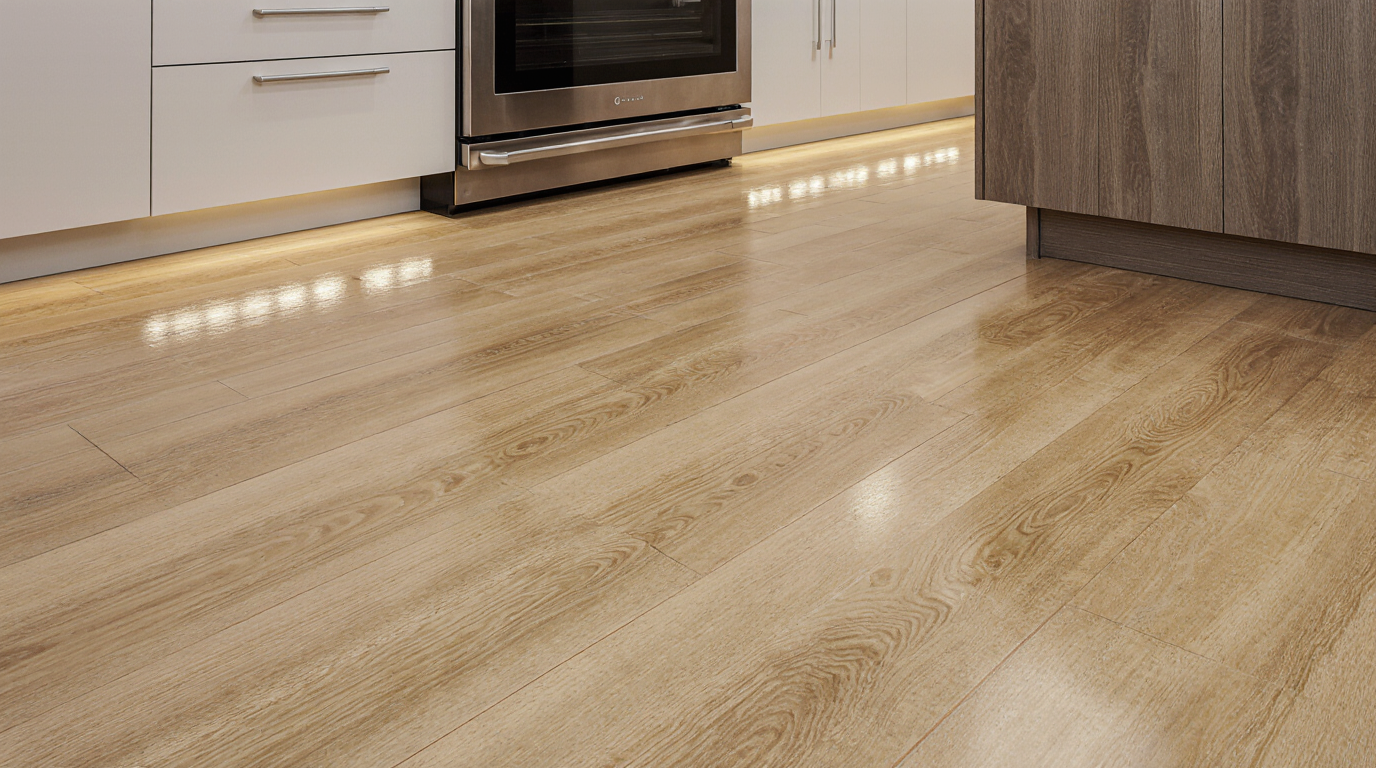
The most critical decision in a Sarasota kitchen floor remodel has nothing to do with color or pattern. It’s about the unseen: the subfloor preparation and the specific moisture barrier system used. In our humid, coastal climate, a beautiful floor laid on an improperly prepped base is a guaranteed failure, often showing signs of cupping or mold within two seasons. The aesthetics are the easy part; survival is the engineering.
Your Kitchen Floor Remodel: A Sarasota-Specific Summary
From my direct experience managing projects across Sarasota County, a successful kitchen floor remodel hinges on
From my direct experience managing projects across Sarasota County, a successful kitchen floor remodel hinges on prioritizing material performance against humidity and hydrostatic pressure over pure aesthetics. The 'look' you want can almost always be achieved with a material engineered for our specific environment. The biggest mistake is choosing a product that performs well in a dry climate and expecting the same result here. Success is not about luck; it's about material science and installation discipline.
- Material Selection: Prioritize Luxury Vinyl Plank (LVP), porcelain tile, or engineered hardwood with a marine-grade core. Solid hardwood is almost always a mistake near the water.
- Subfloor Integrity: Concrete subfloors must be tested for moisture (calcium chloride test) and sealed. Wood subfloors in older homes, especially in areas like Gillespie Park, often require reinforcement and a robust vapor barrier.
- Installation Method: Floating floors require a specific underlayment with a high perm rating. Glued-down applications need an adhesive with built-in moisture-blocking properties.
- Contractor Vetting: The installer's knowledge of local conditions is more important than their portfolio of finished photos. Ask about their specific moisture mitigation protocol.
The Planning Failures That Haunt Sarasota Homeowners
The most costly mistakes in a kitchen floor project are locked in before the first tile is laid. They are decisions made based on national trends or advice from contractors who lack specific experience with Sarasota's slab-on-grade construction and relentless humidity. Ignoring these local realities leads to floors that fail prematurely.
The Most Expensive Failure: Underestimating Subfloor Moisture
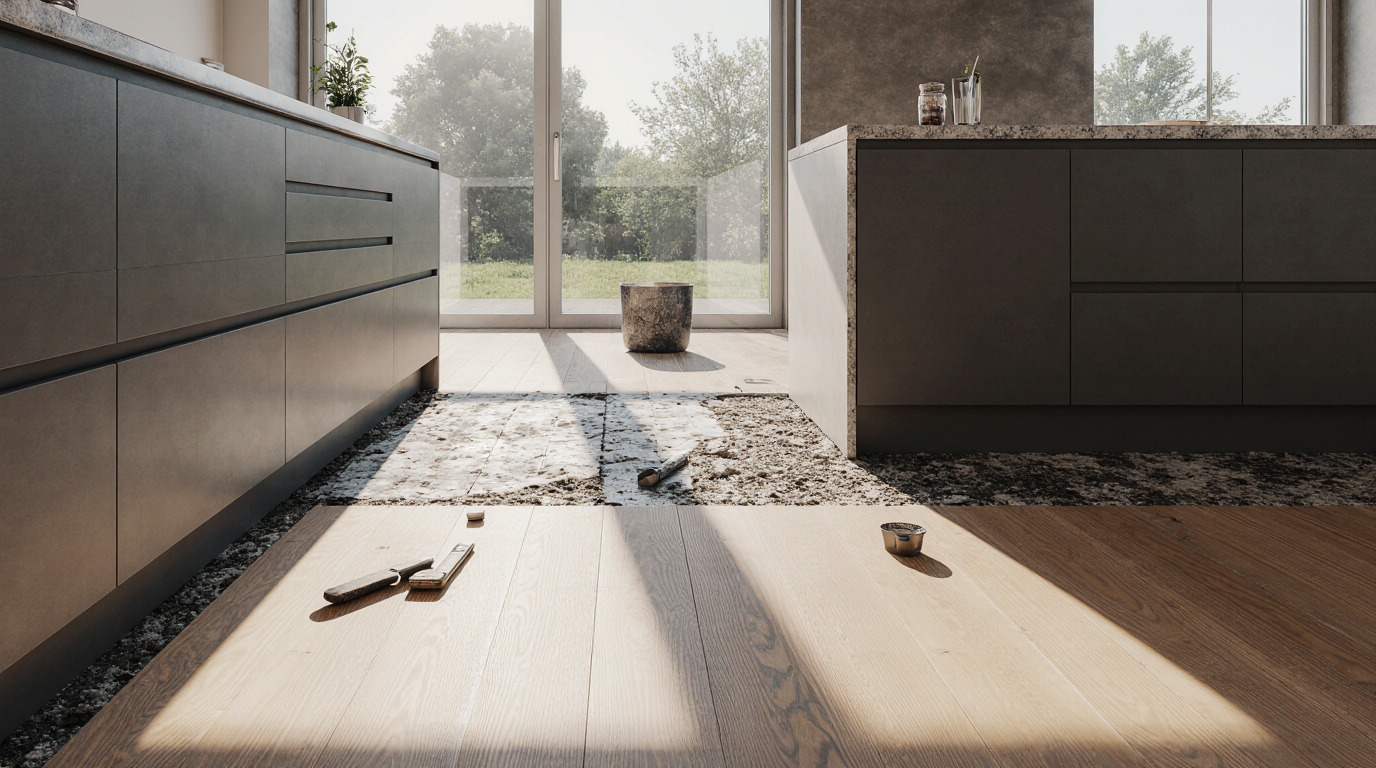
The single most expensive mistake I see is skimping on subfloor moisture testing and mitigation. A client in a beautiful home on Siesta Key chose a high-end engineered hardwood. The contractor did a quick visual inspection and proceeded. Within 18 months, the floor began to cup and show dark stains. The cause was hydrostatic pressure pushing moisture vapor through the concrete slab—a common issue on our barrier islands. The entire floor, a significant investment, had to be torn out. The remediation, including grinding the slab and applying an epoxy moisture barrier, cost nearly 40% of the original project price. A simple, sub-$200 moisture test upfront would have prevented it all.
The Remodeling Process in Practice in Sarasota
A properly executed kitchen floor remodel here follows a strict sequence designed to combat our climate. It begins not with demolition, but with diagnostics. We assess the existing conditions, including the subfloor, adjacent rooms, and even the home's HVAC system, as it plays a role in ambient moisture levels. Only then do we move to material selection and permitting.
Key Selection Criteria for a Sarasota Contractor
When choosing an installer, you are hiring their knowledge of local failure points. A slick presentation means nothing if they don't understand the science of moisture intrusion in our specific environment. Here is what to focus on:
- Asks About Your AC System: A true professional will ask about your dehumidification settings. They know that indoor humidity control is part of the floor's long-term stability.
- Specifies a Moisture Mitigation System: They should present a clear plan, whether it's a 6-mil poly vapor barrier, a liquid-applied membrane, or an adhesive with built-in protection. "We'll put down a pad" is not a sufficient answer.
- Has a Hurricane Preparedness Clause: Their contract should specify how materials and the work site will be secured if a named storm threatens the area during the project. This is a non-negotiable part of doing business in Sarasota County.
- Understands HOA Submittals in Communities like Lakewood Ranch: They should be familiar with the detailed submittal requirements for Design Review Committees, including material samples, installer licenses, and insurance certificates, which can otherwise delay a project for weeks.
Comparing Flooring Options for Sarasota's Climate
The ideal kitchen floor in Sarasota offers a balance of water resistance, durability, and style. The wrong choice can lead to warping, staining, or becoming dangerously slippery when wet from pool or beach traffic. Below is a realistic comparison based on performance in our local homes.
| Material | Humidity/Water Resistance | Durability & Scratch Resistance | Typical Installed Cost per Sq. Ft. |
|---|---|---|---|
| Porcelain Tile | Excellent (Impervious) | Excellent | $15 - $35+ |
| Luxury Vinyl Plank (LVP) | Excellent (100% Waterproof Core) | Very Good | $9 - $20 |
| Engineered Hardwood | Fair to Good (Depends on core & finish) | Good | $12 - $28+ |
| Solid Hardwood | Poor (Prone to cupping/warping) | Good | $14 - $30+ |
When Tile or LVP Is Not the Right Choice
Despite their superior performance, there are scenarios where these materials aren't ideal. For a historic home in a neighborhood like Laurel Park aiming for period-correct restoration, the aesthetic of LVP can be a non-starter. In such cases, a carefully selected, rift and quarter-sawn engineered wood from a specialized manufacturer is a better, albeit higher-maintenance, choice. The trade-off is accepting that you will need to be much more vigilant about climate control and spills to protect your investment.
Your Safe Hiring Checklist for Sarasota
Vetting a flooring contractor in Florida requires looking beyond the standard license and insurance check. You need to confirm their specific expertise in coastal construction and moisture management. Use this checklist before signing any contract.
- Verify their Certified General Contractor (CGC) or specialty license is active and without complaints on the Florida Department of Business and Professional Regulation (DBPR) portal.
- Request proof of both General Liability and Worker's Compensation insurance. An uninsured worker injured on your property can become your liability.
- Ask for at least two local references for kitchen flooring projects completed more than a year ago, preferably in a waterfront or barrier island location.
- Confirm they will perform and provide you with the results of a subfloor moisture test before installation begins. This should be a line item in the contract.
- Ensure the contract explicitly states the type of underlayment or moisture barrier to be used, referencing a specific product name, not just a generic term like "vapor barrier."
- Clarify who is responsible for pulling a permit if one is required. Per the Sarasota County permitting office, substantial flooring work may require one, especially if subfloor work is involved.
- Discuss their protocol for acclimating materials on-site. For engineered wood, this is a critical step that many rush, leading to post-installation expansion or contraction.
Decisions That Determine the Final Outcome
Two clients can start with the same budget and the same aesthetic goal and end up with vastly different results. The difference lies in a few key decisions made early in the process. I've seen that the clients who have the best long-term outcomes are those who prioritize the structural integrity of the installation over last-minute aesthetic upgrades.
The Exact Moment the Majority Gets It Wrong
The critical error happens during the budget allocation phase. Most homeowners allocate the bulk of their budget to the visible material—the beautiful tile or the wood-look plank—and treat the subfloor preparation and underlayment as an area to save money. This is backward. The correct approach is to budget for the best possible moisture mitigation system first, and then select the best flooring material you can afford with the remaining funds. A mid-range LVP on a perfectly prepped and sealed subfloor will outperform a luxury European wood floor on a damp slab every single time in Sarasota.
Practical Answers About Operations in Sarasota
Navigating the logistics of a remodel involves more than just design. It means dealing with local regulations, building codes, and community rules that are specific to our area. Understanding these can prevent costly delays and ensure a smooth project.
How Do Condo Association Rules Impact Flooring Choices?
In the many high-rise condos along Gulf Stream Avenue or on Lido Key, the primary concern is sound transmission. Most associations have strict requirements for an IIC (Impact Insulation Class) rating for any new hard-surface flooring. You must submit the technical data sheet for your chosen underlayment to the board for approval before work can begin. Failure to do so can result in a work-stop order and potential fines.
What Does the Florida Building Code Say About Kitchen Floors?
The Florida Building Code (FBC) is primarily concerned with structural integrity and safety. For flooring, its main impact is on subfloor requirements and ensuring that any alterations do not compromise the structure. In elevated homes within flood zones (common on the keys), any work on the subfloor must meet specific standards for moisture resistance and may trigger other code-compliance upgrades.
Permitting for a Kitchen Floor: When Is It Necessary?
A simple like-for-like flooring replacement typically does not require a permit from Sarasota County. However, the project scope can trigger a permit requirement if you are removing a non-load-bearing wall to create an open-plan kitchen, altering plumbing, or performing structural work on the subfloor. For example, replacing rotten joists under the kitchen floor absolutely requires a permit. Always confirm with the Sarasota County Permitting Office before starting work.