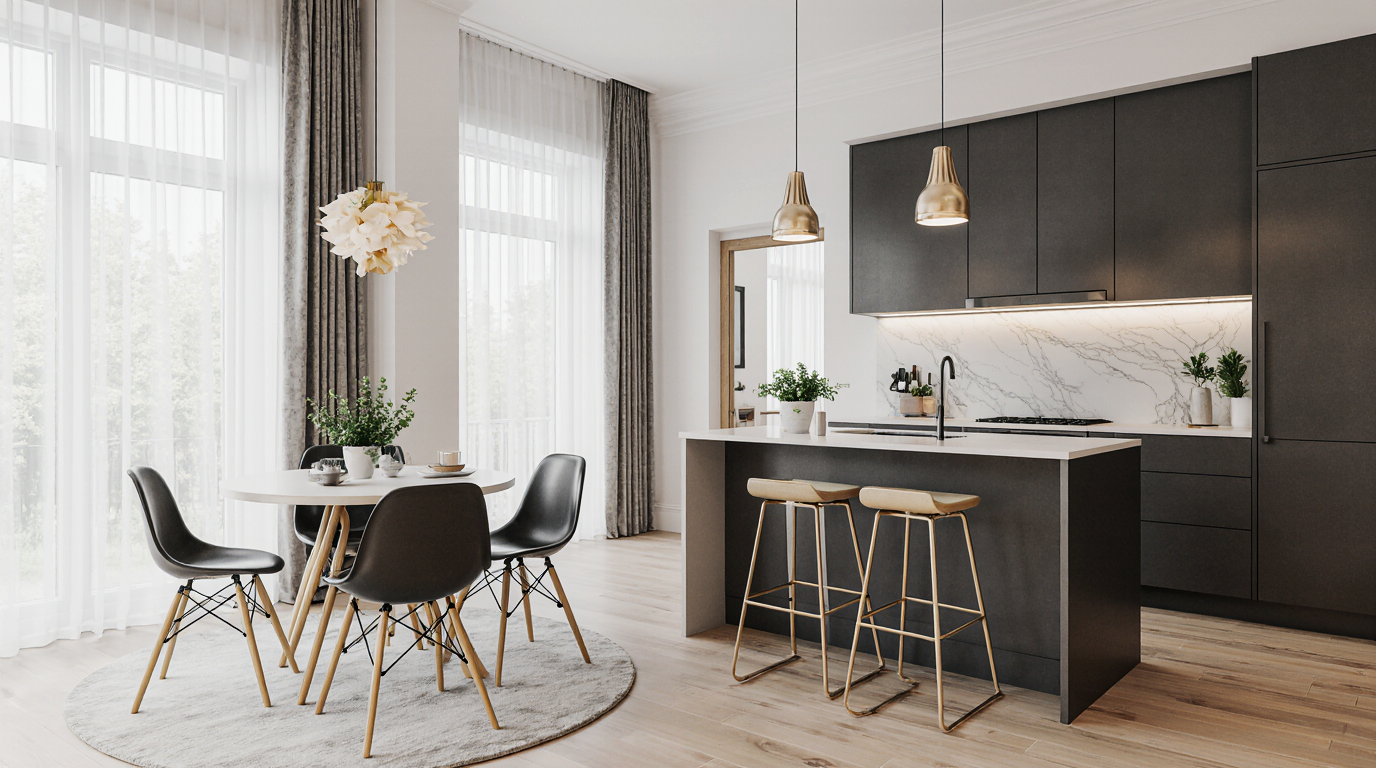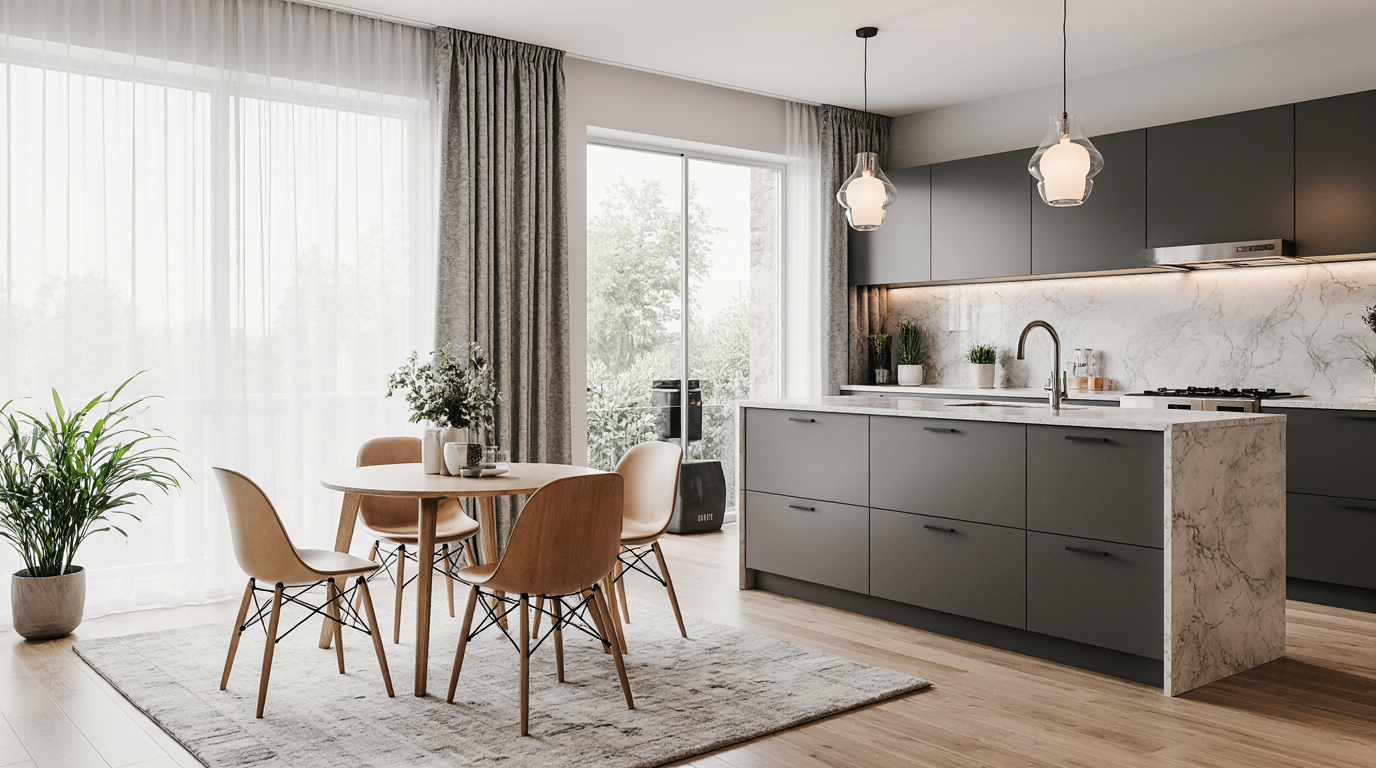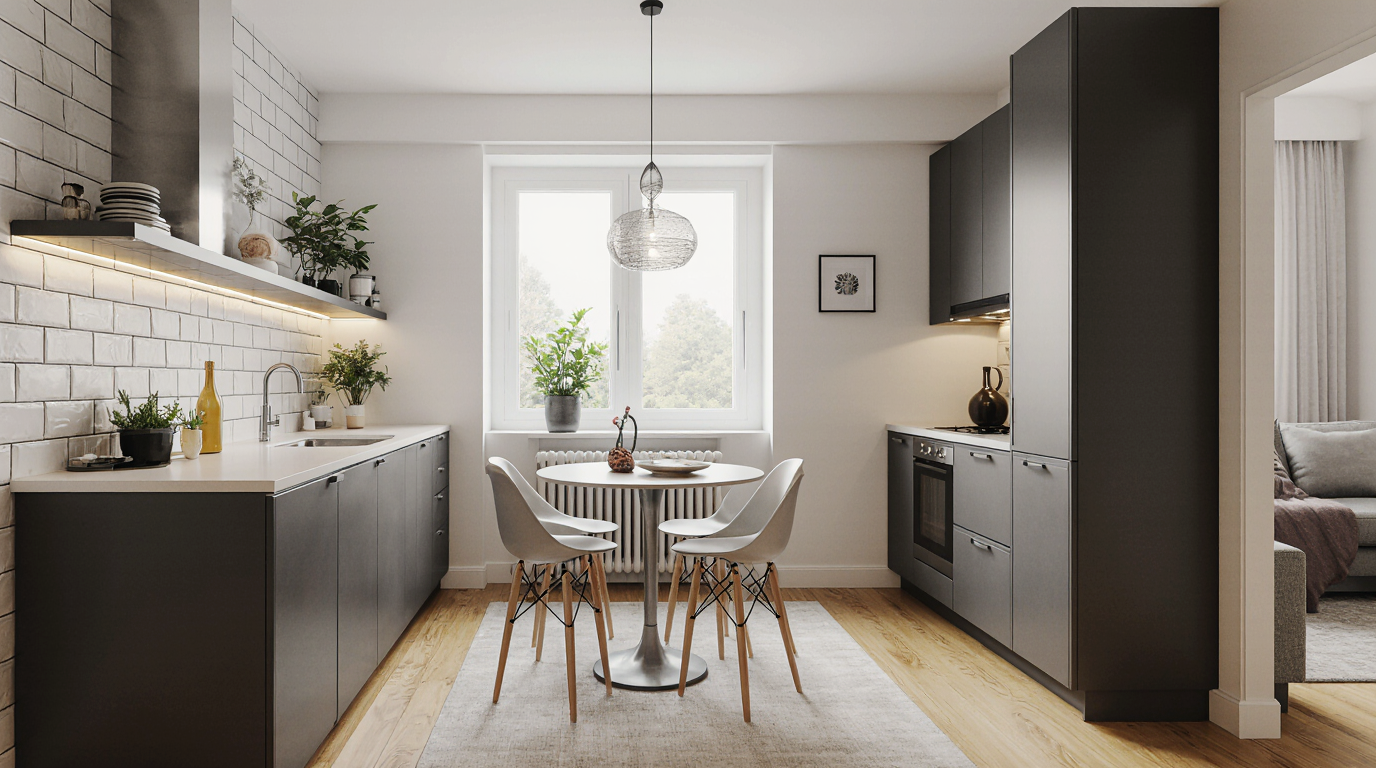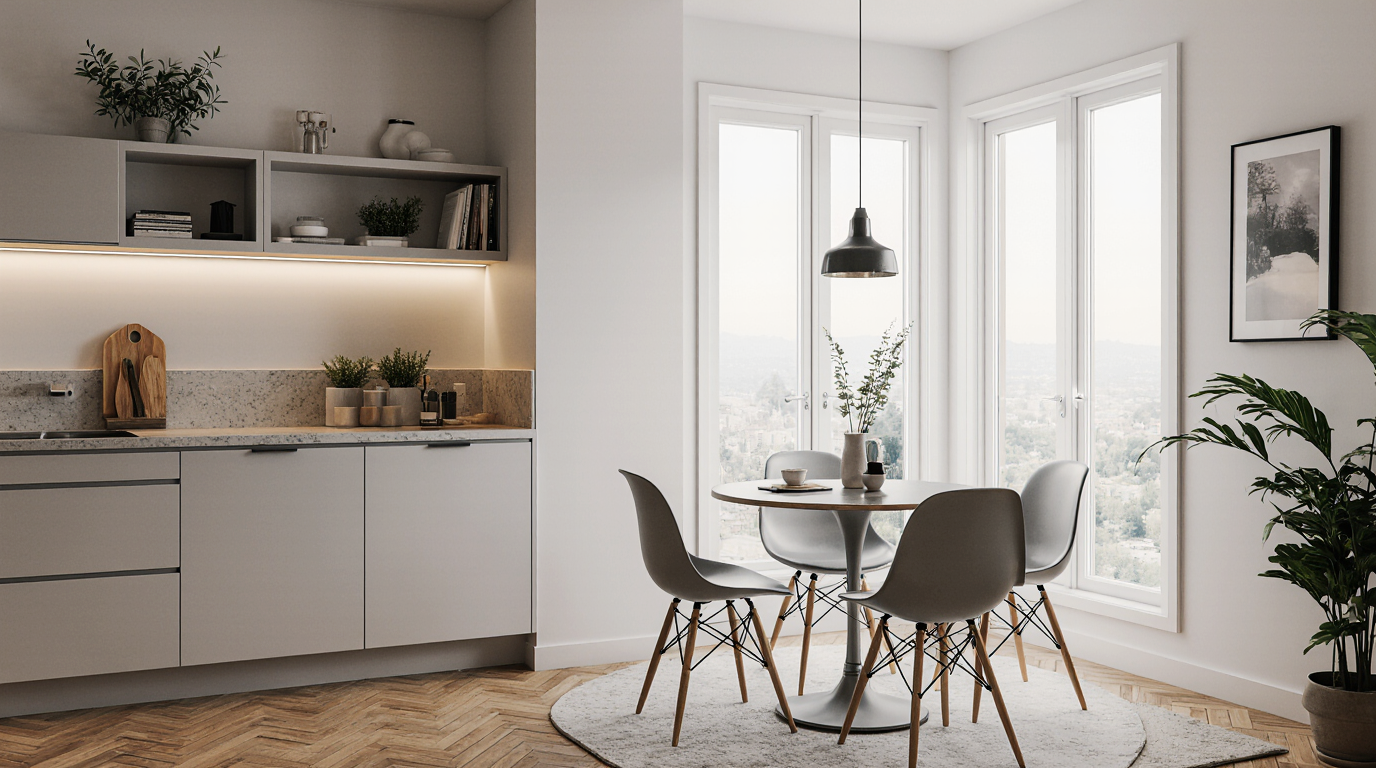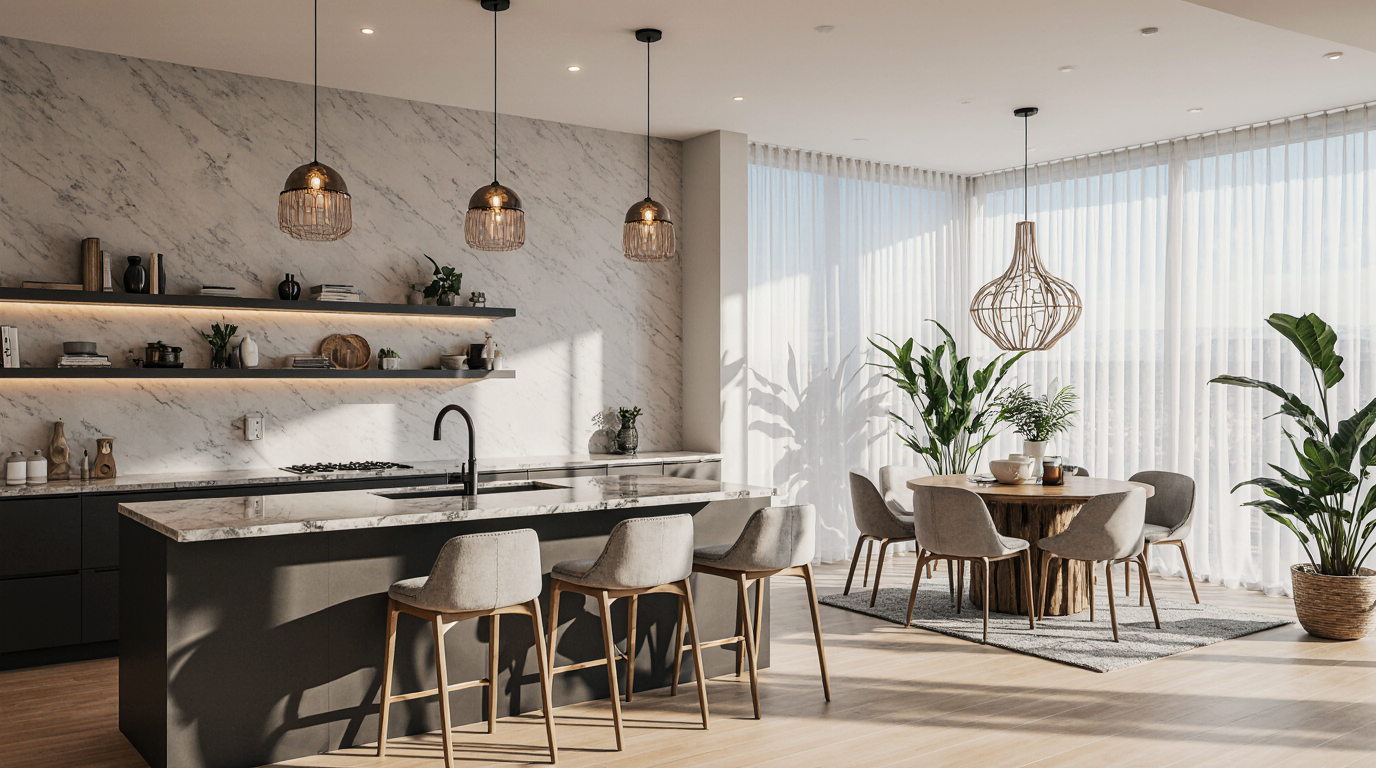
Why do so many beautifully designed kitchen-dining rooms in Sarasota feel dated or show wear within just five years? It’s rarely the fault of the initial aesthetic. The real culprit is a fundamental misunderstanding of how our coastal environment—the relentless humidity, salt air, and intense sunlight—interacts with the materials and layouts chosen for these critical living spaces. A design that works in a landlocked city will actively fight against you here.
Executive Summary: A Local Approach to Kitchen-Dining Design
From my experience executing projects across Sarasota County, a successful kitchen-dining integration hinges on
From my experience executing projects across Sarasota County, a successful kitchen-dining integration hinges on prioritizing material science over fleeting trends. The goal is to create a unified, open-concept space that not only looks stunning but also performs flawlessly against our specific climate challenges. It means designing for light, airflow, and durability, ensuring the space feels as good as it looks for years, not just a single season. The most successful projects I've seen are those that treat the lanai or outdoor view as the primary design anchor, not an afterthought.
- Material Resilience: Specify marine-grade plywood for cabinet boxes and corrosion-resistant hardware (stainless steel 316 or solid brass) to combat humidity and salt air, especially in homes west of I-75.
- Layout for Light and Flow: Orient the layout to maximize natural light from large sliding glass doors or windows, creating a seamless transition to outdoor living areas.
- HOA Compliance: Factor in an average of 4-6 weeks for design review board approval in planned communities like Lakewood Ranch, which can impact project timelines significantly.
- Code-Driven Decisions: Ensure all exterior-facing windows and doors meet Florida Building Code requirements for wind-borne debris, as this impacts both safety and insurance premiums.
The Planning Failures That Compromise Sarasota Homes
The biggest mistakes I see happen long before the first cabinet is installed. They are strategic errors in planning that ignore the realities of our environment. Homeowners fall in love with a look from a magazine based in a different climate, and the translation fails spectacularly in our humid, sun-drenched setting. The result is a space that requires constant maintenance or premature replacement.
The Most Expensive Failure: Underestimating Humidity's Impact on Materials
I worked with a client in a beautiful home near Siesta Key who insisted on standard MDF-core cabinets with a thermofoil finish because they loved the sleek, modern look. Despite my warnings, the budget dictated the choice. Within two years, the thermofoil began to peel near the dishwasher and sink, and the MDF edges started to swell from the ambient humidity. The cost to replace those cabinets was nearly 40% higher than the initial cost of upgrading to a humidity-resistant material would have been. This is the most common and costly failure—saving a little upfront on materials that are fundamentally unsuited for Florida's climate, leading to a complete replacement project down the line.
How Kitchen-Dining Renovations Unfold in Practice Here
A well-executed kitchen and dining room project in Sarasota follows a clear, multi-stage process that accounts for local regulations. It begins with a design phase focused on flow and material selection, followed by detailed architectural plans if walls are being moved. These plans are then submitted for permitting, a step that cannot be skipped, especially for structural or significant electrical and plumbing changes.
Selection Criteria for a Sarasota-Specific Design
Choosing a design direction and a team to execute it requires a local lens. Generic advice often misses the mark. Here's what I guide my clients to focus on specifically for this area:
- Portfolio with Waterfront/Coastal Projects: Look for designers and builders who have extensive experience with homes on the barrier islands or in coastal neighborhoods. They will inherently understand material specifications for salt air.
- In-House or Established HOA Liaisons: In communities like The Founders Club or University Park, navigating the Architectural Review Board (ARB) is a specialized skill. A team that understands this process prevents costly delays and redesigns.
- Verified Hurricane Code Expertise: Ask for specific examples of how they anchor cabinetry and secure openings to comply with the Florida Building Code, especially in high-velocity hurricane zones (HVHZ).
- Transparent Material Sourcing: They should be able to clearly explain why they recommend a certain wood species, finish, or hardware for our climate, going beyond simple aesthetics.
Comparing Open-Concept to Other Layouts
The open-concept kitchen and dining room is dominant in Sarasota for good reason—it aligns with our casual, entertainment-focused lifestyle. However, it's not the only option. Understanding the trade-offs is crucial before committing to a major renovation.
| Feature | Open Kitchen-Dining | Broken-Plan (Semi-Open) | Formal/Closed Dining Room |
|---|---|---|---|
| Suitability for Entertaining | Excellent; seamless flow for guests | Good; creates distinct zones without total separation | Fair; can feel formal and isolates the host |
| Climate Control Efficiency | Lower; harder to cool/dehumidify one large space | Better; allows for zoning of AC | Highest; smaller, contained space is easy to cool |
| Maximizing Natural Light/Views | Best; unobstructed light from large windows/sliders | Good; strategic openings maintain views | Poor; walls block light and sightlines to the outdoors |
| Sound and Odor Containment | Poor; cooking sounds and smells travel freely | Fair; partial walls or glass dividers can help | Excellent; mess and noise are contained |
When an Open-Concept Layout Is Not the Right Choice
I advise against a fully open concept for clients who are serious, frequent cooks and prioritize function over constant social interaction during meal prep. In these cases, a broken-plan layout, perhaps using large pocket doors or a decorative screen wall, offers a better compromise. It allows the space to be opened for parties but closed off to contain cooking mess, heat, and noise during intensive kitchen use, which is a real consideration for energy bills in our long summers.
A Safe Project Checklist for Sarasota Residents
To protect your investment and ensure a smooth process, a verification checklist is essential. This goes beyond checking for a license and insurance; it delves into the specifics of building in our unique coastal region.
- Verify Florida Contractor's License: Check the license status on the Florida Department of Business and Professional Regulation (DBPR) website. Ensure it's current and free of complaints.
- Request Proof of Liability and Workers' Comp Insurance: A certificate of insurance should be provided directly from the insurer, naming you as a certificate holder.
- Inquire About HOA/Condo Association Experience: Ask for references from projects completed within your specific planned community or a similar one. They should understand the submission and approval process intimately.
- Review the Material Specification Sheet: The proposal should explicitly list materials like “corrosion-resistant 304 stainless steel hardware” or “marine-grade plywood cabinet boxes.” Vague terms like “high-quality wood” are a red flag.
- Confirm Permit Responsibility: The contract must clearly state that the contractor is responsible for pulling all necessary permits from Sarasota County or the relevant municipality.
- Discuss Storm Protection Integration: How will new windows and doors integrate with existing or new hurricane shutters? This coordination is critical and often overlooked.
Decisions That Truly Determine the Outcome
After overseeing hundreds of these projects, I've learned that success isn't determined by the budget alone. It's about making a few key decisions in the right order. The most important choices revolve around how the space will function under the stress of our climate and lifestyle, not just how it will look on day one.
The Exact Moment the Majority Gets It Wrong
The critical mistake most people make is choosing their aesthetic finishes—countertops, backsplash, cabinet color—before they have finalized the functional layout and specified the structural materials. They fall in love with a particular quartz slab or tile pattern and then try to force the layout to fit it. The correct approach is to finalize the floor plan and the core material specifications first. The layout, which dictates workflow and light, and the cabinet box material, which determines longevity, are far more important than the decorative surface you see. Once the durable, climate-appropriate foundation is set, the aesthetic choices become much easier and more effective.
Practical Answers About Operations in Sarasota
Navigating the local bureaucracy and practical challenges can be frustrating. Understanding these specific bottlenecks in Sarasota is key to planning a realistic timeline and budget.
How Do HOA Design Reviews Impact Timelines?
In master-planned communities like Palmer Ranch or Lakewood Ranch, the Homeowners Association (HOA) or Architectural Review Board (ARB) has final say on any exterior modifications, including new windows or doors that are part of a kitchen-dining remodel. Submissions often require detailed plans, material samples, and color swatches. The review process itself can take anywhere from 30 to 60 days. Starting any work before receiving written approval can result in fines and a stop-work order.
What Are the Key Florida Building Code Requirements?
For any kitchen-dining project involving exterior walls, the Florida Building Code is paramount. All new windows and sliding glass doors must meet impact-resistance standards for our wind-borne debris region. Furthermore, how cabinets are anchored to the wall, especially on exterior walls, is subject to code to ensure they do not become projectiles in a high-wind event. This is not a suggestion; it's a non-negotiable legal and safety requirement that a qualified contractor will handle through the permitting process with Sarasota County.
Does My Project Need a Permit from Sarasota County?
A permit is almost always required if you are moving or removing walls, altering plumbing or electrical layouts (like adding an island sink or new lighting), or replacing windows and exterior doors. A simple cosmetic update like painting cabinets or replacing a countertop generally does not require a permit. However, the Sarasota County permitting office is the final authority. A reputable contractor will make this determination and manage the entire submission and inspection process as part of their service.