Modern Minimalist Kitchen Design Ideas for a Sleek and Functional Space
A modern minimalist kitchen embodies the perfect harmony between style and practicality, creating an environment that is simultaneously stylish and practical. It focuses on strategic choices such as minimal clutter, precise lines, and sophisticated material selection, creating an environment that feels open, airy, and serene. In contrast to ornate kitchens that can seem chaotic, minimalist designs showcase the inherent charm of every detail, from sleek cabinetry to integrated appliances. Minimalism does not imply austerity; rather, it prioritizes deliberate design decisions that optimize beauty and functionality.
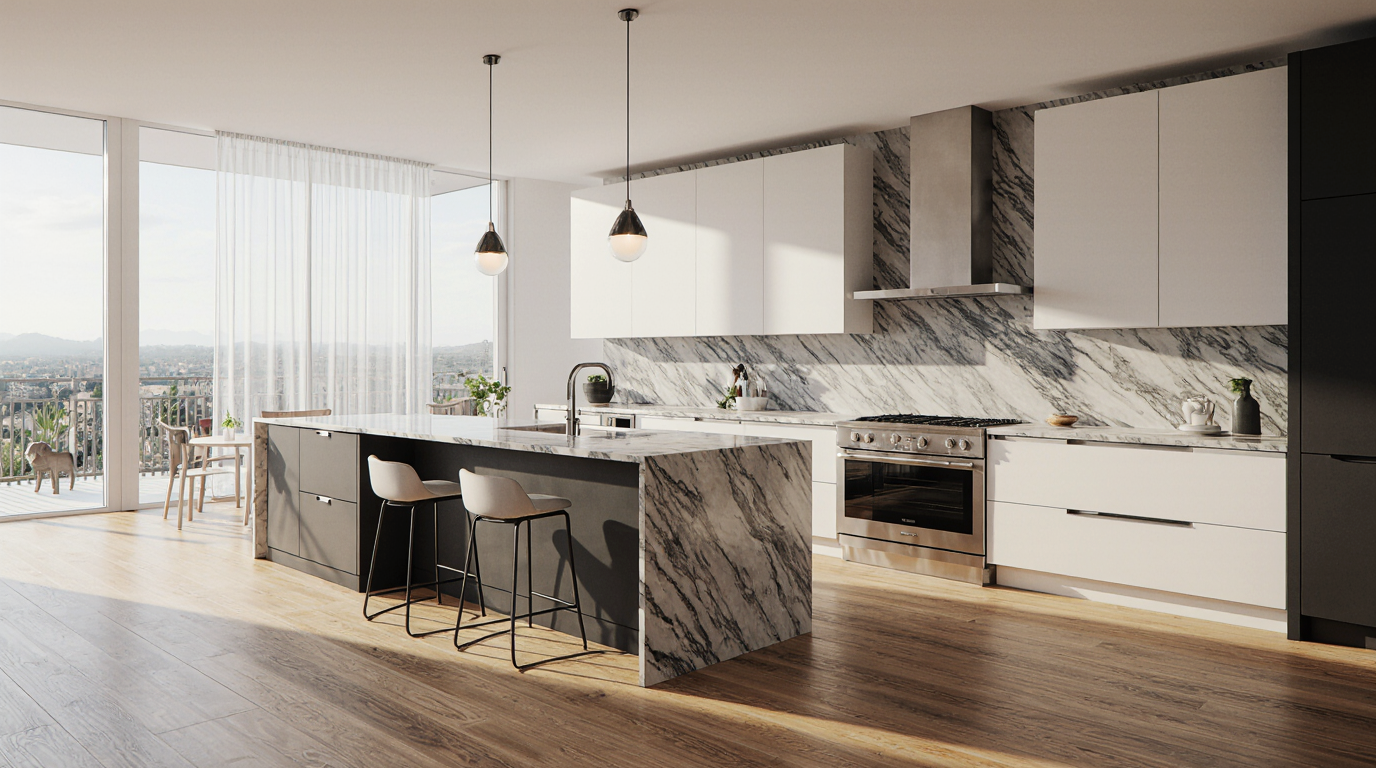
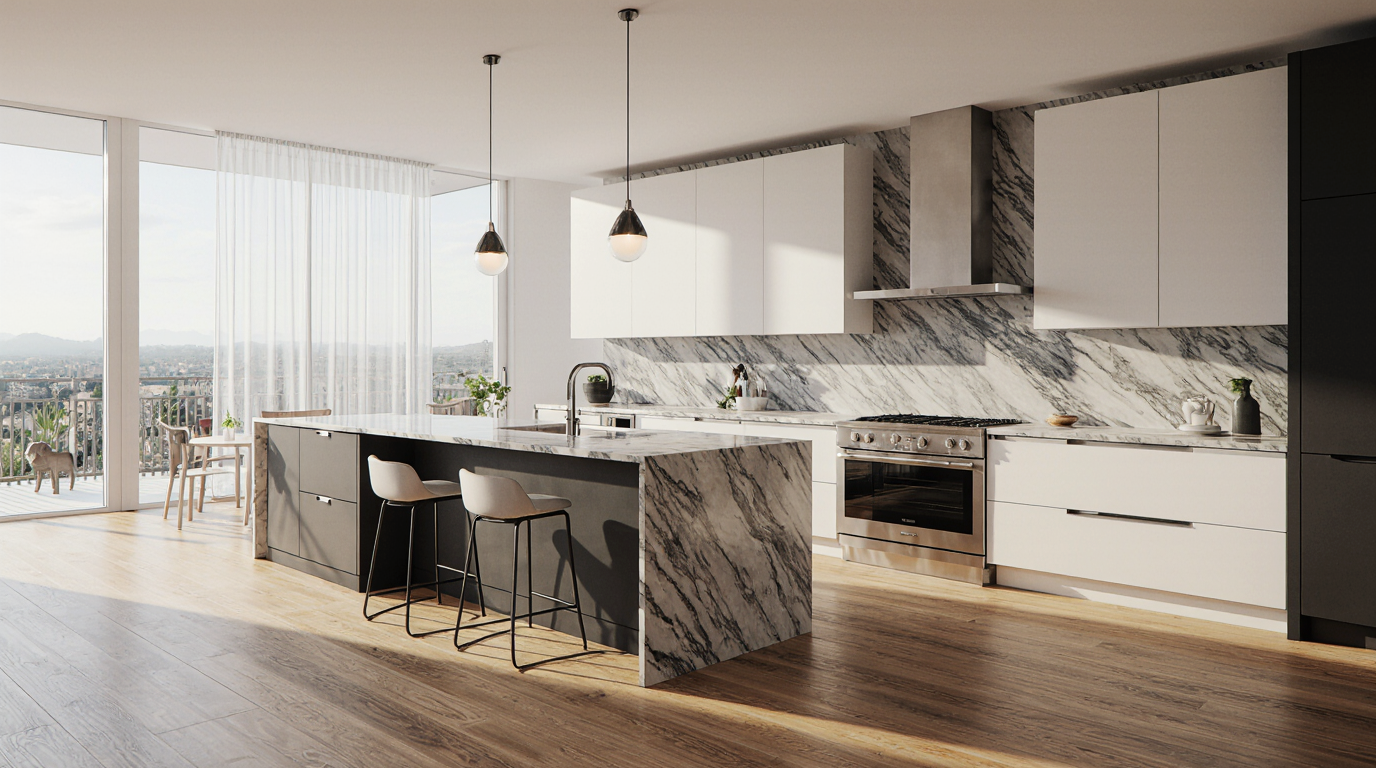
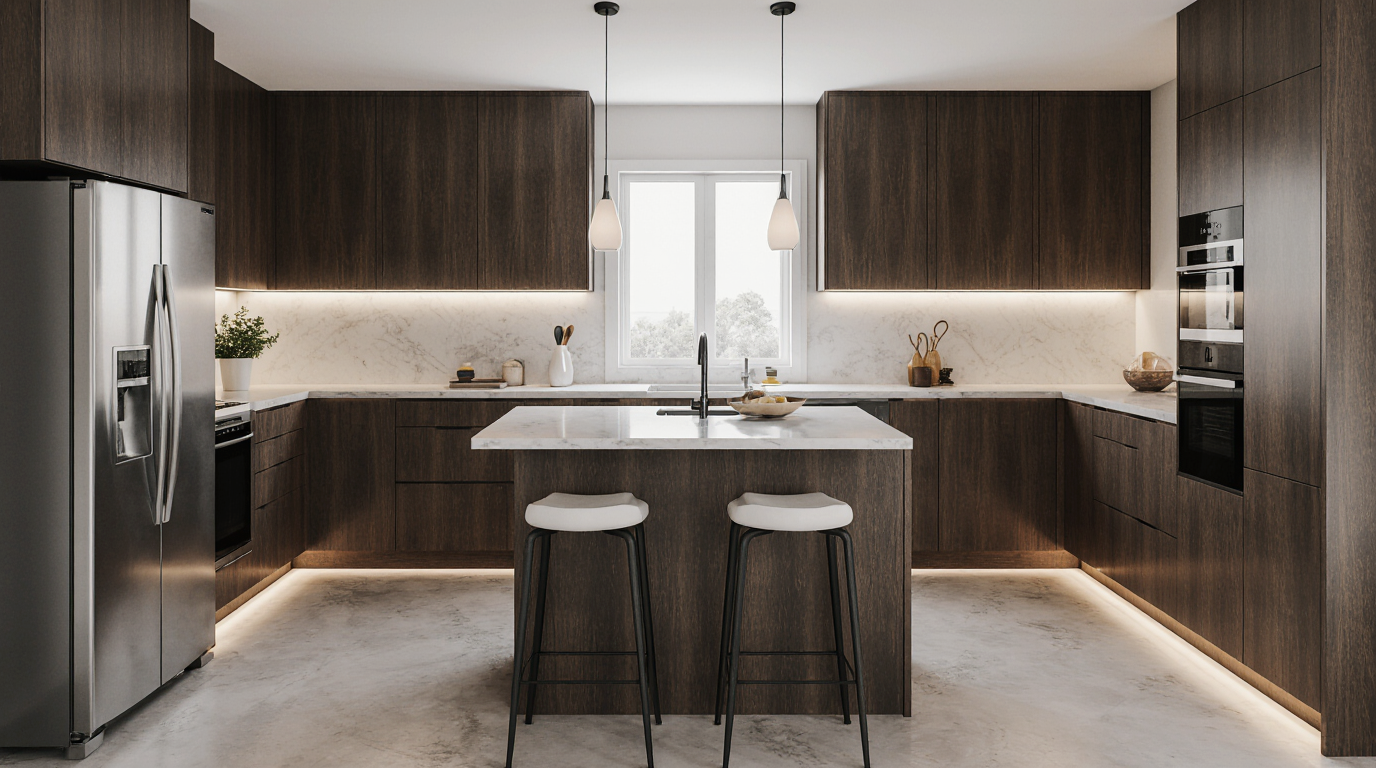
Cabinets in a contemporary minimalist kitchen are pivotal in shaping the room’s aesthetic. Handle-free or flush-panel cabinets in soothing tones, from creamy whites to natural woods, contribute to an airy, uninterrupted visual flow. Bespoke cabinetry maximizes storage, concealing everyday essentials and maintaining a pristine workspace. Innovative pull-out systems enhance functionality while contributing to the kitchen’s refined aesthetic. By carefully selecting materials like high-quality laminates, lacquered finishes, or natural wood, designers can achieve a timeless appeal that remains stylish for years to come.
Lighting is another essential component in creating a modern minimalist kitchen that is both functional and inviting. Layered lighting—task, ambient, and accent—creates balance, providing clarity without visual fatigue. Pendant lights above a central island provide focused illumination for meal prep and casual dining, while recessed LED lights along the ceiling offer soft, uniform lighting that enhances the room’s spacious feel. Integrated strip lighting beneath cabinets enhances workflow and introduces a soft warmth to the environment. Intelligent lighting technology offers dynamic control, adjusting warmth and brightness for optimal comfort and style.
Countertops are a central feature in any modern kitchen, serving as both a practical workspace and a design statement. Materials like quartz, granite, and polished concrete are highly favored for their durability, low maintenance, and elegant appearance. Sleek, uninterrupted surfaces emphasize minimalism, while waterfall edges on kitchen islands introduce a touch of contemporary sophistication. The synergy of minimalist counters with hidden or built-in appliances enhances both style and practicality. This approach not only preserves the clean aesthetic but also enhances the overall functionality of the space.
The selection of floors shapes perception, flow, and cohesion in minimalist kitchens. Materials such as travertine, oversized porcelain, or wood-look engineered planks offer elegance and durability. Understated colors and minimal patterns reinforce calm, emphasizing other design components. Practicality is essential, with surfaces resistant to wear and easy to maintain, ensuring functionality.
High-end appliances are selected to match both the visual and functional demands of a minimalist kitchen. Sleek, high-efficiency appliances not only reduce energy consumption but also complement the overall design. Built-in refrigerators, dishwashers, and microwaves can be concealed behind matching cabinet panels, while modern cooktops and ovens with digital interfaces add a touch of technological sophistication. Appliance integration strengthens the sleek, organized aesthetic central to modern kitchen philosophy.
Intelligent storage maintains order and elegance, providing a designated spot for each kitchen essential. Pull-out spice racks, hidden drawers for utensils, and vertical storage for baking sheets and cutting boards keep essentials organized and easily accessible. Selective shelving introduces visual interest without compromising minimalist principles. Bespoke storage strategies combine functionality with visual coherence, reinforcing minimalist ideals.
Palette selection is subtle, dominated by neutrals with sporadic vibrant highlights. Shades of white, gray, and taupe dominate, providing a calm backdrop for natural wood or metal accents. A single pop of color, whether through a vibrant backsplash, decorative kitchenware, or a statement appliance, can create a focal point that draws the eye without overwhelming the space. Careful moderation of hues promotes balance, cohesion, and enduring style.
Functional layout is central, optimizing movement, comfort, and accessibility. The iconic work triangle is refined for efficiency, comfort, and intuitive cooking flow. Versatile islands integrate prep, dining, and storage, enhancing spatial flexibility. Design emphasizes user-friendly arrangement, ergonomic heights, and strategically placed cabinetry and appliances.
Finally, attention to detail sets a modern minimalist kitchen apart, with subtle design elements adding depth and sophistication. Matte finishes, integrated handles, and hidden hinges create a refined, uncluttered look. Layered textures introduce depth and tactility while maintaining a minimalist ethos. Subtle accents, carefully chosen for impact and function, uphold the kitchen’s visual consistency. Design decisions collectively generate an airy, structured, and sophisticated environment.
Beyond cooking, minimalist kitchens foster calm, engagement, and conviviality. Emphasizing order, premium finishes, thoughtful illumination, and smart storage results in a kitchen that blends aesthetics with usability. This design philosophy proves that minimalism does not equate to austerity but instead celebrates thoughtful, intentional living where every detail serves a purpose and enhances the overall experience.