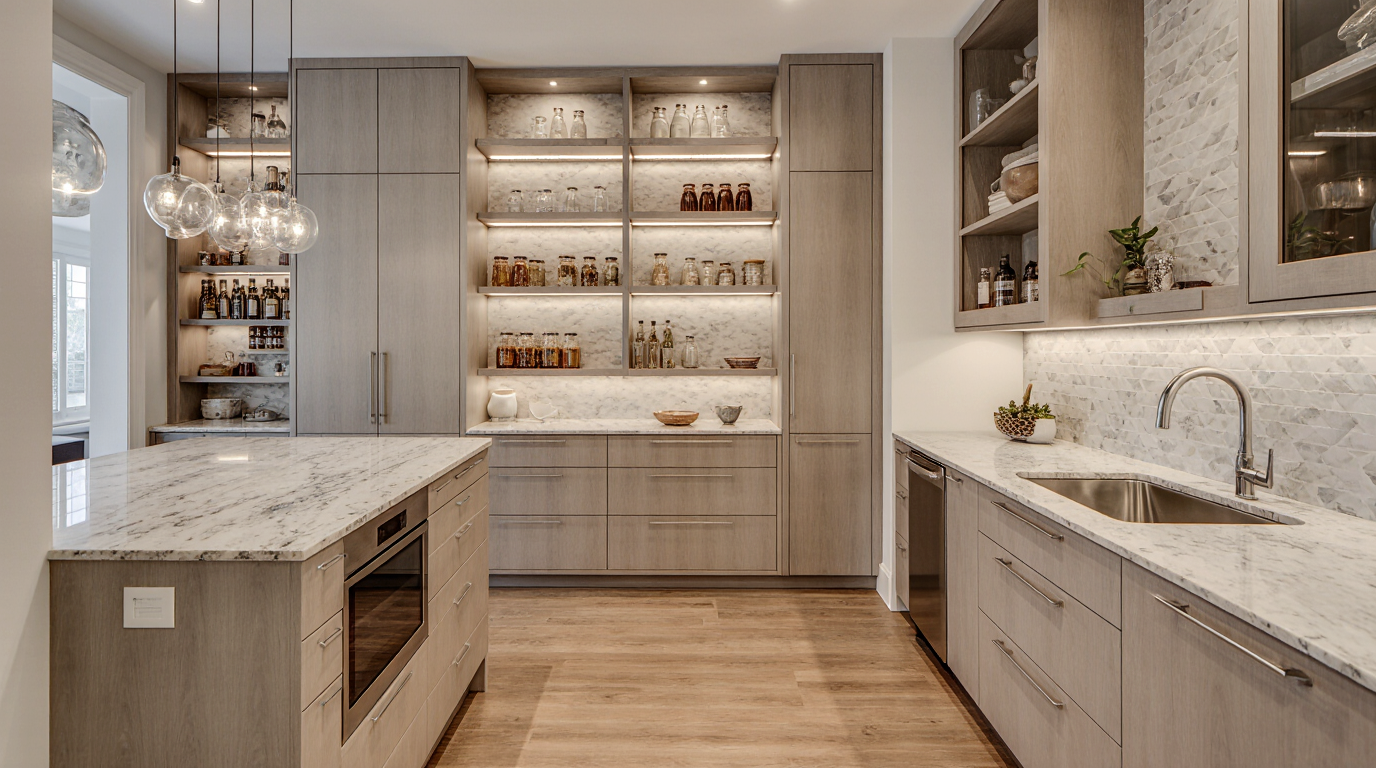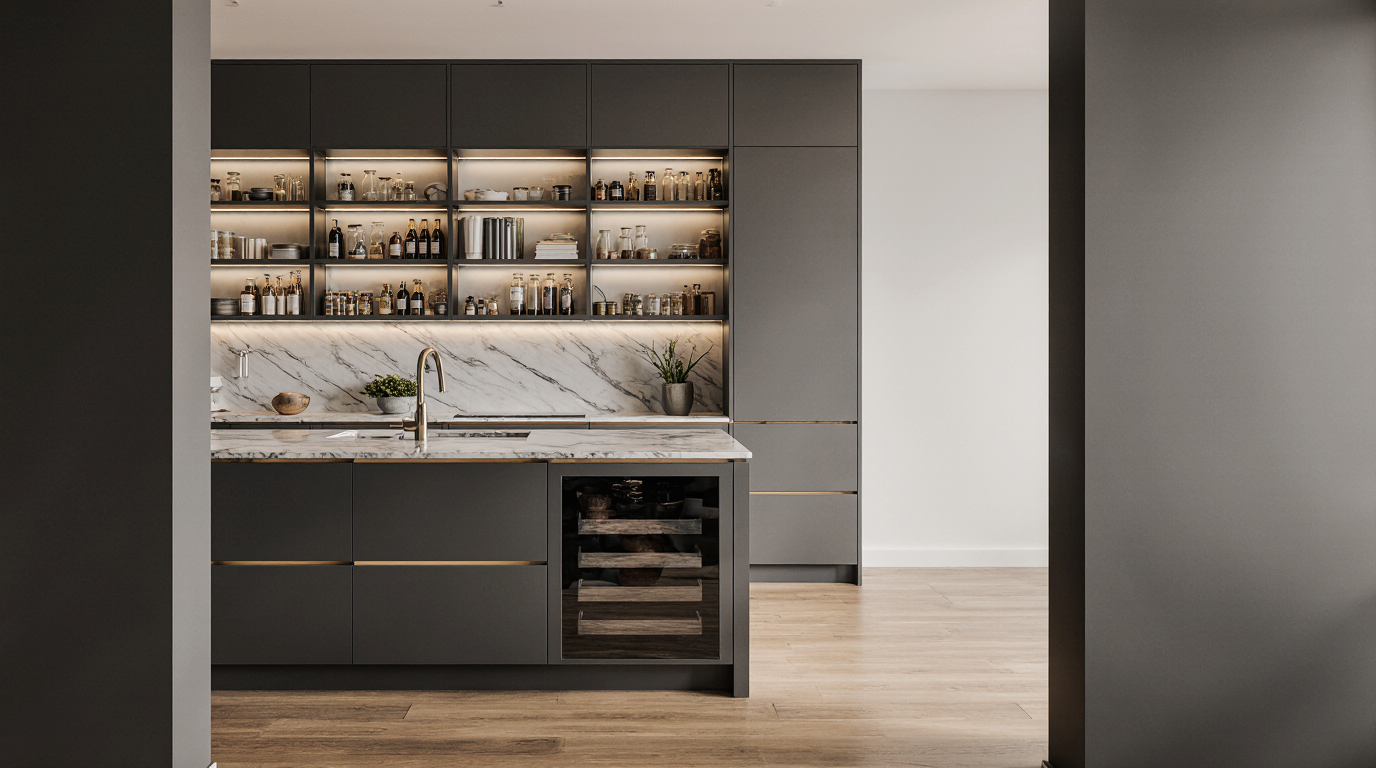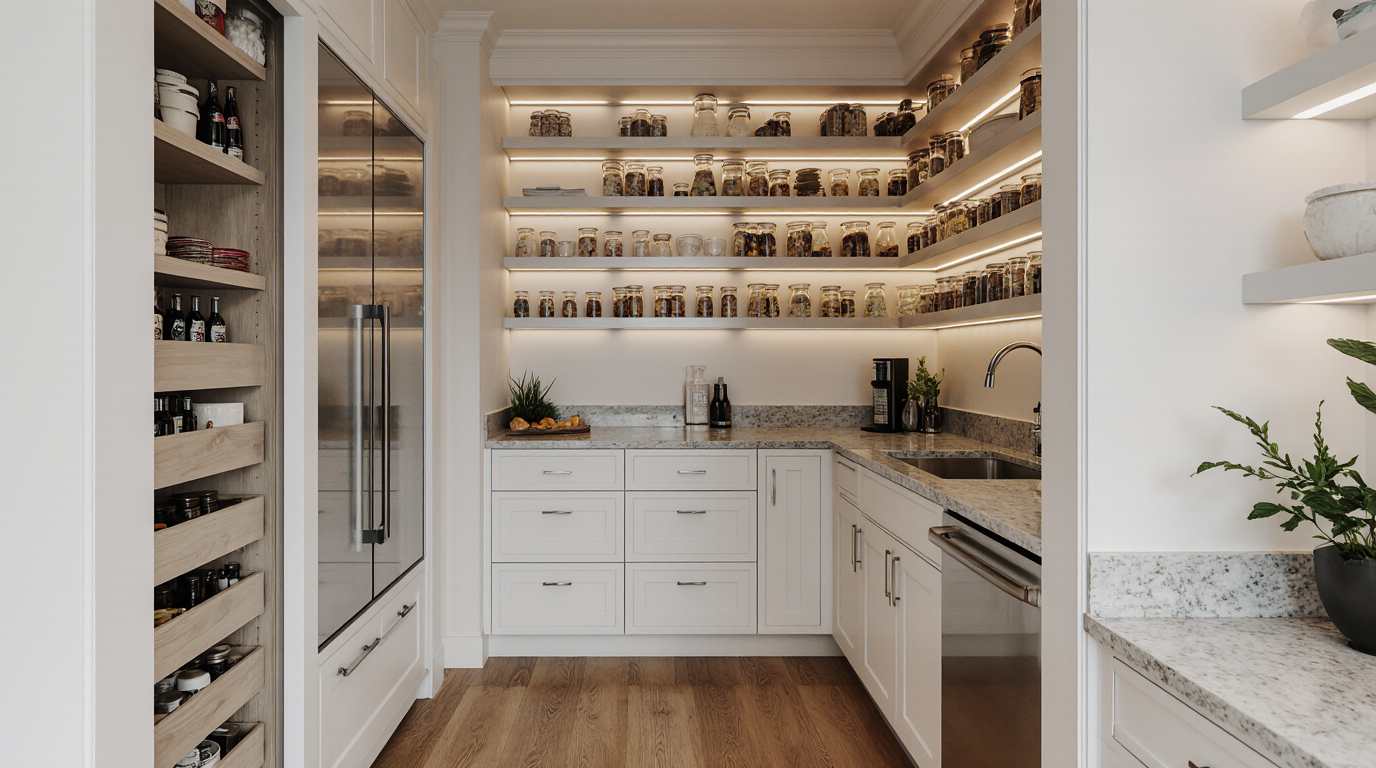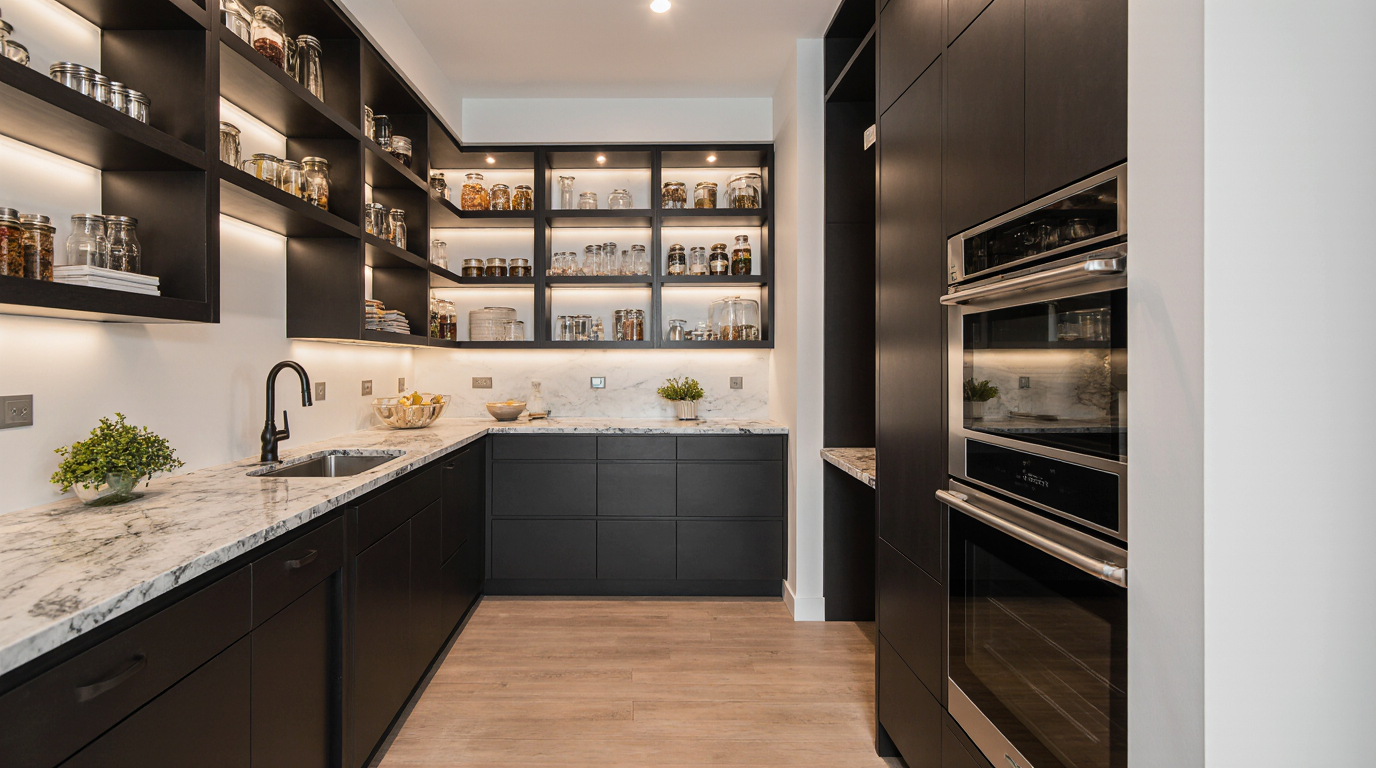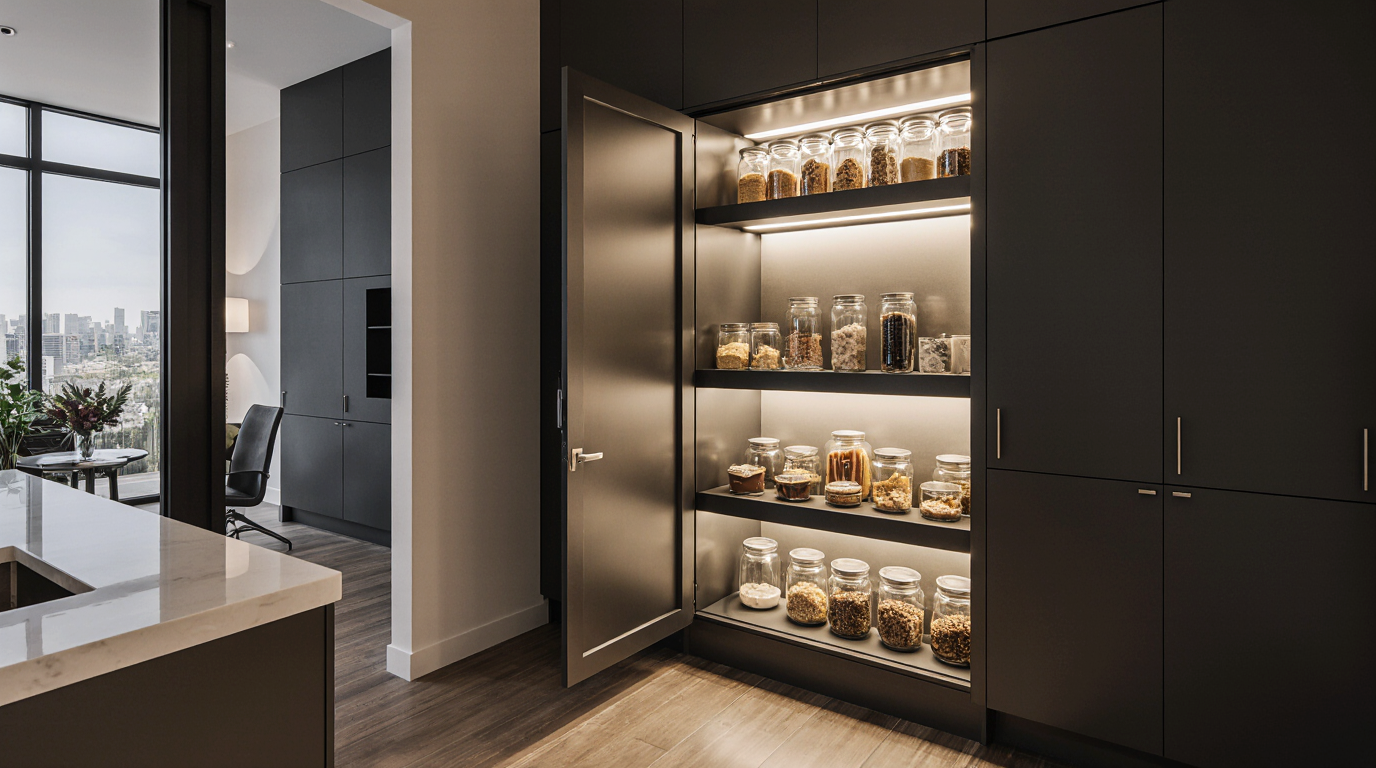
I walked into a stunning Casey Key home last year, a kitchen remodel that cost well into six figures. Everything looked perfect until the client opened the walk-in pantry. The air was thick and musty, and the custom-built MDF shelves, beautifully painted just eight months prior, were already showing subtle swelling at the joints. The problem wasn't the builder; it was the blueprint. It was a design conceived for a dry climate, completely unprepared for the relentless humidity of a Sarasota summer. The most beautiful pantry ideas fail here not because of design, but because of physics.
Your Sarasota Pantry: A Climate-First Approach
From my 15 years designing and building in this region, I can tell you a successful pantry in Sarasota is less about
From my 15 years designing and building in this region, I can tell you a successful pantry in Sarasota is less about trendy storage bins and more about material science and airflow. We have to combat constant moisture, potential pests, and the needs of a part-time residency. The goal is a pantry that protects its contents and its own structural integrity, whether you're here year-round or locking up for six months. Aesthetics must follow function dictated by our coastal environment.
- Material Imperative: Prioritize marine-grade plywood or solid wood over standard MDF or particleboard.
- Ventilation Strategy: Incorporate passive or active ventilation to prevent stagnant, humid air.
- Hardware Specification: Use 304 or 316-grade stainless steel hardware to resist salt-air corrosion.
- Lifestyle Design: Plan for “lock-and-leave” scenarios with sealed containers and pest-resistant features.
The Planning Failures I See Every Season
The costliest pantry mistakes in Sarasota are baked in long before the first shelf is cut. They stem from applying generic design trends to a specific, demanding coastal environment. Homeowners see a beautiful design online and request it, not realizing the materials specified are doomed from the start.
The Most Expensive Failure: Ignoring Humidity's Impact on Materials
The pattern is consistent: a client chooses standard, furniture-grade MDF or particleboard for their pantry shelving because it takes a smooth paint finish and is budget-friendly. Within two to three years, I get the call. The shelves have begun to sag, the paint is bubbling at the seams, and a musty odor has set in. The ambient humidity, even in an air-conditioned home, is enough to cause these composite materials to swell and lose their structural integrity. The “savings” on the initial build are completely erased by the cost of a full tear-out and replacement with appropriate materials like solid wood or marine-grade plywood, which should have been used from the start.
How a Resilient Pantry Is Actually Built in Sarasota
Building a pantry that lasts here involves a process that prioritizes climate resilience. It starts with a conversation not about shelf configuration, but about the home’s HVAC system, its proximity to the water, and how the homeowners use their space, especially if they are seasonal residents.
The process moves from material selection—where we discuss the pros and cons of teak versus sealed maple—to ventilation planning. This might include louvered doors, a small, quiet exhaust fan tied into a humidistat, or simply ensuring the pantry isn't an unconditioned, sealed box. Only after these technical specifications are locked in do we move to the layout, storage solutions, and aesthetics.
Selection Criteria for a Sarasota Pantry Specialist
- They ask about your home's HVAC and dehumidification systems before they discuss wood species.
- Their portfolio includes projects on barrier islands like Siesta Key or Longboat Key, demonstrating experience with high-salt environments.
- They can explain the difference between 304 and 316 stainless steel hardware and when to use each.
- They proactively discuss pest-proofing strategies, a non-negotiable in our subtropical climate.
- They understand the design review process for communities like Lakewood Ranch and can prepare drawings that meet specific HOA guidelines.
Comparing Pantry Construction Approaches
Homeowners often weigh a fully custom pantry against semi-custom options or DIY solutions. For Sarasota, the decision hinges on long-term performance and moisture management, not just initial cost and appearance.
| Feature | Custom Climate-Adapted Pantry | Big-Box Semi-Custom System | DIY Wire Shelving |
|---|---|---|---|
| Material Durability (Humidity) | Excellent (Marine-grade plywood, solid wood, stainless hardware) | Poor to Fair (Primarily MDF/particleboard, standard hardware) | Good (Ventilated, but coatings can chip and rust) |
| Initial Cost | High | Medium | Low |
| Long-Term Cost (5+ years) | Low (minimal replacement/repair) | High (risk of swelling, warping, and replacement) | Medium (risk of rust, sagging, and replacement) |
| Design Flexibility | Total customization for any space, including small pantries | Limited to standard module sizes | Limited by standard lengths and hardware |
When a Fully Custom Pantry Isn't the Right Choice
I am the first to admit that a full custom, climate-resilient pantry is not for every situation. If you are planning a major renovation within the next 3-5 years or if the property is a short-term rental with high turnover and potential for abuse, the significant upfront investment in marine-grade materials may not provide a return. In these cases, a more modular, easily replaceable system like coated wire shelving can be a more pragmatic, albeit temporary, solution.
Safe Hiring and Verification Checklist
Ensuring your pantry investment lasts requires verifying your contractor's understanding of our local conditions. A pretty portfolio is not enough; you need to confirm their technical knowledge for coastal construction.
- Verify Material Specs: Ask for written specification of “marine-grade” plywood. Standard cabinet-grade plywood is not the same and will not perform as well over time.
- Check Their Hardware Supplier: Inquire where they source their drawer slides and hinges. A reputable builder will use suppliers that offer warranted stainless steel or corrosion-resistant coated hardware.
- Discuss Florida Building Code Compliance: Even for a pantry, shelving that holds significant weight must be anchored properly, especially in wind-borne debris regions. Ensure they understand stud-finding and appropriate anchoring techniques, not just drywall anchors.
- Request a Humidistat-Controlled Fan Option: A forward-thinking designer will suggest or at least be knowledgeable about integrating a small exhaust fan (around 50 CFM) tied to a humidistat, which is a game-changer for walk-in pantries.
- Confirm HOA Submission Experience: If you live in a master-planned community, ask for an example of a design package they’ve successfully submitted to an architectural review board.
- Review Their Sealing/Finishing Process: Ask how they seal wood, especially end-grains. All six sides of every wood component should be sealed before installation to prevent moisture intrusion.
Decisions That Determine the Pantry's Lifespan
The success of a Sarasota pantry remodel comes down to a few key decisions made at the very beginning. It's about prioritizing the unseen structural elements over the visible finishes until the foundation is right.
A client I worked with in The Lake Club was initially focused on a specific shade of blue paint for the pantry. I had to pivot the conversation to the substrate that the paint would be applied to. We spent an entire meeting discussing the merits of solid maple versus a high-end, formaldehyde-free marine-grade plywood. Once they understood the risk of the paint cracking and peeling off swelling MDF, the material choice became the priority. The paint color was an easy decision after that.
The Exact Moment When the Majority Gets It Wrong
The critical mistake happens when a homeowner signs off on a design based on a 3D rendering without a corresponding material specification sheet. The rendering shows the layout, not the composition. I insist that clients sign a separate, detailed spec sheet that lists the exact materials for cabinet boxes, shelves, drawer fronts, and the grade of the hardware. This prevents a builder from substituting a lower-grade, moisture-vulnerable material that looks identical on day one but fails by year three.
Practical Answers for Your Sarasota Pantry Project
Navigating a pantry remodel here involves more than just design. You have to contend with local building practices, community rules, and the realities of our climate.
Do I Need a Permit for a Pantry Remodel?
Generally, for a simple “rip and replace” of shelving in an existing pantry in Sarasota County, a permit is not required. However, the moment you alter the structure, move electrical outlets for lighting or small appliances, or add new plumbing, you will need a permit from the Sarasota County Building Department. Adding a dedicated ventilation fan that penetrates an exterior wall will almost certainly trigger a permit requirement. The process typically adds 2-4 weeks to the project timeline.
How Do HOA Design Rules Impact Pantry Design?
For many communities, the HOA's architectural review board is concerned with anything visible from the outside. However, for major kitchen remodels that include the pantry, they may require a full plan submission. Where it most often impacts the pantry is on louvered doors or ventilation grilles. Some HOAs have specific aesthetic rules about door styles, even for interior doors, so it's critical to check your community's covenants before finalizing a design that relies on specific door types for airflow.
What's the Real Cost of Upgrading to Humidity-Resistant Materials?
The material cost for marine-grade plywood can be 40-60% higher than for standard MDF or industrial-grade particleboard. For a medium-sized walk-in pantry, this might translate to an additional $1,500 - $3,000 in raw material costs. While that's a significant number, the cost to tear out a failed pantry and rebuild it in five years is easily double that, not to mention the disruption and potential loss of stored food due to mold or pests. It's a classic “pay now or pay much more later” scenario unique to our humid environment.