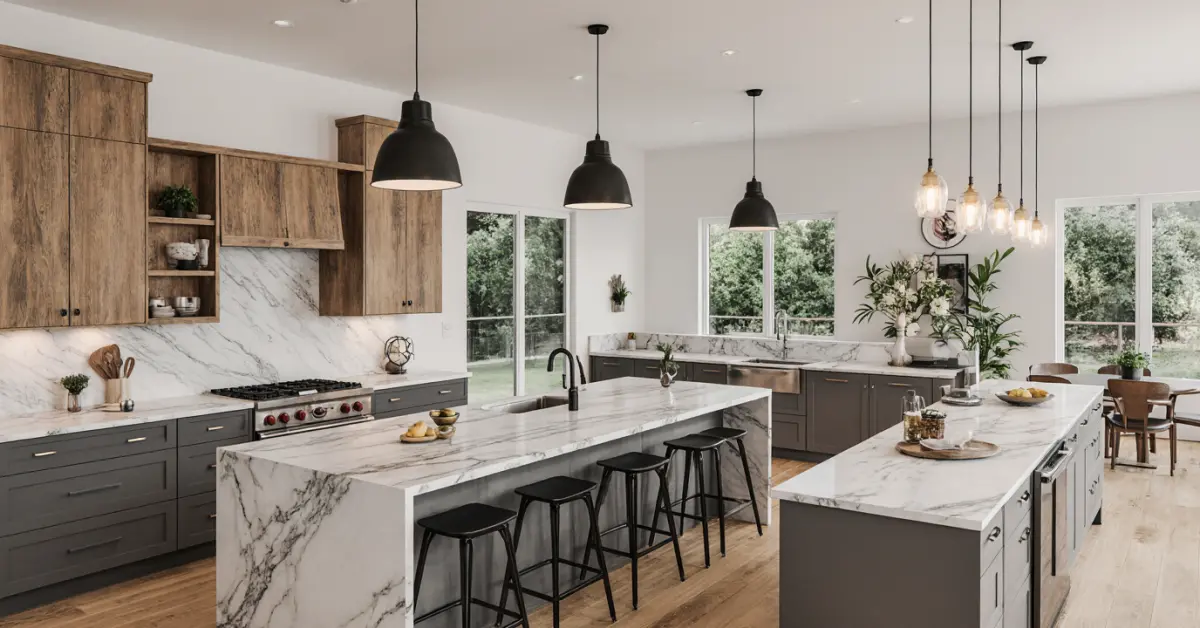
Executive Summary: Navigating Kitchen Design in a Coastal Climate
From over a decade of executing high-end kitchen projects from Longboat Key to The Lake Club, I can state that a
From over a decade of executing high-end kitchen projects from Longboat Key to The Lake Club, I can state that a successful design here is 30% aesthetics and 70% material science. The humid, salt-laden air is an unforgiving variable that dictates everything from cabinet construction to appliance selection. Ignoring it leads to premature failure, turning a dream kitchen into a constant source of maintenance headaches.
- Material Priority: The core of your cabinets must be marine-grade plywood or a high-density polymer, not standard MDF, to prevent swelling and delamination.
- Hardware Specification: All hinges, pulls, and drawer glides must be specified as 316 stainless steel or a corrosion-resistant equivalent; standard steel will rust.
- Ventilation Strategy: A high-CFM (cubic feet per minute) range hood isn't just for cooking odors; it's a critical tool for daily humidity and heat management.
- HOA Compliance: In communities like Lakewood Ranch or The Founders Club, the Design Review Committee (DRC) process can add 45-60 days to your timeline before any work begins.
The Planning Failures That Haunt Sarasota Homeowners
The most common missteps I see happen long before the first cabinet is ordered. They are rooted in underestimating the aggressive nature of our local environment. Clients fall in love with a design from a magazine based in a dry climate, and the conversation about adapting it for Sarasota's reality happens too late, if at all.
The Most Expensive Failure: Ignoring Micro-Environments
A home on Siesta Key is not the same as a home in an inland golf community, yet I often see the exact same material specifications used for both. The client with the waterfront property faces direct salt spray; their exterior-facing kitchen walls and windows have a different level of exposure. The most costly error is a one-size-fits-all approach to materials. I managed a project on Casey Key where the client insisted on a specific type of decorative metal hardware they loved. Despite warnings, they proceeded. Within 18 months, every piece was pitted and corroded from the salt air, requiring a full, labor-intensive replacement that cost nearly 40% of the original hardware budget just to fix.
How a Resilient Kitchen Design Unfolds in Practice
A successful project follows a deliberate sequence that prioritizes environmental resilience first, then layers aesthetics on top. It begins not with colors and styles, but with a technical audit of the home's location, ventilation, and sunlight exposure. This foundational work informs every subsequent decision about layout and finishes.
Selection Criteria for a Sarasota-Proof Kitchen
When I consult with homeowners, I steer them away from generic checklists. For a kitchen to last in Sarasota, the evaluation criteria must be localized. Here are the non-negotiables I insist on:
- Cabinet Box Construction: Is the box made from marine-grade plywood or a comparable moisture-resistant material? Standard particleboard or MDF is a guaranteed failure point.
- Finish Durability: For cabinetry, is the finish a catalyzed conversion varnish or a 2K polyurethane? These offer superior resistance to moisture and UV fading from intense Florida sun compared to standard lacquer.
- HOA & Permitting Timeline: Has the contractor built in a realistic buffer for your specific homeowner association's approval process? A 60-day review period is common in many master-planned communities and can derail a project timeline if not anticipated.
- Appliance Corrosion Warranty: Do the chosen appliances, particularly outdoor kitchen components, have explicit warranties covering corrosion? Many standard warranties have exclusions for salt-air environments.
Comparing Design Approaches for a Coastal Home
The choice is not just between styles but between underlying construction philosophies. A standard kitchen design, often pushed by volume builders, is fundamentally different from one engineered for coastal longevity. The upfront cost is higher for the latter, but the total cost of ownership is significantly lower.
When a Climate-Adapted Design Isn't the Right Choice
There are scenarios where investing in marine-grade everything is overkill. If you're planning a cosmetic update to a condo you intend to sell in 2-3 years, the significant upcharge for premium materials may not provide a return. In this case, a more pragmatic approach using high-quality, well-sealed MDF cabinets and ensuring excellent ventilation can be a perfectly sound financial decision. The key is making the choice consciously, understanding the trade-off in long-term durability for a lower initial investment.
| Feature | Standard Approach | Coastal-Adapted Design | DIY / Big-Box Solution |
|---|---|---|---|
| Cabinet Core | MDF or Particleboard | Marine-Grade Plywood | Stock Particleboard |
| Hardware | Standard Plated Steel | 316 Stainless Steel | Basic Zinc-Plated |
| Typical Lifespan | 7-12 years | 20+ years | 3-7 years |
| Upfront Cost | Baseline | +20-35% | -40-50% |
Safe Hiring and Specification Checklist
Vetting a designer or builder in Sarasota requires asking different questions. Their portfolio might be beautiful, but you need to probe for technical knowledge specific to our region. A pretty kitchen that fails in five years is not a success.
- Verify their General Contractor license is active and insured with the Florida Department of Business and Professional Regulation (DBPR).
- Ask for project references specifically on one of the barrier islands (e.g., Longboat, Lido, Siesta Key) and ask those clients about material performance over time.
- Request a detailed material specification sheet. Look for brand names and grades for plywood, hardware, and finishes—vague terms like “high quality” are a red flag.
- Confirm they have experience navigating the specific permitting process with the Sarasota County Building Department, including familiarity with Florida Building Code requirements for wind-load and anchoring.
- Discuss their protocol for protecting the rest of the home from construction dust and debris, especially HVAC systems in a humid climate where mold is a concern.
- Clarify their process for managing and submitting plans to your local HOA or condo association's design review board.
Decisions That Determine the Long-Term Outcome
Two clients can start with the same budget and the same aesthetic goal, yet end up with wildly different results. The divergence always comes down to a few key decisions made at the very beginning of the process, often based on a misunderstanding of where value truly lies in a coastal kitchen project.
The Exact Moment the Majority Gets It Wrong
The critical error happens during the material selection phase. Most people allocate the bulk of their budget to visible items: the countertop slab, the backsplash tile, the brand of the appliances. The correct approach is to allocate budget to the invisible structure first. I advise my clients to finalize the cabinet box construction (marine-grade ply), the hardware (316 stainless), and the finish type (catalyzed varnish) before they even look at countertop samples. Securing the non-negotiable, resilient core of the kitchen ensures that the beautiful, visible elements you choose later will have a stable, durable foundation to rest on for decades.
Practical Answers About Kitchen Projects in Sarasota
Navigating the logistics of a kitchen renovation here involves more than just design. It means interfacing with local regulations and community-specific rules that can impact timelines and costs. Understanding these operational realities is crucial for a smooth project.
Understanding Sarasota County Permitting Timelines
Any kitchen project involving changes to plumbing, electrical, or structural walls requires a permit from Sarasota County. A common bottleneck is the plan review stage. For a straightforward kitchen remodel, it's wise to budget at least 30-45 days for the initial review process after submission. This does not include time for any required revisions, which can add weeks. This timeline directly impacts start dates and must be factored into any seasonal resident's schedule.
Navigating HOA Design Review Boards
In communities like Lakewood Ranch or Prestancia, the Homeowners Association's Design Review Committee (DRC) or Architectural Review Board (ARB) has final say on almost everything, even interior changes if they are part of a larger renovation. Submissions often require detailed plans, material samples, and color swatches. The board may only meet once a month, so a missed deadline or incomplete submission can easily cause a 30-day delay before your project is even considered.
Florida Building Code and Cabinet Installation
A little-known aspect of the Florida Building Code, particularly in coastal areas, relates to how cabinetry is secured. While not always enforced on minor remodels, in new construction or substantial renovations, inspectors may look for robust anchoring of upper cabinets to the wall structure. This is to ensure they do not become projectiles in a high-wind event. Using longer, structural-grade screws and ensuring solid blocking within walls is a best practice that a knowledgeable local contractor will implement by default.