Executive Summary: Countertop Selection in Sarasota's Coastal Climate
From my 15 years specializing in countertop installations across Florida, I've seen that Sarasota's blend of high
From my 15 years specializing in countertop installations across Florida, I've seen that Sarasota's blend of high humidity, intense UV exposure, and salt air requires a specific material strategy. Homeowners here, especially in waterfront areas like Siesta Key or Longboat Key, must prioritize non-porous and UV-stable materials to avoid premature aging, staining, and costly replacements. The focus should be less on trend-chasing and more on long-term performance in a demanding coastal environment.
- Climate is Non-Negotiable: Materials like unsealed marble or butcher block are high-risk choices due to moisture absorption and potential for mold or warping.
- UV Stability Matters: Many engineered materials, especially darker quartz colors, can discolor over time with direct, prolonged sun exposure common in Sarasota homes.
- HOA Covenants are Key: In communities like Lakewood Ranch, exterior-facing kitchen windows mean countertop visibility can be subject to design review board approval.
- Installation is as Critical as Material: Proper sealing of seams and substrate preparation is paramount to prevent moisture intrusion, a common failure point I've had to correct on projects.
The Planning Failures That Lead to Regret
The most common mistakes I see are not in the final color choice, but in the initial planning phase. Homeowners often fall in love with a material they saw online or in a magazine without understanding its practical limitations in our specific climate. This disconnect between aesthetic desire and environmental reality is where costly errors are born.
The Underestimation of Sunlight
The most expensive failure is ignoring the path of natural light through your kitchen. I worked on a project in a beautiful bayfront home in the Harbor Acres neighborhood where the client insisted on a deep, rich navy blue quartz for their large island. The kitchen had floor-to-ceiling west-facing windows. Within three years, the side of the island bathed in the afternoon sun had visibly faded to a duller, almost purplish hue compared to the shaded side. The manufacturer's warranty explicitly excluded UV damage. The only fix was a complete replacement of a very expensive, custom-fabricated slab.
How Countertop Projects Unfold in Practice
A countertop project in Sarasota is a multi-stage process involving more than just picking a slab. It starts with an in-home consultation to measure and assess site conditions, like sunlight exposure and kitchen layout. From there, we move to material selection, slab viewing at a local supplier, and final templating. The fabrication is done off-site, and the installation typically takes one to two days, followed by plumbing reconnection.
Selection Criteria for Sarasota Homeowners
When I consult with clients, I steer them toward a decision framework tailored to our local environment. Simply choosing what looks good at the showroom is a recipe for disappointment.
- Evaluate Porosity First: Ask for the material's water absorption rate. Anything above 0.5% is generally a red flag for a humid climate unless you are committed to rigorous, frequent sealing.
- Verify UV Resistance: For kitchens with significant natural light, demand to see the manufacturer’s warranty regarding colorfastness and UV stability. Some high-end materials like Dekton or certain porcelain slabs offer superior UV resistance.
- Consider Salt Air Corrosion: For homes on the barrier islands (Lido Key, Siesta Key), even indoor-adjacent hardware and fixtures can be affected. Ensure any integrated metal elements or supports are marine-grade stainless steel.
- Check HOA/Condo Association Rules: Many Sarasota condo associations have strict rules on work hours, debris removal, and even the type of underlayment used to mitigate noise transfer. These rules can add days and costs to the project if not planned for.
Comparing the Top Material Choices for Coastal Living
The debate between natural stone and engineered surfaces is different here. Performance in our specific climate—facing heat, humidity, and sun—should be the deciding factor. Below is a realistic comparison for a Sarasota homeowner.
| Material | UV & Fade Resistance | Humidity & Stain Resistance | Typical Installed Cost (per sq. ft.) |
|---|---|---|---|
| Granite | Excellent (Natural stone is generally UV stable) | Good to Very Good (when properly sealed annually) | $60 - $130 |
| Quartz (Engineered) | Fair to Good (Resins can yellow/fade with direct sun) | Excellent (Non-porous, no sealing required) | $70 - $150+ |
| Marble | Excellent (Does not fade) | Poor (Highly porous, etches and stains easily) | $80 - $200+ |
| Porcelain/Sintered Stone | Excellent (Impervious to UV rays) | Excellent (Zero porosity, highly resistant to stains) | $85 - $185 |
When an Exotic or Natural Stone Is Not the Right Choice
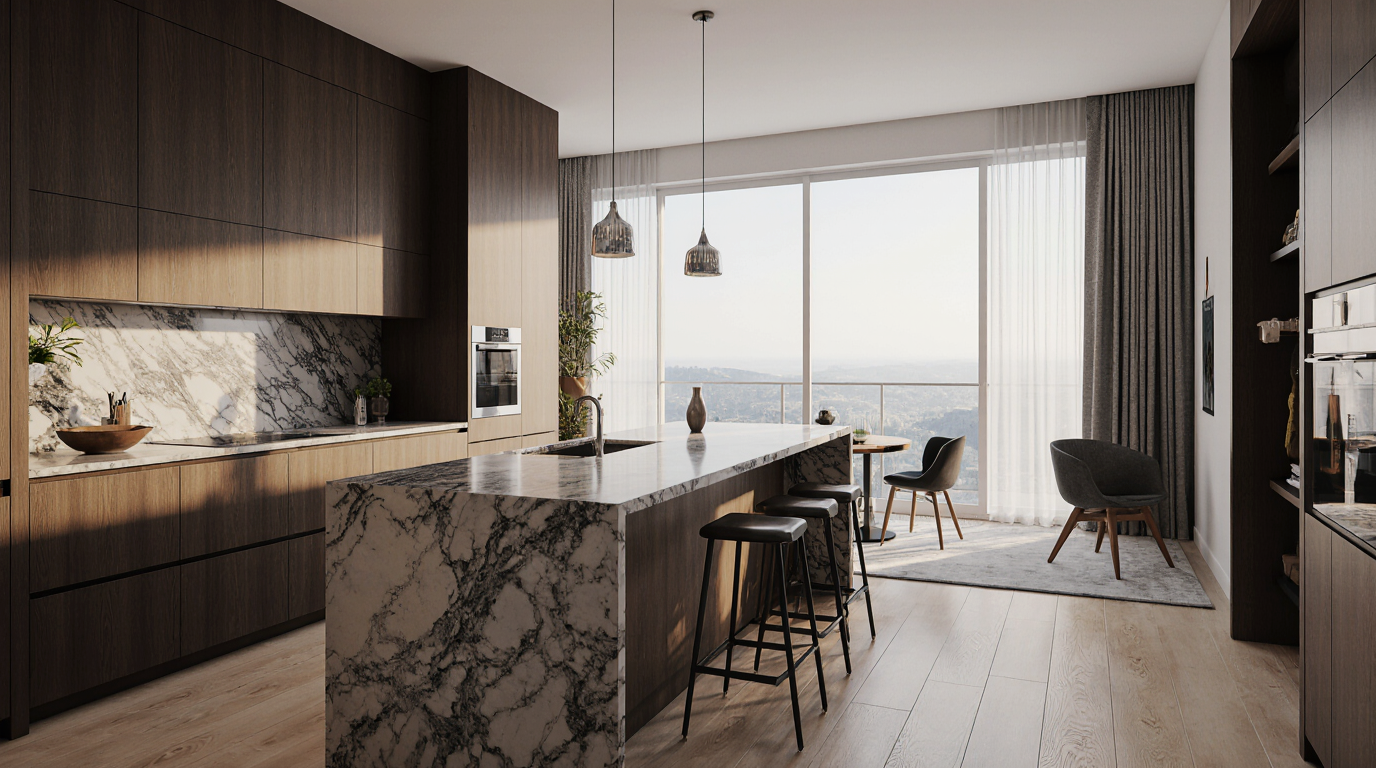
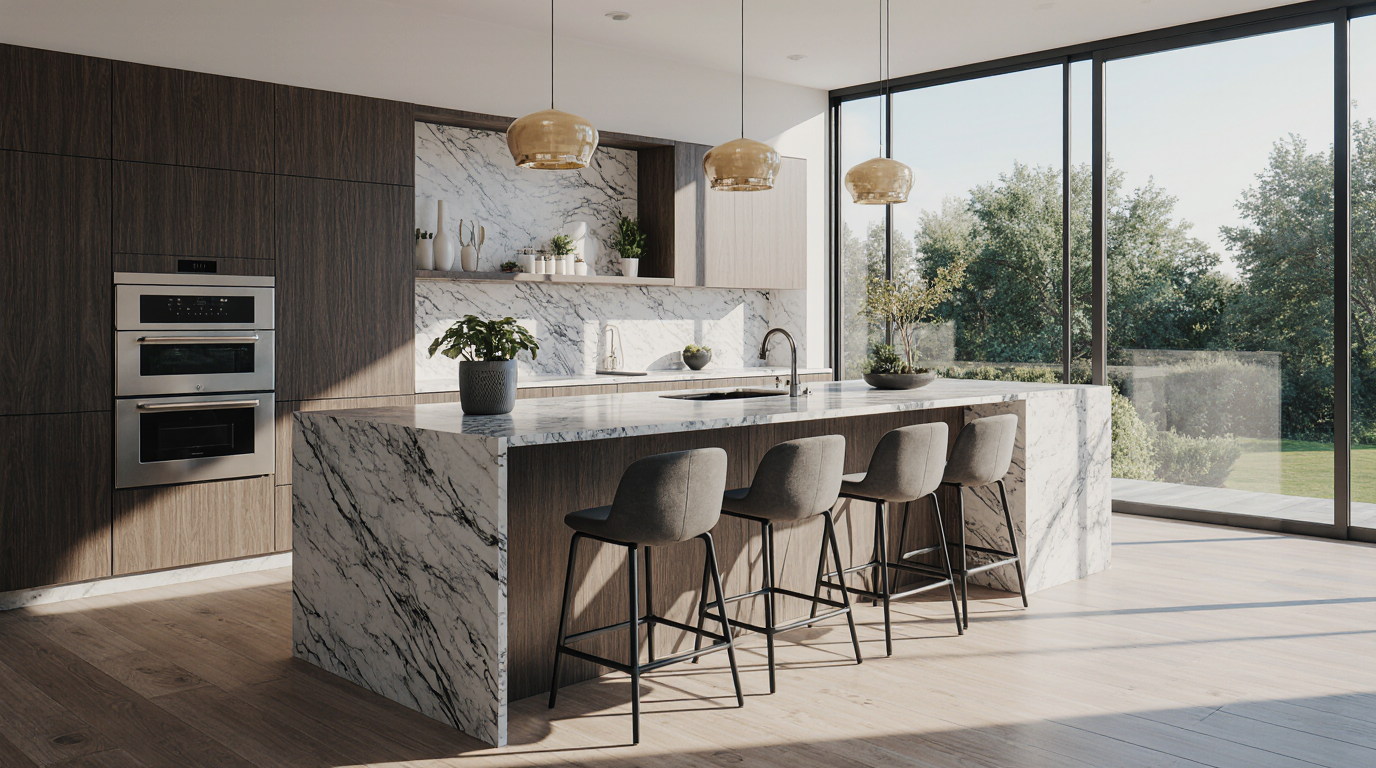
An exotic stone like a rare amethyst or a veiny marble can be a stunning centerpiece, but it's often the wrong choice for a high-use family kitchen in a seasonal home. If the property is rented or used by extended family, the meticulous care required (immediate wipe-ups, specific cleaners, annual sealing) is unlikely to be followed. In these cases, the heartbreak and cost of repairing a deeply stained or etched surface far outweigh the initial aesthetic win. A high-quality quartz or porcelain will provide a better-looking surface five years down the line with minimal stress.
A Safe Hiring and Installation Checklist
Verifying your installer is as important as choosing your material. A beautiful slab can be ruined by a poor installation, leading to cracked seams, uneven surfaces, and moisture damage.
- Verify the contractor holds a current, valid license with Sarasota County and the State of Florida, along with liability and worker's compensation insurance.
- Ask for references from projects completed in your specific area (e.g., a waterfront condo on Longboat Key has different logistical challenges than a single-family home in Palmer Ranch).
- Confirm they use a laser templating system for precision. Digital templating is the standard for high-end custom countertops and minimizes gaps.
- Discuss seam placement before you sign the contract. A good fabricator will plan seams to be as inconspicuous as possible, often matching the veining of the stone.
- Ensure the contract specifies the exact slab you selected (with serial numbers if available) and details the edge profile (e.g., mitered, eased, ogee).
- For any project requiring structural changes, confirm they will pull the necessary permits from the Sarasota County Building Department. Minor countertop replacements often don't, but layouts that move plumbing or electrical always do.
Decisions That Determine the Final Outcome
The success of a countertop installation is often sealed long before the installers arrive. It's determined by a few key decisions that many homeowners rush through in their excitement to get to the finished product. The most important is resisting the urge to design in a vacuum.
The Moment Most Homeowners Get It Wrong
The critical mistake happens when the countertop is chosen before the lighting—both natural and artificial—is finalized. I've seen clients approve a slab in a brightly lit, air-conditioned showroom, only to find it looks dramatically darker or shows unexpected undertones in the warm, ambient light of their own kitchen. The single most effective action is to get a physical sample of the actual slab—not just a generic square—and view it in your kitchen at different times of day: morning, afternoon, and under your planned artificial lighting at night. This simple step prevents the most common and expensive form of buyer's remorse.
Practical Answers for Sarasota Countertop Projects
Navigating the local specifics of a countertop installation can be complex. Here are answers to common operational hurdles I help clients overcome in Sarasota.
How do HOA Design Reviews Impact Timelines?
In communities like Lakewood Ranch or The Founders Club, the homeowners' association (HOA) design review committee must approve all exterior-visible modifications. If your kitchen window faces the street or a golf course, your countertop choice might be subject to review. This process can add 30 to 60 days to your project timeline before any work can begin. You must submit samples and specifications for approval, and failing to do so can result in fines and a stop-work order.
Are There Special Requirements for High-Rise Condos?
Yes. High-rise condos from Downtown Sarasota to Longboat Key have strict regulations. Installers must use designated service elevators, adhere to limited working hours (often 9 AM to 4 PM, no weekends), and protect common areas. More importantly, getting a large slab up to a high floor can be a logistical challenge requiring specialized equipment, which can add to the labor cost. Always confirm the building's requirements with the condo association management before finalizing an installation date.
What Does the Florida Building Code Say About Countertops?
While the Florida Building Code doesn't regulate countertop materials themselves, it governs the electrical and plumbing work associated with them. If you are installing a new sink, faucet, dishwasher, or outlets in an island, all that work must be done by a licensed plumber or electrician and will require a permit and inspection from Sarasota County. Trying to save money by having a countertop installer handle this work is a code violation and can create significant problems with insurance or a future home sale.