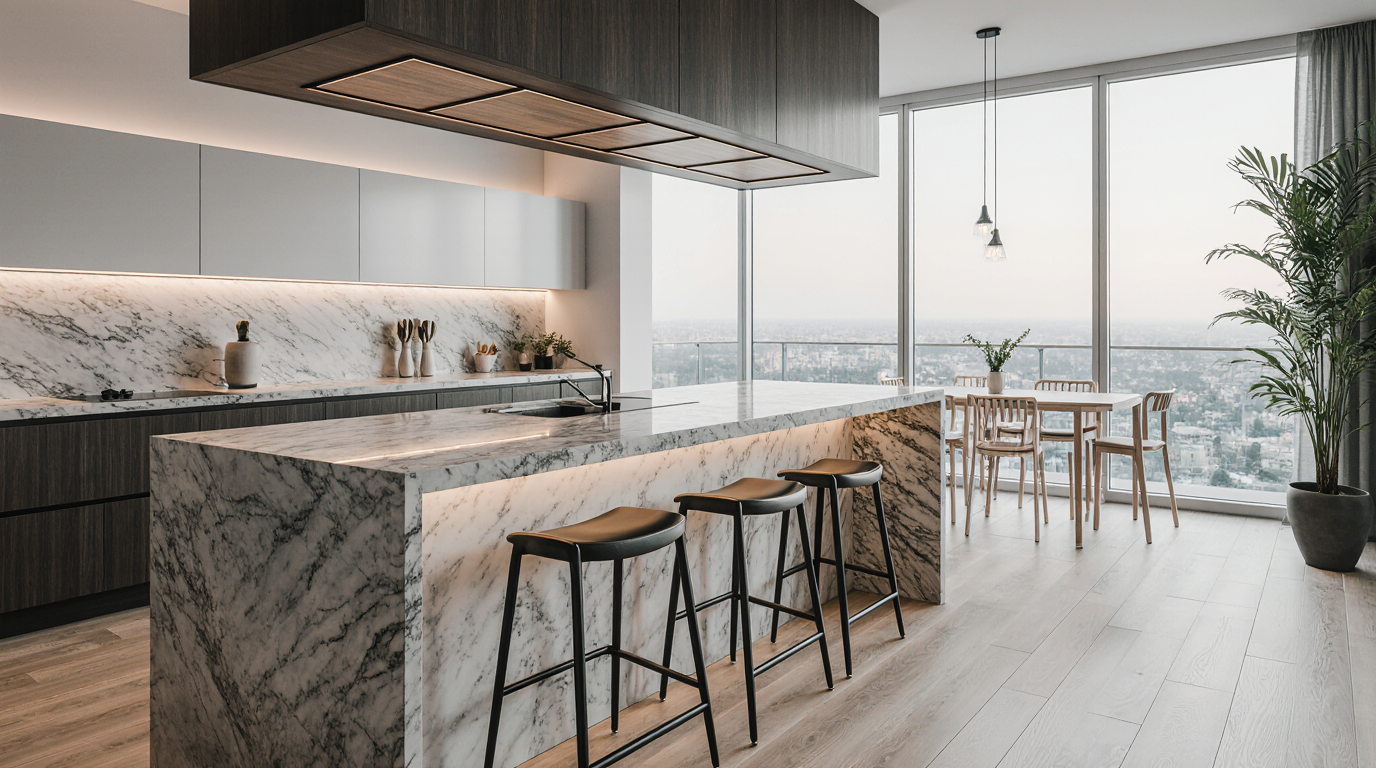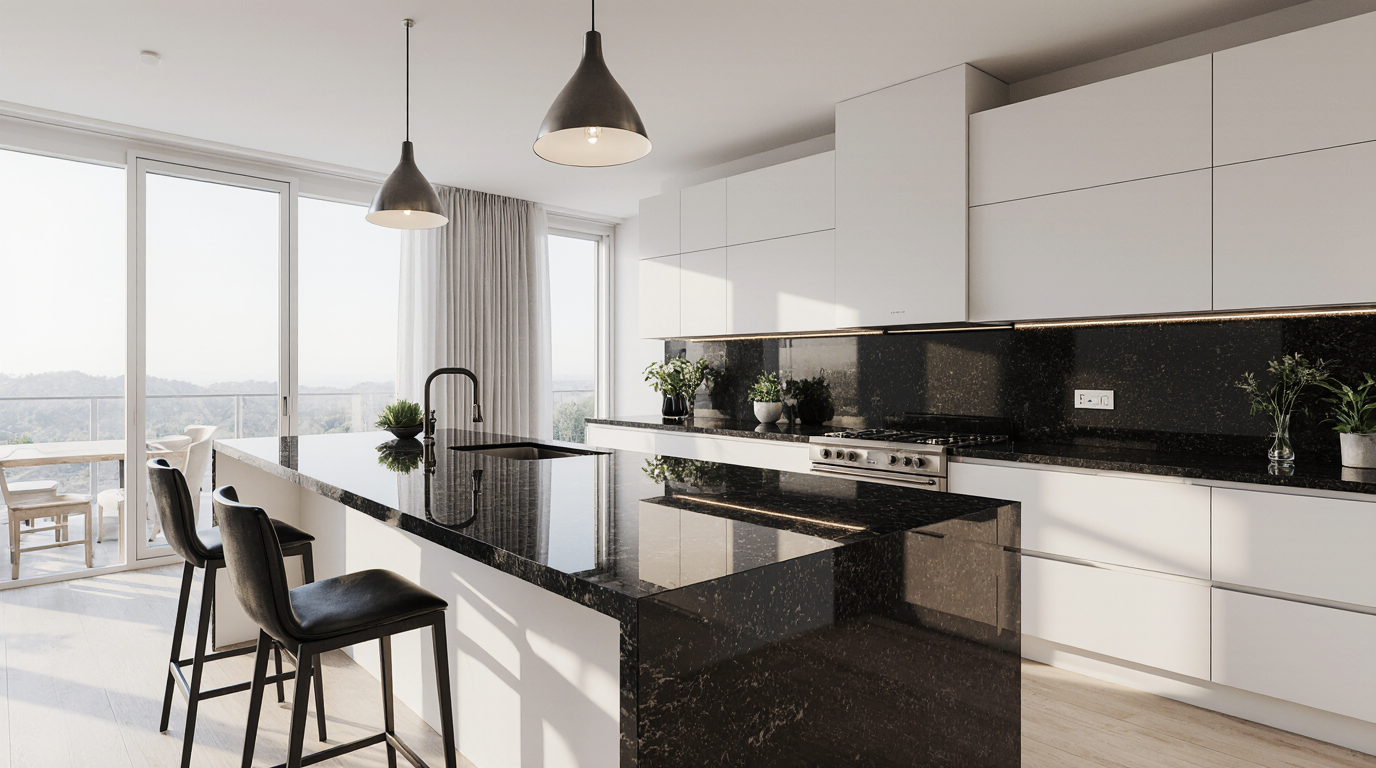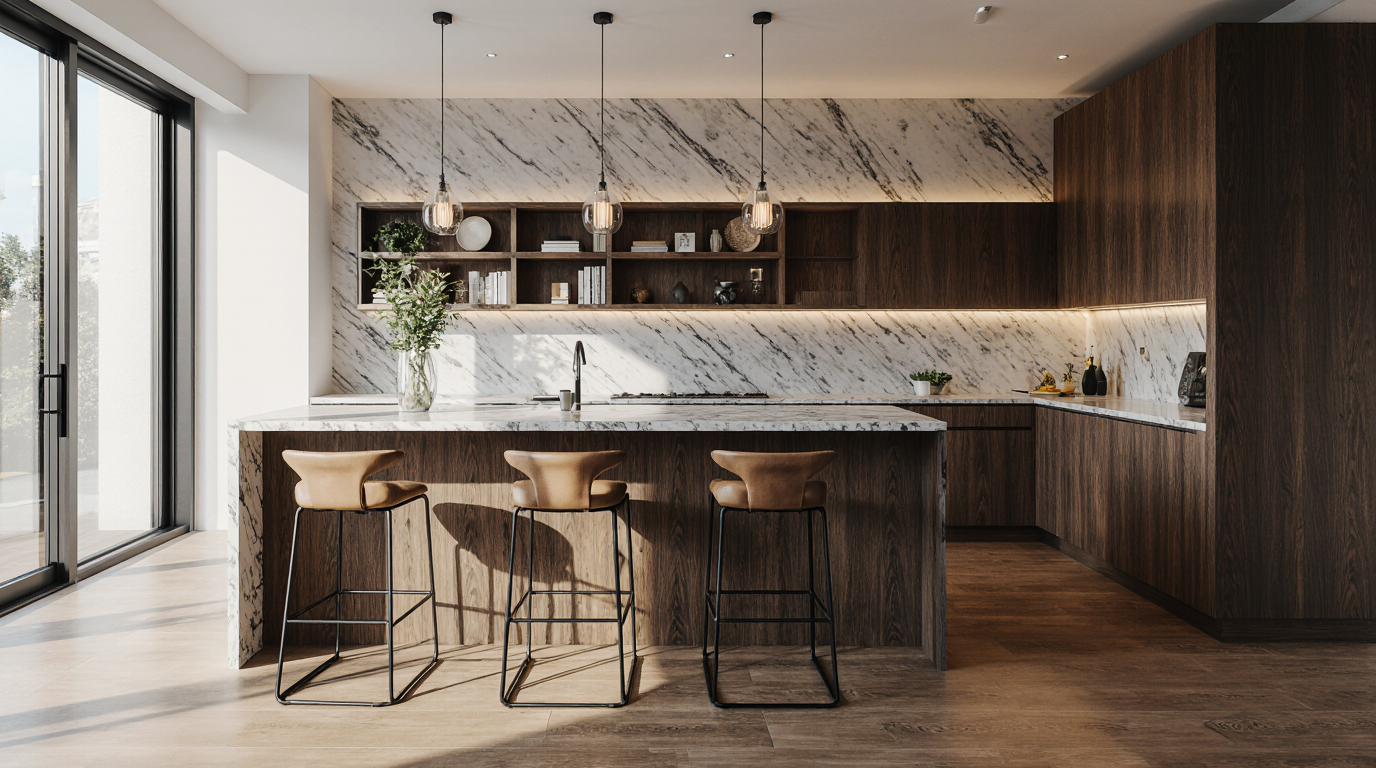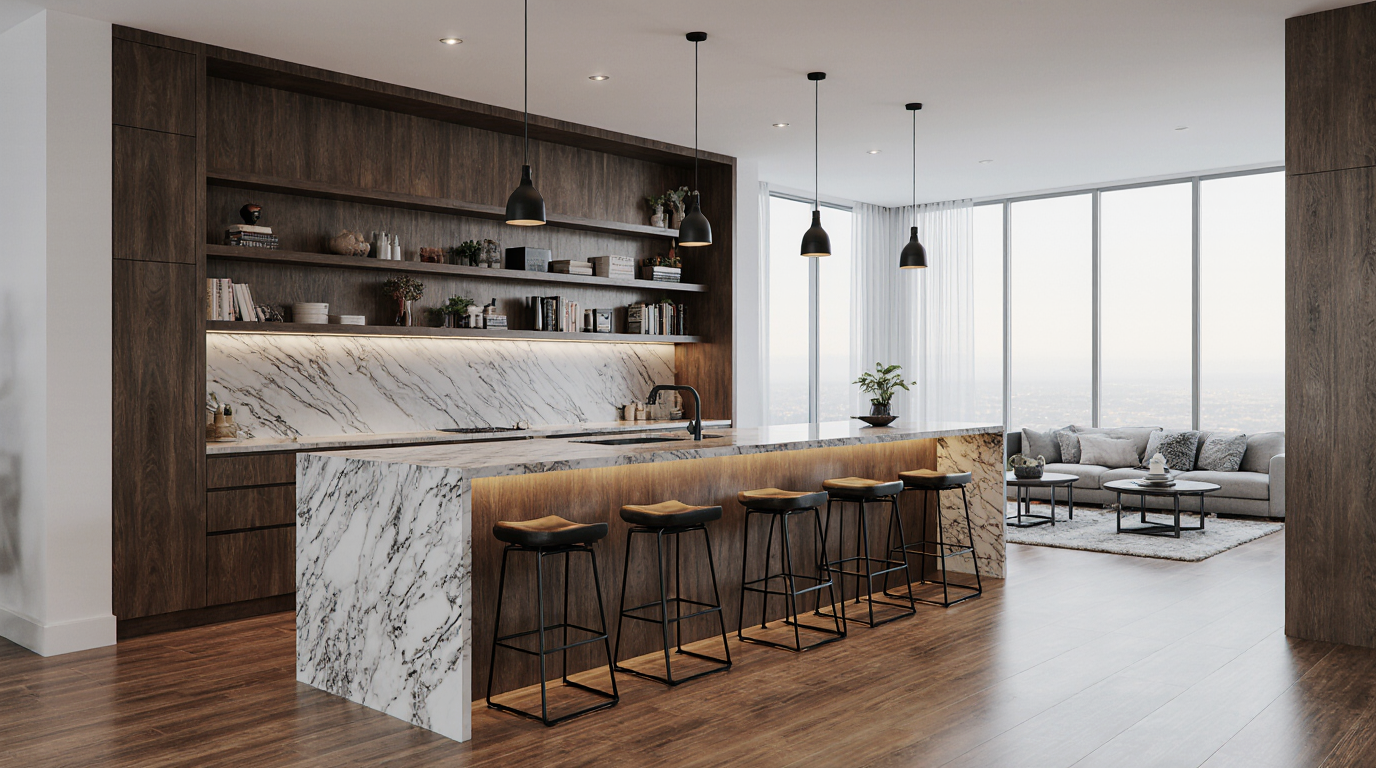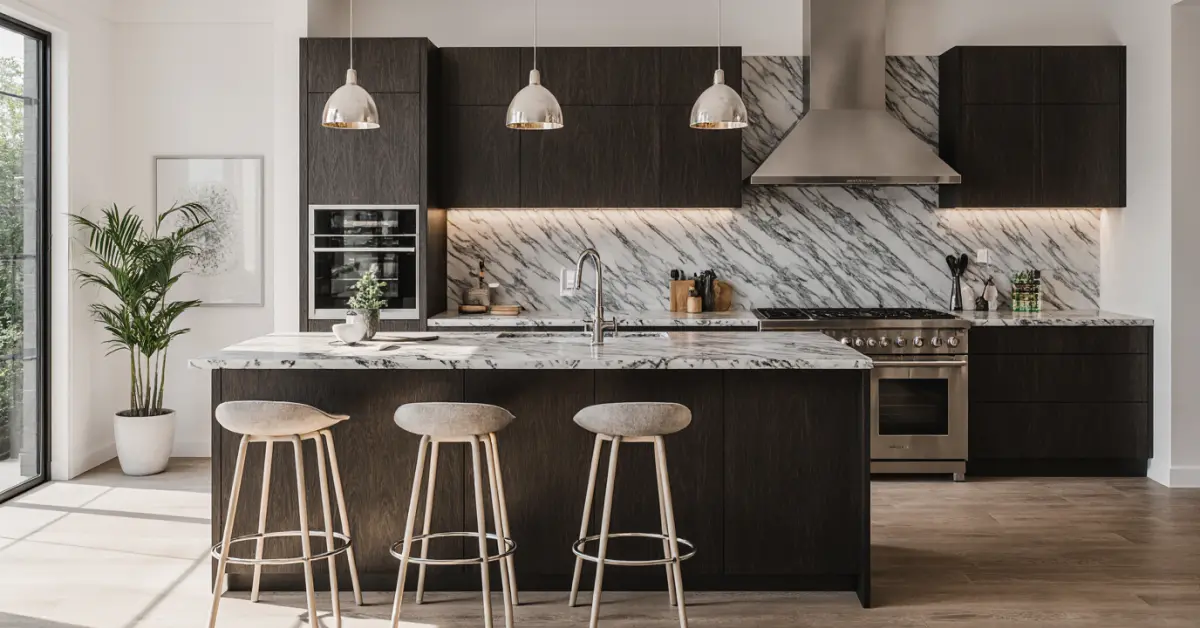
In Sarasota County, a standard building permit for a kitchen remodel can take anywhere from 4 to 8 weeks for approval, not including potential reviews by a Homeowners Association (HOA). For a seasonal resident aiming to complete a project between May and October, this administrative timeline is not just a detail; it's the critical path that dictates whether their kitchen is ready for season. This is the reality where countertop design decisions, made early and correctly, prevent costly delays.
Executive Summary: Countertop Design in Sarasota
From my direct experience executing kitchen projects from Lakewood Ranch to Siesta Key, the most successful countertop
From my direct experience executing kitchen projects from Lakewood Ranch to Siesta Key, the most successful countertop designs in Sarasota are not chosen based on trend alone, but on a rigorous assessment of environmental performance. The intense Florida sun, high humidity, and salt air in coastal areas dictate material viability far more than in other markets. A beautiful, porous marble that looks stunning in a magazine can become a maintenance nightmare here without the right sealing and homeowner diligence. The focus must be on balancing the desired aesthetic—often a clean, coastal modern look—with non-porous, UV-stable, and durable materials that withstand the local climate.
- UV Stability is Non-Negotiable: Materials must resist fading and yellowing from constant, direct sunlight exposure through large windows and lanais.
- Porosity Dictates Maintenance: The humidity and lifestyle here mean spills are common. Low-porosity materials like quartzite and high-quality engineered quartz are often superior to many granites and marbles.
- HOA Pre-Approval is Mandatory: Especially in communities like Palmer Ranch, design choices, including exterior-facing kitchen window sills or outdoor kitchen counters, require strict adherence to community guidelines.
- Seamless Indoor-Outdoor Flow: Many designs incorporate kitchen islands or peninsulas that lead to outdoor spaces. The countertop material must be suitable for both environments or have a compatible exterior-grade alternative.
Common Planning Failures I've Seen On-Site
The most frequent and costly mistakes in Sarasota countertop projects happen long before the first slab is cut. They are errors in judgment, typically rooted in underestimating the local environment. A client might fall in love with a specific vein in a marble slab online, only to find it's too soft and porous for their high-use kitchen that opens onto a pool deck, leading to etching and stains within the first year.
Another common failure is designing a large, monolithic kitchen island without considering access. I've seen projects in older Lido Key homes where a massive, single-slab quartzite countertop couldn't make it through the narrow hallways or stairwells, forcing a last-minute redesign to a multi-piece top, which completely changed the intended modern, seamless look and added thousands in labor and material waste.
The Most Expensive Failure: Ignoring UV Impact
The single most expensive oversight I consistently observe is selecting an indoor-only engineered quartz with high resin content for a kitchen flooded with natural light, especially near south-facing sliders. The sales pitch focuses on its non-porous, stain-resistant nature. What is often missed is that the resins binding the quartz can yellow over time with direct, prolonged UV exposure. Within a few years, the area of the counter that gets direct sun is a noticeably different shade than the rest, a permanent and irreversible flaw that can only be fixed by complete replacement.
The Design and Installation Process in Practice
A countertop project in Sarasota follows a clear path, but it's one that must navigate local specifics. It begins with a design consultation where we discuss not just aesthetics like waterfall edges or L-shaped layouts, but the practicalities of your home's location—is it waterfront on Bird Key or inland in a golf community? This initial conversation determines the viable material palette.
Once a material is chosen, a fabricator creates a precise template of your cabinets. This is a critical step; your cabinets must be fully installed and level. Then, you typically visit a slab yard to select the exact stone or quartz slabs. The fabricator uses the template to cut the stone, accounting for sink cutouts, faucet holes, and seams. Finally, the installation team delivers and sets the countertop, a process that can take a few hours to a full day, followed by sealing if it's a natural stone.
Material Selection Criteria for Sarasota Homeowners
- Salt Air Resistance: For homes on the barrier islands (Siesta, Longboat, Casey Key), select materials and, if applicable, sealants that won't degrade or pit from airborne salinity.
- Hurricane Code Compliance: For outdoor kitchens, countertop installations may need to meet standards for wind uplift and securing, which can influence the type of substrate and anchoring used.
- Heat Tolerance for Lanai Kitchens: If the countertop is part of an outdoor kitchen, it must withstand the intense heat of a grill without cracking or scorching. Materials like granite or sintered stone are superior to quartz in this application.
- HOA Material Palette Approval: Many master-planned communities have pre-approved color and material palettes, especially for elements visible from the outside. Verify your selection against these rules before purchasing.
Comparing Top Countertop Material Choices
Choosing a material involves trade-offs between aesthetics, durability, and cost. For the Sarasota market, the comparison must include environmental resilience. A material that performs well in a dry, northern climate might fail spectacularly here. The decision should be deliberate and informed by how you live in your Florida home.
| Material | Best For | Sarasota Climate Consideration | Typical Installed Cost (per sq. ft.) |
|---|---|---|---|
| Engineered Quartz | Modern, consistent look; low maintenance indoor kitchens. | High UV exposure can cause yellowing in some brands/colors. Not for outdoor use. | $80 - $150 |
| Quartzite | Natural stone look with superior durability; high-traffic areas. | Excellent UV stability and durability. Requires sealing, but less frequent than granite. | $90 - $200+ |
| Granite | High-heat areas like outdoor kitchens; traditional aesthetics. | Very durable against heat and UV. Porosity varies; must be sealed regularly to prevent stains. | $70 - $140 |
When a High-End Stone Isn't the Right Choice
A unique, exotic quartzite countertop is a status symbol, but it's not the right choice for every situation. I worked with a client who owned a seasonal rental property on Siesta Key. They wanted a luxury feel to attract tenants but had to face the reality that renters will not care for a countertop with the same diligence as an owner. Spilled wine, citrus, and harsh cleaning chemicals were inevitable. In this case, we opted for a high-quality, bulletproof granite that was more forgiving of abuse than a delicate, lighter-colored quartzite, saving them the long-term cost and stress of repairs.
A Safe Hiring and Vetting Checklist
Ensuring your countertop project succeeds comes down to vetting your fabricator and installer. A beautiful slab can be ruined by poor templating, cutting, or seaming. The stakes are too high to choose based on the lowest bid alone. A botched seam on a kitchen bar counter is something you'll see every single day.
- Verify they have a current license and liability insurance specific to work in Sarasota County.
- Ask to see examples of their seam work. A good seam should be nearly invisible, smooth to the touch, and color-matched.
- Confirm who is responsible for the plumbing and electrical disconnect/reconnect for the sink and disposal. This is a common point of confusion.
- Inquire about their slab selection process. Do you get to approve the final slab and layout before they cut? This is crucial for natural stones with lots of movement.
- Discuss their warranty. Does it cover the material, the installation, or both? What are the exclusions?
- For condo renovations, ensure they are familiar with the building’s rules for work hours, elevator use, and debris removal.
Decisions That Determine the Final Outcome
The success of a countertop design is sealed by a few key decisions made at the outset. The first is accepting the limitations of your chosen material and designing around them, not in spite of them. If you love the look of marble but hate the idea of patina and etching, you are setting yourself up for disappointment. A better decision is to find a quartzite or quartz that mimics that look without the maintenance baggage.
The second critical decision is the finish. A polished finish will show every fingerprint and smudge but makes colors pop. A honed or leathered finish is more forgiving and hides minor imperfections but can be more susceptible to staining if not properly sealed. This choice should be based on lifestyle, not just the appearance in the showroom.
The Exact Moment the Majority Gets It Wrong
The most common misstep I see happens right at the slab yard. A client, overwhelmed by the beauty of a full, dramatic stone slab standing vertically under showroom lights, approves it on the spot. They fail to ask the fabricator to lay out the digital template of their L-shaped kitchen or island on a photo of that exact slab. When the counter is installed, the stunning vein they loved is cut off in an awkward spot or ends up mostly on a section that will be covered by appliances. The moment of truth is before the cut, not after.
Practical Answers About Operations in Sarasota
Navigating the specifics of a countertop installation in Sarasota involves more than just design. You have to contend with local regulations, building types, and community oversight. Here are the practical issues that often arise.
Do I Need a Permit for Just a Countertop Replacement?
Generally, if you are only replacing the countertop and not altering any plumbing or electrical locations, Sarasota County does not require a permit. However, the moment the project expands—moving a sink, adding an outlet to the island, or changing the footprint of the cabinets—you cross the threshold into a remodel that requires a permit from the Sarasota County Building Department. It's best to confirm with your contractor, as assuming no permit is needed can lead to stop-work orders.
How Do Condo Board Approvals Impact My Timeline?
In the high-rise condos along Gulf Stream Avenue or on Longboat Key, the Condo Association's approval is often a bigger hurdle than the city permit. They regulate everything: hours of work (typically 9 AM to 4 PM, no weekends), noise levels, use of service elevators, and even the insurance requirements for your installers. Submitting your design and contractor's paperwork for board approval can add 30 days or more to your project timeline, a critical factor for seasonal residents.
What Are the Requirements for an Outdoor Kitchen Counter?
Outdoor kitchen countertops are exposed to extreme conditions. The Florida Building Code has requirements for wind load and securing structures. While the code might not specify the countertop material itself, the underlying cabinet structure it's attached to must be properly anchored to the slab to prevent it from becoming a projectile in a hurricane. Furthermore, any electrical or gas lines for appliances must be installed to code for exterior use, which is a separate inspection and a critical safety checkpoint.