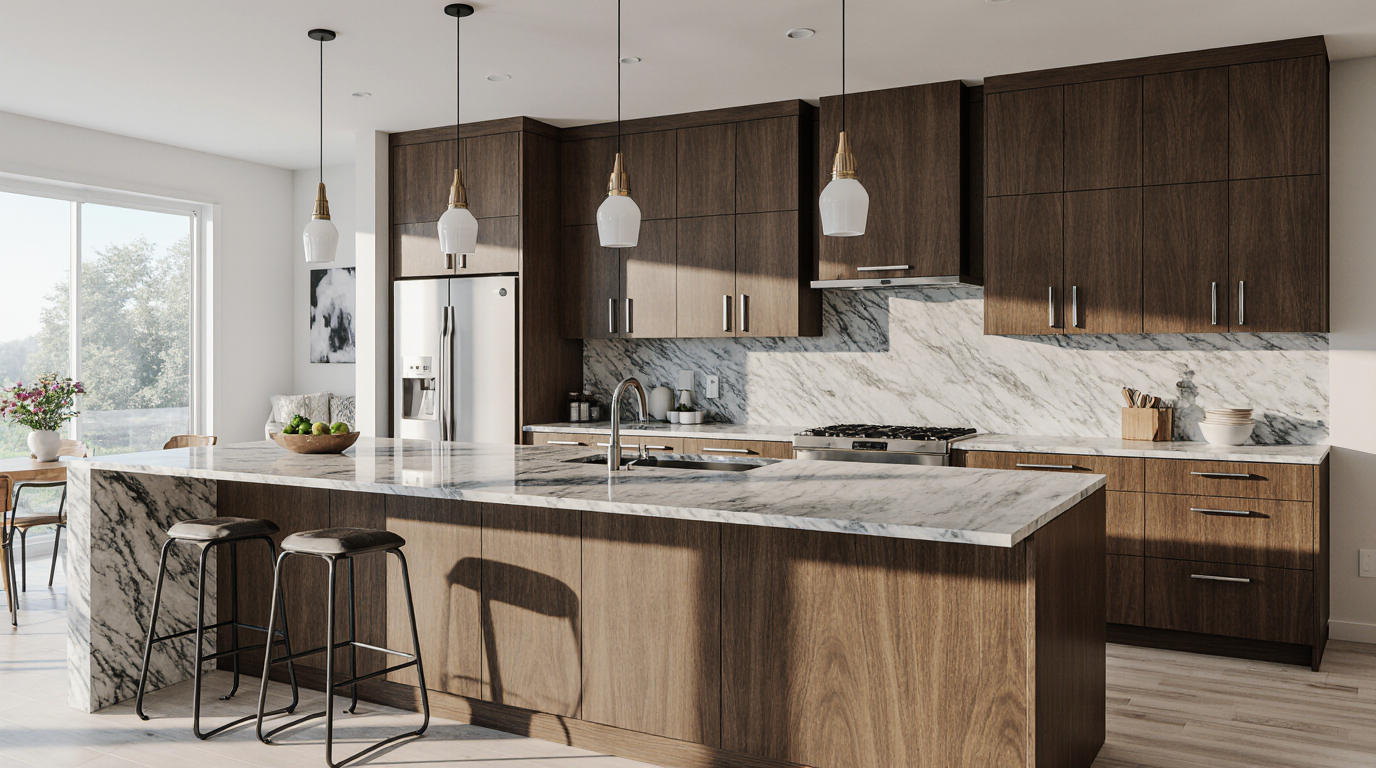
Executive Summary: Custom Cabinets in Sarasota's Coastal Climate
From my direct experience managing high-end kitchen remodels from The Landings to Longboat Key, the success of custom
From my direct experience managing high-end kitchen remodels from The Landings to Longboat Key, the success of custom cabinetry here hinges on preemptively fighting moisture and salt. A standard cabinet box, even from a reputable national brand, is often not specified for the sustained high humidity we experience. The focus must be on materials that offer dimensional stability and hardware that resists corrosion. The initial kitchen cabinet remodel cost is secondary to the long-term cost of failure.
- Core Material is Non-Negotiable: Standard particleboard or MDF will swell. Specify marine-grade plywood or high-density furniture-grade plywood for all cabinet boxes (carcasses).
- Finish is a Seal, Not Just a Color: The finish must fully encapsulate all surfaces, including edges and back panels, to create a vapor barrier. A post-catalyzed conversion varnish is the professional standard here.
- Hardware Must Be Marine-Grade: Salt air corrodes standard steel hinges and drawer glides. Specify 304 or 316 stainless steel hardware, especially for homes west of the Trail.
- Ventilation is Part of Cabinetry: A kitchen design that neglects proper ventilation and dehumidification will undermine the most expensive cabinets. This is a system, not just a set of boxes.
The Planning Failures That Inflate Budgets Post-Contract
The most common financial pain points in Sarasota cabinet projects arise from underestimating our environment. Clients focus on door styles and colors, while the real budget-busters are the technical specifications that a contractor might not volunteer to include in a base bid. An inexpensive kitchen remodel often becomes very costly when these oversights lead to premature failure.
The Most Expensive Oversight: Ignoring Humidity's Effect on Wood Movement
The costliest mistake is choosing a wood species or cabinet style that is inherently unstable in high humidity. I worked on a project in a beautiful bayfront home on Siesta Key where the client insisted on wide, solid-wood slab doors for a sleek, modern look. Despite warnings, the choice was made. Within two summer seasons, the solid doors began to cup and warp, refusing to close properly. The humidity swings caused the wide planks to expand and contract unevenly. The fix required remaking all the large doors with a more stable engineered core and veneer, effectively doubling the initial cost of the doors and creating immense frustration.
The Cabinet Remodel Process in Practice
A true custom cabinet project in Sarasota is a multi-stage process involving design, engineering, fabrication, and installation, all governed by local conditions. It begins not with sketches, but with a deep analysis of the home's specific environment, HVAC system, and the client’s lifestyle. This diagnostic phase dictates the material and construction choices that follow.
Selection Criteria for a Sarasota Cabinet Maker
When vetting a professional for a cabinet kitchen remodel, your questions should be hyper-local. A great portfolio of work from a dry climate is irrelevant here. Your checklist must include:
- Local Workshop Verification: Does the fabricator build the cabinets in a climate-controlled workshop in the Sarasota area? Cabinets built elsewhere and shipped can absorb moisture in transit, leading to issues after installation.
- Hurricane Code Experience: Can they explain how they anchor upper cabinets to meet the Florida Building Code's requirements for homes in Wind-Borne Debris Regions? This often involves specific blocking within the walls and structural fasteners, not just standard screws.
- HOA Navigation: Do they have experience submitting design and material specification packages to demanding HOAs, such as those in Lakewood Ranch or Palmer Ranch? This can save weeks, if not months, in approval delays.
- Material Transparency: Ask to see their standard box material. If it's not a high-grade, moisture-resistant plywood, they are not building for this climate. They should be able to provide spec sheets for their core materials and finishes.
Comparing Custom Cabinets to Stock and Semi-Custom Options
The decision to go custom is often weighed against more accessible alternatives. In Sarasota, the value proposition for custom work is tied directly to longevity and performance in our demanding climate, not just aesthetics.
| Feature | Stock Cabinets | Semi-Custom Cabinets | True Custom (Sarasota-Specific) |
|---|---|---|---|
| Core Material | Particleboard/MDF | Particleboard with Plywood Upgrade Option | Marine-Grade or Furniture-Grade Plywood Standard |
| Finish Durability | Thermofoil or Thin Lacquer | Catalyzed Varnish (Often lower solids content) | Post-Catalyzed Conversion Varnish (High-solids, full encapsulation) |
| Hardware | Standard Plated Steel | Standard; Stainless Upgrade is an Upcharge | 304/316 Stainless Steel Recommended as Standard |
| Lifespan in Coastal FL | 3-7 Years before issues | 8-15 Years with careful maintenance | 20+ Years |
When Custom is Not the Right Choice
Custom cabinetry is not the best solution for every situation. If you are flipping a property on a tight budget and short timeline, the lead time and kitchen cabinet remodel cost of true custom work may not align with your ROI goals. In such cases, a quality semi-custom line with a plywood box upgrade and careful professional installation can be a more pragmatic, though less durable, alternative.
A Safe Hiring Checklist for Your Project
Hiring for a custom cabinet remodel requires more diligence than a standard renovation. Your vetting process must be thorough and technically focused to avoid the common pitfalls of our local market.
- Verify their Florida contractor's license is active and they carry both General Liability and Workers' Compensation insurance. Ask for the certificates.
- Request at least three local references for projects completed more than two years ago. This allows you to ask past clients about long-term performance and durability.
- Confirm their familiarity with the permitting process through the Sarasota County Building Department. A simple cabinet replacement may not need a permit, but any layout change involving plumbing or electrical will.
- Review a sample contract. It should specify materials down to the brand and grade (e.g., “3/4-inch marine-grade plywood with Okoume face veneer”), hardware (e.g., “Blum Tandembox with 304 stainless steel slides”), and the exact finish (e.g., “Sherwin-Williams Kemvar Conversion Varnish”).
- Ask about their warranty. A one-year warranty is standard, but a confident craftsman building for this climate will often stand behind their structural integrity for longer.
Decisions That Determine the Final Outcome
The ultimate success of your new kitchen rests on a few key decisions made long before the first piece of wood is cut. These choices have a cascading effect on budget, timeline, and satisfaction. The order in which you make them is critical.
The Exact Moment Most Homeowners Get It Wrong
The critical error happens at the very beginning. Most people start by collecting design ideas and then try to fit them into a budget. In Sarasota, you must reverse this process. You must first establish a realistic materials budget based on our climate's demands, and only then explore designs that are compatible with those materials. Falling in love with a design that requires unstable wood or a delicate finish is setting yourself up for disappointment or a massive budget increase to re-engineer it for durability.
Practical Answers for Operations in Sarasota
Navigating a cabinet remodel involves dealing with local regulations and logistics. Understanding these specific hurdles upfront prevents delays and unexpected costs.
HOA and Condo Association Design Review
In communities like The Meadows or high-rise condos on Golden Gate Point, the Homeowners or Condo Association has final say. Their design review boards often have specific requirements for material quality, noise abatement during construction, and contractor work hours. A complete submittal package, including material samples and detailed drawings, is required. A typical review process can take anywhere from 30 to 60 days, a critical timeline to factor into your project schedule before any demolition begins.
Understanding Florida Building Code and Cabinetry
While cosmetic cabinet replacements are often exempt from permits, the Florida Building Code (FBC) has implications. If you move a wall or alter the kitchen's footprint, all new work must comply. More importantly, in High-Velocity Hurricane Zones (HVHZ), which cover much of Sarasota's coastal areas, the code has standards for how permanent fixtures are attached to the structure. Proper anchoring of upper cabinets is a life-safety issue, not just a cosmetic one.
Logistical Challenges in Waterfront and High-Rise Remodels
Working on the barrier islands or in downtown high-rises presents unique logistical hurdles. There are often strict limitations on delivery times, contractor parking, and elevator usage for transporting materials and debris. These constraints add time and labor costs that must be factored into the bid. A contractor without experience in these environments will likely underestimate these costs, leading to change orders later.