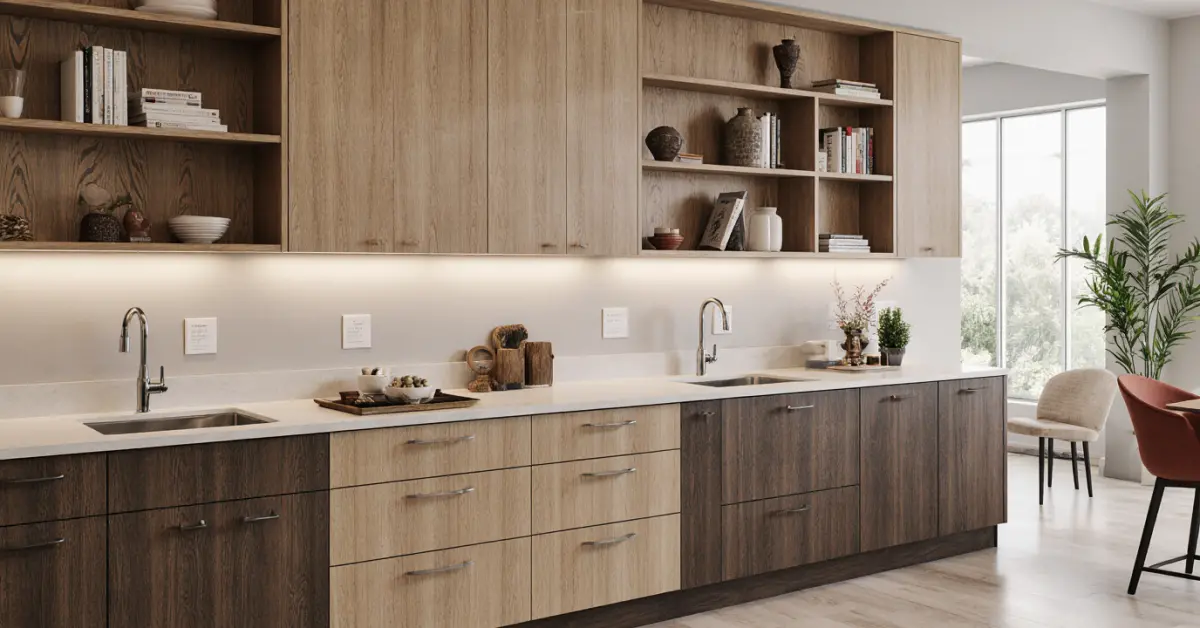
Why do two sets of 'discount' Shaker cabinets, priced almost identically, perform so differently in a Sarasota home? One will look brand new in five years, while the other shows signs of swelling and delamination after just two hurricane seasons. The answer isn't in the brand name, but in the construction specifications that are rarely discussed on the showroom floor, specifications that are critical in our high-humidity environment.
Most buyers focus on door style and color, assuming the cabinet box is a standard commodity. In coastal Florida, that assumption is the root of the most expensive problems. The difference between a standard particle board box and one constructed with moisture-resistant materials is often subtle in the quote but becomes glaringly obvious once the first summer hits.
Executive Summary: Sourcing Smart in Sarasota
From my direct experience managing cabinet installations across Sarasota County, the key to a successful, long-lasting
From my direct experience managing cabinet installations across Sarasota County, the key to a successful, long-lasting kitchen on a budget isn't finding the cheapest price, but the best value for our specific climate. This means prioritizing material composition over superficial features. The most durable 'affordable' cabinets I've installed in this market consistently share a core set of non-negotiable traits that resist the high humidity and salt air unique to our coastal communities.
- Core Material: The cabinet box must be plywood, not standard particle board (MDF). A modest upcharge for marine-grade plywood in sink bases or near dishwashers is a wise investment.
- Hardware Finish: All hinges and drawer glides should be stainless steel or have a corrosion-resistant coating. Standard zinc-plated hardware will rust, especially in homes on the barrier islands.
- Assembly Method: Look for prefab or RTA (Ready-to-Assemble) cabinets that use cam-lock and dowel construction with wood glue reinforcement, not just staples, which can loosen in fluctuating humidity.
- HOA Compliance: For communities like Lakewood Ranch or Palmer Ranch, ensure the supplier can provide detailed specification sheets and finish samples required for Architectural Review Committee approval, a process that can add 30-60 days to your timeline.
The Planning Failures That Inflate 'Affordable' Cabinet Costs
The most significant cost overruns in projects using discount or prefab cabinets don't come from the cabinets themselves. They come from failing to account for Sarasota-specific conditions during the planning phase. Homeowners are often so focused on the per-cabinet price that they overlook the environmental and regulatory factors that will ultimately dictate the project's true cost.
A common error is designing a layout with standard-sized prefab cabinets without a site-check by an experienced installer. Walls in older Sarasota homes, particularly west of the Trail, are rarely perfectly plumb or square. An 'affordable' cabinet plan that doesn't account for this will result in unsightly gaps, the need for excessive filler strips, and extra labor costs that can quickly erode any initial savings.
The Most Expensive Failure: Ignoring Humidity's Impact on Materials
The costliest mistake I see is choosing cabinets based on a sample door viewed in an air-conditioned showroom. A standard MDF or particle board cabinet box, which looks perfectly fine initially, is like a sponge in our environment. I was called to a project in a Lido Key condo where the client had saved about 15% upfront on particle board cabinets. Within three years, the sink base had swollen from a minor plumbing leak, the toe-kicks were delaminating from floor moisture, and the drawer fronts over the dishwasher had started to peel. The cost to replace just those damaged sections negated all the initial savings and then some.
The Process of Buying and Installing Stock Cabinets in Practice
Acquiring affordable kitchen cabinets in Sarasota is a multi-step process that goes beyond just placing an order. It begins with precise measurements and ends with a final walkthrough, with critical local checkpoints in between. The process is heavily influenced by whether you live in a single-family home with no HOA or a condo with strict rules.
Once you select a supplier, they will typically create a 3D rendering based on your kitchen's dimensions. After you approve the design, the cabinets are ordered. Lead times for in-stock lines can be as short as a week, while semi-custom or imported prefab lines can take 6-10 weeks. Installation itself is typically a 3-5 day process, but it's the preparation and post-installation work that homeowners often underestimate.
Key Selection Criteria for Sarasota Buyers
- Warranty Against Warping/Delamination: Does the manufacturer's warranty explicitly cover issues related to humidity? Many standard warranties have clauses that void coverage for 'environmental conditions.'
- Local Inventory vs. Special Order: A supplier with local warehousing in the Sarasota-Bradenton area can be a lifesaver. If a piece arrives damaged, a replacement can be sourced in a day, not weeks, preventing costly project delays.
- HOA & Condo Board Experience: Has the supplier worked with your specific HOA or condo association before? An experienced vendor will know the submission requirements for places like The Landings or Prestancia, saving you weeks of back-and-forth.
- Construction for Coastal Codes: While less critical for interiors, ensure the installer is familiar with Florida Building Code requirements for anchoring upper cabinets, especially in homes within wind-borne debris regions, to ensure they are secured properly to the structure.
Comparing Prefab Cabinets to Other Options
For many Sarasota homeowners, especially seasonal residents or those managing rental properties, prefab or 'discount' cabinets offer a compelling balance of cost, speed, and aesthetics. However, they are not the only solution. Understanding the trade-offs is key to making a sound financial decision.
The primary alternatives are custom cabinetry from a local millwork shop and cabinet refacing. Each serves a different need and budget, and the right choice depends entirely on your project goals, the condition of your existing kitchen, and your timeline.
When Discount Cabinets Are NOT the Right Choice
Despite their value, there's a clear scenario where I advise clients against prefab cabinets. If your kitchen has a highly irregular layout—multiple odd angles, non-standard ceiling heights, or unique architectural features—forcing stock cabinets into the space is a mistake. The amount of custom filler panels, on-site modifications, and compromised storage space will ultimately lead to a disjointed look and functional frustration. In these cases, the higher initial investment in true custom work from a local Sarasota woodworker provides a far superior long-term result.
I recently worked with a client who owned a rental condo on Siesta Key. Their goal was a quick, durable, and budget-friendly kitchen refresh between tenants. They were considering the cheapest white Shaker cabinets available from a big-box store. I showed them how for a roughly 10-15% increase in material cost, they could upgrade to an all-plywood construction cabinet from a local distributor. The deciding factor was the hardware; the upgraded line came with stainless steel, soft-close hinges, a critical feature for preventing rust and wear in a humid, high-use rental environment. They made the upgrade, and the new kitchen has already endured two seasons with zero callbacks for adjustments or hardware issues, protecting their investment and minimizing maintenance headaches.
| Feature | Prefab / Discount Cabinets | Custom Millwork | Cabinet Refacing |
|---|---|---|---|
| Typical Cost | $4,000 - $12,000 | $18,000 - $50,000+ | $5,000 - $15,000 |
| Timeline (Design to Install) | 2-10 weeks | 12-24 weeks | 3-6 weeks |
| Humidity Resistance | Varies (Plywood box is key) | Excellent (Marine-grade options) | Depends on existing boxes |
| Customization | Limited to standard sizes | Unlimited | Layout cannot be changed |
A Safe Purchasing Checklist
Navigating the cabinet market requires more than just picking a style. Use this checklist to protect your investment and ensure a smooth project in the Sarasota area.
- Verify the Box Material: Get in writing that the cabinet boxes are all-plywood construction. Do not accept 'furniture board' or 'engineered wood' as an equivalent.
- Inspect the Finish: Check for a multi-step factory finish that includes a catalyzed conversion varnish. This topcoat is much more resistant to moisture, cleaning chemicals, and wear than a simple lacquer.
- Confirm Installer's License and Insurance: Any installer working in your home in Sarasota must carry a valid license and, crucially, liability and worker's compensation insurance. Ask for the certificate of insurance.
- Get a Sample Door: Take a sample door to your home. The lighting in a showroom is completely different from your kitchen's natural and artificial light.
- Clarify the Warranty Details: Ask for the manufacturer's warranty document and read the exclusions, particularly regarding climate and moisture.
- Check HOA/Condo Insurance Requirements: Many Sarasota condo associations require vendors to carry high liability insurance limits (often $1 million or more). Confirm your supplier and their installer meet these requirements before signing a contract.
Decisions That Determine the Outcome
The success of a kitchen renovation using affordable cabinets hinges on a few key decisions made early in the process. My years on project sites have shown me that it's not the budget that determines satisfaction, but the foresight of the homeowner and the expertise of their installer.
The most critical decision is allocating the budget. Instead of trying to find the absolute cheapest cabinet, allocate a portion of your budget to upgrading the core components: an all-plywood box and quality, corrosion-resistant hardware. A slightly smaller budget for the countertop or backsplash is a much better trade-off than compromising the structural integrity of the cabinets themselves.
The Exact Moment the Majority Gets It Wrong
The most common misstep happens during the measurement and layout phase. Many homeowners, in an effort to save money, rely on their own measurements or a free, cursory design from a salesperson who has never set foot in their home. The right move is to insist that the person responsible for the installation performs the final field measurements before the order is placed. This one step catches wall imperfections, confirms appliance specifications, and prevents the delivery of thousands of dollars worth of cabinets that don't quite fit, avoiding costly return fees and project-killing delays.
Practical Answers About Cabinet Projects in Sarasota
Getting cabinets installed involves navigating local rules and logistics. Understanding these practical hurdles upfront can prevent significant stress and delays.
Do I Need a Permit for New Kitchen Cabinets?
In Sarasota County, a permit is generally not required if you are doing a direct replacement of kitchen cabinets without altering the plumbing, electrical, or structural layout. However, the moment you move a sink, add an outlet for an appliance, or take down a wall, you will need a permit from the Sarasota County Building Department. This process typically adds 4-6 weeks to the project timeline and requires licensed tradespeople for the electrical and plumbing work.
How Do HOA Design Reviews Impact Cabinet Choices?
In master-planned communities like Palmer Ranch or University Park, the Homeowners Association (HOA) Architectural Review Committee (ARC) may have jurisdiction over kitchen renovations, especially if they are visible from the outside or in a condo. You must submit your plans, including cabinet style, color, and materials, for approval before work begins. They are primarily concerned with maintaining a certain aesthetic and ensuring work is done by insured contractors. Failure to get prior approval can result in fines and a stop-work order.
What's the Best Material for Waterfront Properties?
For homes directly on Sarasota Bay, Longboat Key, or Siesta Key, standard materials are simply not sufficient. I strongly recommend upgrading to cabinets with marine-grade plywood boxes, especially for sink bases and any cabinetry on exterior walls. Furthermore, consider finishes like high-pressure laminate (HPL) or thermofoil, which are non-porous and provide an excellent barrier against salt air and moisture, preventing the underlying material from swelling or deteriorating over time.