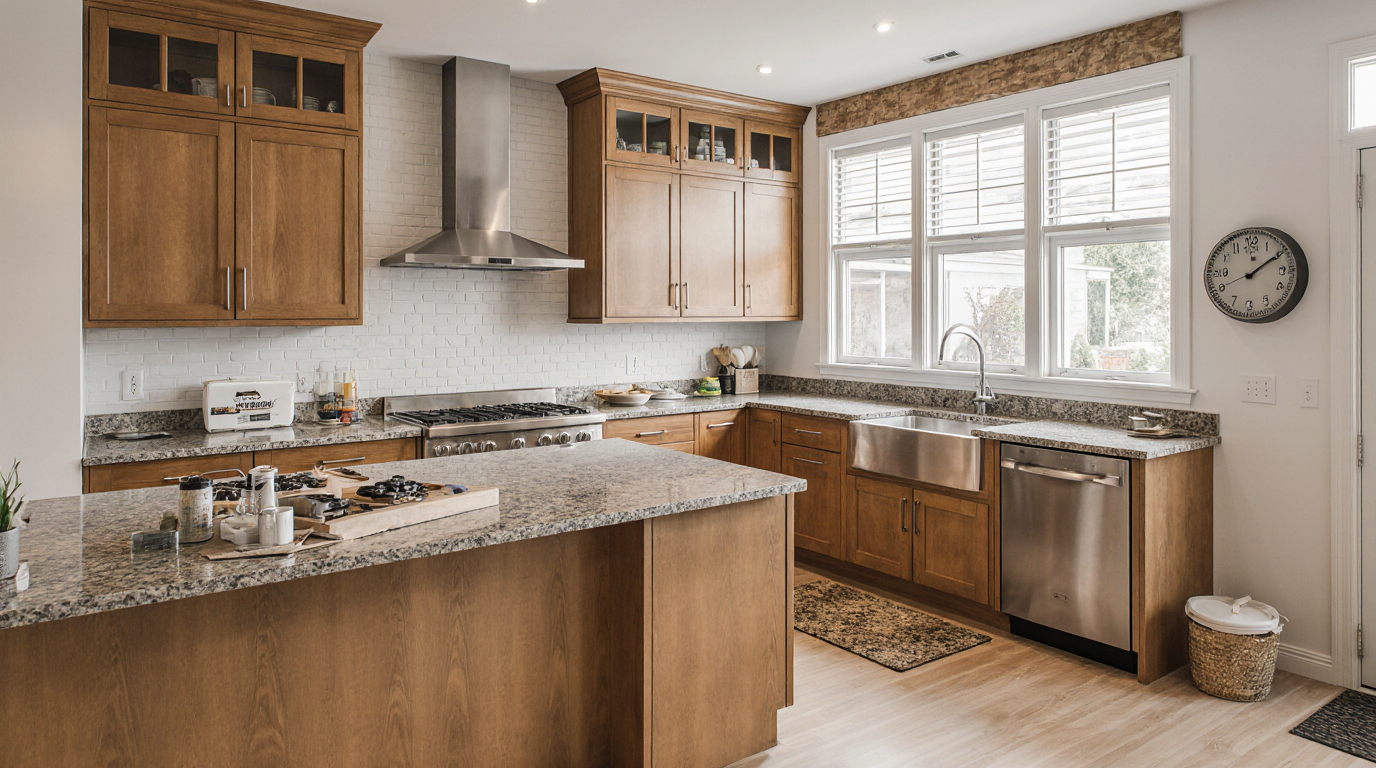
Executive Summary of Cabinet Renovation in Sarasota
From my perspective after years of managing kitchen projects in Sarasota, a successful cabinet renovation hinges on one
From my perspective after years of managing kitchen projects in Sarasota, a successful cabinet renovation hinges on one critical factor: a brutally honest assessment of your existing cabinet boxes against our local climate. The high humidity and salt air, especially west of the Trail, will quickly expose any weakness in particle board or poorly sealed joints. Refacing is not just a cosmetic upgrade here; it's a strategic decision that can outperform new, mid-grade cabinetry if done correctly, but only if the foundational structure is sound.
- Core Assessment: Verify your cabinet boxes are made of plywood, not particle board (MDF), before considering any renovation. MDF swells irreversibly in Sarasota's humidity.
- Material Priority: For refacing, prioritize thermofoil or high-quality acrylics for their non-porous, moisture-resistant properties over wood veneers, which can peel in our climate.
- HOA Pre-approval: In communities like Lakewood Ranch or Palmer Ranch, even interior renovations without structural changes may require design review board notification. Check your covenants first.
- Cost Reality: Professional cabinet refacing in Sarasota typically lands between $7,000 and $15,000 for an average-sized kitchen, a significant savings over the $25,000+ for a full custom cabinet replacement.
Planning Failures That Inflate Costs After the Contract
The most significant post-contract cost increases I see stem from discoveries made after the old cabinet doors are removed. Homeowners and even some less experienced contractors focus entirely on the new finish, door style, and hardware, but they fail to budget for the potential remediation of the underlying cabinet boxes. This is a critical oversight in a place like Sarasota, where long-term exposure to humidity can cause hidden damage.
A low initial quote for a “cabinet refacing price” often omits a contingency for repairing water damage under the sink, delaminated box interiors, or warped shelving. When we pull the doors off and find swollen particle board or mold, the project grinds to a halt. Suddenly, what was a refacing project becomes a targeted replacement of one or two boxes, completely altering the timeline and budget. A proper initial inspection must include emptying the main cabinets and probing for soft spots, especially under the sink and around the dishwasher.
The Most Expensive Failure: Ignoring the Cabinet Box Material
The costliest mistake is agreeing to reface cabinets made of builder-grade particle board. I’ve seen it happen in otherwise beautiful homes in communities built in the 90s and early 2000s. The homeowner invests thousands in high-end thermofoil doors and new hardware, only to have the veneer or laminate on the cabinet face frames start to peel within two years because the underlying particle board is subtly swelling and contracting with the seasons. It’s like putting a new roof on a house with a crumbling foundation. A professional's first job is to tell you when *not* to reface, even if it means losing the project. If your boxes are not solid plywood, your renovation budget is better allocated toward a full replacement.
The Cabinet Renovation Process in Practice
A professional cabinet renovation is a systematic process that takes an existing kitchen layout and transforms its look and feel without the demolition, dust, and disruption of a full remodel. The core structure—the cabinet boxes mounted to the wall—remains in place. This is what makes the process faster and more cost-effective. Typically, we can complete a full refacing project in under a week, whereas a full cabinet replacement can take a month or more, including templating for new countertops.
The project starts with removing all doors, drawer fronts, and hardware. Then, the surfaces of the cabinet boxes (the face frames and any exposed side panels) are meticulously prepared—cleaned, degreased, and sanded. A new veneer or laminate is then applied to these surfaces, matching the new doors and drawer fronts. Finally, the new components are installed with modern hardware, often including upgrades like soft-close hinges and full-extension drawer glides. The transformation is purely aesthetic and functional at the surface level, leveraging the good bones of your existing layout.
Selection Criteria for a Sarasota Refacing Specialist
Hiring the right team in our specific environment is crucial. A general contractor might do refacing, but a specialist understands the material science needed for our coastal conditions. Here’s what I advise clients to verify:
- Experience with Marine Environments: Ask for project examples on Longboat Key or Siesta Key. They should be able to discuss materials resistant to salt air and high humidity, not just standard wood veneers.
- In-House vs. Subcontracted Work: Does the company use its own employees for the installation? Subcontracting can lead to accountability gaps, especially if issues with the veneer application arise later.
- Knowledge of Local Suppliers: A contractor familiar with local suppliers like Sarasota Architectural Salvage for unique hardware or regional distributors for specific thermofoil brands can navigate supply chain issues more effectively.
- Proof of License and Insurance: Verify their license with Sarasota County's permitting office and ensure they carry proper liability and worker's compensation insurance. This protects you from any on-site accidents.
Comparison with Cabinet Replacement and Refinishing
Understanding the trade-offs between different cabinet update methods is key to making a sound financial decision. Refacing, refinishing (painting), and full replacement each serve different purposes and budgets. The choice depends on the condition of your cabinets, your desired outcome, and your tolerance for disruption.
For many Sarasota homes with solid but dated layouts, refacing hits the sweet spot of high impact for a moderate cost. Refinishing is the most budget-friendly but is only viable if you like your current door style. Full replacement offers total creative freedom but at the highest cost and longest project timeline.
When Refacing Is Not the Right Choice
I actively talk clients out of refacing in two specific scenarios. The first, as mentioned, is when the cabinet boxes are made of particle board or show signs of water damage. It’s simply not a sound investment. The second scenario is when the client is deeply unhappy with their kitchen's layout. Refacing does not fix a dysfunctional floor plan. If you despise the location of your appliances or lack of a functional island, spending $10,000 on refacing will only make you resent the new, beautiful cabinets in a layout you still hate. In that case, that money is better served as a down payment on a full remodel that addresses the core functional problems.
| Indicator | Cabinet Refacing | Cabinet Refinishing (Painting) | Full Cabinet Replacement |
|---|---|---|---|
| Typical Cost Range | $7,000 - $15,000 | $3,000 - $7,000 | $20,000 - $50,000+ |
| Project Duration | 3 - 7 days | 5 - 10 days | 4 - 8 weeks |
| Durability in FL Humidity | High (with thermofoil/acrylic) | Moderate (paint can chip/peel) | High (with quality plywood boxes) |
| Layout Changes Possible? | No | No | Yes, complete freedom |
Safe Hiring Checklist for Sarasota Homeowners
Hiring a contractor for any home project requires due diligence, but in Florida, the stakes are higher due to transient workers and storm-chasing opportunists. A systematic check is your best defense against poor workmanship and financial loss.
- Verify a Florida Specialty Contractor License: A painter's license is not sufficient. Ensure they have a specific license for cabinetry or are a state-certified General Contractor. You can verify this on the Florida Department of Business and Professional Regulation (DBPR) website.
- Request a Certificate of Insurance (COI): The contractor should provide a COI directly from their insurance agent, naming you as the certificate holder. This proves their policy is active.
- Check for Sarasota County-Specific History: Ask for references from projects completed within Sarasota County in the last two years. This demonstrates familiarity with local suppliers, home styles, and potentially even specific condo association rules.
- Review Material Specifications in the Contract: The contract should explicitly state the brand and thickness of the veneer (e.g., Rigid Thermofoil - RTF), the type of hinge (e.g., Blum soft-close), and the material of the new doors. Vague terms like “high-quality materials” are a red flag.
- Understand Lien Waivers: For larger projects, ensure your contract specifies that you will receive a “Release of Lien” from the contractor and any major suppliers upon final payment. This protects you from claims if the contractor fails to pay their vendors.
- Inquire about Hurricane-Related Experience: While cabinets are interior, a contractor with experience in coastal construction will have a better understanding of how building envelopes fail and how moisture gets in, leading to better long-term installations.
Decisions That Determine the Renovation's Outcome
Over the years, I've pinpointed a few key decisions that separate a satisfactory cabinet renovation from one that truly elevates a home's value and the owner's daily experience. Success is less about the color you choose and more about the structural and functional choices you make at the outset. One of the most impactful decisions is upgrading functionality at the same time as aesthetics.
While the doors and faces are off, it's the most cost-effective time to add features like pull-out trash bins, custom drawer organizers, or converting a standard base cabinet into a bank of deep, functional drawers. These upgrades often add less than 15% to the total project cost but can radically improve the usability of your kitchen. Homeowners who skip this to save a little on the initial cabinet refacing cost almost always regret it later, as retrofitting these features is far more expensive and complex.
The Exact Moment the Majority Gets It Wrong
The critical error happens during the material selection process. Most homeowners get fixated on door style and color samples viewed under the showroom's perfect lighting. They make a decision based on a small square of material without seeing it in their own home's unique lighting conditions. The single most important step is to take the final two or three sample doors home and live with them for at least 48 hours. View them in the morning light, under your kitchen's artificial light at night, and next to your existing countertops and backsplash. A color that looks like a warm gray in a showroom can look starkly blue or green in a north-facing Sarasota kitchen. This simple, no-cost step prevents the most common and heartbreaking post-installation regret I hear: “I love the quality, but the color just isn't what I imagined.”
Practical Answers About Operations in Sarasota
Navigating a renovation project involves more than just design and construction; it requires an understanding of local regulations and community-specific rules. In Sarasota, this is particularly true for condominium and HOA-governed properties.
Do I Need a Permit for Cabinet Refacing in Sarasota?
Generally, a permit from the Sarasota County Building Department is not required for cabinet refacing, as it's considered a cosmetic or “finish” project. However, the moment the project scope expands to include altering plumbing (moving a sink), electrical (adding under-cabinet lighting), or changing the kitchen's footprint, permits become mandatory. The permit fee itself might be minimal, around $100-$200, but the process of submitting plans and waiting for approval can add several weeks to your timeline. Always clarify the full scope with your contractor to determine if your project crosses the line into permitted work.
How Do Condo Association Rules on Lido Key Affect My Project?
On barrier islands like Lido Key or Longboat Key, condominium associations have extremely strict rules. You will likely need to submit your contractor's license and insurance for board approval before any work begins. They often restrict work hours (e.g., 9 AM to 4 PM, Monday-Friday only) and dictate which elevators and service entrances can be used. This can extend a 4-day project to over a week. Failing to get pre-approval can result in fines and work stoppages, a frustrating and costly delay I’ve seen firsthand.
What Materials Best Withstand Sarasota's Coastal Environment?
For homes on or near the water, material choice is non-negotiable. Standard wood veneers will fail. The glue can delaminate from the constant humidity and salt in the air. The best choices are Rigid Thermofoil (RTF) or high-gloss acrylics. These are essentially seamless, non-porous polymer wraps over a stable MDF core, making them impervious to moisture. For hardware, insist on stainless steel hinges and drawer glides. The upcharge for marine-grade hardware is minimal compared to the cost of replacing rusted, seized-up hardware in three to five years.