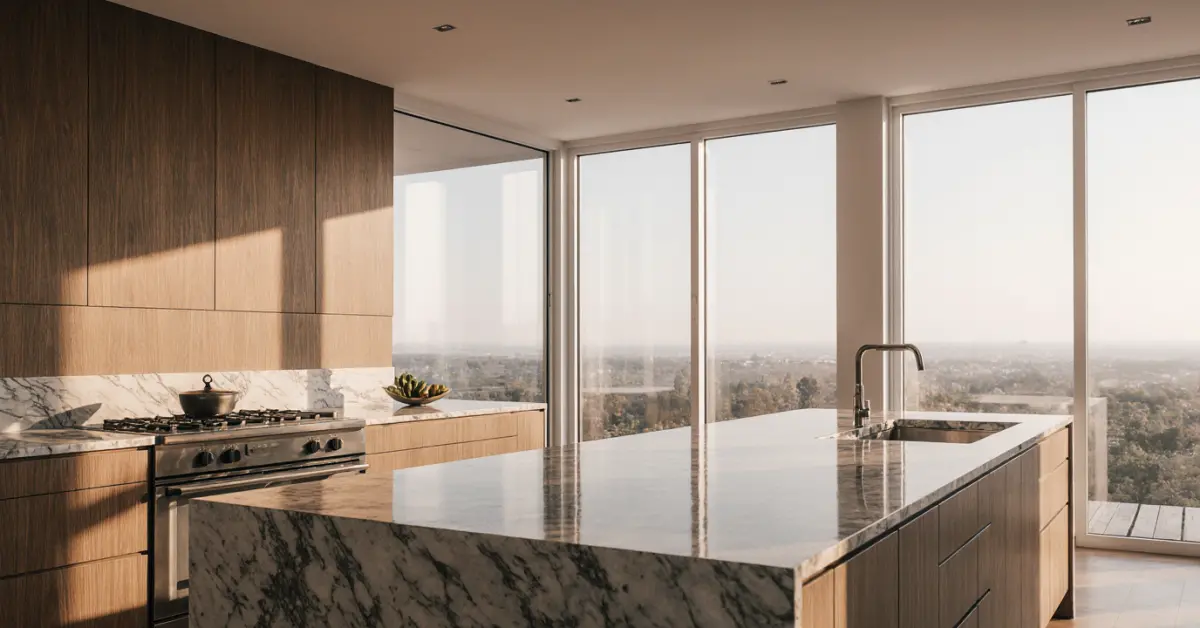
Executive Summary: Island Countertops in Sarasota
From my experience executing projects from Siesta Key to Lakewood Ranch, selecting an island countertop in Sarasota is
From my experience executing projects from Siesta Key to Lakewood Ranch, selecting an island countertop in Sarasota is a decision where material science and local climate realities collide. The wrong choice isn't just a cosmetic issue; it's a functional failure waiting to happen due to UV degradation, humidity-induced warping, and salt air corrosion. The central challenge is balancing the high-end aesthetic demanded by the market with materials engineered to perform in this specific coastal environment.
- UV Exposure: Direct sunlight through large windows can fade and discolor many resin-based materials like certain quartz composites and butcher blocks over time.
- Humidity and Salt Air: Porous natural stones require meticulous, frequent sealing to prevent staining and microbial growth, while wood countertops need marine-grade finishes to avoid warping.
- HOA and Condo Association Scrutiny: Design review boards in communities like Lakewood Ranch and many downtown condos have specific guidelines that can influence material and edge profile choices.
- Indoor-Outdoor Flow: For homes with lanais and large sliders, the island countertop must visually and functionally complement outdoor kitchen surfaces, demanding consistency in durability.
Planning Failures That Compromise Your Investment
The most significant planning mistakes I see in Sarasota are rooted in underestimating the local environment. Homeowners fall in love with a material they saw in a magazine or a home up north, without accounting for the intense Florida sun and humidity. The failure isn't in the material itself, but in its application in the wrong context.
For example, a beautiful, dark-colored quartz countertop installed in a west-facing kitchen with large windows can show signs of fading in just a few years. Another common error is choosing a highly porous stone like certain marbles for a high-use island, only to find that humidity and spills lead to permanent staining that even professional servicing can't fully remove.
The Most Expensive Failure: Ignoring Seam Placement and Support
The costliest mistake is approving a layout without scrutinizing the plan for seams and structural support, especially for large, waterfall-edge islands. In Sarasota's high-value real estate market, a poorly placed seam on a premium slab of quartzite or marble can diminish the entire project's perceived value. Worse, inadequate support for heavy stone on a large span can lead to stress fractures over time, a catastrophic failure that requires complete replacement.
I worked on a project on Lido Key where the initial fabricator planned a seam right through the primary prep area to save material. We intervened, redesigned the layout to use a jumbo slab, and reinforced the cabinetry. It added about 15% to the material cost but preserved the aesthetic integrity and long-term structural stability, preventing a potential six-figure problem later.
How the Selection and Installation Process Works in Sarasota
The process begins with material selection, which should be done with physical samples viewed in your home's actual lighting. Once a material is chosen—be it quartz, granite, or a specialty surface—a fabricator will visit the site to create a precise digital template of your island cabinetry. This is a critical step; your cabinets must be fully installed and perfectly level before templating.
The fabricator then uses this template to cut your slab. In Sarasota County, there isn't a specific permit just for a countertop installation unless it's part of a larger, permitted kitchen remodel involving plumbing and electrical work. The installation itself typically takes a few hours, but the entire process from template to install averages 2-3 weeks, depending on material availability.
Selection Criteria for Sarasota Homeowners
- Outdoor UV Resistance Rating: Even for indoor use, ask for materials with high UV resistance, especially for kitchens with expansive glass. This is a standard specification for quality quartz and porcelain slabs.
- Porosity and Sealing Requirements: Get the manufacturer's required sealing frequency in writing. For waterfront homes on Casey Key, I recommend sealing high-end natural stone twice as often as the standard recommendation.
- Fabricator's Hurricane Preparedness Plan: Does the fabricator have a secure facility to store your valuable slab if a hurricane watch is issued during the fabrication window? This is a non-negotiable question.
- HOA Compliance Documentation: Before purchasing a slab, ensure your fabricator can provide the necessary specifications and samples required by your HOA's Architectural Review Board, a common hurdle in master-planned communities.
Comparison of Dominant Island Countertop Materials
Choosing the right surface involves trade-offs between aesthetics, maintenance, and durability in our coastal climate. Homeowners often default to quartz, but other materials have distinct advantages depending on the use case. The key is to align the material's properties with your lifestyle and home's location.
| Material | UV & Fade Resistance | Maintenance in High Humidity | Typical Price Point (Installed) |
|---|---|---|---|
| Engineered Quartz | Good to Excellent (Varies by brand/color) | Low (Non-porous, resists microbial growth) | $90 - $180 / sq. ft. |
| Natural Granite | Excellent (Natural stone does not fade) | Moderate (Requires periodic sealing) | $80 - $200+ / sq. ft. |
| Butcher Block (Wood) | Poor to Fair (Prone to fading and discoloration) | High (Requires marine-grade sealant, risk of warping) | $70 - $150 / sq. ft. |
When a Natural Stone or Wood Countertop Is Not the Right Choice
A butcher block island countertop, for all its warmth and charm, is often a poor choice for seasonal residents in Sarasota. If a home is closed up for months during the humid summer, the wood can swell, warp, or even develop mildew if the finish is compromised and the home's climate control fails. I only recommend it for full-time residents who are committed to its upkeep. Similarly, delicate marbles are ill-advised for high-traffic family kitchens or rental properties where the surface will face abuse from tenants.
Safe Hiring Checklist for Your Countertop Project
Hiring the right fabricator and installer is as important as selecting the right stone. A beautiful slab can be ruined by poor templating, cutting, or seaming. This checklist is tailored to the specifics of the Sarasota market.
- Verify the fabricator holds current General Liability and Worker's Compensation insurance valid in Florida. Ask for the certificate.
- Confirm they use digital templating technology. Manual or stick templating for complex islands is an outdated practice that invites error.
- Ask to see examples of their seam work, specifically on the material you are considering. A quality seam should be nearly invisible to the touch.
- Inquire about their experience working within your specific community (e.g., The Founders Club, The Lake Club) and their familiarity with its HOA review process.
- Ensure their contract specifies who is responsible for plumbing and electrical disconnection/reconnection for sinks and cooktops. This is a common source of unexpected costs.
- Discuss the warranty for both the material (from the manufacturer) and the installation (from the fabricator). Get the installation warranty in writing.
Decisions That Determine the Outcome
The success of an island countertop project hinges on a few key decisions made early in the process. The first is choosing a material based on performance, not just appearance. The second is selecting a full-service, reputable fabricator rather than just a stone yard that subcontracts the work. A fabricator who controls the process from template to installation is accountable for the final result.
The pattern I've observed is that clients who visit the slab yard and personally select and tag their specific slab—not just the stone type—are always more satisfied with the final product. This allows you to see the unique veining and character of the exact piece that will be in your home and to work with the fabricator to map out the best parts for prominent areas.
The Exact Moment the Majority Gets It Wrong
The critical mistake most people make is designing the kitchen layout and cabinetry before considering the limitations of their desired countertop material. For instance, they design a massive 14-foot island, fall in love with a specific quartzite that only comes in standard 10-foot slabs, and are then forced into accepting a prominent seam they never wanted. Or they design an overhang that is too deep for the stone's tensile strength without planning for steel supports.
The correct approach is to provisionally select your countertop material and understand its slab dimensions and support requirements *during* the kitchen design phase. This allows the cabinetry and layout to be designed around the material's strengths and sizes, ensuring a seamless, structurally sound result without compromise.
Practical Answers About Operations in Sarasota
Navigating a countertop project involves more than just design. Here are answers to common operational questions that arise in Sarasota, where regulations and community rules play a significant role.
HOA Design Review in Lakewood Ranch and Similar Communities
Most master-planned communities require exterior modifications to be approved, but many also have strict covenants on interior renovations visible from the outside. For a kitchen island in a home with large rear windows facing a golf course, your material choice could theoretically be subject to review. The process typically involves submitting a sample of the material, a drawing of the kitchen layout, and the contractor's credentials to the Architectural Review Board, which can add 30-60 days to your project timeline.
Managing Installations in High-Rise Condos Downtown
Installing a large, heavy countertop in a downtown Sarasota high-rise like The Vue or The Ritz-Carlton Residences presents logistical challenges. Condo associations have strict rules regarding work hours, service elevator usage, and protecting common areas. Your installer must provide proof of insurance to the building management and may have to book the service elevator weeks in advance. The logistics of getting a 1,000-pound slab of granite up 15 floors without damaging anything is a specialized skill.
Florida Building Code and Island Support Requirements
While the Florida Building Code doesn't dictate countertop material, it does govern structural integrity. For stone countertops, any overhang exceeding 10 inches (for 3cm stone) generally requires additional support, such as steel brackets or a full plywood sub-top. In Sarasota, where large, functional islands for entertaining are popular, this is a crucial safety and compliance point. An unsupported overhang is a liability, and a licensed contractor will ensure the installation meets these structural standards.