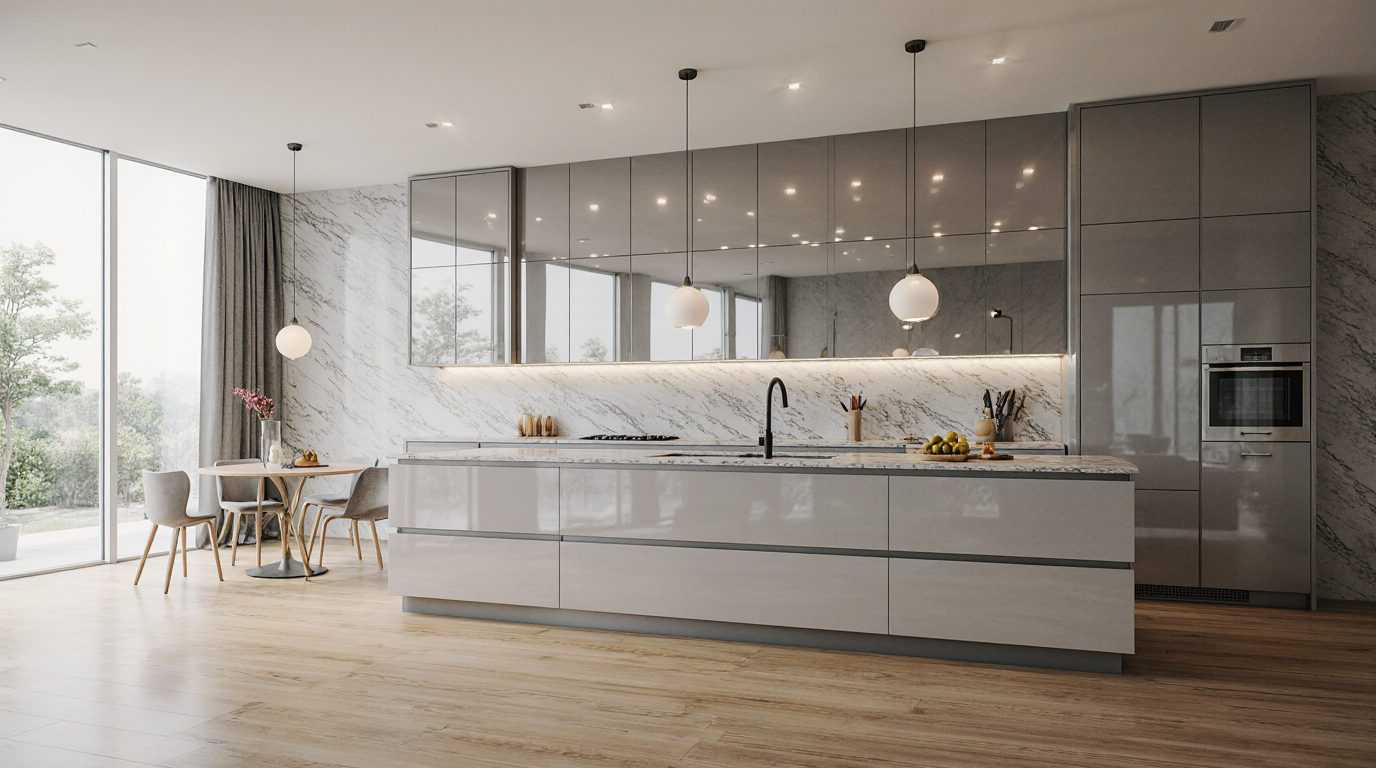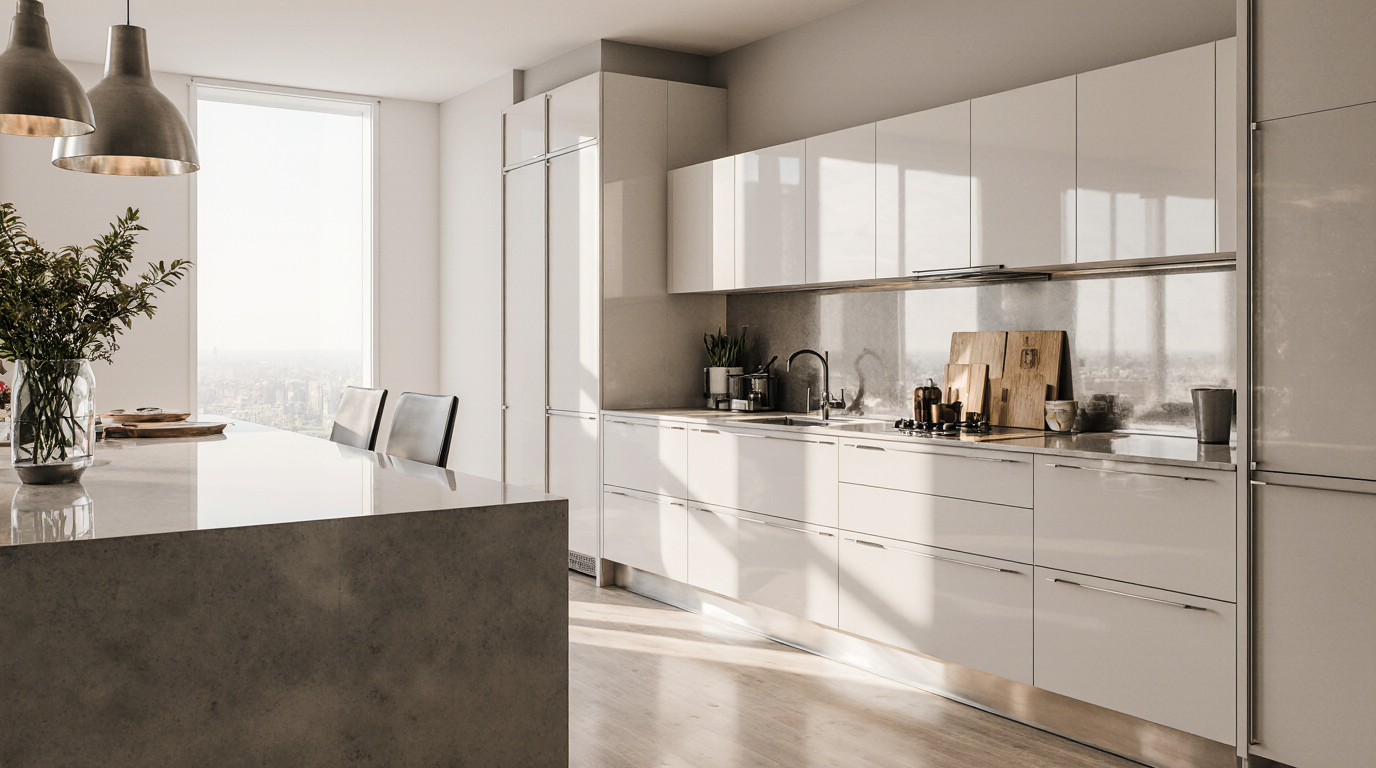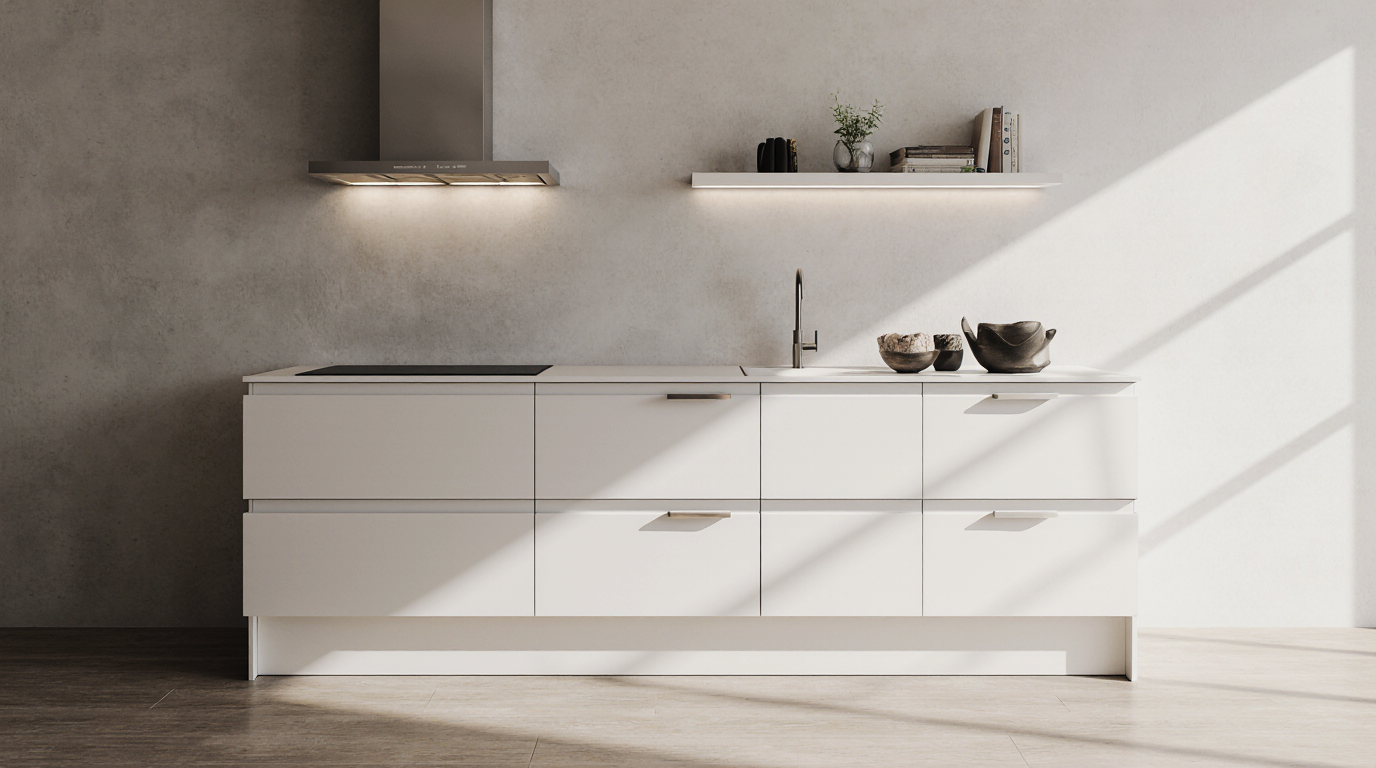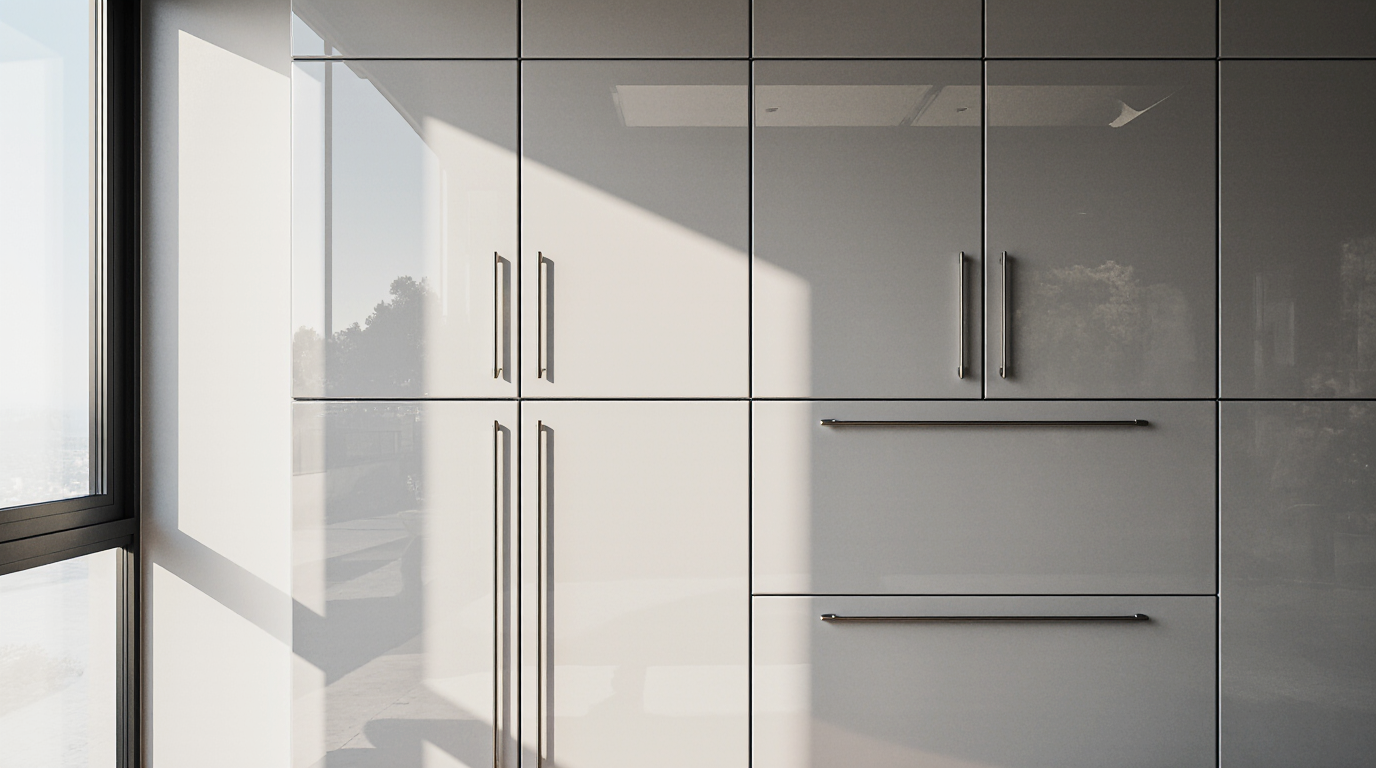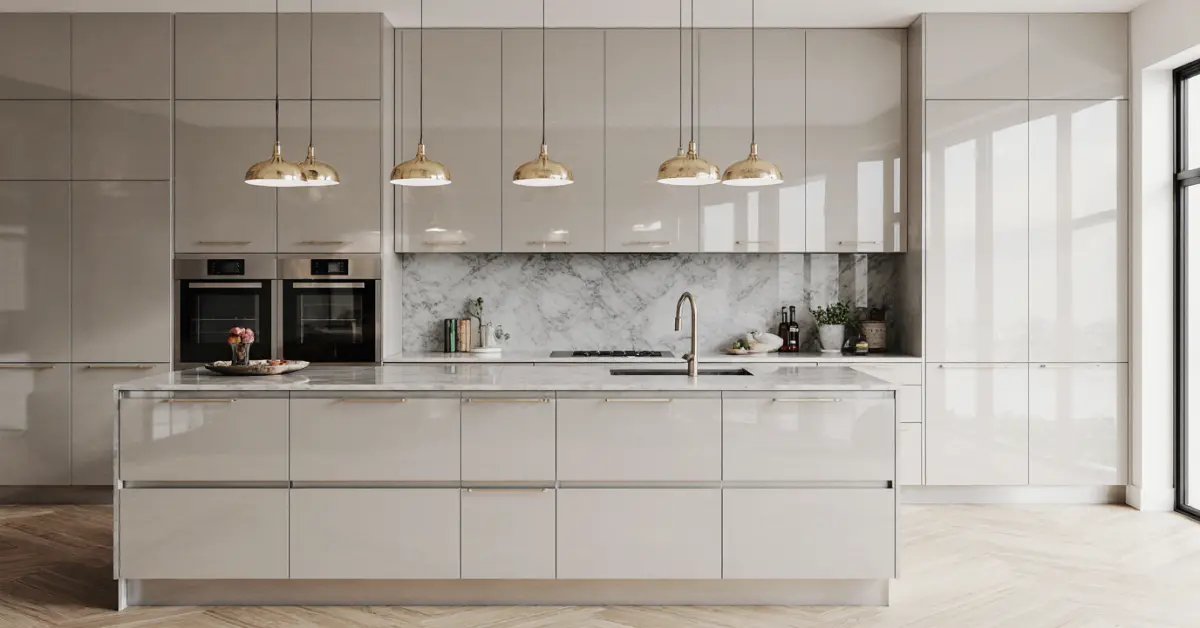
In Sarasota County, the average number of days with high humidity hovers around 250 per year. For a homeowner investing in high gloss kitchen cabinets, that isn't just a weather statistic; it's the primary adversary that can cause a premium acrylic or lacquer finish to delaminate or yellow in under five years. The key to a lasting, beautiful kitchen isn't just the color or style—it's specifying a core material and adhesive technology engineered for our relentless coastal environment.
Executive Summary: Achieving a Lasting High-Gloss Finish in Sarasota
From my direct experience on projects from Lakewood Ranch to Bird Key, achieving a durable high-gloss kitchen in
From my direct experience on projects from Lakewood Ranch to Bird Key, achieving a durable high-gloss kitchen in Sarasota is less about the brand and more about the material science. The intense UV exposure and pervasive humidity demand a technical approach that goes beyond standard cabinet selection. A successful project hinges on specifying materials that resist yellowing and delamination, and using installation methods that account for moisture and salt air. Many beautiful kitchens fail prematurely because the focus was on the initial look, not the long-term performance in our specific climate.
- Core Material is Non-Negotiable: Always specify a marine-grade plywood or high-density fiberboard (HDF) core. Standard MDF will swell with ambient humidity, causing the gloss layer to ripple or peel.
- Finish Technology Matters: True acrylic-faced panels offer superior UV resistance compared to polyurethane lacquers, which can yellow over time with direct sun exposure common in Sarasota homes.
- Edge Banding is a Critical Seal: Laser or PUR (polyurethane reactive) edge banding creates a seamless, waterproof seal. This is the single most important detail to prevent moisture ingress at the panel edges.
- Ventilation and Climate Control: Proper kitchen ventilation and consistent HVAC use are as crucial as the cabinets themselves, especially for seasonal residents whose homes may be closed up for months.
The Planning Failures That Compromise High-Gloss Cabinets
The most common errors I see with high-gloss installations in Sarasota happen long before the first cabinet is hung. Clients fall in love with a sleek, reflective look in a showroom but fail to account for the realities of a coastal Florida home. They underestimate the impact of direct sunlight from large windows and the constant battle against humidity, leading to choices that look great for a year and then begin to degrade.
The Most Expensive Failure: Ignoring UV Impact on Color
The costliest mistake is choosing a finish based on color alone, particularly with cream or white high-gloss cabinets, without verifying its UV stability. I worked on a project in a Lido Key condo where the client insisted on a specific European lacquer for its unique creamy tone. Despite warnings, the focus was purely aesthetic. Within two years, the cabinets directly hit by the afternoon sun through the west-facing glass had yellowed noticeably, creating a jarring two-tone effect against the shaded cabinets. The cost to replace just the affected door and drawer fronts exceeded 25% of the original cabinet budget, a completely avoidable expense had a UV-resistant acrylic been chosen initially.
How High-Gloss Cabinetry Projects Unfold in Practice
A successful high-gloss kitchen project in Sarasota follows a meticulous process that prioritizes material specification for our climate. It begins not with design, but with a technical assessment of the home's environment, including window locations, sun exposure, and ventilation systems. From there, we select the appropriate panel technology—typically an acrylic-faced panel on a moisture-resistant substrate. The fabrication process requires specialized machinery for cutting and edge-banding to ensure a flawless, sealed finish that can withstand humidity.
Selection Criteria for Sarasota Homeowners
When evaluating options, Sarasota clients must look beyond the showroom samples. Your checklist should be tailored to our specific environmental challenges:
- Substrate Verification: Insist on seeing a cross-section of the panel. Do not accept standard particleboard or MDF. The core must be rated for high-humidity applications.
- Edge Banding Method: Ask the fabricator if they use PUR or laser edge banding. Conventional EVA hot-melt glue can soften and fail in the heat of a Florida garage or during transport, compromising the seal before installation even begins.
- Warranty Against Yellowing: A reputable supplier for the Sarasota market will offer a specific warranty against color change and delamination due to UV exposure. A generic product warranty is not sufficient.
- HOA Material Submission: For communities like The Concession or Lakewood Ranch, your HOA's Design Review Committee may require material samples and specifications. Ensure your supplier can provide this documentation promptly to avoid delays.
Comparison with Alternative Cabinet Finishes
High gloss is a statement, but it's not the only option for a modern or classic kitchen. Understanding the trade-offs is key, especially in a demanding environment like Sarasota's. Here's a practical comparison based on projects I've managed locally.
| Feature | High-Gloss Acrylic | Satin Painted Finish (on HDF) | Wood Veneer (Sealed) |
|---|---|---|---|
| Humidity Resistance | Excellent (with proper edge banding) | Good (requires high-quality paint and primer) | Fair (vulnerable to expansion/contraction) |
| UV/Sunlight Stability | Excellent (minimal to no yellowing) | Good to Fair (high-end paints perform well, others fade) | Poor (will fade and change color over time) |
| Maintenance & Cleaning | Easy to wipe, but shows fingerprints and smudges | Easy to clean, hides minor imperfections well | Requires specific wood cleaners, can be porous |
| Durability/Scratch Resistance | Good to Fair (can scratch; repairs are difficult) | Good (touch-ups are possible) | Fair (dents and scratches easily) |
When a High-Gloss Finish Is Not the Right Choice
I advise clients against high-gloss finishes in two specific scenarios. First, for families with young children or very active kitchens, the constant visibility of fingerprints and the risk of scratching from toys or cookware can become a major source of frustration. A high-quality satin or matte finish is far more forgiving. Second, for homes with a more classic or transitional style, like many in the McClellan Park area, a high-gloss finish can feel architecturally out of place, clashing with the home's inherent character. In these cases, beautiful cream colored kitchen cabinets with a satin finish often achieve a more harmonious and timeless look.
A Safe Hiring Checklist for Your Sarasota Project
Finding a company that can deliver a lasting high-gloss kitchen goes beyond looking at portfolios of beautiful kitchen cabinets. You need a partner with proven technical expertise in our specific climate. Use this checklist to vet potential cabinet makers and installers.
- Verify they use a moisture-resistant substrate like marine-grade plywood or HDF, not just standard MDF.
- Confirm their use of PUR or laser edge banding technology for a permanent, waterproof seal.
- Ask for local references from waterfront properties (Lido Key, Siesta Key, Casey Key) that are at least 3-5 years old to see how their work holds up to salt air and humidity.
- Check for proper licensing and insurance, including liability coverage that meets the often-stringent requirements of Sarasota's luxury condo associations.
- Ensure the installation plan includes sealing all cutouts (sinks, outlets) with silicone to prevent moisture from wicking into the core material.
- Discuss their process for acclimatizing materials on-site before installation to prevent warping.
- Review their warranty specifically for delamination and color fastness in a high-UV environment.
Decisions That Determine the Final Outcome
The success of your high-gloss kitchen is determined by a few critical decisions made early in the process. The single most important choice is prioritizing the technical specification of the panel over the brand name or country of origin. A premium German or Italian brand using the wrong core for Florida's climate will fail just as surely as a lower-cost option. Your budget should be allocated first to the core and edge-banding technology, then to the aesthetic features.
The Exact Moment the Majority Gets It Wrong
The critical error happens when the client approves the final design and color without having a signed-off, written specification for the core material and edge-banding method. I've seen it repeatedly: a contract will simply state “high-gloss cream cabinets.” This ambiguity gives the cabinet maker latitude to use a standard MDF core to boost their margin. You must insist that the material specification, such as “0.75-inch HDF core with acrylic face and PUR edge banding,” is an explicit line item in the contract. This simple step shifts the conversation from a subjective discussion about looks to an objective standard of quality and durability.
Practical Answers About Operations in Sarasota
Navigating a high-end cabinet installation in Sarasota involves more than just design and construction. You have to contend with local regulations, building codes, and community-specific rules that can impact timelines and costs.
Permitting for Kitchen Remodels in Sarasota
If your kitchen renovation involves moving electrical or plumbing, a permit from Sarasota County (or the respective city) is required. A straightforward cabinet replacement (a “pull and replace”) typically does not. However, installers for high-end cabinetry often prefer to pull a permit regardless, as it provides a framework for inspections. The Sarasota County permit fee for a minor interior remodel can start around $100 but increases with the total project valuation. Expect a 2-4 week lead time for permit review on average.
Condo and HOA Approval Processes
In nearly all Sarasota condos and managed communities like Palmer Ranch, you cannot begin work without approval from the association's architectural review board. This process can take anywhere from 30 to 60 days. They will require contractor insurance certificates, a detailed scope of work, material samples, and a work schedule. Work is often restricted to specific hours (e.g., 9 AM to 4 PM, weekdays only), which can extend the project timeline.
Florida Building Code and Cabinet Installation
The Florida Building Code has specific requirements for anchoring upper cabinets, especially in coastal high-wind zones. While focused on structural integrity, proper anchoring also prevents cabinets from pulling away from walls that may shift slightly due to humidity and thermal expansion. A qualified installer in Sarasota will use longer, structural-grade screws and ensure they are secured into studs, not just drywall, to meet these more stringent local standards. This is a crucial detail for ensuring long-term stability.