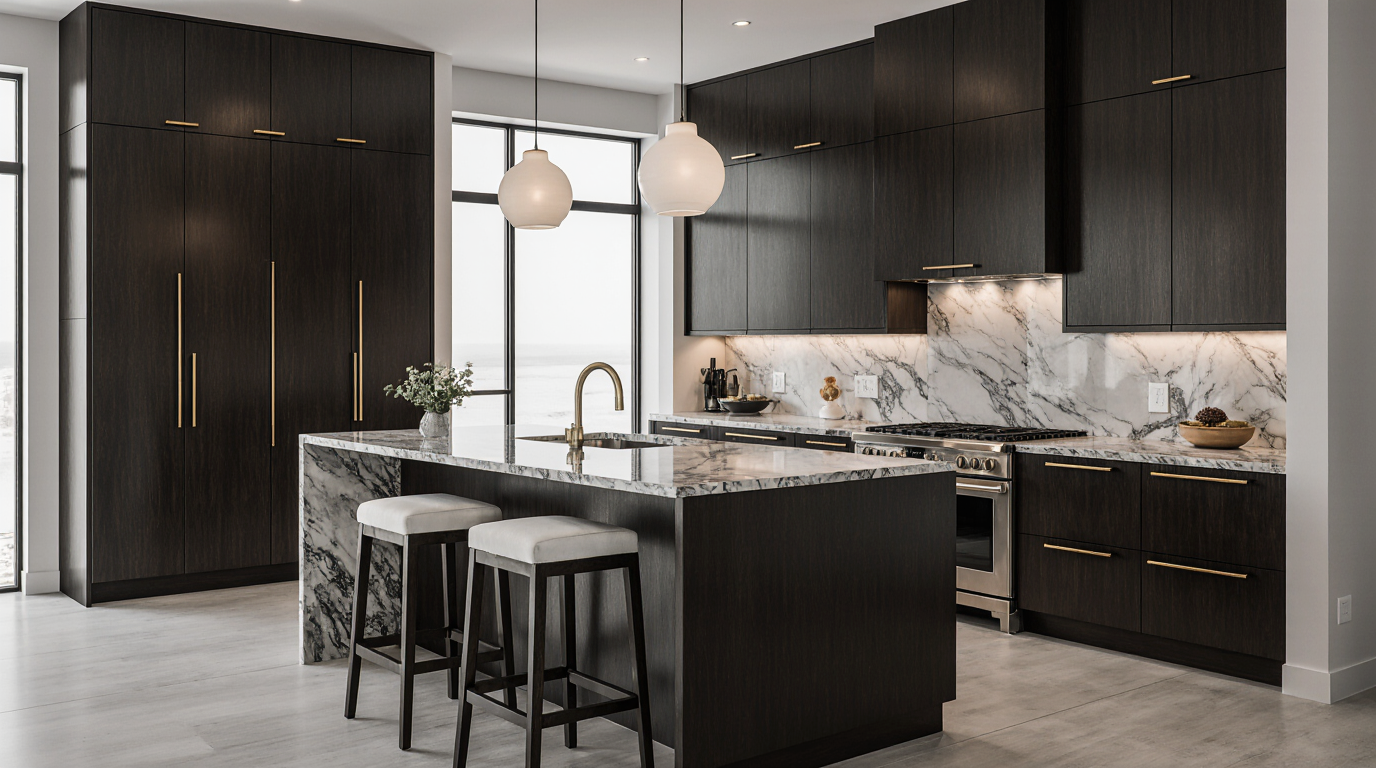
A Diagnostic Approach to Kitchen Cabinet Engineering
My process begins long before a single piece of wood is cut. When I first walk into a space, whether it’s a new build in Lakewood Ranch or a renovation on Lido Key, I'm not just looking at the layout. I'm assessing the home’s building envelope—its airflow, the placement of windows, and the heat signature of appliances. I've identified that a Sub-Zero refrigerator, for example, produces a different kind of ambient heat than a Wolf range, and the adjacent cabinetry must be engineered to dissipate that heat without compromising the finish over time. This initial diagnostic phase is crucial for designing a system that performs, not just one that looks good on day one.
I also analyze the home's HVAC performance and typical indoor humidity levels, which can fluctuate dramatically. A kitchen designed for a home with a high-efficiency variable-speed air conditioner requires different considerations than one in an older home with less precise climate control. This technical assessment dictates the specific joinery techniques and internal ventilation strategies I will build into the cabinet boxes themselves to prevent any possibility of microbial growth or material stress.
The Material Science of a Climate-Proof Cabinet
The core material is just the starting point. When I specify plywood, I'm looking for a void-free multi-ply construction, which guarantees uniform strength and stability. Even high-quality domestic plywood can have hidden voids that create weak spots; I reject any panel that doesn't meet this zero-tolerance standard. For the finish, my workshop applies a two-part post-catalyzed conversion varnish. Unlike a standard lacquer that can yellow or crack under the intense Florida UV light streaming through large windows, this finish creates a chemically-cured, non-porous barrier. It offers a measurable increase in resistance to common household chemicals, abrasives, and moisture, ensuring the finish remains pristine.
Hardware is another area where I see widespread failures. My preference is for high-performance systems like Blum LEGRABOX or Grass Vionaro drawer slides. The reason is their engineering: the synchronized runners provide a fluid motion that won't degrade under heavy loads, and their robust construction prevents the lateral sagging I often find in cheaper systems after only a year of use. These are not aesthetic choices; they are mechanical components selected to guarantee a cabinet's functional performance for decades.
Fabrication and On-Site Integration Process
Precision in the workshop translates directly to longevity in the home. Every cabinet carcass I build is assembled using interlocking joinery methods, primarily dado and rabbet joints, reinforced with concealed screws. This creates a monolithic box that is inherently stronger and more rigid than the simple butt joints and staples common in mass-produced cabinetry. This structural integrity is critical for supporting heavy stone countertops without deflection.
My installation protocol is methodical and addresses the realities of local architecture:
- Acclimatization: All finished cabinetry is delivered to the job site and allowed to acclimate to the home's specific environment for at least 72 hours before installation. This simple step prevents post-installation shifting and warping as the wood adjusts.
- Laser-Level Installation: I start by establishing a perfectly level baseline with a laser. Every cabinet is then individually leveled and shimmed, ensuring absolute precision across the entire run. This is non-negotiable for achieving the seamless look required in modern and transitional designs.
- Scribing to Fit: No wall is perfectly straight. I meticulously scribe the back and side edges of cabinets to the wall's contours, creating a true built-in look without relying on oversized caulk lines or clumsy trim pieces to hide gaps.
Precision Tolerances and Final Commissioning
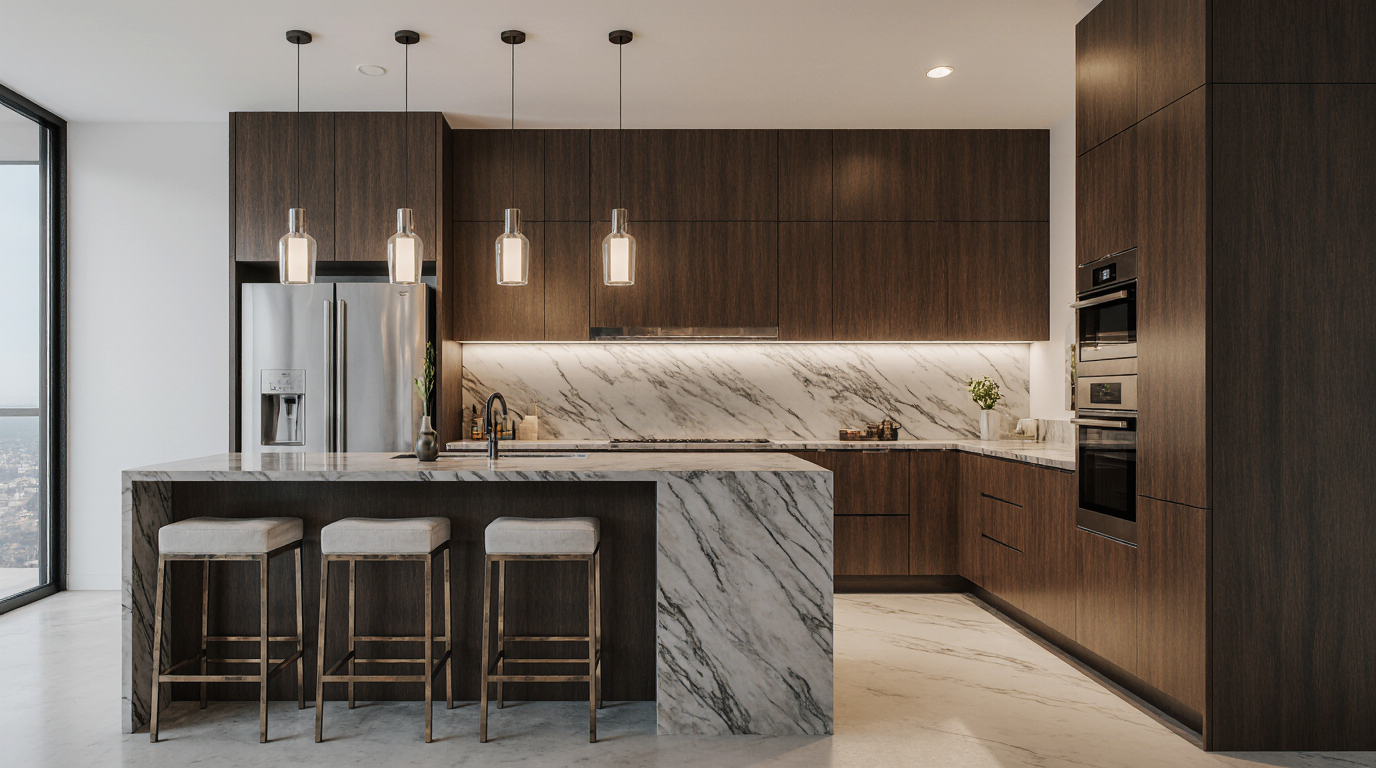
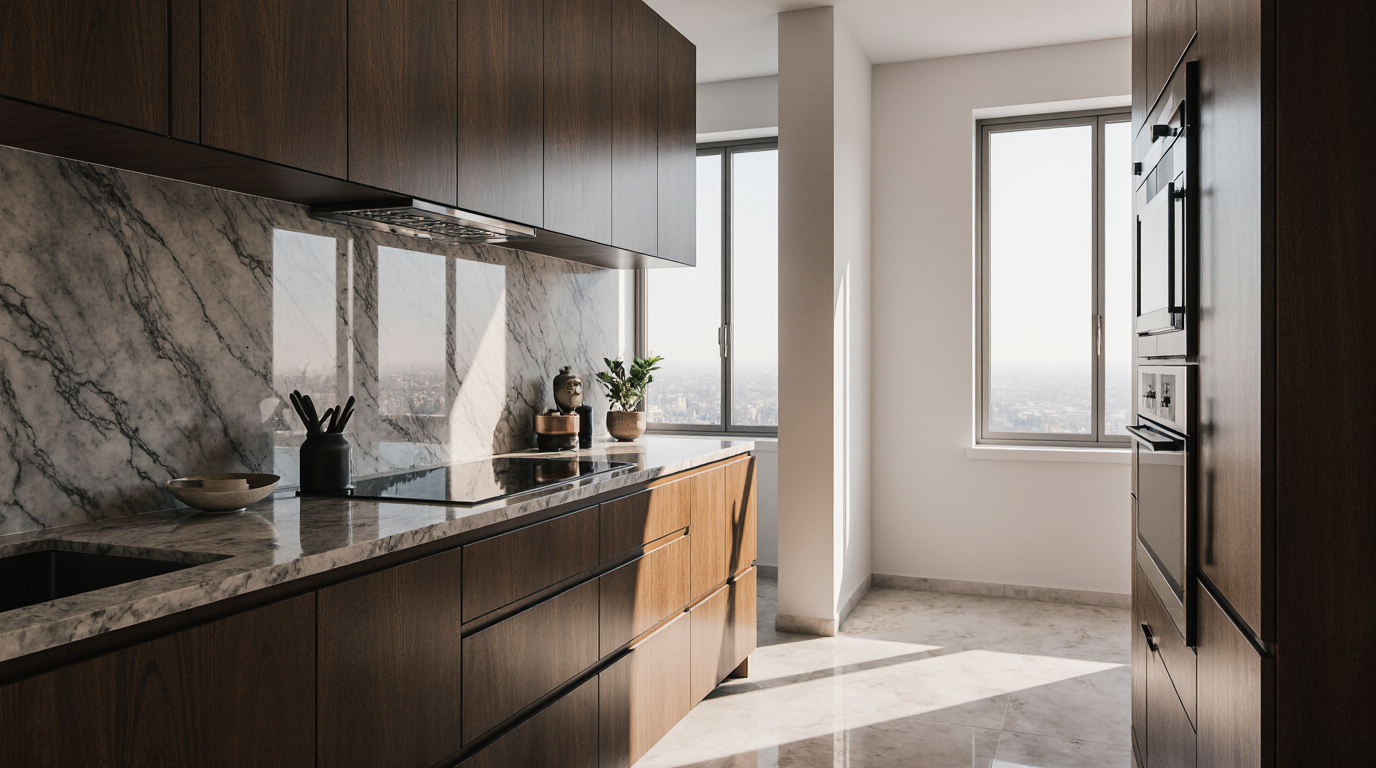
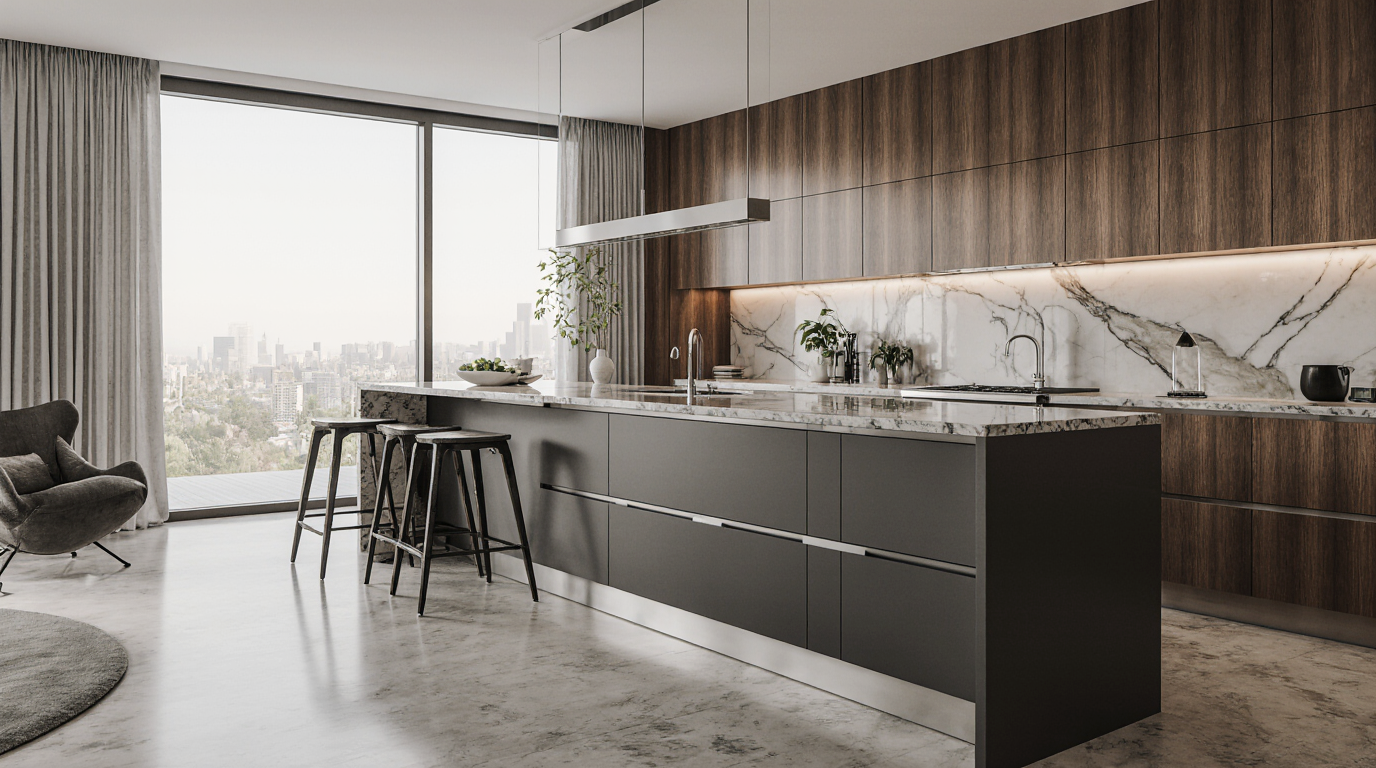
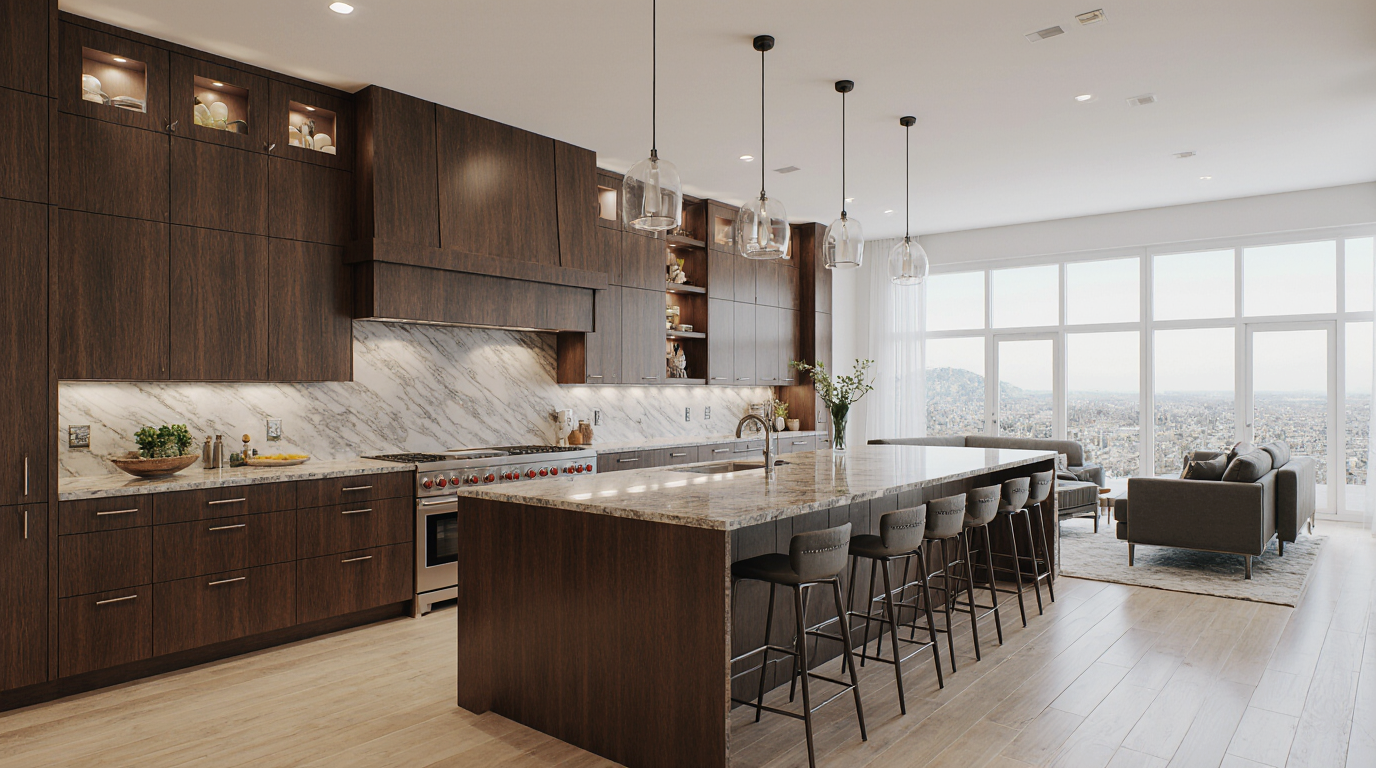
The final stage is about refinement. I work to a strict 1/16-inch tolerance for all door and drawer gaps. This consistency is a hallmark of true custom craftsmanship and is only possible when every preceding step, from cutting to assembly, is executed with extreme precision. It's this visual harmony that separates high-end cabinetry from standard installations. Before the project is complete, I conduct a full commissioning of the kitchen—adjusting every hinge and drawer slide for perfect alignment and smooth operation, and verifying that all integrated lighting and accessories function flawlessly. This final quality check ensures the finished product meets my engineering standards.
When you look closely at your current kitchen, are the gaps between your cabinet doors and drawers perfectly consistent, or have they begun to drift and tell the story of a system under environmental stress?