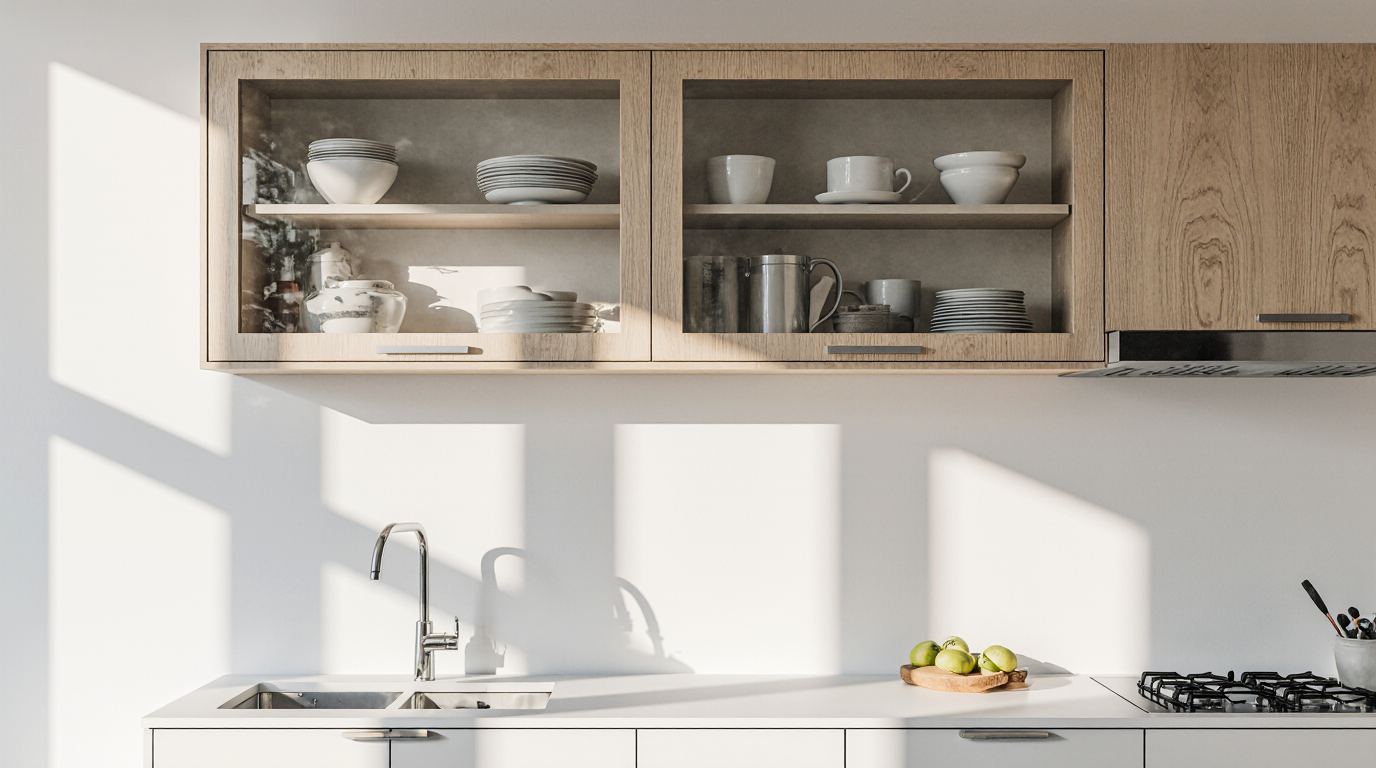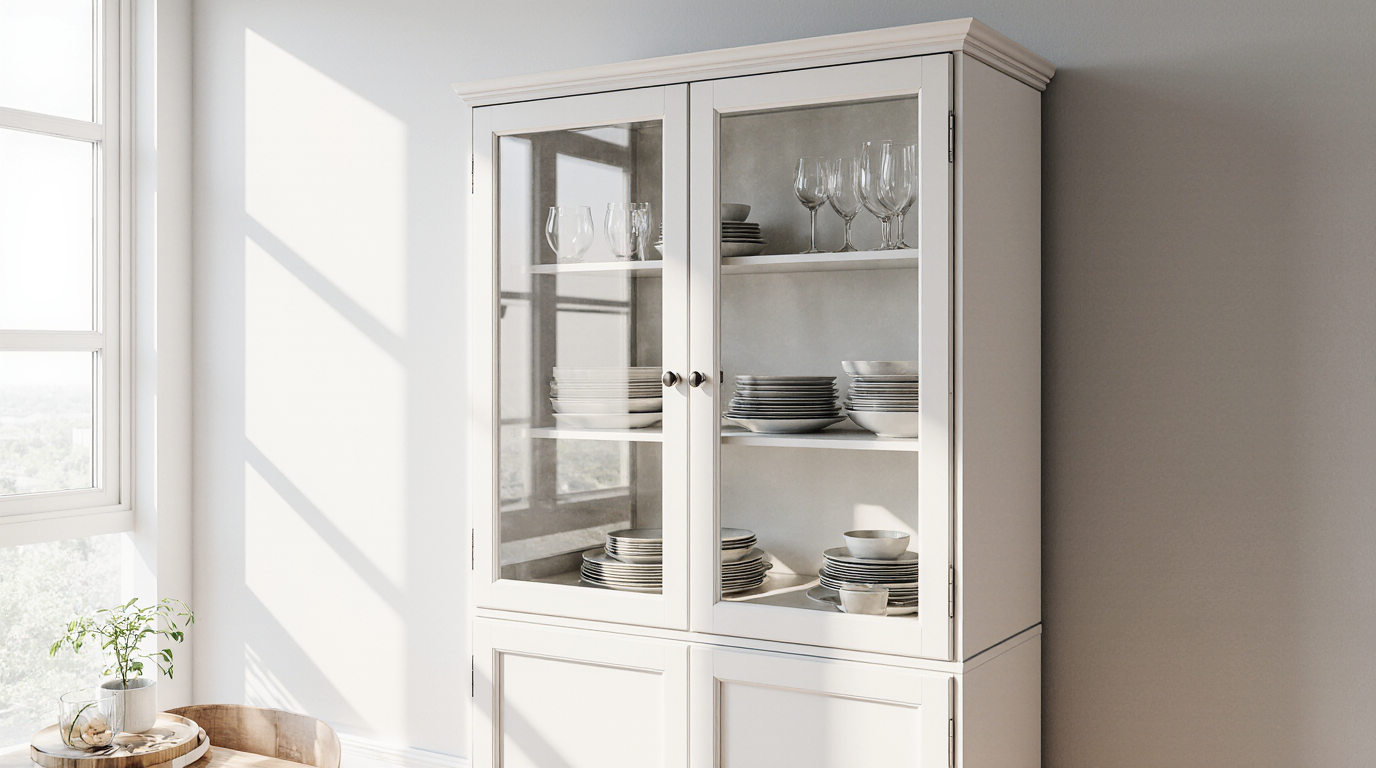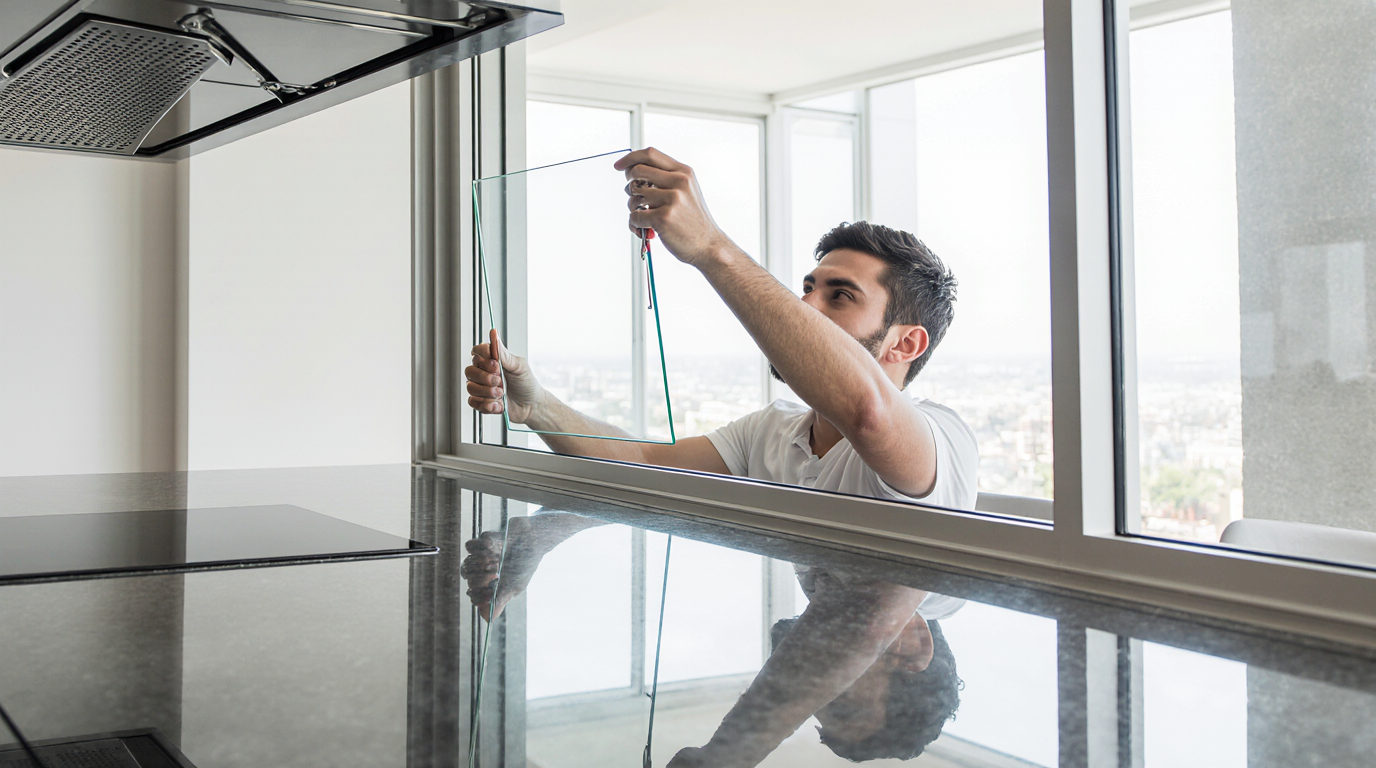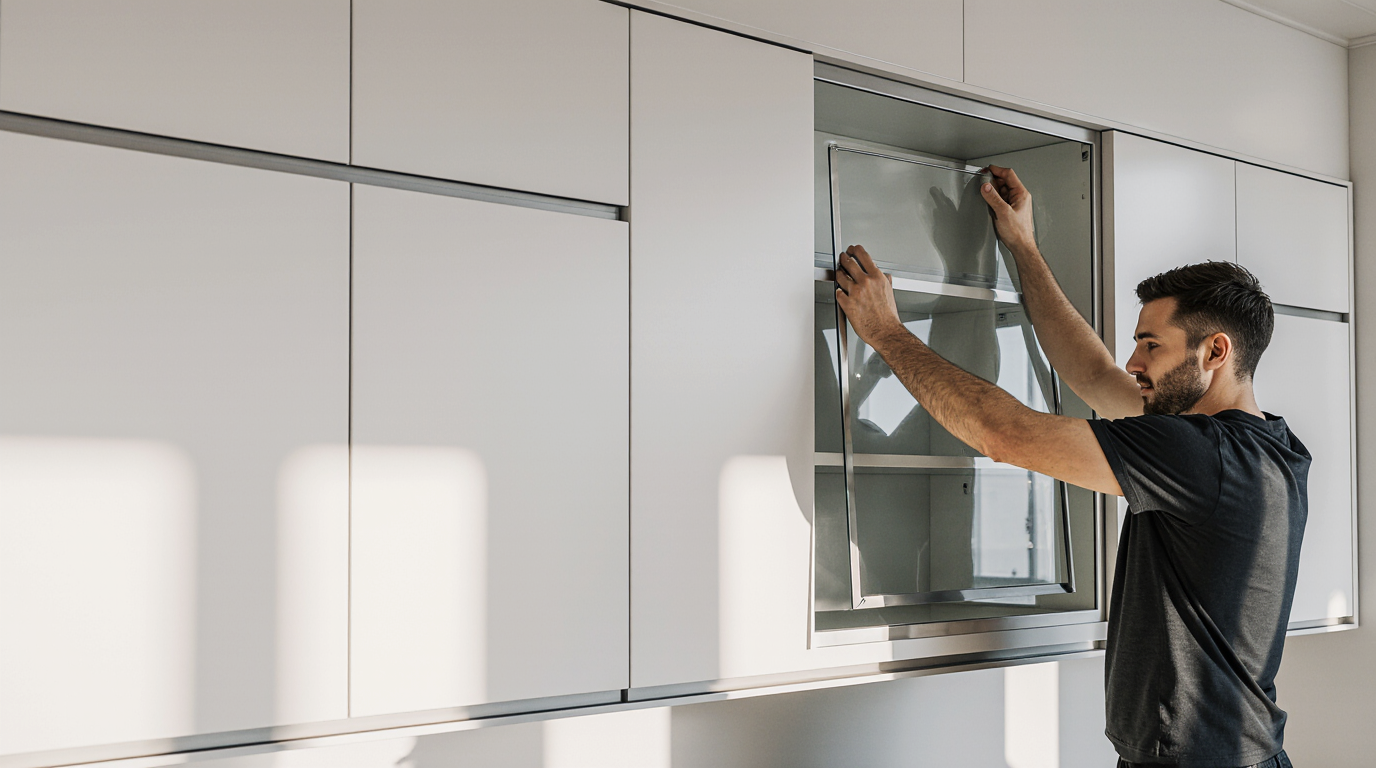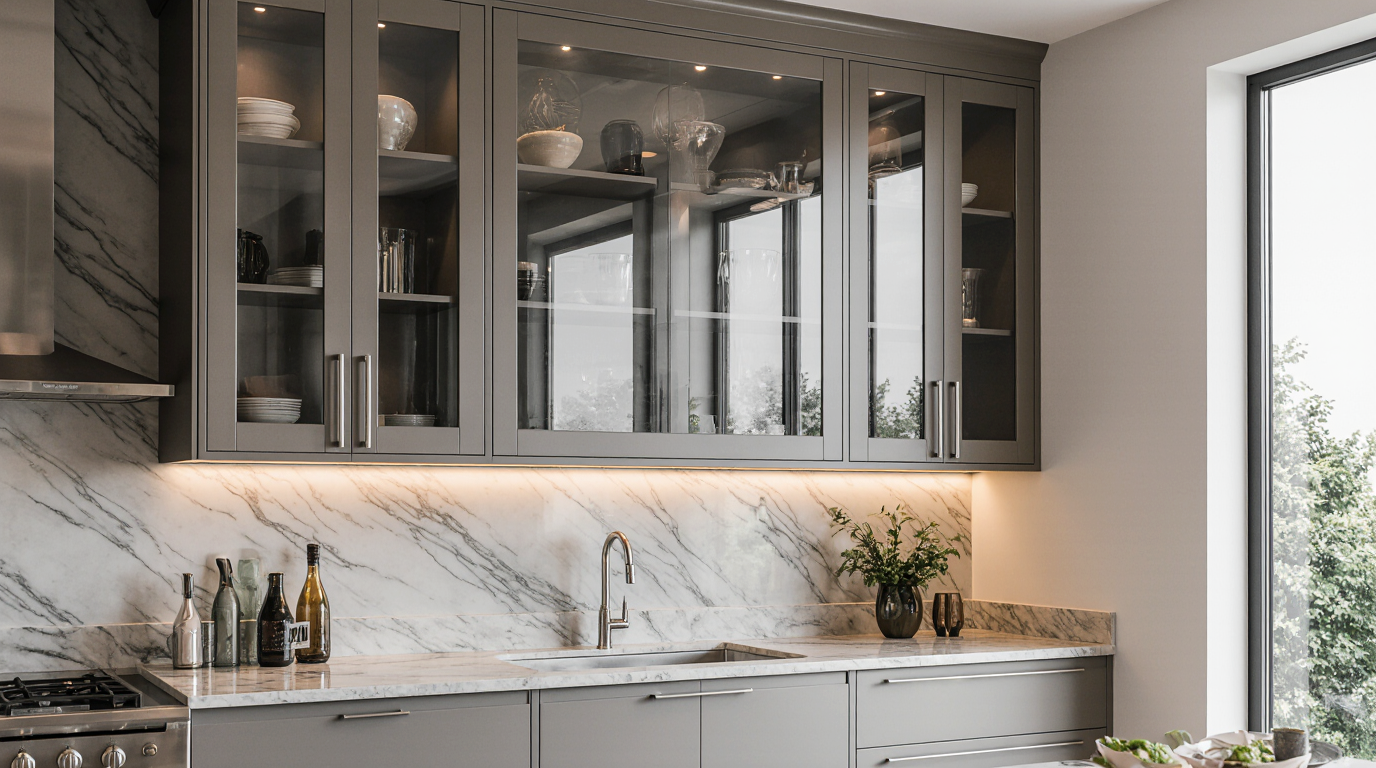
In Sarasota County, a standard kitchen remodel permit can take anywhere from 4 to 8 weeks for review and issuance, assuming no complications. For a homeowner in a deed-restricted community like Lakewood Ranch, you must add another 30 to 60 days for the mandatory Design Review Committee approval before you can even submit to the county. This bureaucratic timeline is the unseen enemy of glass cabinet projects, where every material choice, from the glass tint to the frame, must be finalized and approved long before a single tool is lifted.
Executive Summary: Navigating Glass Cabinetry in a Coastal Climate
From my direct experience installing high-end kitchens across Sarasota, the success of a glass cabinet project hinges
From my direct experience installing high-end kitchens across Sarasota, the success of a glass cabinet project hinges less on the brand and more on its technical specification against humidity and UV light. Many homeowners focus on the glass style—frosted, reeded, clear—but the real points of failure are the frame material, the seal integrity, and the hardware's corrosion resistance. What looks stunning in a Midwest showroom can delaminate or fog within two seasons in a Bird Key home if not built for our specific environment.
- Climate-Driven Material Selection: The core decision is specifying marine-grade plywood or specialized MDF for frames to prevent warping from Sarasota's high humidity.
- UV and Impact Resistance: For homes with significant sun exposure, particularly on the barrier islands, low-emissivity (Low-E) or laminated glass is not a luxury; it prevents fading of cabinet contents and adds a layer of safety.
- Hardware Specification: All hinges, pulls, and internal mechanisms must be stainless steel (304 or 316 grade) or have a PVD finish to resist corrosion from salt air.
- Sealing and Ventilation: Properly gasketed doors are non-negotiable to keep humid air out, but integrated ventilation for appliance cabinets is equally critical to prevent internal moisture buildup.
The Most Common Planning Failures with Glass Cabinets Here
The biggest missteps I see in Sarasota are rooted in underestimating our environment. Homeowners fall in love with a design they saw online or in a national magazine, not realizing the materials shown are completely unsuitable for a home that sits 100 yards from saltwater. The resulting issues aren't immediate but surface within 18-24 months as subtle warping, fogging between panes, or rust spots on hinges.
The Single Most Expensive Mistake: Ignoring Sun Exposure
The costliest error is failing to map the path of the sun through the kitchen across different times of the day and year. I worked on a project in a beautiful Lido Shores home where the client insisted on standard clear glass for west-facing cabinets to display their ceramic collection. Despite my warnings, they prioritized clarity over protection. Within a year, the intense afternoon sun had visibly faded not only their prized collection but also the wood veneer on the interior of the cabinets. The fix required replacing all the glass with a Low-E coated option and having the cabinet interiors professionally refinished—a completely avoidable expense that was nearly 30% of the original cabinet cost.
How the Process Works in Practice for a Sarasota Home
A successful project follows a strict sequence, aligning design choices with local constraints from the start. It begins with an on-site analysis of light, airflow, and humidity, which informs the material specifications. We then develop detailed shop drawings that explicitly call out the type of glass, the frame construction, and the hardware grade. These drawings are what get submitted to your HOA or condo association's architectural review board, a step that often dictates the project timeline.
Material Selection Criteria for Sarasota Residents
- Frame Stability: Is the cabinet box and door frame made from marine-grade plywood or a high-density, moisture-resistant composite? Standard particleboard will swell and fail.
- Glass Type and Hurricane Code: While not always required for cabinetry, if the glass is part of a large unit near an exterior window in a wind-borne debris region, using laminated or tempered safety glass is a crucial consideration for both safety and peace of mind.
- Hardware Finish Durability: Ask for proof that the hardware has been tested for salt spray resistance. A “brushed nickel” finish can be applied over cheap steel or durable stainless steel; the difference is invisible at first but obvious after one summer.
- Seal and Gasket Quality: The door seal should be a high-quality silicone or neoprene gasket, not a simple foam strip. This is what creates a barrier against the pervasive humidity that can cause musty odors and damage contents.
Comparing Glass Cabinets to Other Options in Our Market
Glass cabinets offer an unmatched sense of openness and light, but they aren't the only way to achieve a high-end look. It's crucial to weigh them against solid wood or high-quality laminates based on the practical demands of a Sarasota lifestyle. The choice impacts not just aesthetics but daily maintenance and long-term durability.
| Feature | Glass Front Cabinets | Solid Wood Cabinets | High-Pressure Laminate (HPL) |
|---|---|---|---|
| Humidity Resistance | Dependent on frame/seal (Variable) | Requires expert sealing; prone to expansion | Excellent; highly stable |
| Maintenance | Requires frequent cleaning of glass | Standard cleaning; needs polishing | Very low; easy to clean |
| Cost | High (especially with specialty glass) | High | Moderate to High |
| UV Resistance | Good to Excellent (with Low-E glass) | Poor to Fair (prone to fading) | Excellent (color-stable) |
When Glass Fronts Are Not the Right Choice
I advise against expansive use of glass cabinets for clients who are seasonal residents or use their Sarasota property as a rental investment. Unless someone is present for regular climate control and cleaning, the combination of stagnant, humid air and salt accumulation can lead to issues. For a part-time residence, the practicality and resilience of a high-quality solid door, perhaps in a lighter finish to mimic the brightness, often proves to be a more durable, lower-maintenance investment.
A Safe Hiring and Installation Checklist
Verifying a cabinet maker’s local experience is paramount. A craftsman from a drier climate may build beautiful cabinets, but they will likely fail to account for the material science needed to combat our humidity and salt air. Your vetting process must go beyond the portfolio.
- Confirm their Florida contractor's license is active and they carry appropriate liability and workers' compensation insurance.
- Ask for at least two references from projects completed on one of the barrier islands (e.g., Longboat, Siesta, Lido Key) more than three years ago.
- Request a sample cross-section of a cabinet door to inspect the frame material, joinery, and glass seal yourself.
- Verify that their proposal explicitly lists the grade of stainless steel for all hardware (e.g., SS304 or SS316).
- Ensure the contract includes language about meeting all relevant Florida Building Code requirements, especially for anchoring and structural integrity.
- Discuss their process for coordinating with your condo association or HOA architectural review board. An experienced local professional will have this process streamlined.
- Ask how they manage dust and debris in an occupied home, a critical point in the many high-rise condos downtown.
Key Decisions That Determine the Final Outcome
The success of your project will be determined by a few critical choices made long before installation begins. The first is accepting that materials suitable for other parts of the country are not the default here. The second is prioritizing performance over pure aesthetics when the two are in conflict. A slightly tinted Low-E glass might alter the color of your white dishes, but it will save them and your cabinets from sun damage.
The Exact Moment Most Homeowners Get It Wrong
The critical mistake happens during the design phase, when the focus is entirely on the visual. Clients spend weeks choosing a glass texture—frosted, seeded, reeded—but only minutes discussing the cabinet box construction. You must reverse this priority. Finalize the technical specifications first: the box material (marine-grade ply), the joinery, the hardware, and the sealing system. The decorative custom cabinet glass is the final layer, not the foundation. Getting the core construction right is what ensures your beautiful glass choice remains beautiful for decades.
Practical Answers About Operations in Sarasota
Navigating the local requirements is as important as the design itself. Misunderstanding these processes can lead to significant delays and budget overruns. Here are the common operational hurdles I help clients overcome.
Understanding HOA and Condo Association Reviews
In communities from The Landings to Palmer Ranch, any exterior-facing modification, which can include kitchens visible from the outside, requires approval. They will review everything from the finish to the reflectivity of the glass. Submitting a complete package with material samples and detailed drawings upfront is the only way to avoid a cycle of rejections that can add months to your timeline.
Permitting for Cabinetry: When Is It Required?
In Sarasota County, simply replacing cabinets with the same layout typically does not require a permit. However, the moment you move plumbing, electrical (for under-cabinet lighting), or change the kitchen's footprint, you trigger the need for a full building permit. This involves plan reviews and inspections. A reputable installer will manage this process, but you need to account for the associated city or county fees, which can run several hundred dollars, and the time for review.
Meeting Florida Building Code for Cabinet Anchoring
The Florida Building Code has specific requirements for how wall cabinets are anchored to the structure, designed to prevent them from detaching during high-wind events. This is not something to overlook. I've seen installations where screws barely hit the drywall. Proper installation requires locating studs and using appropriate fasteners to ensure the glass wall cabinet kitchen unit and its heavy contents remain securely attached, a critical safety measure in our hurricane-prone region.