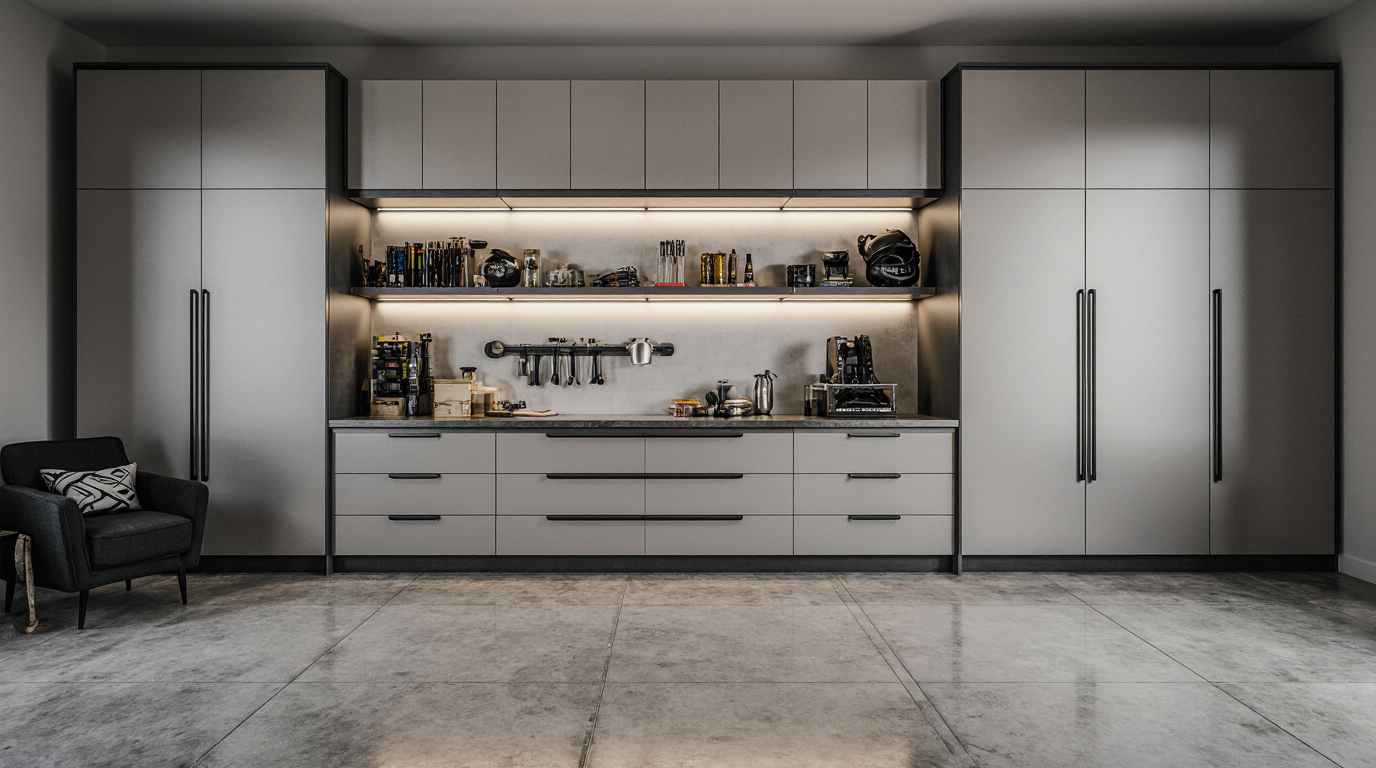
Diagnostic Protocol for Coastal Garage Environments
Before any design work begins, my first step is a thorough environmental assessment of the garage space itself. I’m not just measuring wall dimensions; I'm analyzing the specific microclimate. This involves checking for sources of vapor intrusion from the foundation, measuring ambient humidity levels over a 24-hour period, and identifying how airflow from frequently opened garage doors introduces salt and moisture. I’ve found that garages in Lido Key properties, for example, face a far more aggressive salt spray component than those further inland, requiring different sealing protocols.
This diagnostic phase is critical because it dictates the engineering. A common oversight I see in standard installations is the failure to account for the unconditioned nature of a garage. A cabinet that performs perfectly inside a climate-controlled home will fail when exposed to the temperature and humidity swings of a Florida garage. My methodology identifies these stress points first, ensuring the final cabinetry is engineered for its real-world environment, not an idealized showroom.
A Deeper Dive into Material and Hardware Specifications
When I specify marine-grade plywood, it's crucial to understand why it’s fundamentally different from other materials. The core distinction is the use of Weather and Boil Proof (WBP) phenolic resin to bond the wood veneers. This adhesive creates a permanent, waterproof bond that will not break down, even if fully submerged. Standard furniture-grade plywood or MDF uses urea-formaldehyde glues, which are water-resistant at best and will inevitably delaminate in the constant high humidity of a Sarasota garage. The structural integrity is simply on another level, preventing the sag and warp I’m often called in to fix.
The same level of scrutiny applies to hardware. Many suppliers will market "rust-resistant" hardware, which is often just a thin zinc or chrome plating over standard steel. This coating is easily compromised by a small scratch, and once breached, the salt air attacks the steel underneath. My non-negotiable standard is solid 316L stainless steel for all functional components, including full-extension drawer slides and European-style concealed hinges. This grade's superior chromium and added molybdenum content provide maximum resistance to pitting and corrosion from chlorides, ensuring smooth, reliable operation for decades, not just a few years.
Fabrication and Installation: A Zero-Tolerance Approach
My fabrication process is engineered to create a sealed, monolithic unit. Every component is cut using CNC equipment for absolute precision, but the joinery and assembly are where the real durability is built in. I don’t rely on simple screws and staples; my cabinets use interlocking joinery like dadoes and rabbets, reinforced with a specialized polyurethane reactive (PUR) adhesive. This adhesive chemically reacts with moisture in the air to cure, forming an incredibly strong and completely waterproof bond.
The installation process is just as meticulous and follows a strict protocol:
- Waterproof Sealing: Before any cabinet is installed, I apply a waterproof sealant to all raw edges of the plywood, even those that won't be visible. This ensures there are zero entry points for moisture into the wood core.
- Off-Floor Mounting: All cabinet systems are mounted on integrated legs or directly to the wall, elevated a minimum of four inches off the concrete slab. This prevents moisture wicking from the floor and protects against potential water intrusion.
- Scribing and Fastening: Each cabinet is perfectly scribed to the wall and floor for a seamless, built-in look. For fastening, I use only high-grade stainless steel anchors and screws to ensure the mounting points themselves are impervious to corrosion.
Final Adjustments and Long-Term Performance Standards
The final stage is all about precision and ensuring the system functions flawlessly within its environment. I set all door and drawer gaps to a consistent 3mm tolerance. This provides a clean, high-end aesthetic while allowing for minuscule, unnoticeable material movement during extreme temperature shifts, preventing binding. I also assess the need for passive ventilation within the cabinet system itself, sometimes incorporating subtle vents to prevent stagnant air and allow the interior to breathe, further safeguarding stored items.
My quality standard is simple: the finished installation must perform as well on day one thousand as it does on day one. This requires an uncompromising focus on materials and methodology from the very beginning. The ultimate goal is a beautiful, highly functional garage storage system that becomes a permanent, valuable feature of the home. Now, look at the cabinets currently in your garage—are they an asset engineered for our climate, or are they slowly absorbing the humid Sarasota air?