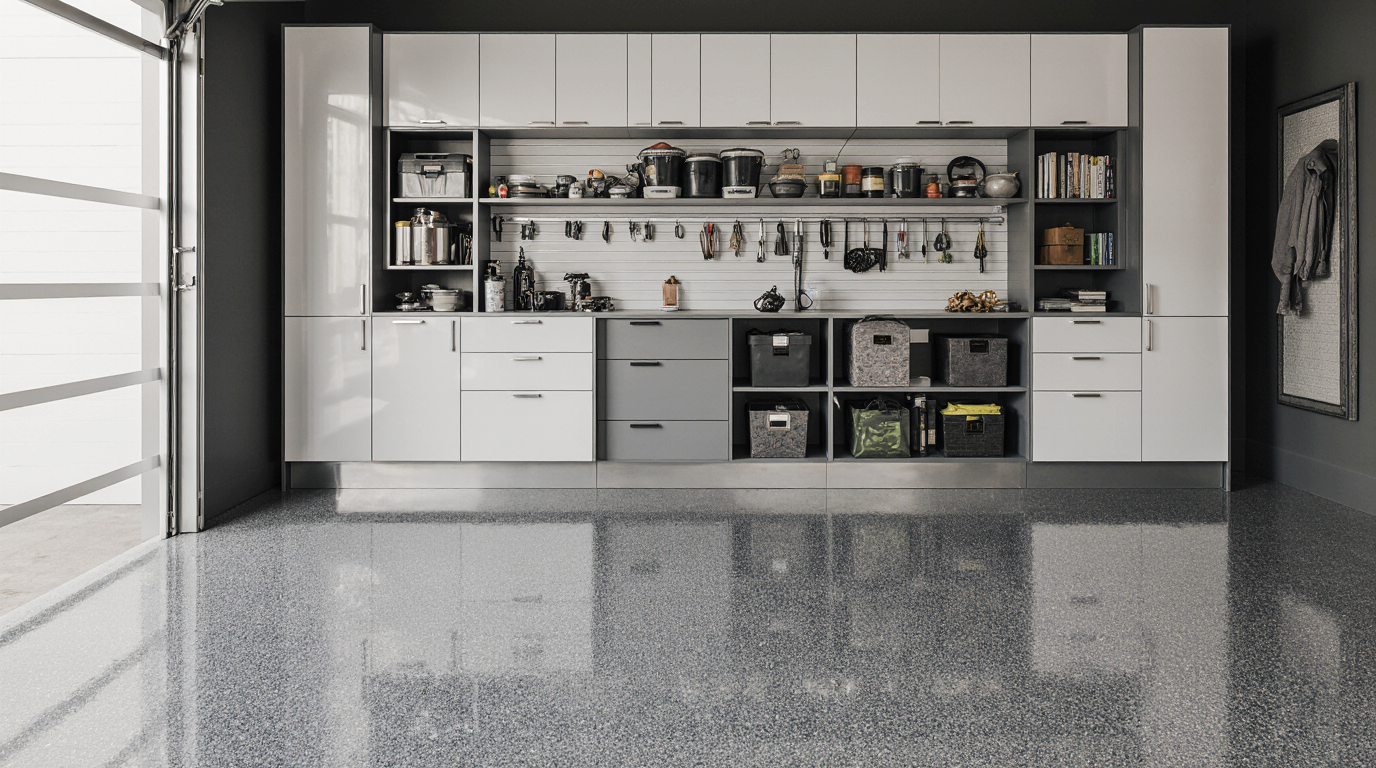
Diagnosing the Garage Environment: My Pre-Design Audit Process
Before a single piece of wood is cut, my process begins with a comprehensive environmental audit of the garage space. This step is critical and often overlooked. I'm not just measuring wall dimensions; I'm analyzing the specific microclimate the cabinetry will endure. In a Lakewood Ranch estate, the primary concern might be ambient humidity and heat cycling, while for a home on Bird Key, the dominant factor is the aggressive salt aerosol from the bay. I use a hygrometer to get baseline humidity readings and assess airflow patterns to identify potential moisture traps.
This initial diagnosis dictates the entire engineering strategy. It helps determine if the cabinetry should be raised off the concrete slab on polymer legs to prevent moisture wicking, or if passive ventilation needs to be integrated into the cabinet design. Understanding the specific challenges of the space—whether it's the intense afternoon sun on a west-facing garage door or the proximity to a boat slip—allows me to build a system that is resilient by design, not just by material choice.
The Material Science of a Climate-Proof Garage Cabinet
The decision to use marine-grade plywood is based on its fundamental construction. Unlike MDF or particleboard, it's made from waterproof phenolic resin that bonds wood veneers under extreme pressure, creating a stable core that is virtually impervious to delamination from moisture. For the exterior, I specify a high-pressure laminate (HPL) or a two-part polyurethane finish that completely seals the wood, especially the vulnerable end grains, creating a monolithic, water-resistant surface.
Hardware selection is equally scientific. I've seen standard zinc-plated hinges show surface rust in a Sarasota garage in under a year. My standard is 316 stainless steel for all hinges, drawer slides, and fasteners. This specific alloy contains molybdenum, which provides superior resistance to chloride corrosion—the exact type of corrosion caused by salt air. For drawer slides, I employ full-extension, soft-close models also built from stainless steel, ensuring a lifetime of smooth, silent operation regardless of the humidity.
Fabrication to Installation: A Zero-Tolerance Framework
My fabrication process is built around precision to eliminate any potential points of failure. Every component is engineered for durability in a high-humidity environment. This isn't standard cabinet making; it's a specific protocol I've developed for coastal applications.
- Joinery: All cabinet boxes are constructed using dado and rabbet joints, reinforced with 316 stainless steel screws, not just staples. This creates an incredibly strong, rigid box that resists racking and twisting as temperatures fluctuate.
- Edge Sealing: Every cut edge of the plywood is sealed with a waterproof agent before assembly. This is a crucial step that prevents moisture from ever reaching the plywood core, which is the primary cause of swelling in lesser-quality cabinets.
- Installation: On site, I ensure cabinets are installed with a slight air gap from concrete walls where possible. All mounting points are sealed with a high-grade silicone sealant to create a barrier against moisture transfer from the structure of the home.
Final Calibration for Longevity and Performance
The final stage is about precision and future-proofing. Door and drawer alignments are set to a tolerance of less than 1/16th of an inch. This tight tolerance, maintained by the stability of the marine-grade core and robust hinges, ensures the cabinet seals properly, helping to keep the interior environment more stable. We also consider the contents. For clients storing sensitive electronics or collector's items, I can integrate low-voltage, sealed LED lighting and even small, solid-state dehumidifiers directly into the cabinetry design.
This level of detail ensures the system doesn't just look good on day one, but that it actively resists the environmental stresses of a Florida garage for its entire lifespan. It's a calculated engineering approach designed to deliver a permanent solution. Does your current garage storage system account for the specific thermal expansion coefficient of its materials and the corrosive potential of its hardware?