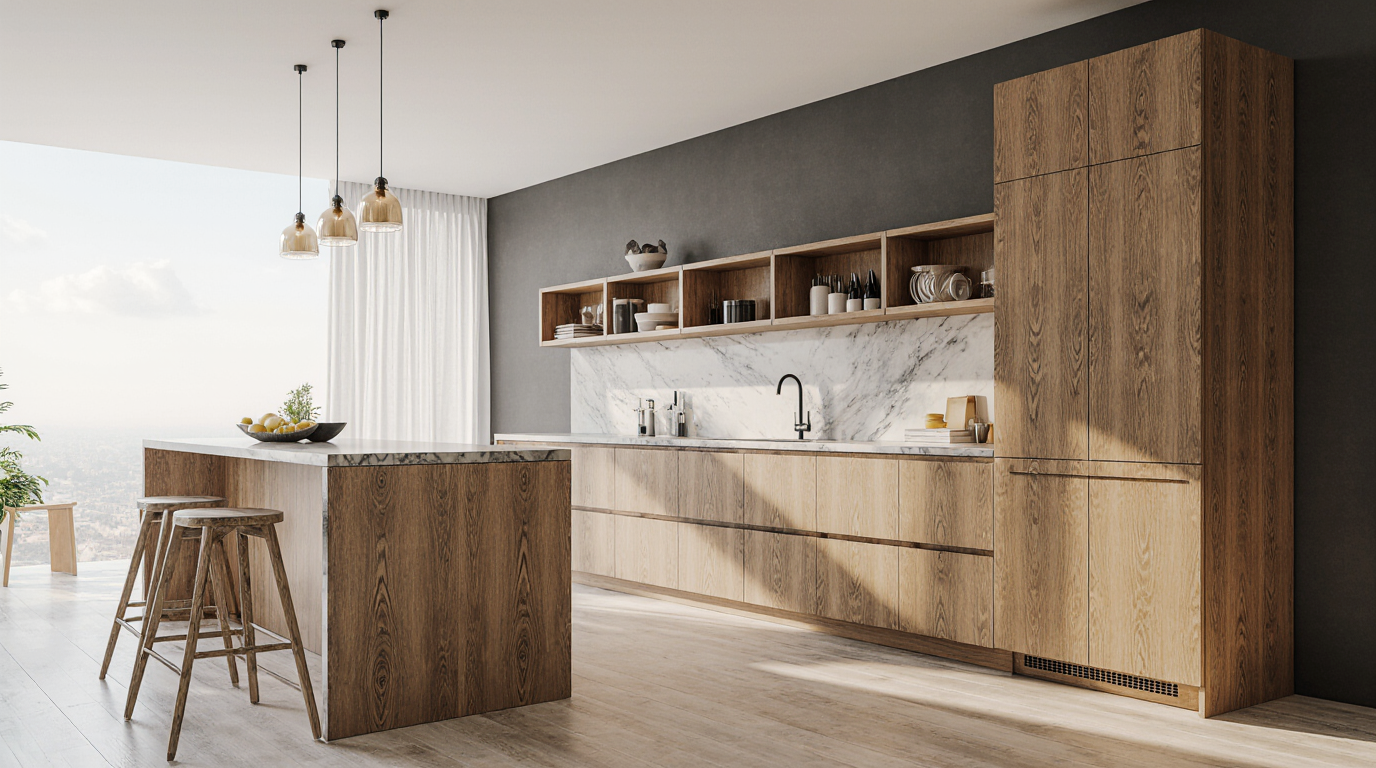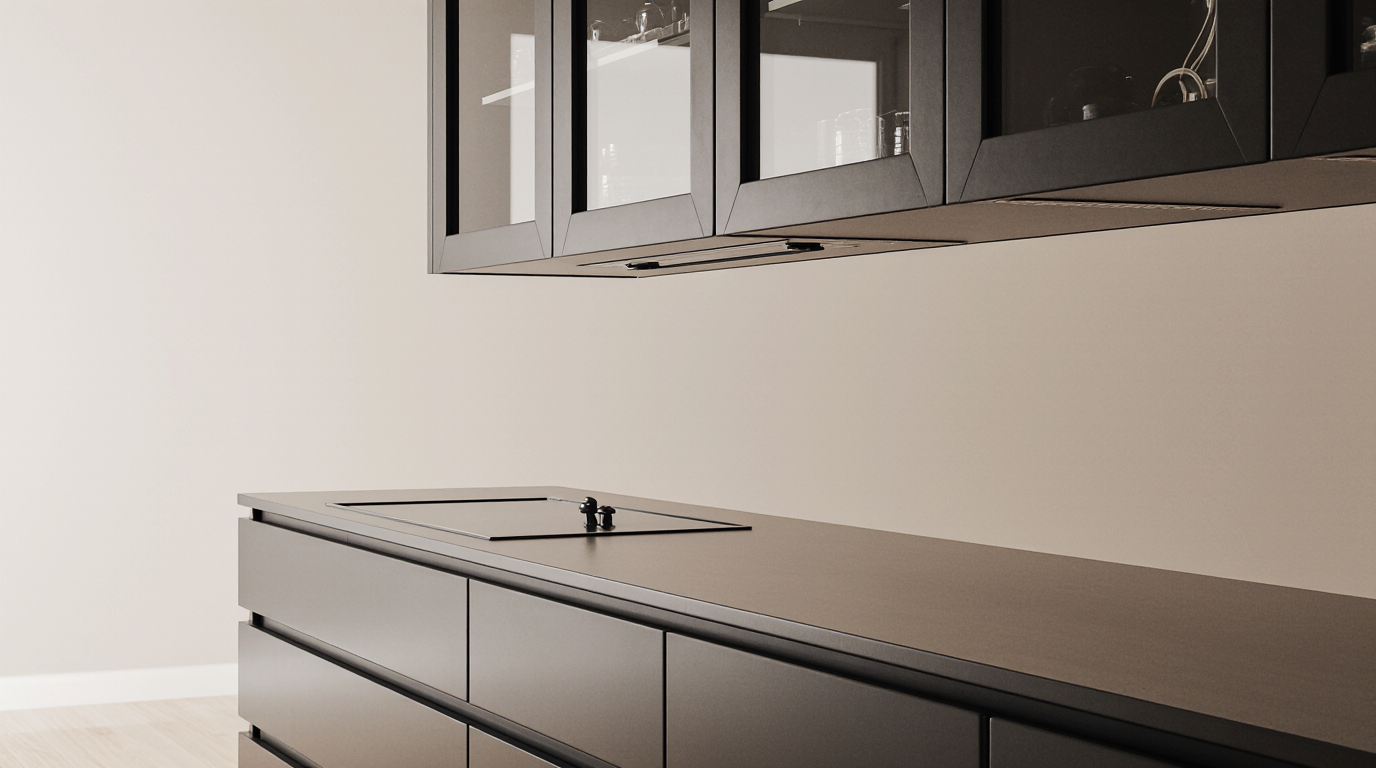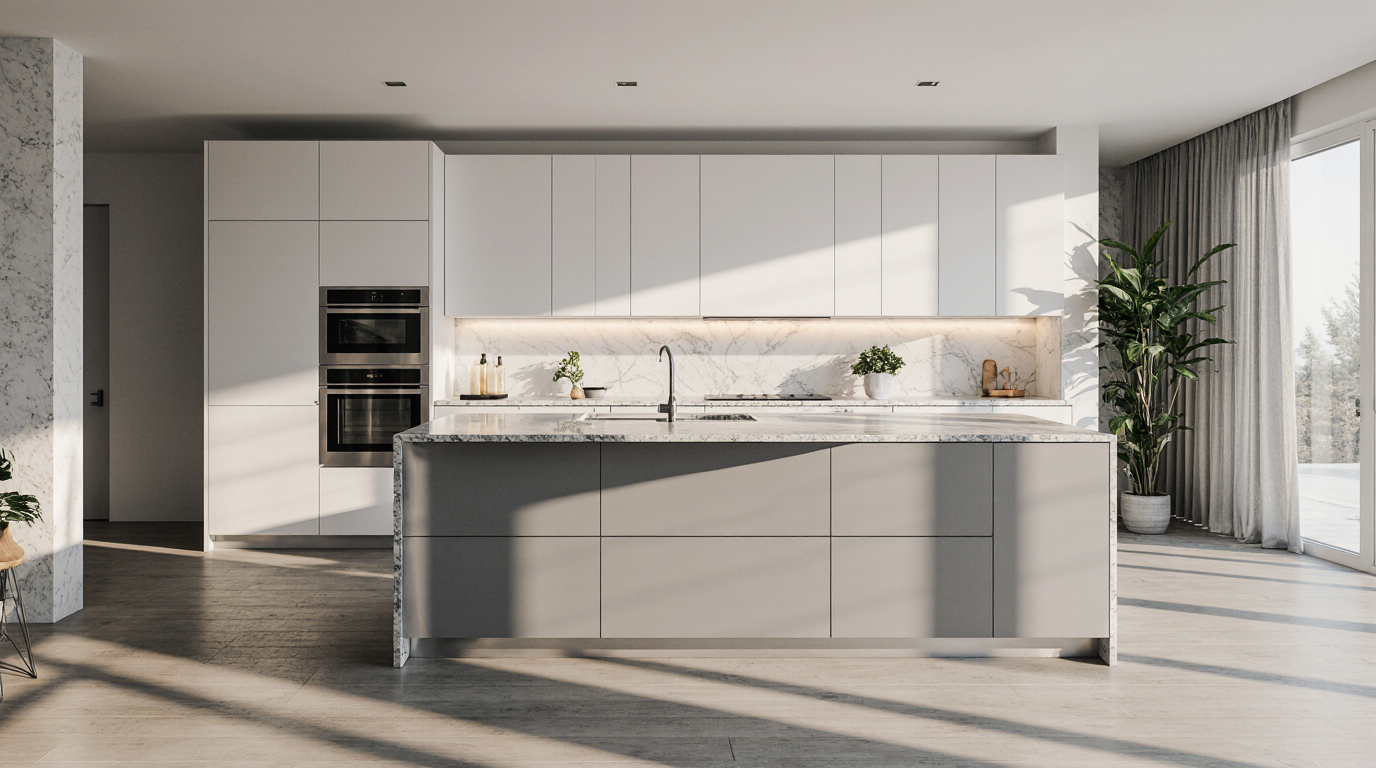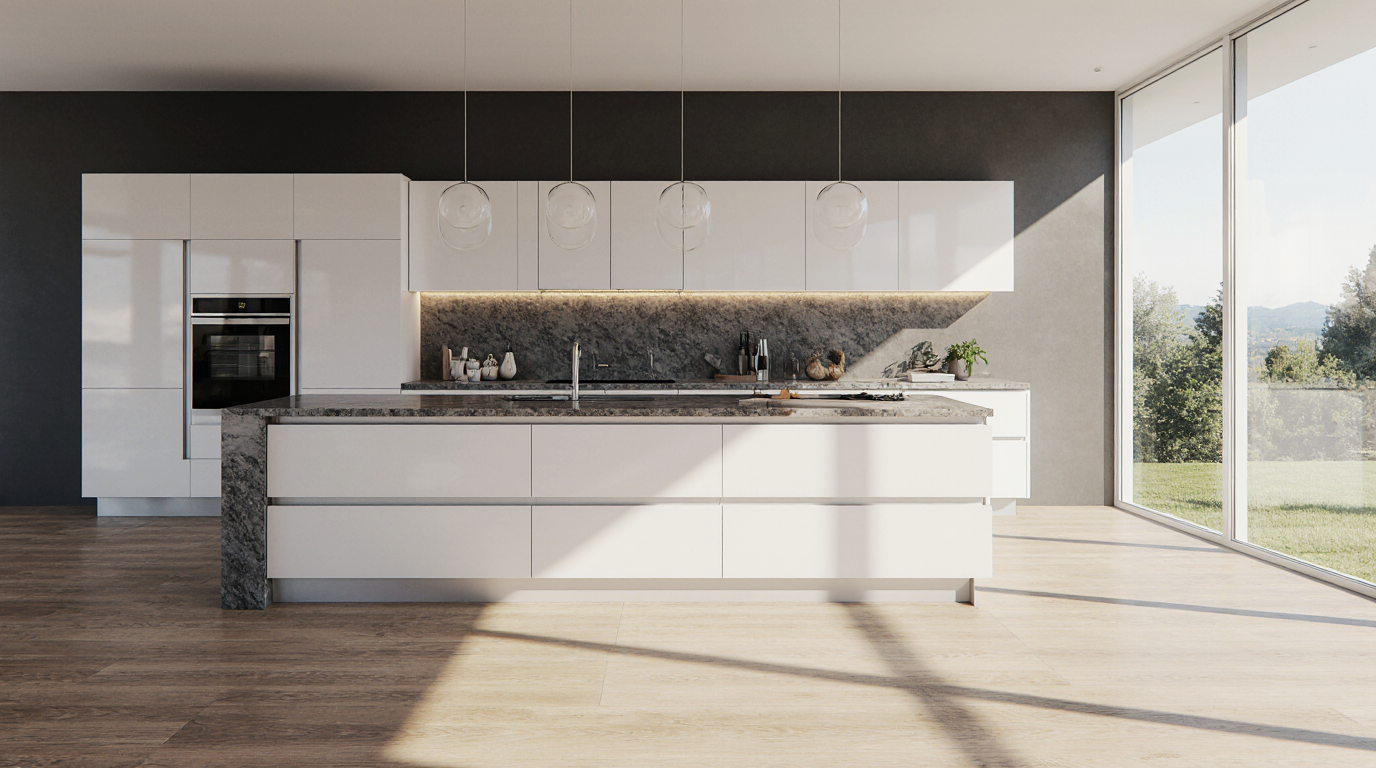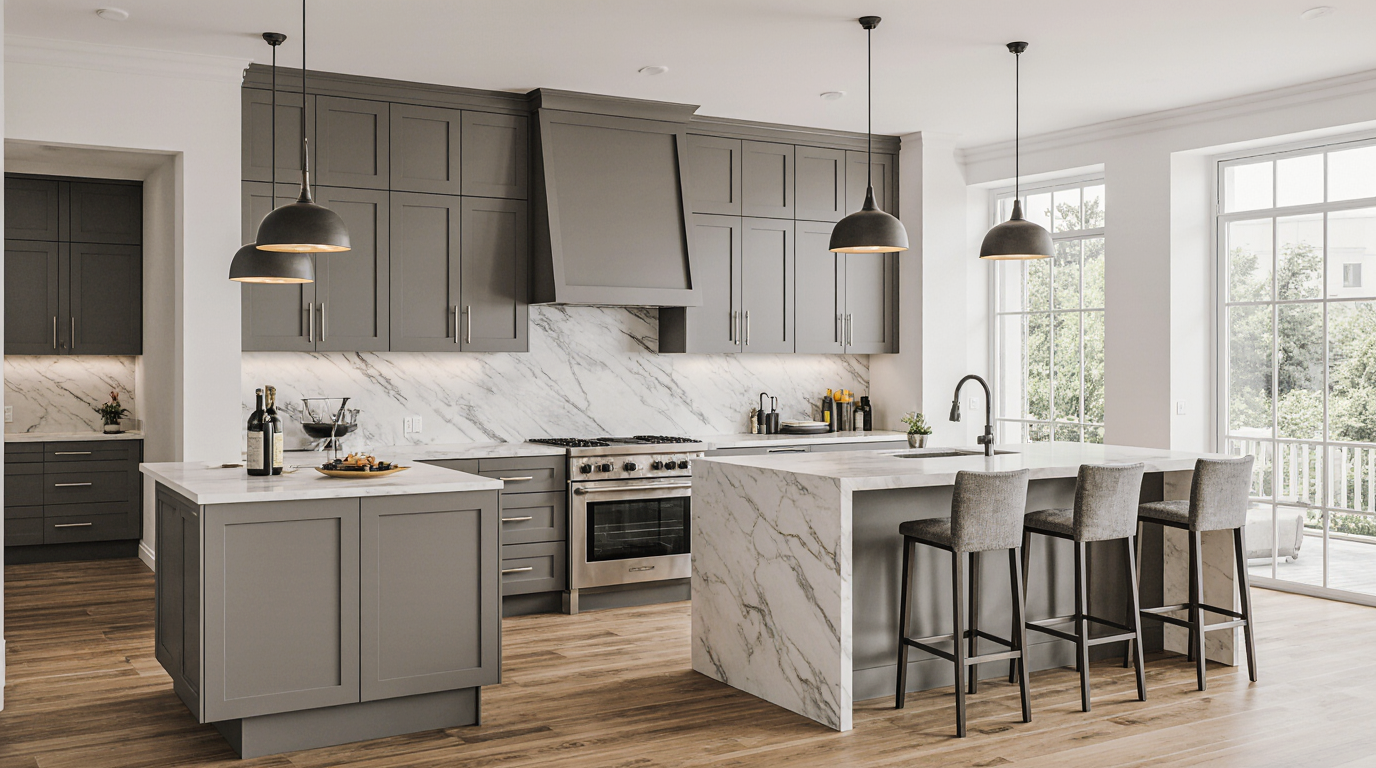
Many kitchen renovations I see in Sarasota start with a clear vision: the clean, seamless look of frameless Shaker cabinets. It’s a style that feels right for our light-filled, coastal homes. But the conversation often skips a critical detail that I’ve seen turn dream kitchens into frustrating maintenance problems within a few years. The constant, high humidity along the Gulf Coast is not a minor detail; it’s a structural force that will actively work against the tight tolerances of frameless cabinet construction. The most common failure is not a defect in the cabinet, but a mismatch of the material to the environment.
Executive Summary: Achieving Durable Frameless Shaker Style in Sarasota
From my direct experience installing frameless kitchens from Lakewood Ranch to Longboat Key, success hinges on material
From my direct experience installing frameless kitchens from Lakewood Ranch to Longboat Key, success hinges on material stability and specialized installation techniques. Standard MDF or particleboard cores, often used in frameless cabinets, will swell and fail in our non-air-conditioned spaces or during construction. The clean, minimal reveal of a frameless door becomes its biggest weakness if the box or door warps even slightly from moisture absorption. This isn't a theoretical risk; it’s a predictable outcome I've been called in to fix.
- Material Core is Non-Negotiable: The core material must be a high-grade, moisture-resistant plywood or a specialized engineered substrate designed for humid climates.
- Hardware Specification is Crucial: Hinges and drawer glides must have a corrosion-resistant finish (like stainless steel or a specialized coating) to combat salt air.
- Installation Requires Acclimatization: Cabinets must be acclimatized on-site before installation to minimize movement after they are fixed to the walls.
- Code-Compliant Anchoring: In many parts of Sarasota County, particularly west of I-75, anchoring of upper cabinets must meet Florida Building Code requirements for wind-borne debris regions, which is a structural consideration.
The Planning Failures That Compromise Frameless Cabinets
The most significant errors in a frameless Shaker project in Sarasota happen long before the first cabinet is ordered. They are rooted in underestimating the impact of our local climate on a cabinet system that relies on precision. A half-inch of face frame on a traditional cabinet can hide a lot of minor wood movement; a frameless cabinet with a 2mm gap cannot.
I’ve seen clients focus entirely on the door style and color, assuming the “box” is a standard commodity. In this environment, the box is everything. Using a standard particleboard core to save a few thousand dollars on the initial purchase almost guarantees you’ll face issues with door alignment and hardware failure down the line. The savings are quickly erased by service calls and eventual replacement.
The Most Expensive Failure: Ignoring Substrate and Finish Specifications
The costliest mistake I repeatedly encounter is accepting a cabinet proposal without explicit, written specifications for the core materials and finish. A client on Siesta Key had a beautiful kitchen installed, but the contractor used a standard thermofoil finish over an MDF core for the Shaker doors. Within two summer seasons, the humidity caused the MDF to swell slightly, and the thermofoil began to peel at the corners and seams. The entire set of doors and drawer fronts had to be remade, a cost that far exceeded the initial savings of choosing a lower-grade material.
The Installation Process for Frameless Cabinets in Practice
A proper installation in Sarasota is a multi-stage process that accounts for environmental factors. It starts with a site assessment to check for any existing moisture issues. Once the cabinets are fabricated, they should be delivered to the job site and allowed to sit, unboxed, for at least 48-72 hours. This allows the materials to reach equilibrium with the home's ambient humidity level before they are rigidly attached to the walls.
This acclimatization step is frequently skipped on tight schedules, but it’s critical for frameless systems. We then use high-quality, corrosion-resistant cabinet screws and ensure that upper cabinets, especially solid wood frameless kitchen cabinets, are anchored directly into studs, meeting local building code requirements. Final door and drawer adjustments are made after the countertops are installed, as the weight can cause minor settling in the cabinet boxes.
Selection Criteria for a Sarasota Homeowner
- Verify the cabinet box material is specified as marine-grade plywood or a high-density, moisture-resistant composite. Ask for the product data sheet.
- Confirm all hardware (hinges, drawer glides, pulls) is specified as stainless steel or has a documented corrosion-resistant rating suitable for coastal applications.
- Ensure the installation plan includes an on-site acclimatization period for the cabinets before they are hung.
- For homes in designated wind zones, ask the installer how they will meet the Florida Building Code's requirements for anchoring frameless upper cabinets to the wall structure.
Comparing Frameless Shaker with Alternative Cabinet Styles
Frameless Shaker cabinets offer a superb, clean aesthetic, but they are not the only option, nor always the best one for every situation in our market. The primary trade-off is the demand for precision and material stability versus the more forgiving nature of traditional framed cabinetry, especially in homes that may not be climate-controlled year-round.
| Feature | Frameless Shaker Cabinets | Framed Shaker Cabinets | Custom Plywood Slab Doors |
|---|---|---|---|
| Humidity Tolerance | Low to Moderate (Highly dependent on premium materials) | High (Face frame adds rigidity and hides movement) | Very High (No joints to separate, stable core) |
| Accessibility | Excellent (No center stile or frame lip) | Good (Frame reduces opening size slightly) | Excellent (Full-access, similar to frameless) |
| Aesthetic | Modern, seamless, minimalist | Traditional, Transitional | Ultra-Modern, Contemporary |
| Installation Cost | Higher (Requires more precision and skill) | Moderate | Moderate to High (Depends on veneer/finish) |
When Frameless Construction is Not the Right Choice
I advise clients against frameless cabinets in specific scenarios. If the home is a part-time residence that will be closed up for months without consistent air conditioning, the humidity swings can be too extreme. In these cases, a high-quality framed cabinet, which has greater structural rigidity and can better tolerate minor wood movement, is a more robust and lower-risk choice. The aesthetic compromise is minor compared to the functional reliability gained.
A Safe Hiring and Specification Checklist
Hiring a contractor or cabinet supplier in Sarasota requires diligence beyond looking at a portfolio of finished projects. You must verify their understanding of our local environmental challenges. A beautiful installation in a dry climate means nothing here.
- Request a detailed quote that explicitly lists the brand and technical name of the cabinet box material (e.g., “3/4-inch marine-grade fir plywood” not just “plywood box”).
- Ask for the brand and model of the hinges and drawer glides to verify their corrosion-resistance specifications online.
- Check their Florida contractor's license and insurance. Ensure their liability insurance is current and adequate for your project's value.
- Discuss their specific method for anchoring frameless upper cabinets to meet structural codes, especially in older homes with potentially uneven walls.
- Request references from at least two local projects completed more than three years ago. This allows you to ask those homeowners about long-term performance.
- Review any Homeowners Association (HOA) design guidelines, particularly in communities like Lakewood Ranch or The Founders Club, before finalizing your cabinet finish. Some have strict rules on exterior-facing elements visible through windows.
- Get a clear, written timeline that includes a specific duration for material acclimatization on-site.
Decisions That Determine the Outcome of Your Project
The ultimate success of a frameless Shaker kitchen in this climate comes down to prioritizing material science over short-term savings. I’ve seen projects go perfectly and others fail miserably, and the divergence point is always the conversation about what the cabinets are made of, not just how they look.
The most successful clients I've worked with are those who allocate a higher portion of their budget to the unseen elements: the cabinet box core, the hardware, and a high-quality, catalyzed conversion varnish finish that seals the wood components against moisture. They understand that these choices provide the structural foundation for the kitchen's long-term beauty and function.
The Exact Moment When the Majority Gets It Wrong
The critical mistake happens when comparing quotes. Most people line up the bottom-line price and focus on the door style. The correct approach is to ignore the price at first and instead create a table comparing the material specifications line-by-line. Force every bidder to specify the exact core material, the hardware brand, and the finish type. Only after you have an apples-to-apples comparison of the core components should you then look at the price. Choosing the cheaper quote that specifies “MDF core” over the one with “marine-grade plywood” isn’t saving money; it’s prepaying for a future failure.
Practical Answers About Operations in Sarasota
Navigating a kitchen remodel here involves more than just design and installation. You must contend with local regulations and logistical realities that can impact your timeline and budget. These are the operational details that often surprise homeowners.
HOA Design Review in Planned Communities
In master-planned communities, the Homeowners Association (HOA) design review board is your first hurdle. They may not care about your cabinet construction, but they will have strict rules about the placement of dumpsters, contractor work hours, and potentially even the finishes if they are visible from outside. Submitting your plans early is critical; a typical review process in a community like Palmer Ranch can take 30 to 60 days, which can significantly delay your project start date.
Permitting for Kitchen Remodels in Sarasota County
If you are moving plumbing, electrical, or walls, you will need a permit from the Sarasota County Building Department. A simple cabinet replacement (a “pull and replace”) typically does not. However, the interpretation can vary. The permit process adds time and cost, with permit fees for a mid-size kitchen remodel often running between $500 and $1,500, depending on the scope. A licensed contractor must pull these permits, which ensures the work is inspected and up to code.
Meeting Florida Building Code for Cabinet Anchoring
The Florida Building Code (FBC) has specific structural requirements, particularly concerning wind load. While it primarily affects windows and roofing, it also has implications for how heavy items are secured to walls. For frameless upper cabinets, which can be very heavy when loaded, ensuring they are anchored into solid blocking or studs with appropriately sized fasteners is a life-safety issue, not just a cosmetic one. We often have to open walls to add solid wood blocking to ensure a secure installation, especially in older block homes common in neighborhoods like South Gate or Gulf Gate.