Diagnostic and Spatial Planning Methodology
Before a single slab of quartz is even considered, my process begins with a structural and functional audit of the kitchen space. I analyze the load-bearing capacity of the existing or planned cabinetry, paying close attention to the spans required for large islands popular in Lakewood Ranch homes. A common mistake is failing to engineer proper support, leading to sagging over time. My methodology involves mapping out the primary work zones—prep, cooking, and cleaning—to ensure the countertop layout enhances workflow rather than impeding it. This diagnostic phase ensures the final design is not just beautiful, but a piece of functional engineering.
Beyond Color: The Technical Selection of Quartz Slabs
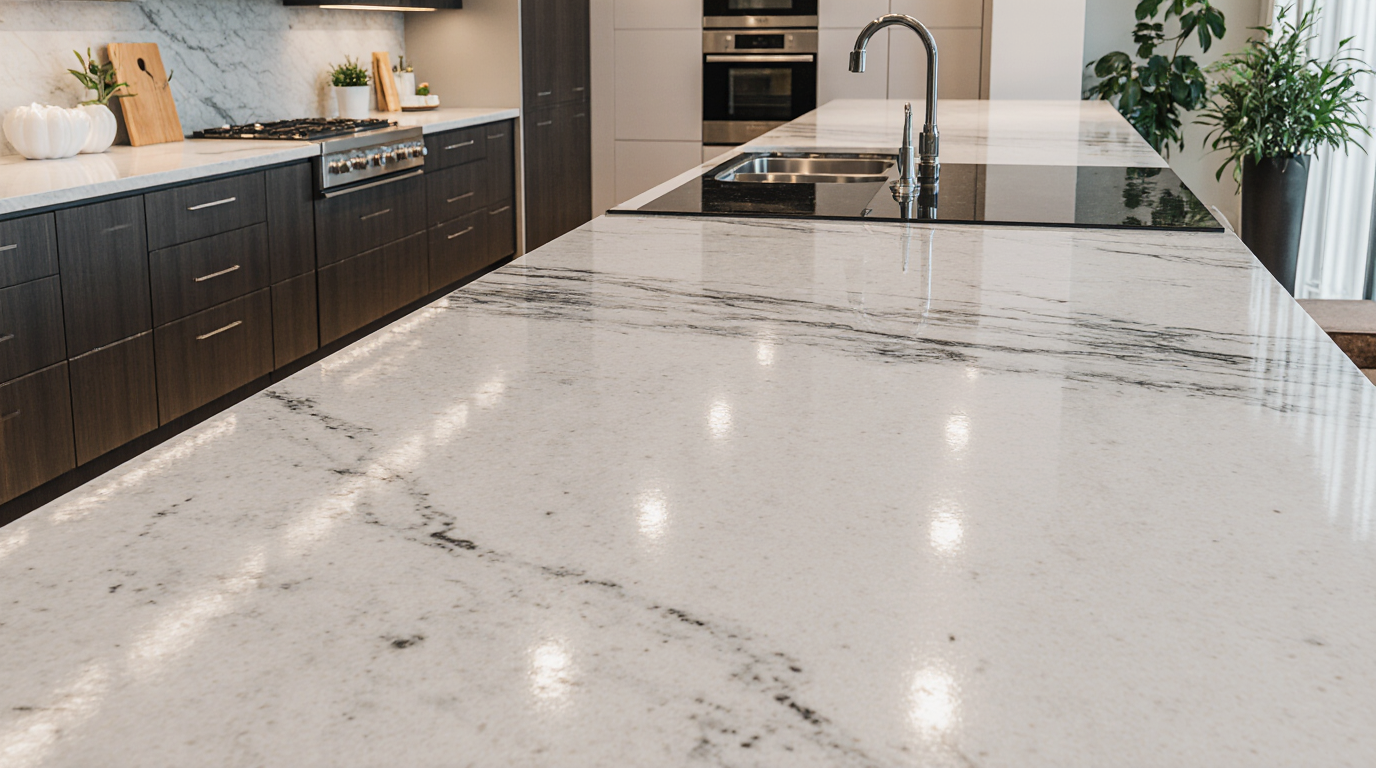
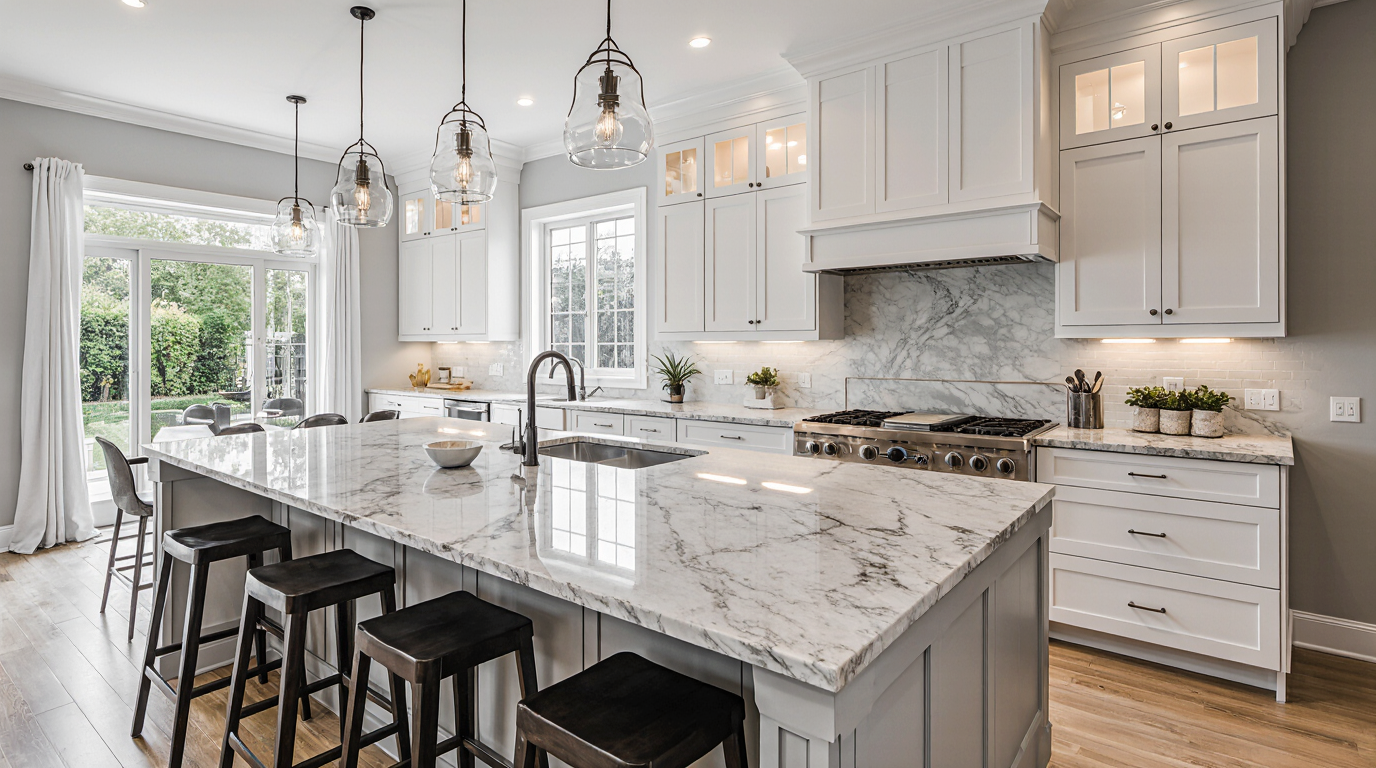
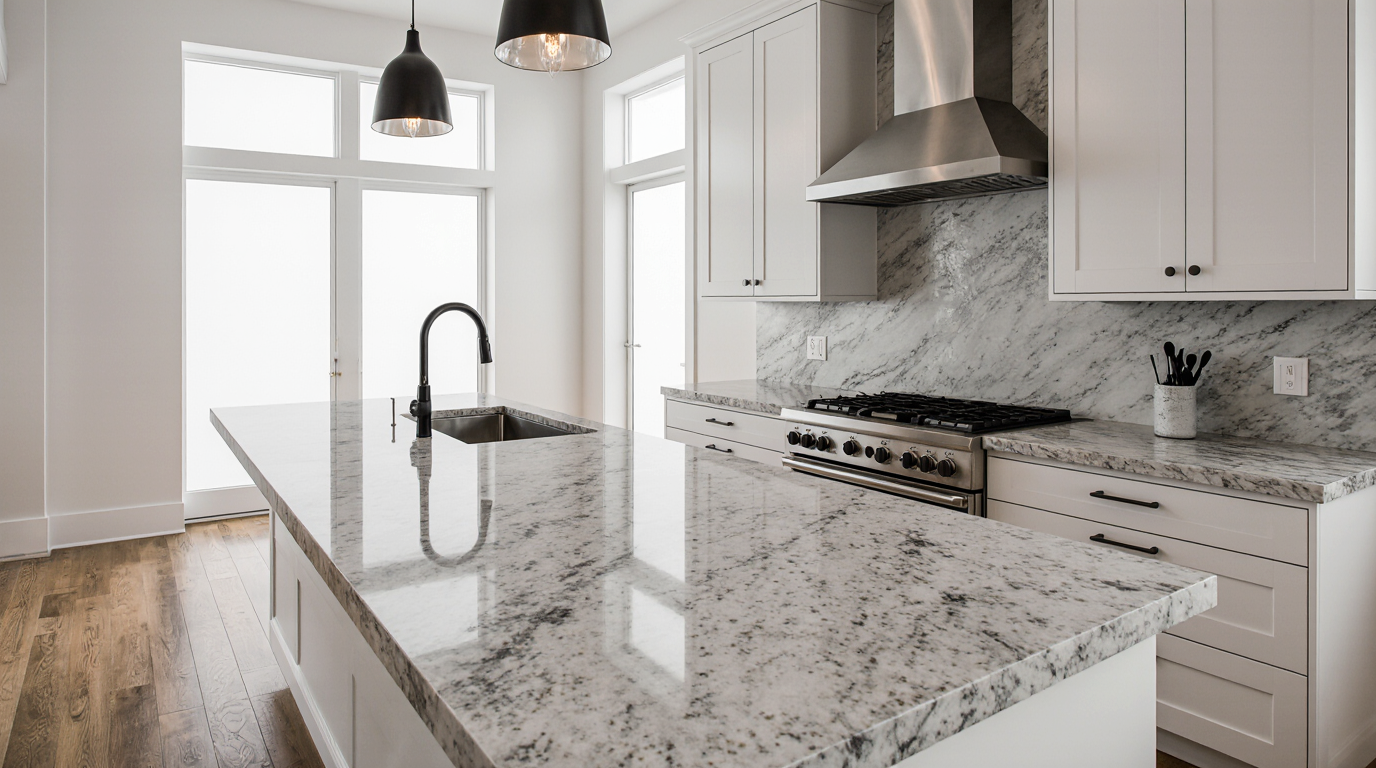
Choosing a quartz slab goes far beyond picking a color from a small sample. I personally inspect full slabs to identify inconsistencies in pattern or resin pooling, which can create weak spots. For high-end designs, especially those with waterfall edges or full-height backsplashes, I exclusively source bookmatched slabs. This involves using two adjoining, mirror-image slabs to create a continuous, uninterrupted vein pattern that flows across surfaces. This technique turns a simple countertop into a monolithic piece of art, but it requires meticulous planning and sourcing that most suppliers don't offer as a standard.
The Fabrication and Installation Protocol
The transition from a raw slab to a finished countertop is where precision is paramount. My fabrication process rejects one-size-fits-all approaches and is built on a sequence of critical technical steps that guarantee a flawless result. I've found that overlooking any of these stages is the primary cause of visible seams and poor fitment I'm often called to fix.
- Digital Laser Templating: We move beyond cardboard templates. I use a laser templating system to capture the precise dimensions of the cabinetry and walls, accounting for every imperfection and nuance down to a fraction of a millimeter.
- Seam Placement Strategy: Seams are unavoidable in many designs, but their visibility is not. I strategically plan seam locations to fall in the least conspicuous areas, avoiding high-traffic work zones and aligning them with architectural lines to make them virtually disappear.
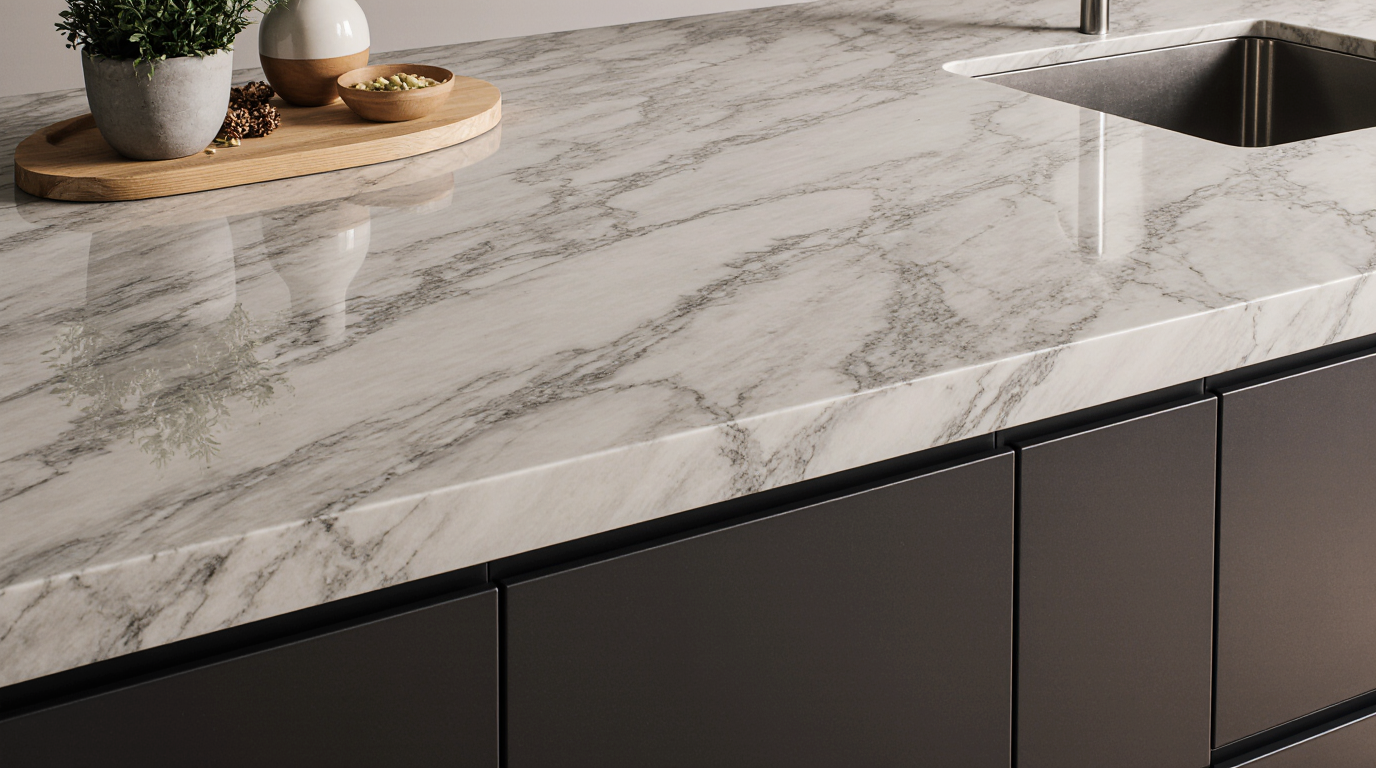
- Edge Profile Engineering: The edge is a critical detail. While a standard eased edge is common, a mitered edge is my preference for luxury projects. This involves cutting the top and apron pieces at a 45-degree angle to create the illusion of a solid, thick block of stone without the excessive weight or cost.
Precision Adjustments and Climate-Resistant Adhesives
The final installation is a game of millimeters. In many Sarasota homes, particularly older waterfront properties, walls and floors are rarely perfectly level or square. My team is trained in advanced scribing techniques to perfectly match the countertop to the wall's contour, eliminating unsightly gaps. Furthermore, I specify a flexible, high-grade epoxy for all seams. This is crucial in Florida, as it allows for minute thermal expansion and contraction caused by our climate, preventing the seams from cracking or separating over time—a subtle but vital detail for ensuring a 20+ year lifespan for the installation.
Looking at your current kitchen, is your countertop's primary seam located in the middle of your main workspace, compromising both its aesthetic and structural weak point?