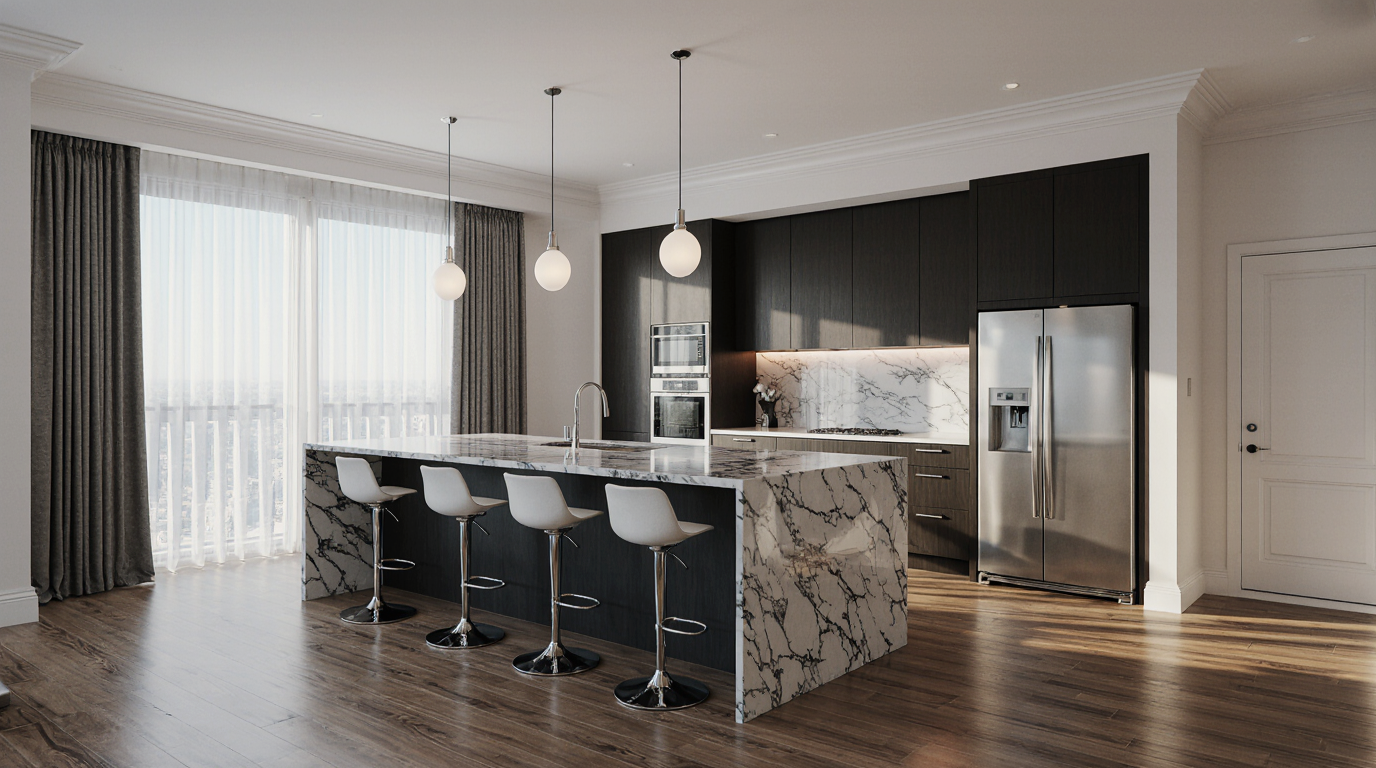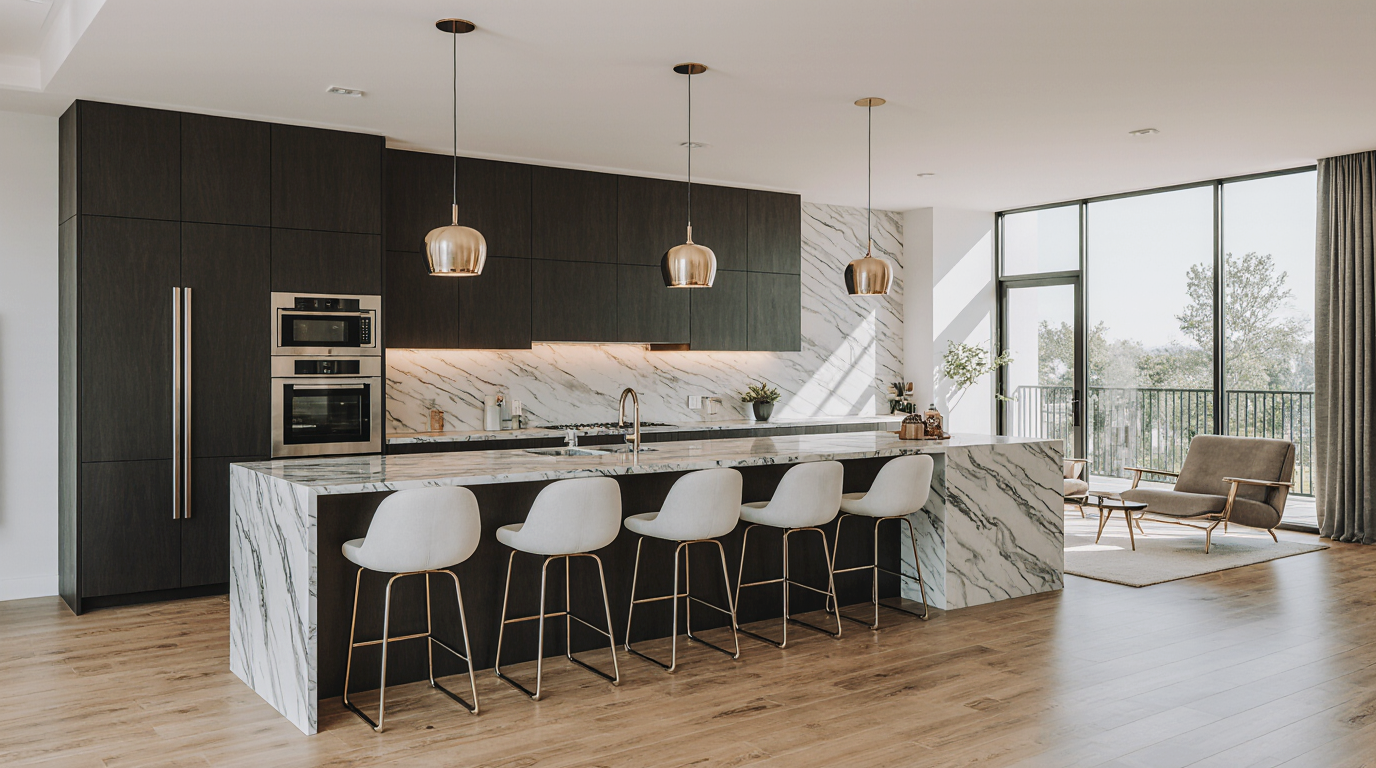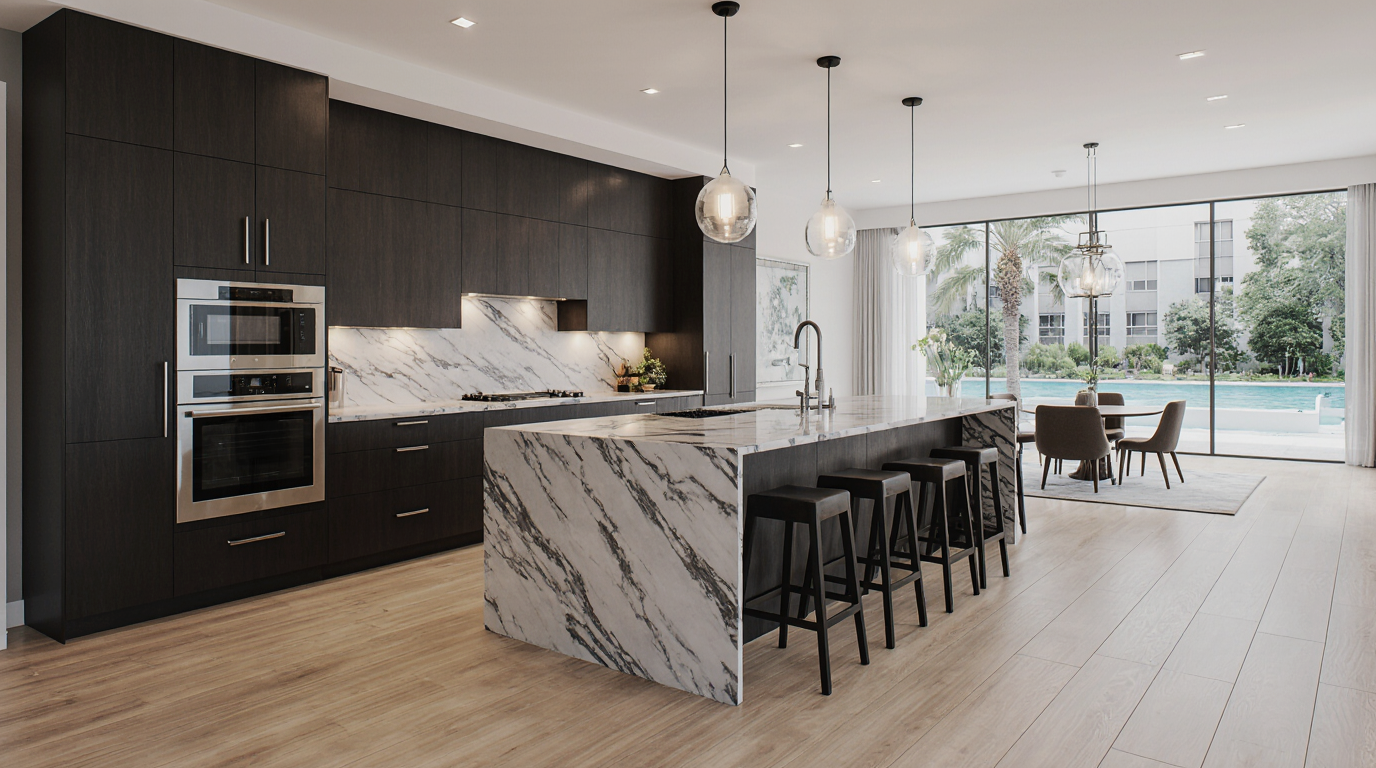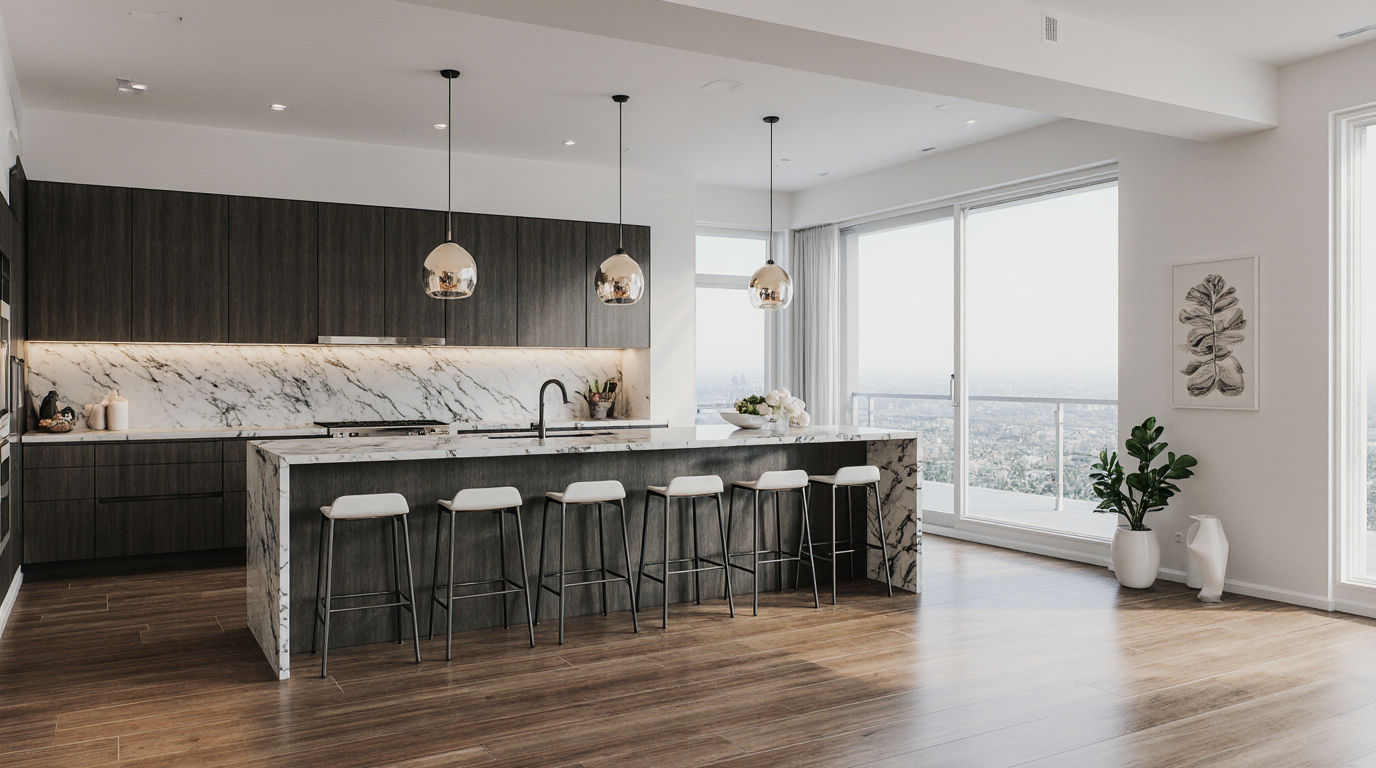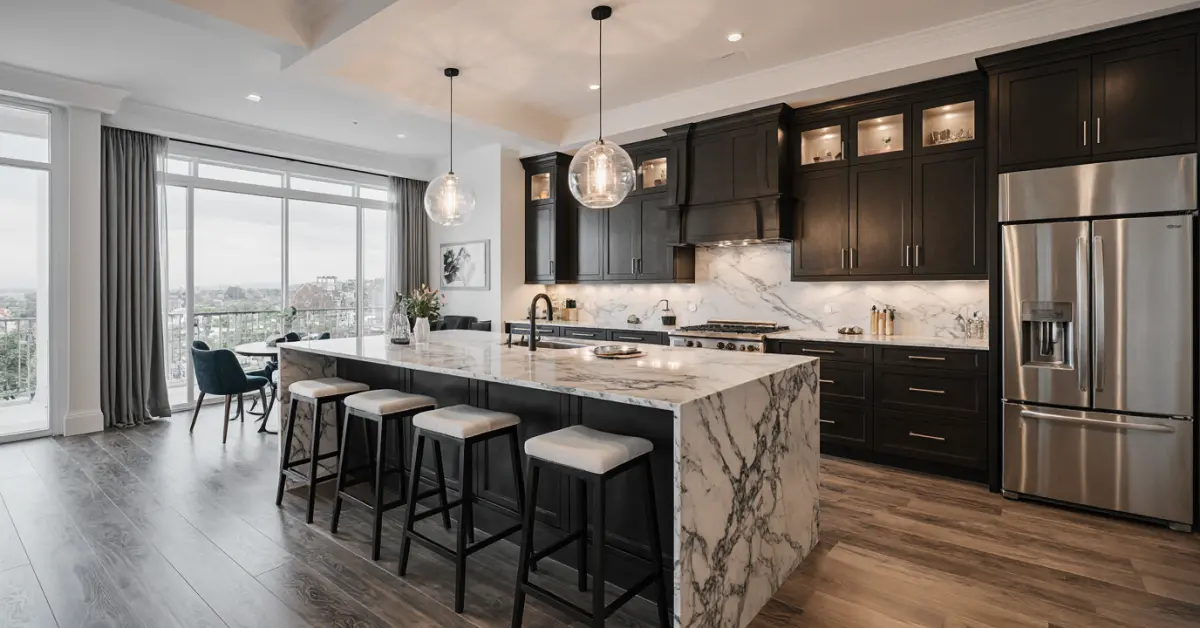
The client approved the design for their Casey Key waterfront home, thrilled with the exotic veneer selected for the kitchen island. Six weeks later, a call from the fabricator confirmed a delay; the specified material was on backorder for four months. The problem wasn't the supply chain. The real issue was that a humidity-stable substrate for that veneer was never discussed, a detail that turned a dream design into a logistical nightmare. That single oversight reveals the central challenge of custom kitchens in our coastal environment.
Executive Summary: A Resilient Custom Kitchen in Sarasota
From my direct experience executing projects from Longboat Key to The Lake Club, a successful custom kitchen in
From my direct experience executing projects from Longboat Key to The Lake Club, a successful custom kitchen in Sarasota is defined less by its aesthetic and more by its resilience to our coastal climate. The conversation must start with material science—specifically how wood, finishes, and hardware will react to near-constant humidity and salt air. It's a non-negotiable factor that dictates longevity far more than brand names or design trends. Homeowners who prioritize this from day one avoid the premature failures I'm often called in to fix years later.
- Material Stability: The core of every cabinet box and door should be marine-grade plywood or a high-density, moisture-resistant engineered substrate. Standard MDF will swell.
- Hardware Specification: All functional hardware—hinges, slides, and pulls—must be 304 or 316-grade stainless steel to prevent corrosion from salt air.
- Finish System: The finish must be a catalyzed conversion varnish or a 2K polyurethane, providing a non-porous barrier against moisture intrusion. Standard lacquer will fail.
- Code & HOA Compliance: Projects must account for Florida Building Code anchoring requirements in wind-borne debris zones and the often-lengthy design review process of local HOAs.
The Planning Failures That Compromise Longevity
The most significant errors in custom kitchen projects here are not about layout or color; they are fundamental material and construction oversights driven by a disconnect between aesthetic goals and environmental reality. Clients fall in love with a look they saw in a magazine based in a dry climate, and the conversation about how to adapt it for Sarasota's humidity happens too late, if at all. This leads to warped doors, delaminating veneers, and rusted hardware within a few years.
The Most Expensive Failure: Underestimating Humidity's Impact on Wood
The costliest mistake I consistently see is selecting a wood species or cabinet construction method that is inherently unstable in our high-humidity environment. A client once insisted on solid, wide-plank shaker doors for their bayfront home. Despite warnings, they prioritized the look. Within two years, the center panels had swollen and cracked the finish at the joints, requiring a complete, and very expensive, door replacement. The failure was predictable because solid wood constantly moves with moisture changes; an engineered core with a stable veneer would have provided the same look without the inevitable self-destruction.
The Practical Workflow for a Custom Kitchen Project
A custom kitchen project in Sarasota follows a distinct path dictated by local regulations and climate. It begins with a deep analysis of the home's specific location—a condo on Lido Key has different ventilation and material challenges than a single-family home in Lakewood Ranch. The process is a collaboration between the homeowner, designer, and a cabinet maker who understands local material science. It is not simply a matter of ordering boxes; it's about engineering a system.
Selection Criteria for a Sarasota-Based Cabinet Maker
When vetting a professional for a project in this area, the portfolio is secondary. The primary focus should be on their technical knowledge of coastal construction. A beautiful portfolio of projects from a different climate is irrelevant here.
- Does their standard proposal specify marine-grade plywood or moisture-resistant composite cores? If they default to standard particleboard or MDF, they are not building for this climate.
- Can they provide examples of projects on the barrier islands (Siesta Key, Longboat Key) that are over five years old? This demonstrates a track record of durability in the harshest local conditions.
- Do they have an established process for navigating HOA design review boards in communities like The Concession or The Founders Club? Inexperience here can add months to a project timeline.
- What is their policy on hardware? They should proactively recommend and specify stainless steel or other corrosion-resistant materials, not wait for you to ask.
Comparing Custom Millwork to Other Options
While custom-made kitchens offer unparalleled design freedom and durability, they are not the only solution. Semi-custom and stock cabinetry can be viable alternatives, but the trade-offs in our specific environment are significant. The key is understanding where the cost savings in alternatives come from—typically in materials and construction methods that are least suited for Florida's Gulf Coast.
| Feature | Fully Custom Millwork | Semi-Custom Cabinetry | Stock Cabinetry |
|---|---|---|---|
| Material Suitability | Engineered for high humidity; marine-grade options standard. | Limited moisture-resistant options; often an upcharge. | Typically particleboard; highly susceptible to swelling. |
| Design Flexibility | Unlimited. Every dimension, finish, and detail is specified. | Fixed sizes with some modification options. Limited finishes. | No customization. Fixed sizes and styles. |
| Longevity in Sarasota | 20+ years when properly specified and built. | 7-12 years, with potential for earlier failure at joints/sinks. | 3-7 years before visible moisture damage is likely. |
| Initial Investment | Highest. Reflects superior materials and labor. | Moderate. A 30-50% savings over full custom. | Lowest. Mass-produced for low cost. |
When a Fully Custom Approach Is Not the Right Choice
A fully custom kitchen is not the best path for every situation. For a rental property or a home that you plan to sell within a few years, the significant upfront investment may not provide a proportional return. In these cases, a well-chosen semi-custom line that offers an all-plywood box construction can be a pragmatic compromise, providing better durability than stock cabinets without the cost of bespoke millwork. The key is to allocate the budget toward the most critical upgrade: the cabinet box material itself.
A Safe Hiring Checklist for Your Sarasota Project
Hiring the right team is the single most important decision you will make. A beautiful design rendered by a team that doesn't understand coastal building practices will inevitably lead to disappointment. Verifying their technical expertise is paramount.
- Verify their license and insurance with Sarasota County. Ensure their liability coverage is adequate for the value of your property, especially in high-end communities.
- Ask for their specific material suppliers for plywood and hardware. A reputable local builder will have established relationships with suppliers who stock marine-grade materials.
- Review a sample contract. It should explicitly state the materials being used (e.g., “3/4-inch marine-grade fir plywood for all cabinet boxes”), the brand and series of hardware, and the type of finish system. Ambiguity is a red flag.
- Confirm their familiarity with the Florida Building Code's requirements for cabinetry installation in high-velocity hurricane zones (HVHZ), which dictates specific anchoring methods to prevent them from becoming projectiles.
- Discuss their process for protecting the rest of your home from dust and debris, particularly if you are living on-site during a renovation in a condo building with strict rules.
Decisions That Determine the Ultimate Outcome
After more than a decade of managing these projects, I can state with certainty that the success of a custom kitchen hinges on decisions made long before the first piece of wood is cut. It is a process of prioritizing engineering over aesthetics in the initial phase. The most satisfied clients are those who embrace the technical constraints of our environment and let them guide the design.
The Exact Moment the Majority Gets It Wrong
The critical error happens at the very beginning: when clients and designers finalize a layout and aesthetic before they have a fabricator at the table to discuss materials. They design in a vacuum, fall in love with an idea, and then try to force a material to work. The correct approach is to select the cabinet maker first, based on their technical expertise with coastal environments, and have them be part of the initial design conversation. This ensures the design is grounded in material reality from day one, preventing costly redesigns, delays, and long-term performance issues.
Practical Answers About Operations in Sarasota
Navigating the local administrative landscape is a key part of any custom kitchen project. Understanding timelines and requirements for permits and association approvals prevents unexpected and frustrating delays, which is especially critical for seasonal residents on a tight schedule.
HOA Design Review in Master-Planned Communities
In communities like Lakewood Ranch or University Park, any exterior-facing modifications, including a new kitchen window or vent, require approval from an Architectural Review Committee (ARC) or Design Review Board (DRB). The submission package is detailed, and the review process can take anywhere from 30 to 60 days. Starting construction without this approval can result in fines and work-stoppage orders.
Permitting with Sarasota County for Structural Changes
If your custom kitchen plan involves moving walls, altering plumbing, or changing electrical layouts, a building permit from Sarasota County is required. As of my last major project, the plan review process for a straightforward interior renovation was taking approximately 4-6 weeks after submission. This timeline must be factored into the project schedule before demolition begins.
Impact of Flood Zones on Kitchen Renovations
For homes located in designated flood zones, particularly on the barrier islands, the “50% Rule” can be triggered. If the cost of your renovation exceeds 50% of the market value of the structure, you may be required to bring the entire structure up to current flood code compliance. This is a complex and costly regulation, and a consultation with a local architect or contractor is essential before finalizing the scope of a high-end kitchen remodel in these areas.