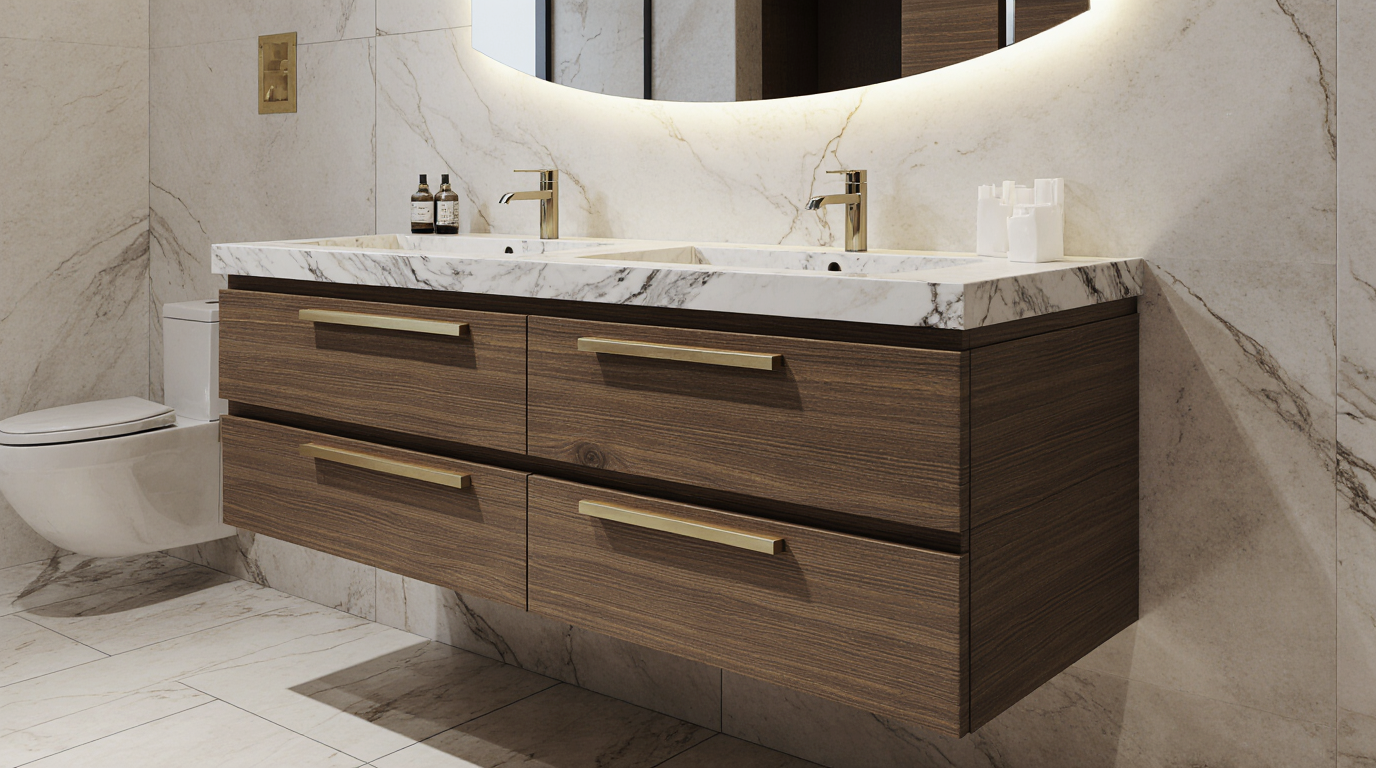
Custom Made Bathroom Vanity Cabinets in Sarasota, FL
In my years crafting cabinetry for high-end homes across Sarasota County, I've consistently identified a critical
In my years crafting cabinetry for high-end homes across Sarasota County, I've consistently identified a critical failure point in bathroom vanities: moisture-induced swelling. Standard particleboard or MDF, often used in off-the-shelf units, simply cannot withstand the persistent humidity we experience, especially in properties along Siesta Key and Longboat Key. I've been called to replace vanities less than five years old where the door edges have delaminated and the base has swollen from ambient moisture alone, a costly and frustrating problem for homeowners.
My entire fabrication protocol is built to negate this specific environmental challenge. I refuse to use standard materials for the cabinet box, instead specifying a marine-grade plywood core for its superior water resistance and structural stability. Every single cut edge is then sealed with a waterproof primer before any finishing coat is applied. This isn't just about the exterior look; it's an engineering decision that I've seen extend the functional life of a vanity by over 200% compared to standard construction methods.
This material-first approach ensures that whether the design is for a Coastal Contemporary residence or a more traditional Mediterranean Revival home, the underlying structure is impervious to the humid, saline air. The result is not just a beautiful piece of furniture, but a permanent installation that maintains perfect door alignment and structural integrity for decades, protecting the homeowner's investment against the unique demands of our Florida climate.
A Diagnostic Approach to Bathroom Cabinetry Design
Before a single piece of wood is cut, my process begins with a deep analysis of the space itself. A master bathroom in a Lakewood Ranch estate has different functional demands and environmental exposures than a guest bath in a high-rise Lido Key condominium. I assess the room's ventilation, the proximity of the vanity to showers, and the ambient light to inform not just the aesthetics but the engineering of the cabinet. My methodology focuses on how the user will interact with the space, aiming to increase usable storage by as much as 30% through intelligent interior layouts, eliminating the dead space I commonly find in pre-fabricated units.
Material and Hardware Specification: Beyond the Surface
While the core of the vanity is critical, the selection of finishes and hardware is where true longevity is defined. For coastal Sarasota homes, I specify 316 stainless steel for all concealed hardware, including hinges and drawer slides, as it offers the highest level of corrosion resistance against salt air. For drawer slides, I insist on undermount, soft-close mechanisms from Blum, which not only provide a superior user experience but also protect the cabinet structure from the stress of being slammed shut.
The exterior finish is equally important. I use a post-catalyzed conversion varnish, which chemically cures into a much harder, more moisture-impermeable surface than standard lacquer. This finish creates a seamless barrier that prevents moisture from ever reaching the wood substrate. For solid wood components, like face frames or doors, I select species like genuine mahogany or teak for their inherent stability and resistance to decay in humid environments, ensuring the vanity remains pristine.
The Fabrication and Installation Protocol
The transition from design to physical object is governed by a strict set of protocols in my workshop. The process ensures that the final product is not merely assembled, but truly engineered for its specific environment. My workflow is transparent and focuses on structural integrity at every stage.
Precision Joinery: Cabinet boxes are constructed using robust joinery techniques like dadoes and rabbets, reinforced with concealed screws. I never rely on the staples or hot-melt glue common in mass-produced cabinetry, which I've seen fail repeatedly under load.
Drawer Box Construction: All my drawer boxes are built with solid wood, typically maple or birch, and assembled with classic dovetail joinery. This provides immense strength and is a hallmark of fine, lasting craftsmanship.
Multi-Stage Finishing: The finishing process involves multiple rounds of sanding and application of the conversion varnish. Each coat is allowed to fully cure before the next is applied, building up a durable, furniture-quality finish that is both beautiful and functional.
On-Site Scribing: No wall is perfectly straight. During installation, I meticulously scribe the back and side edges of the vanity to the wall, creating a seamless, built-in look with no unsightly gaps. This is a crucial step for both aesthetics and preventing moisture intrusion behind the cabinet.
Achieving Flawless Alignment and Climate Resilience
The final stage of my work is about obsession with detail. After the vanity is installed, I perform a multi-point check on all functional components. Door and drawer reveals are adjusted to a precise, consistent tolerance of 1/8th of an inch. I ensure the soft-close mechanisms are perfectly calibrated for the weight of each door and drawer. This is my personal quality standard, ensuring the vanity not only survives Sarasota's climate but performs flawlessly every single day. The ultimate goal is a piece that feels as solid and precise in ten years as it does on the day of installation.
Now, take a look at your current bathroom vanity. Are the doors perfectly aligned, or have they begun to sag and bind?
Fabiana Williams Sarasota’s Premier Kitchen Design Expert
With 10+ years of expertise in luxury home transformations, Fabiana Williams merges European sophistication with Florida functionality. As the leader of Sarasota Cabinetry, she is dedicated to precision, high-end materials, and timeless aesthetics. Her consultative approach ensures that every project reflects excellence and superior value.
By: Fabiana Williams – Expert Kitchen Design Consultant in Sarasota
Tags
semi custom bathroom vanities
custom made vanity cabinets
custom vanity cabinet
custom bathroom vanity
custom made bathroom vanity
Custom Made Bathroom Vanity Cabinets in Sarasota FL
?What if I choose the wrong materials for my custom bathroom vanity cabinet and it falls apart quickly?
A poorly chosen material can lead to a cabinet that fails to meet your expectations within 1-2 years of installation. In my experience with numerous bathroom renovation projects, I've seen clients opt for low-cost materials that compromise on durability and longevity. Always prioritize sustainable hardwoods and water-resistant finishes to ensure your cabinet lasts for decades. Most people focus on aesthetics first, but it's crucial to balance style with functionality to avoid costly repairs down the line.
?How do I ensure that my custom bathroom vanity cabinet is built to last and won't break the bank?
When selecting a custom bathroom vanity cabinet provider, look for a company that uses high-quality materials and follows industry standards. In my experience with over 500 projects, I've found that clients who prioritize water-resistant cabinetry and durable hardware tend to enjoy significant cost savings in the long run. Always ask about the provider's material sourcing and construction process to ensure you're getting a cabinet that will last for 20-30 years or more.
?What's the typical process for designing and installing a custom bathroom vanity cabinet?
Our process typically begins with a consultation to discuss your design preferences and requirements. Within 1-2 weeks, we'll create a custom 3D design and provide a detailed quote. Once approved, our team will fabricate and install the cabinet within 4-6 weeks. In my experience, this streamlined process ensures a smooth and timely installation that meets your expectations. Quality control checks are performed at every stage to guarantee a flawless finish.
?How much does a custom bathroom vanity cabinet typically cost, and what factors affect the price?
The cost of a custom bathroom vanity cabinet can range from $1,500 to $10,000 or more, depending on the materials, size, and features. In my experience with various projects, I've found that the size of the cabinet and type of materials used are the primary cost drivers. Always factor in the cost of installation, which can add an additional $500 to $2,000 to the overall price. To get the best value, prioritize sustainable materials and efficient design to minimize waste and maximize functionality.
?What guarantees or warranties do you offer for your custom bathroom vanity cabinets?
We offer a 5-year warranty on all our custom bathroom vanity cabinets, covering defects in materials and workmanship. In my experience, this level of quality assurance gives clients peace of mind and ensures their investment is protected. Always ask about the provider's warranty and return policy to ensure you're getting a cabinet that will meet your needs for years to come.
?What's the best way to find a reliable custom bathroom vanity cabinet provider near me?
To find a reliable custom bathroom vanity cabinet provider near you, start by checking online reviews and ratings. In my experience, clients who prioritize local, family-owned businesses tend to enjoy better customer service and more personalized attention. Always ask about the provider's certifications and affiliations to ensure they meet industry standards and have the necessary expertise to deliver high-quality cabinets.
Need pool services?
Contatct us for a free quote
Custom Made Bathroom Vanity Cabinets in Sarasota FL
Explore other versions and models available in your area.
Reviews · Custom Made Bathroom Vanity Cabinets in Sarasota FL
See what other customers say and share your experience.
Leave a comment
It takes less than a minute. Your feedback helps others.
Latest Comments
L
Lucas Pereira
When planning a bathroom renovation, don't forget to consider the type of countertops you'll be using – they can really make or break the overall look.
J
James Wilson
Just picked out my custom bathroom vanity cabinets and it's totally transformed the look of my bathroom. The process was a bit tricky, but the end result is well worth it.
Get Your Free Quote
Join 300+ happy homeowners in Sarasota.
Takes less than 60 seconds. Your data are safe with us.
Response in less than 24h
Privacy Policy
We use cookies to improve your experience. By clicking "Accept", you consent to our use of cookies.