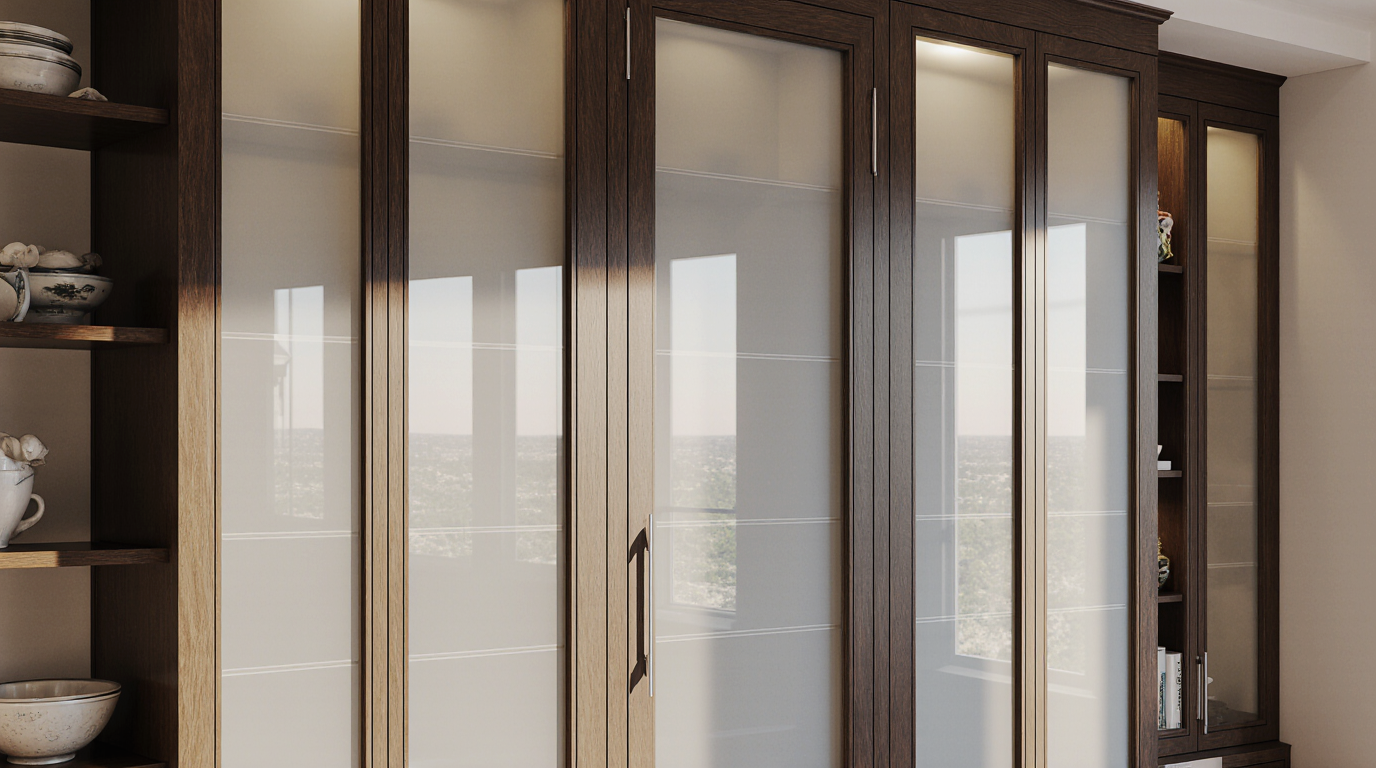
Executive Summary: Custom Glass Cabinet Doors in Sarasota
From my experience executing projects from Siesta Key to Lakewood Ranch, the success of custom glass cabinet doors in
From my experience executing projects from Siesta Key to Lakewood Ranch, the success of custom glass cabinet doors in Sarasota hinges entirely on mitigating environmental factors, not just on aesthetic selection. The core challenge is specifying a product that allows light and openness while resisting the constant assault of humidity, salt, and potential UV degradation. A standard glass insert that works perfectly in an inland city will often fail here within a few years, showing fogging between panes or corrosion on its hardware. The focus must shift from just the look of the glass to the integrity of the entire door assembly.
- Hurricane Code Compliance: For exterior-facing or semi-exterior applications (like a lanai kitchen), any large glass feature may need to meet Florida Building Code requirements for impact resistance, which dictates the use of laminated or specific tempered glass assemblies.
- Material Specification is Non-Negotiable: Door frames must be made from materials resistant to warping, such as high-quality marine-grade plywood or specially treated solid woods. Hardware, including hinges and pulls, must be 316 stainless steel or a comparable marine-grade alloy to prevent rust.
- Sealing is Paramount: The way the glass is set into the frame is critical. Proper gasketing and sealing prevent moisture intrusion, which is the primary cause of internal fogging and mold growth within the cabinet box.
- HOA and Condo Association Scrutiny: In many Sarasota communities, particularly on Longboat Key or in downtown condos, design review boards have specific rules about reflectivity and appearance that can affect your choice of glass finishes, such as mirrored or heavily tinted options.
Common Planning Failures with Glass Cabinetry in a Coastal Climate
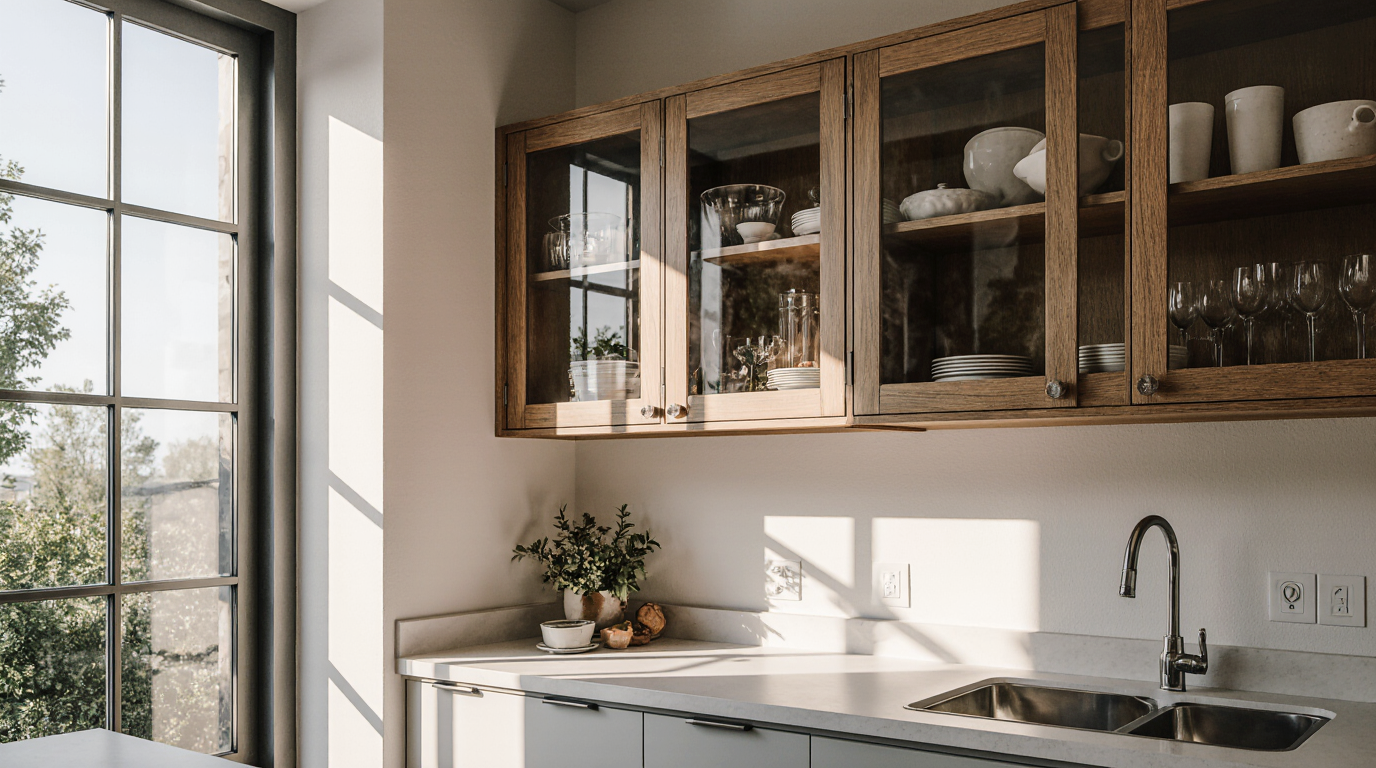
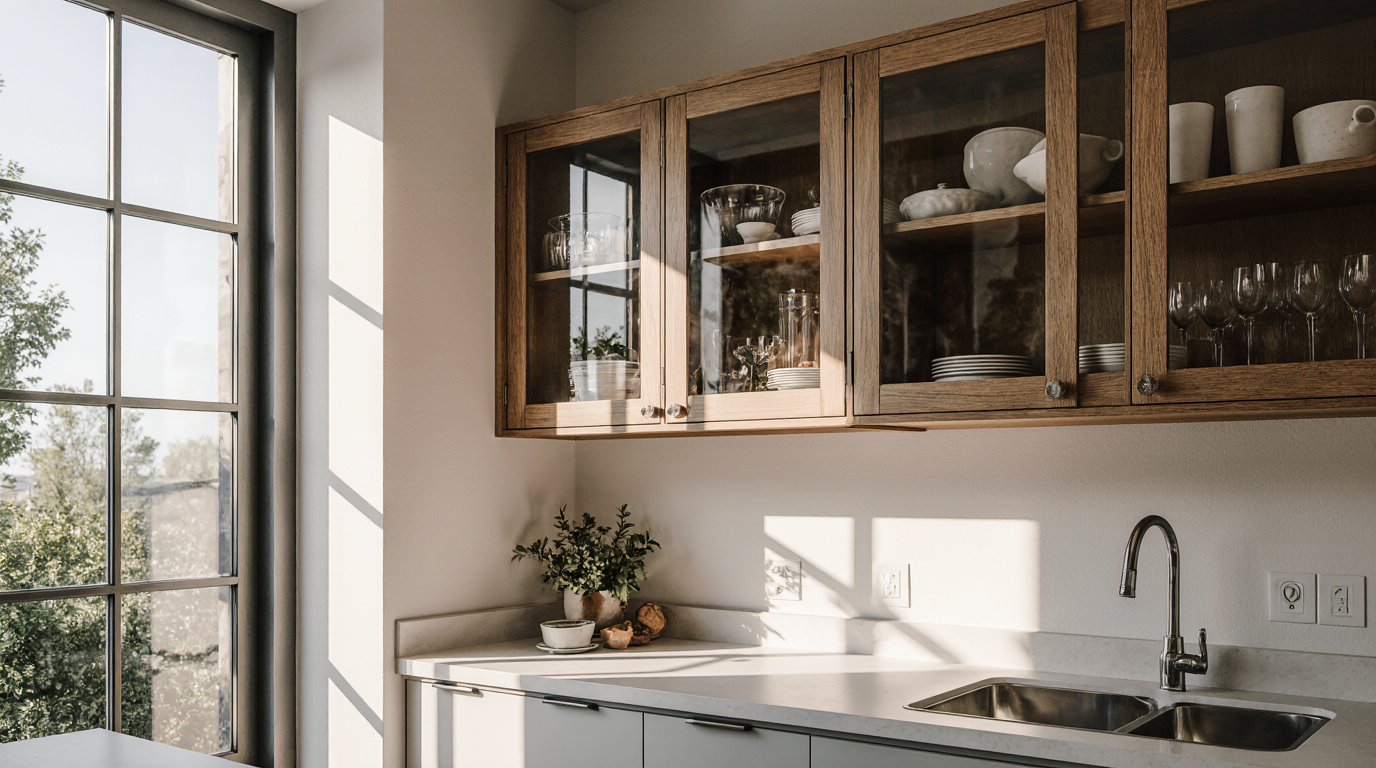
The most frequent and costly mistakes I see stem from treating glass cabinet doors as a simple decorative choice. Clients focus on the pattern—be it reeded, frosted, or seeded—and overlook the technical specifications required for our climate. This oversight leads to predictable failures that are expensive to rectify after installation.
Another common error is underestimating the effect of intense Florida sunlight. A client might choose a clear glass to display fine china, only to find that the UV rays streaming through a nearby window are fading the interior finish of their expensive custom cabinets. We now systematically discuss window locations and the potential need for UV-filtering films on the cabinet glass itself.
The Most Expensive Failure: Ignoring Hardware and Frame Material
The single most expensive failure I’ve observed is specifying standard, high-end hardware and wood frames for a home on or near the water. A client with a beautiful home on Lido Key insisted on a specific brand of polished nickel hardware they had used in their Chicago residence. Despite my warnings, they proceeded. Within 18 months, every hinge and pull showed pitting and the beginnings of corrosion from the salt air. The door frames, made from a standard solid maple, had swollen just enough from the humidity to prevent proper closing. The cost to replace all the hardware with marine-grade stainless steel and rework the doors was nearly 30% of the original project cost—a completely avoidable expense. The lesson is stark: in Sarasota, the environment dictates the material specification, not the catalog.
The Practical Process for Specifying and Installing
The process begins not with glass samples, but with a thorough site evaluation to assess environmental exposure. We determine the proximity to saltwater, direct sun exposure, and the home’s HVAC and dehumidification capabilities. This informs the base requirements for the door frame materials and the type of glass assembly needed.
Once we have the technical baseline, we move to design. This involves selecting the glass type, the frame style (mullions, single pane), and the hardware. A formal proposal is drafted with explicit material callouts, such as “316 stainless steel hinges” or “laminated safety glass.” After approval, fabrication begins. Installation is the final, critical step, where we ensure every door is perfectly aligned and sealed to create a stable interior environment for the cabinetry.
Selection Criteria for Sarasota Homeowners
- Verify Marine-Grade Hardware: Do not accept “rust-resistant.” Demand specification sheets for hardware confirming it is 316-grade stainless steel or a comparable salt-air-rated material. This is a must for any property west of I-75.
- Inquire About Frame Construction: Ask specifically how the wood or substrate is sealed before the glass is installed. The interior edges of the frame where the glass sits are the most vulnerable points for moisture penetration.
- Demand Impact Glass for High-Risk Areas: If the cabinets are in a room with large windows or doors in a wind-borne debris zone, using laminated or impact-rated glass in the cabinets can be a wise, albeit more expensive, choice for comprehensive protection.
- Check the Warranty for Coastal Exclusions: Many manufacturers have clauses that void warranties on finishes or materials in coastal or high-humidity environments. A reputable local fabricator will provide a warranty that accounts for Sarasota’s climate.
Comparing Glass Doors to Other Cabinet Fronts in Sarasota
Glass cabinet doors offer a unique aesthetic, but they are not the right fit for every situation, especially given the maintenance and cost implications in our region. Homeowners must weigh the desire for light and display against the practicalities of durability and upkeep. The decision often comes down to the home's location and the owner's lifestyle.
Solid wood doors offer timeless durability and hide clutter, while high-pressure laminate or polymer doors provide extreme resistance to moisture and are easier to clean. The choice involves a trade-off between visual openness, cost, and long-term resilience to the Sarasota environment.
| Feature | Custom Glass Doors | Solid Wood Doors | High-Pressure Laminate/Polymer |
|---|---|---|---|
| Humidity/Warp Resistance | Dependent on frame material; glass is stable | Varies by wood species and finish; requires careful sealing | Excellent; highly stable and non-porous |
| Salt Air Corrosion Resistance | Hardware is the weak point; requires marine-grade metals | Hardware is the weak point; finish can be compromised over time | Excellent; hardware is the only concern |
| Upfront Cost | High to Very High | Medium to High | Medium |
| Maintenance | Requires regular cleaning of glass; frame and hardware need inspection | Requires polishing; potential for refinishing | Low; easy to clean with simple detergents |
When Glass Cabinet Doors Are the Wrong Choice
I advise against extensive use of glass cabinet doors in a seasonal vacation home that is often closed up for months at a time. Without consistent, year-round climate control, the interior of the home can experience significant temperature and humidity swings. This trapped moisture creates a perfect environment for condensation to form on the inside of the glass and can promote mold growth within the cabinets. In these scenarios, solid, well-sealed doors are a much safer and lower-maintenance option.
A Safe Hiring Checklist for Your Project
Hiring a craftsman for custom glass doors in Sarasota requires more than just reviewing a portfolio of pretty kitchens. You are hiring for technical expertise specific to a harsh coastal environment. An oversight in material selection can lead to a complete failure of the product in just a few years.
- Confirm their supplier for marine-grade (316) hardware and ask to see it specified in the contract.
- Ask for examples of projects completed on barrier islands like Siesta Key or Longboat Key at least five years ago, and inquire about how they have performed.
- Verify they carry appropriate liability and workers' compensation insurance, a standard requirement for entry into most managed communities in Sarasota County.
- Discuss their process for sealing the glass into the frame. Do they use a simple silicone bead or a more robust marine-grade glazing compound or gasket?
- If you live in a condo, ensure they have experience working with building management and understand the strict rules regarding freight elevator usage, work hours, and debris removal.
- Request a detailed drawing that shows not just the design but also cross-sections of the door construction and frame joinery.
Decisions That Determine the Outcome
The success of your project will be determined long before the first piece of wood is cut. The most crucial decisions revolve around accepting the reality of our environment and budgeting for the necessary material upgrades. Trying to save a few hundred dollars by opting for a lower grade of stainless steel or a standard wood sealer is a recipe for disappointment.
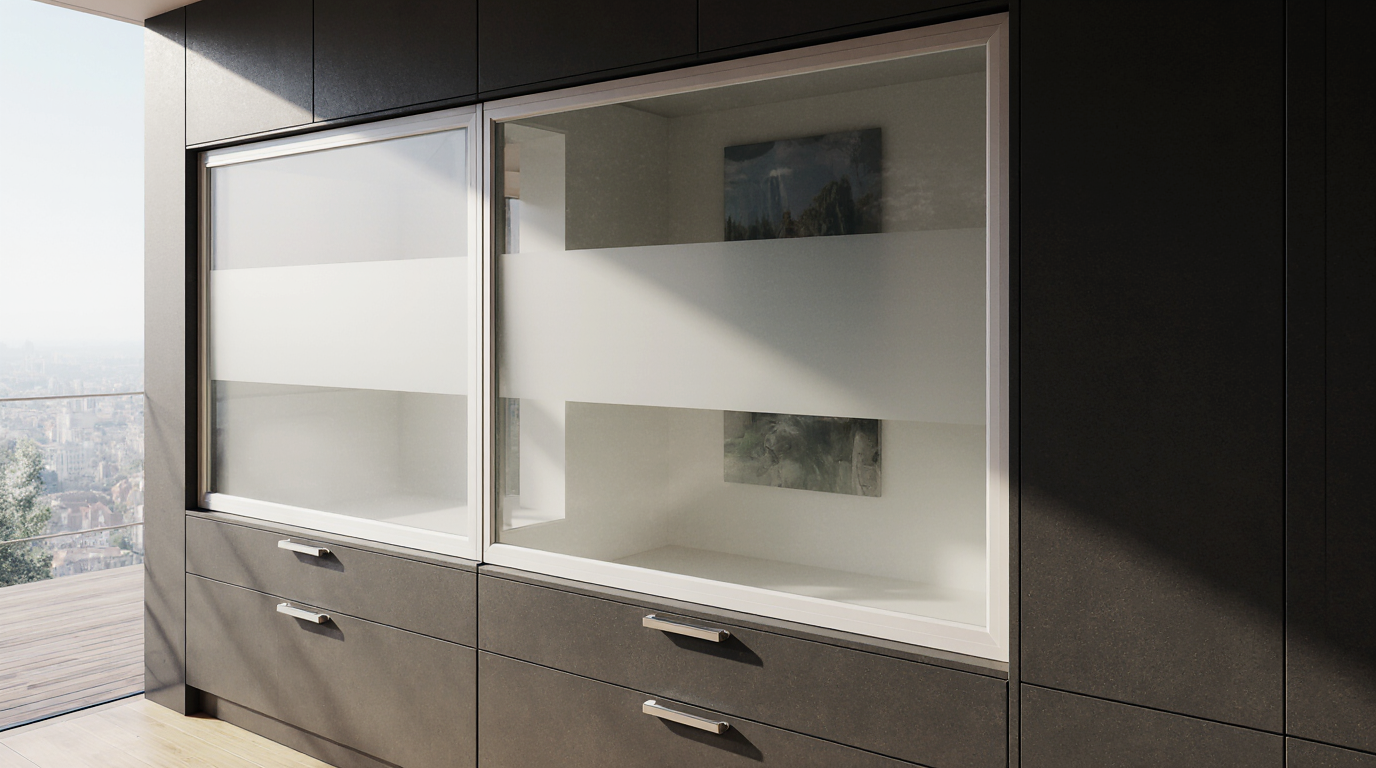
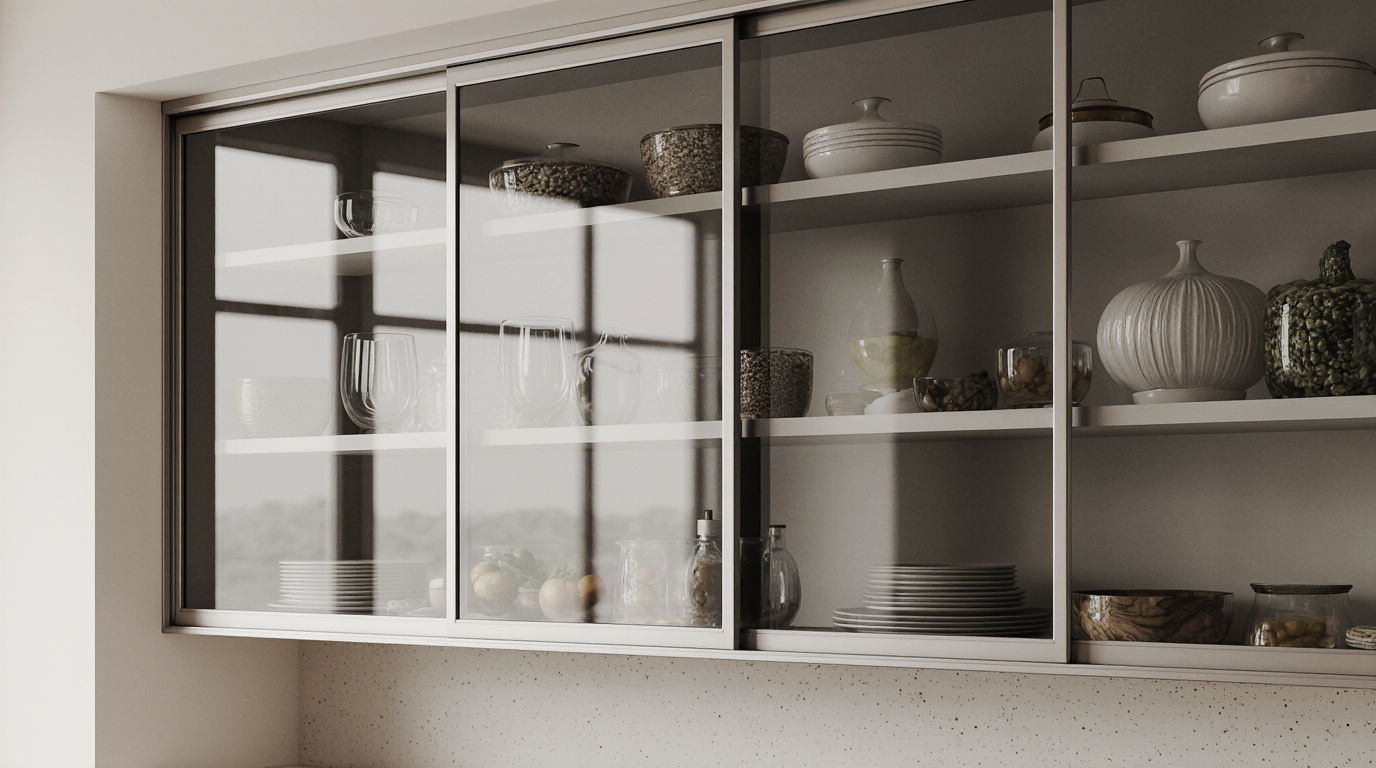
Another pivotal decision is the type of glass itself. While decorative options are plentiful, consider the practicality. Frosted or reeded glass is excellent for obscuring clutter while still reflecting light. However, clear glass demands that the interior of your cabinets be immaculately organized at all times. This lifestyle commitment is something clients often underestimate.
The Exact Moment the Majority Gets It Wrong
The critical error happens when the client approves a design based on a rendering or photo from a non-coastal region without a line-by-line review of the material specifications. They fall in love with a look and assume the builder will adapt it. You must insist that the proposal explicitly lists every component's material and grade. If the proposal just says “stainless steel hinges,” reject it. It must say “316 stainless steel hinges.” If it says “solid wood frame,” demand to know the species and how it will be sealed on all six sides before assembly. This is the moment of due diligence that separates a resilient, long-lasting installation from one that looks old in three years.
Practical Answers About Operations in Sarasota
Navigating HOA Design Review in Lakewood Ranch or Palmer Ranch
Most master-planned communities in Sarasota have Architectural Review Committees (ARCs) or HOAs that must approve any significant interior renovation, especially in condos. For glass cabinets, their primary concern is often external appearance if the kitchen is visible from windows. Reflective, mirrored, or heavily colored glass can sometimes be rejected. The typical approval process takes 30 to 60 days. You must submit your fabricator's detailed drawings, material specs, and contractor license/insurance to the board for review before any work can begin.
Florida Building Code and Glass Safety Requirements
While interior cabinet doors are generally not regulated as strictly as windows, there are exceptions. If a cabinet with a large glass door is located in what could be deemed a hazardous location—such as next to a swinging door or in a low position where someone could fall into it—the code may require safety glass (tempered or laminated). An experienced local professional will know precisely when these Florida Building Code, Residential Edition (Chapter 3) requirements are triggered, ensuring your project is not just beautiful but also safe and compliant.
The Financial Reality of Coastal Material Upcharges
Homeowners are often surprised by the cost premium for coastal-rated materials. For context, moving from a standard high-quality hinge to a marine-grade 316 stainless steel equivalent can increase the hardware cost by 50-75%. Similarly, opting for a marine-grade plywood substrate for the door frames instead of standard furniture-grade plywood can add 20-30% to the raw material cost. While these numbers seem high, they are an investment in longevity. Paying this premium upfront avoids the far greater expense of replacement and repair caused by corrosion and warping down the line.