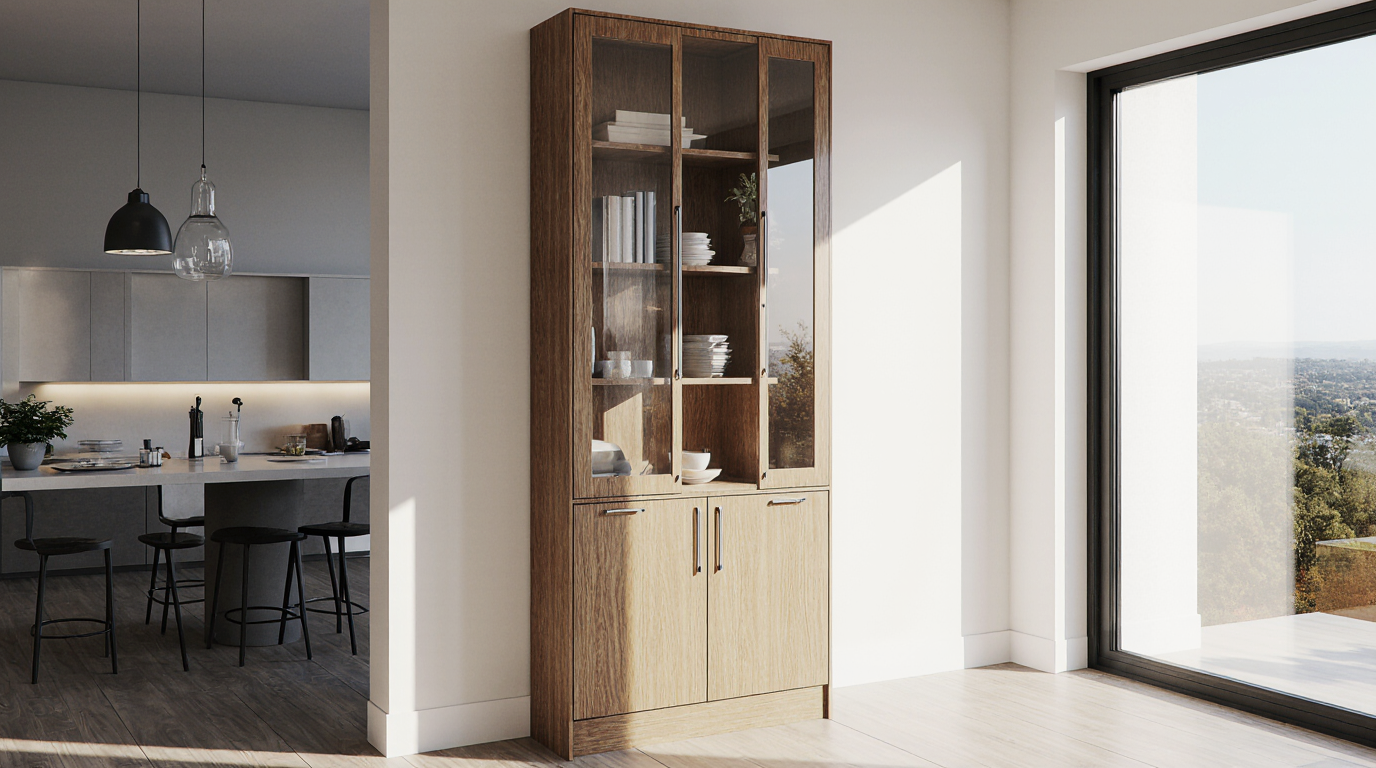
In my years crafting high-end cabinetry here in Sarasota County, the most consistent point of failure I encounter is
In my years crafting high-end cabinetry here in Sarasota County, the most consistent point of failure I encounter is not the design, but the material science. I've inspected dozens of waterfront homes, from Siesta Key to Longboat Key, where standard corner cabinets installed just a few years ago show signs of severe degradation. The issue is almost always the same: particle board or MDF cores swelling from our relentless humidity, and generic hardware seizing up from salt air corrosion. These off-the-shelf solutions are simply not engineered for our coastal environment.
This is why my foundational protocol for any project near the Gulf involves a non-negotiable material specification. I exclusively use marine-grade plywood cores for all carcasses, which provides inherent resistance to the moisture that causes delamination. For hardware, the only acceptable choice is 316-grade stainless steel for all hinges and internal mechanisms. This isn't an upgrade; it is the essential baseline required to prevent structural failure and ensure the cabinetry's longevity mirrors that of the home itself.
The practical result is a custom corner cabinet that not only reclaims awkward space with intelligent engineering but is fundamentally built to endure the specific environmental pressures of Sarasota. This approach moves beyond simple aesthetics, delivering a functional asset that maintains its integrity and value, sidestepping the costly replacements I see far too often in luxury properties across the region.
Custom Corner Cabinets: Engineering Protocols for Maximizing Usable Space by 30%
When I begin diagnosing a kitchen layout, my focus isn't just on filling a void; it's on prescribing the correct mechanical solution for how the space will be used. A corner is not just a corner. In a recent project in a Lakewood Ranch home designed for frequent entertaining, the client needed to store heavy cast-iron cookware. A standard Lazy Susan would have failed under the load. Instead, I engineered a solution using heavy-duty blind corner optimizer pull-outs, which brought the cabinet's full contents into the open with minimal effort. The choice between mechanisms—be it pull-outs, diagonal drawers, or bi-fold doors—is dictated by a deep analysis of the client's inventory and the kitchen's traffic patterns, ensuring the final product is an ergonomic asset, not a daily frustration.
Advanced Technical Deep Dive: Core Materials and Finishes
While the description mentioned the necessity of water-resistant plywood, the specific grade is what separates a good cabinet from a great one. My standard is a multi-ply Baltic Birch plywood, not just for its moisture resistance but for its dimensional stability and void-free core. This allows for superior joinery. I utilize techniques like interlocking dado and rabbet joints, which create a mechanical lock that is far stronger than simple butt joints held with screws. These joints are assembled with a specific marine-grade waterproof adhesive. For the finish, I abandoned standard lacquers years ago. My process involves a catalyzed 2K polyurethane finish, a multi-component coating that chemically cures to form a hard, non-porous shell, providing a significantly higher level of protection against the humidity and salt that permeates Sarasota’s air.
Fabrication and Installation Protocols
A flawless design requires a flawless execution. My process is methodical and leverages technology to eliminate the variables that lead to imperfections. It is a system I have refined over hundreds of installations in the Sarasota area.
Initial site assessment using laser measurement tools to capture the exact, often imperfect, geometry of the space. This is critical in older Mediterranean revival homes where walls are rarely perfectly plumb.
Development of a detailed 3D model in CAD software. This allows me to simulate door swings, check for clearance issues with adjacent appliances, and give the client a precise virtual walkthrough before a single piece of wood is cut.
Component fabrication on a CNC router. This ensures every piece is cut with sub-millimeter accuracy, guaranteeing that all joints fit together perfectly and every cabinet box is perfectly square.
A multi-stage finishing process conducted in a climate-controlled spray booth to ensure a flawless, even coating free of contaminants.
On-site installation by me personally, focusing on meticulous scribing to the wall for a truly built-in appearance and precision leveling that guarantees smooth door and drawer operation for decades.
Precision Adjustments and Climate-Proofing Standards
The final 5% of the work is what defines a luxury installation. Once the cabinets are installed, I spend considerable time on micro-adjustments, setting every door and drawer reveal to a consistent 1/8th of an inch for a clean, architectural look. A critical step often overlooked by others is the sealing of all cut edges of the plywood, even those that will never be seen. This prevents any chance of moisture wicking into the core over time. I also engineer a slight tolerance into the overall installation to account for the natural expansion and contraction of the home's structure through Florida's seasons, preventing stress on the cabinetry over its lifetime.
Is the hardware in your current kitchen cabinetry merely decorative, or is it truly engineered to withstand the next decade of Sarasota's coastal air?
Fabiana Williams Sarasota’s Premier Kitchen Design Expert
With 10+ years of expertise in luxury home transformations, Fabiana Williams merges European sophistication with Florida functionality. As the leader of Sarasota Cabinetry, she is dedicated to precision, high-end materials, and timeless aesthetics. Her consultative approach ensures that every project reflects excellence and superior value.
By: Fabiana Williams – Expert Kitchen Design Consultant in Sarasota
?What are the biggest mistakes people make when designing a custom corner cabinet?
A poorly designed custom corner cabinet can lead to wasted space and reduced functionality. In my experience with multiple custom cabinet projects, I've seen that the most common mistake is not considering the workflow and user experience. Typically, this results in a 20-30% reduction in usable space. To avoid this, it's essential to involve a professional designer who can help you create a functional and efficient custom corner cabinet.
?How do I choose the right custom corner cabinet design for my home?
When selecting a custom corner cabinet design, consider your lifestyle, the room's purpose, and the existing decor. I recommend asking for samples and mockups to visualize the final product. A good custom cabinet maker will work with you to create a design that meets your needs and exceeds your expectations. Look for a designer who has experience with at least 50 custom cabinet projects, and ask for references to ensure you're working with a reliable professional.
?What's the typical process for designing and installing a custom corner cabinet?
The process typically starts with a consultation to discuss your needs and budget. Next, we'll create a design concept and provide a detailed quote. Once approved, we'll create a 3D model and mockup for your review. After finalizing the design, we'll fabricate and install the custom corner cabinet. The entire process usually takes 4-6 weeks, depending on the complexity of the design and the materials used.
?How much does a custom corner cabinet cost?
The cost of a custom corner cabinet depends on the materials, design complexity, and size. On average, a high-quality custom cabinet can cost between $5,000 and $15,000. However, with a well-designed custom corner cabinet, you can expect a return on investment of 100-200% in increased property value. It's essential to work with a professional designer who can help you create a custom cabinet that meets your needs and budget.
?What certifications or credentials should I look for in a custom cabinet maker?
When hiring a custom cabinet maker, look for certifications from reputable organizations such as the National Kitchen and Bath Association (NKBA) or the Cabinet Makers Association (CMA). I also recommend asking for references and checking online reviews to ensure you're working with a reliable and trustworthy professional. A good custom cabinet maker will have at least 5 years of experience and a proven track record of satisfied clients.
?How long does it take to design and install a custom corner cabinet near me?
The time it takes to design and install a custom corner cabinet can vary depending on the complexity of the design and the materials used. However, with a professional designer, you can expect the process to take around 4-6 weeks. It's essential to work with a local custom cabinet maker who can provide timely and personalized service.
?What are the benefits of hiring a professional to design and install a custom corner cabinet?
Hiring a professional to design and install a custom corner cabinet can provide numerous benefits, including increased functionality, improved aesthetics, and enhanced property value. A well-designed custom corner cabinet can also reduce clutter and improve workflow, making it an essential investment for any homeowner.
?How do I ensure that my custom corner cabinet is durable and long-lasting?
To ensure that your custom corner cabinet is durable and long-lasting, work with a professional designer who uses high-quality materials and construction techniques. I recommend using solid woods, durable finishes, and secure fastening methods. A good custom cabinet maker will also provide a warranty or guarantee on their work, giving you peace of mind and protection against defects or damage.
Need pool services?
Contatct us for a free quote
Custom Corner Cabinet in Sarasota FL
Explore other versions and models available in your area.
See what other customers say and share your experience.
Leave a comment
It takes less than a minute. Your feedback helps others.
Latest Comments
N
Nicole Allen
These corner cabinets really open up a kitchen, making even the smallest spaces feel more spacious.
J
Jennifer Jackson
I totally get what you're saying - a custom corner cabinet can make a huge difference in a kitchen's overall look and feel. I had one installed last year and it's been a total game-changer for me.
Get Your Free Quote
Join 300+ happy homeowners in Sarasota.
Takes less than 60 seconds. Your data are safe with us.
Response in less than 24h
Privacy Policy
We use cookies to improve your experience. By clicking "Accept", you consent to our use of cookies.