
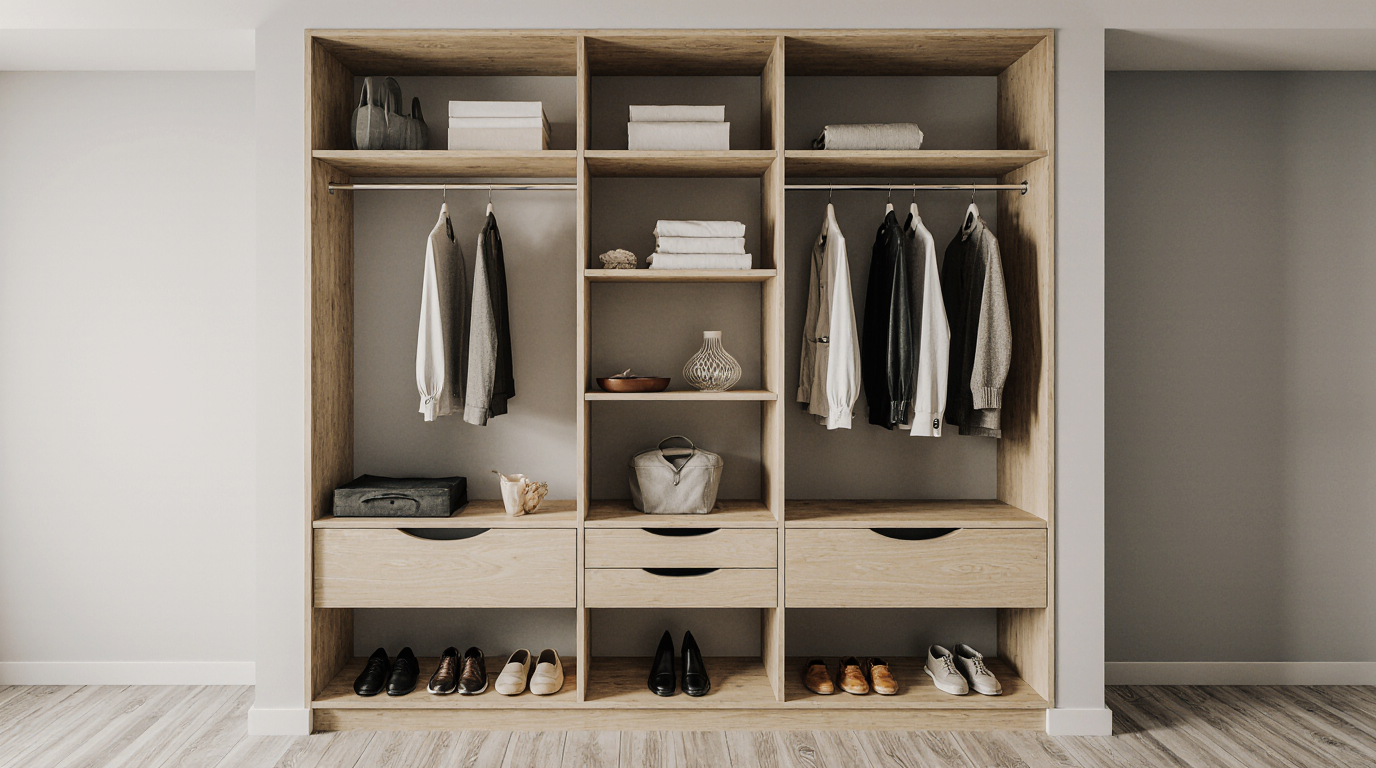
Custom Closet Engineering: The Framework for Doubling Usable Space in Sarasota County Homes
A Diagnostic Approach to Closet Architecture, Not Just Storage
My process for designing a custom closet begins long before I even consider a piece of wood. It starts with a spatial and environmental diagnosis of the home itself. I analyze the specific location of the closet—is it adjacent to a master bathroom that generates significant steam? Does it have a wall that gets direct, intense afternoon sun? These factors create microclimates that dramatically affect material performance. I’ve seen identical materials fail in one part of a Casey Key home and thrive in another, simply due to airflow and humidity differentials.
The next step is a detailed inventory and ergonomic study of the wardrobe. This isn't about counting shoes; it's about understanding weight, length, and frequency of use. Heavy suit collections require different structural support than lightweight garments. I measure the exact drop needed for long dresses to prevent pooling on the floor and design dedicated, ventilated spaces for athletic wear. This meticulous planning is how I often achieve a 20-30% increase in usable storage capacity without changing the closet's footprint. It transforms the space from a simple box into an efficient, tailored system.
Material Science: Beyond the Standard Cabinet Box
The term 'quality materials' is often thrown around, but in the context of Sarasota's climate, it has a very specific technical meaning. The primary enemy is moisture, which attacks both the wood composite and the hardware. Standard MDF (Medium-Density Fiberboard) acts like a sponge in our humidity, which is why I avoid it for any structural components. My preferred material is a marine-grade plywood, which is laminated using waterproof glues in a void-free construction, preventing internal pockets where moisture can collect and cause delamination from the inside out.
Hardware selection is equally critical. Many builders use 304 stainless steel, which offers some corrosion resistance but will eventually show rust spots in the salt-laden air of Lido Key or Longboat Key. My non-negotiable standard is 316 stainless steel for all hinges, drawer slides, and hanging rods. The addition of molybdenum in its alloy gives it superior resistance to chlorides, making it the only truly long-term solution for our coastal environment. For finishes, I rely on a two-part polyurethane conversion varnish, which creates a much harder, more chemically resistant, and less permeable barrier than common lacquers, effectively sealing the wood substrate.
The Fabrication Blueprint: From Digital Model to Physical Reality
Precision in the workshop translates directly to a flawless installation. Every closet system I build is first modeled in a 3D CAD program, allowing the client to virtually walk through the space and approve every drawer and shelf before a single sheet of material is cut. This digital blueprint then feeds directly into a CNC router for cutting, ensuring every component is accurate to a fraction of a millimeter. This level of precision is impossible to achieve with manual cutting.
My assembly process prioritizes structural integrity over speed. Instead of relying solely on screws, I use traditional joinery techniques that create stronger, more durable connections. My methodology includes:
- Using dado and rabbet joints for shelving to distribute weight across the entire cabinet side.
- Implementing a blind-dado construction for cabinet backs, which squares the box and adds immense racking strength.
- Assembling all components with high-performance, moisture-resistant wood glue in addition to mechanical fasteners.
- Applying all finishes in a controlled workshop environment before delivery, ensuring a perfect, even coat without the fumes and mess of on-site finishing.
On-Site Calibration for Florida's Climate
The final stage is a meticulous on-site installation, where I account for the realities of local construction. It’s common to find walls in Lakewood Ranch homes that are not perfectly plumb or square. I use a technique called scribing to flawlessly match the cabinetry to the contours of the wall, eliminating unsightly gaps. Leveling is done with laser precision, ensuring that doors hang perfectly and drawers glide without resistance. Every drawer slide is tested, and every door is adjusted to a uniform 1/16-inch tolerance for a clean, architectural look.
This final calibration is about more than just aesthetics; it's about function and longevity. A perfectly balanced installation reduces stress on hinges and hardware, extending their lifespan and ensuring the smooth, silent operation expected of a high-end custom build. It's the last 5% of the job that makes 100% of the difference. Does your current closet design account for the specific structural and environmental realities of your home, or is it simply fighting against them?
