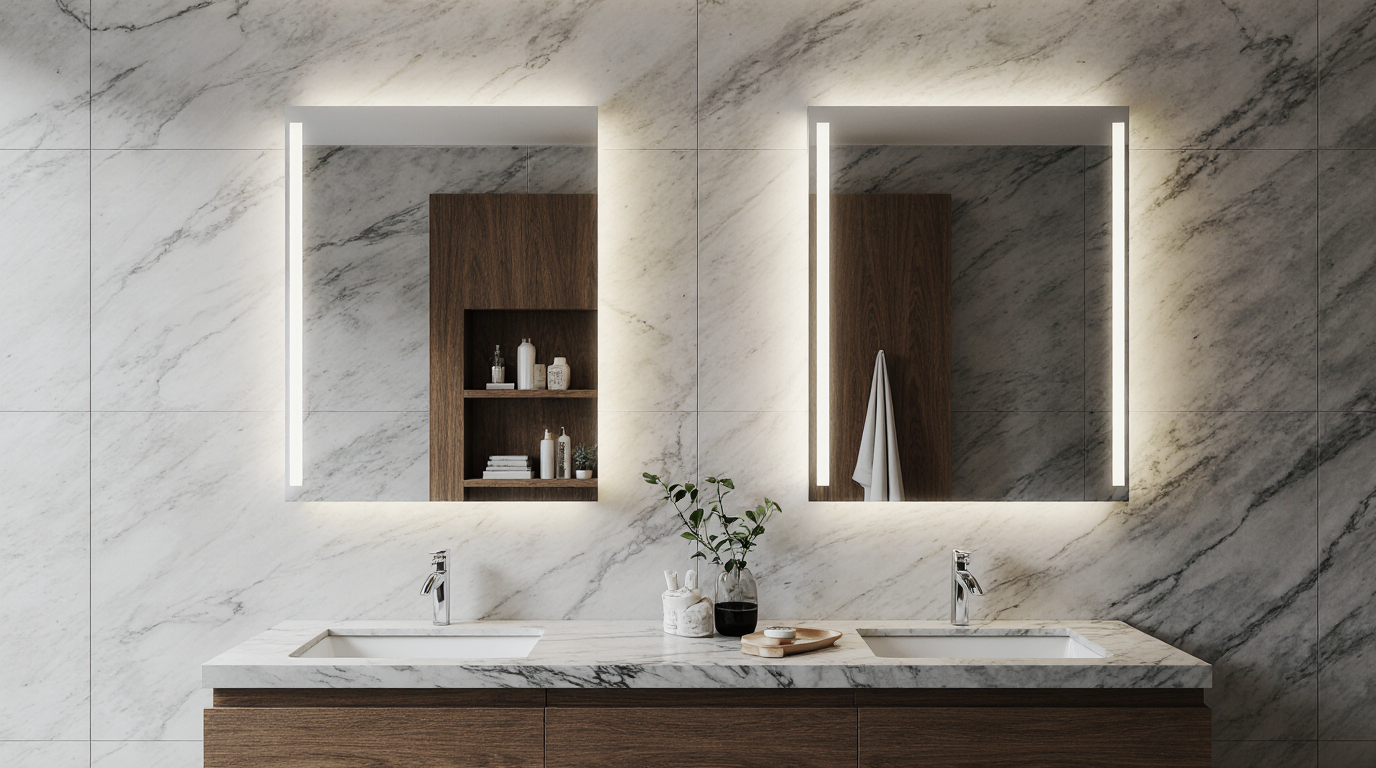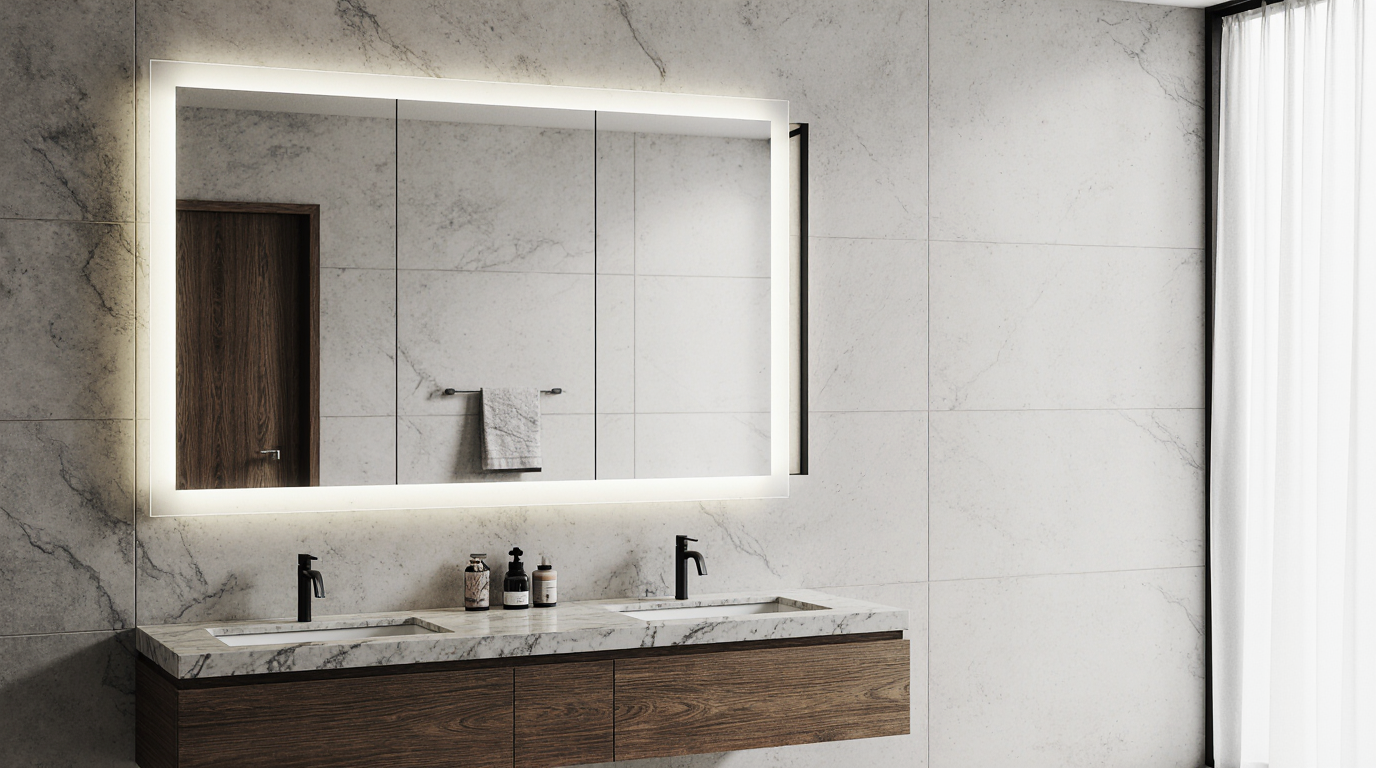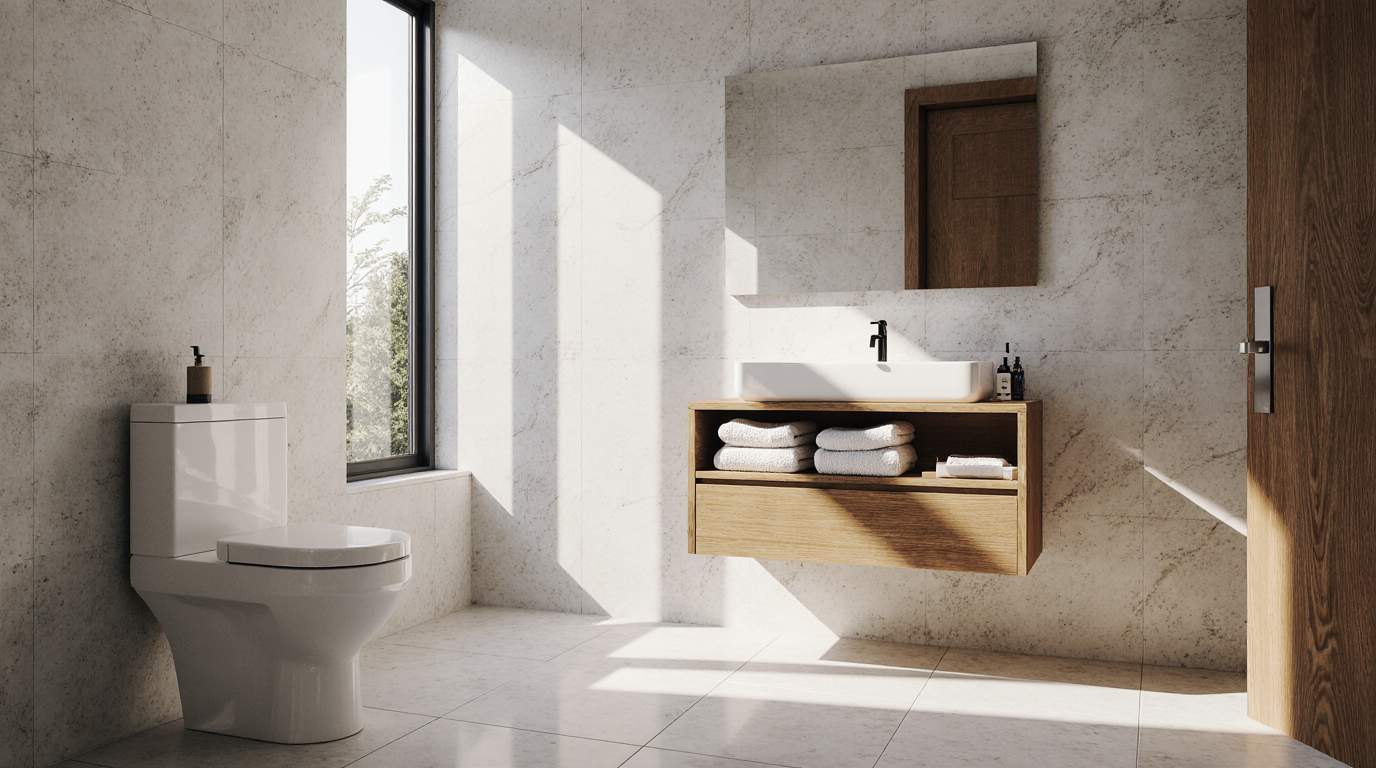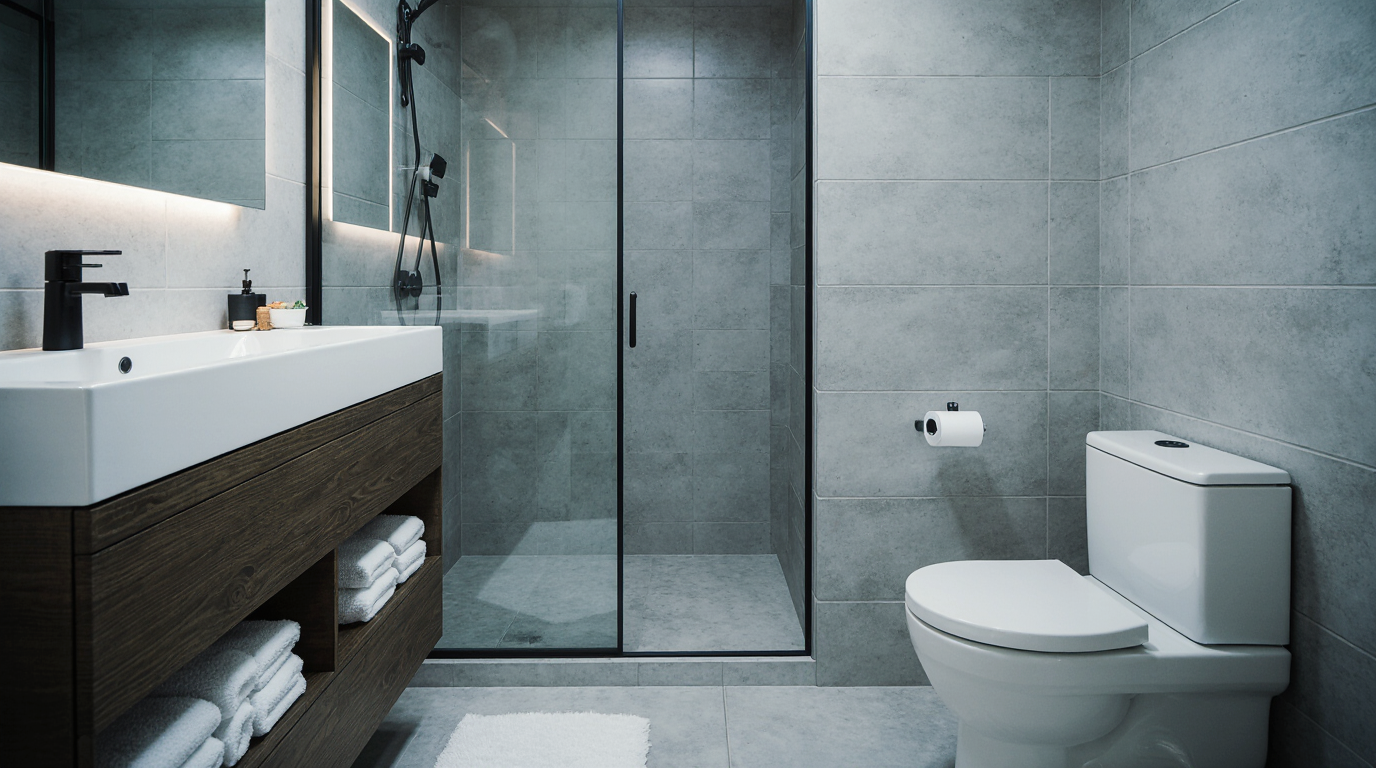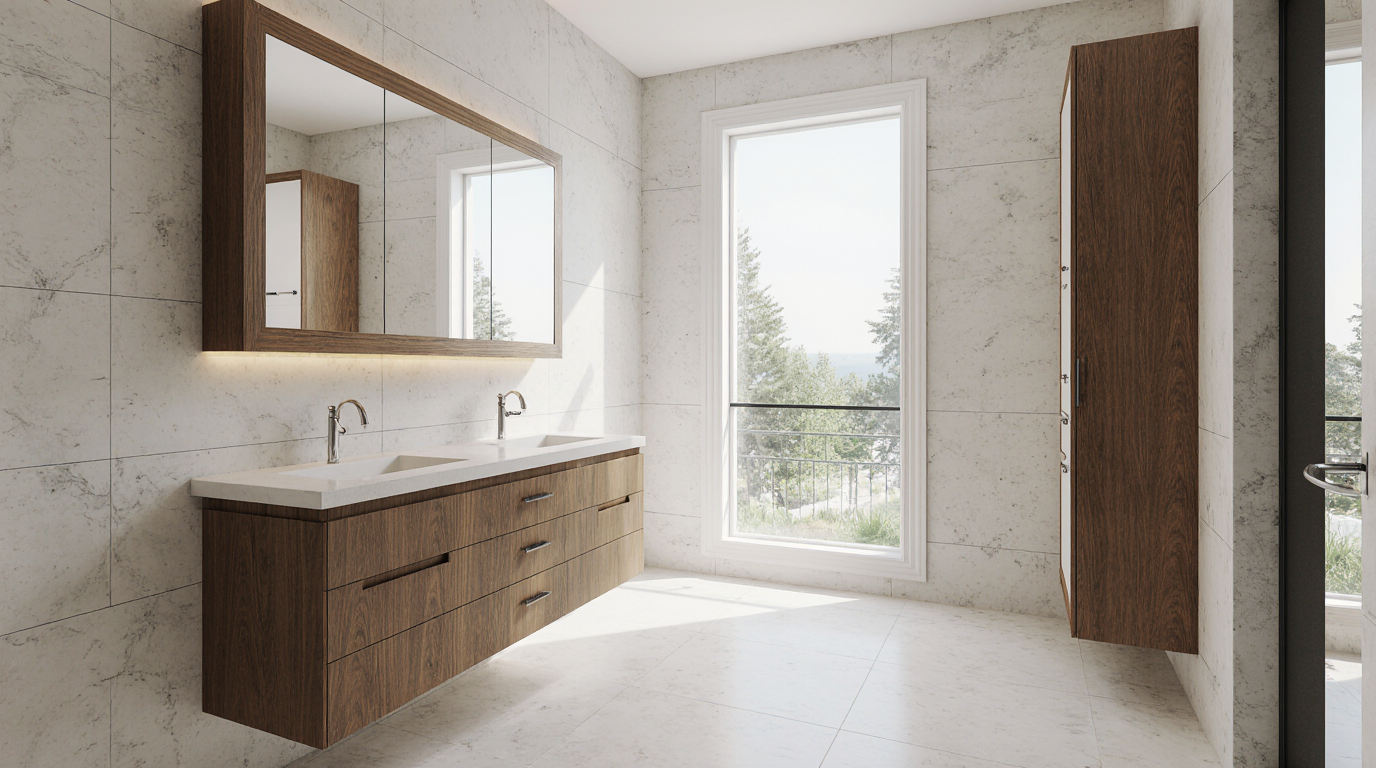
The Diagnostic Phase: Mapping Moisture and Space Before the First Cut
Before a single piece of wood is ordered, my process begins with a technical assessment of the specific bathroom environment. A master suite in a Lakewood Ranch home has different airflow and humidity challenges than a guest bath in a Lido Key condo directly facing the Gulf. I analyze the ventilation system, measure ambient humidity levels, and map the proximity of the vanity to high-moisture zones like showers and tubs. This data directly informs the specific finishing protocol I'll employ, as a cabinet next to a steam shower requires a different sealing strategy than one in a well-ventilated powder room.
This diagnostic stage is also where I engineer for spatial efficiency. Standard vanities are notoriously inefficient. I identify opportunities to increase usable storage by as much as 20% by designing around plumbing, using custom drawer depths, and incorporating interior fittings that are simply not available in off-the-shelf units. It’s a methodology focused on designing the cabinet from the inside out, ensuring every cubic inch serves a purpose.
Material and Hardware Specification: Beyond the Plywood Core
While the marine-grade plywood core is foundational, the long-term performance is in the details. The specific veneer and finish are crucial. For instance, I use a catalyzed conversion varnish, a finish far superior to standard lacquer because it undergoes a chemical reaction as it cures, creating a harder, non-porous barrier that is impervious to moisture and common bathroom chemicals. This is applied in a multi-coat process in a controlled environment to ensure a perfect, unbroken seal.
For hardware, my specification goes deeper than just the material. I exclusively use high-performance systems like Blum LEGRABOX or Salice Futura glides, which offer flawless, soft-close operation even under the weight of a thick quartz countertop. The hinges are not just stainless steel; they are fully adjustable in six ways, allowing me to achieve perfect, consistent 3mm gaps between all doors and drawers—a hallmark of true bespoke cabinetry. This level of hardware engineering prevents the sagging and misalignment I see in countless other installations.
The Fabrication Process: A Joinery-First Assembly
How a cabinet is held together is just as important as the materials used. My fabrication philosophy prioritizes structural joinery over shortcuts like screws and staples, which inevitably loosen over time in humid conditions. Every cabinet carcass I build utilizes robust, timeless woodworking techniques to ensure it remains perfectly square and rigid for its entire lifespan.
- Precision Cutting: All panels are cut on a CNC router for absolute precision, ensuring every joint is perfectly tight.
- Structural Joinery: I primarily use dado and rabbet joints, which interlock and create a much stronger connection than simple butt joints. This prevents the cabinet from racking or twisting during installation and use.
- Waterproof Edge Sealing: Every single exposed edge of the plywood, even those hidden from view, is sealed with a waterproof PUR (polyurethane reactive) adhesive edge banding. This is the most common point of failure for moisture ingress, and my method creates a monolithic, sealed box.
Precision Installation and Final Tolerances
The final 5% of the project—the installation—is what separates adequate work from exceptional results. In Sarasota, walls are rarely perfectly plumb or straight. I meticulously scribe each cabinet to the wall, creating a seamless, built-in look with no unsightly gaps. More importantly, I seal the base of the cabinet to the floor with a high-grade silicone before the toe-kick is installed. This simple step, often overlooked, prevents any water on the floor from wicking up into the cabinet material.
Once the vanity is set, the final adjustment begins. I spend hours meticulously aligning every door and drawer front to achieve those perfect, uniform gaps. This isn't just for aesthetics; proper alignment ensures the soft-close mechanisms engage correctly and reduces long-term stress on the hinges and glides. This level of precision guarantees that the cabinetry will function as beautifully as it looks, withstanding the unique environmental pressures of Sarasota County. Is your current bathroom cabinetry engineered with this level of foresight, or is it simply a standard solution fighting a losing battle against our climate?