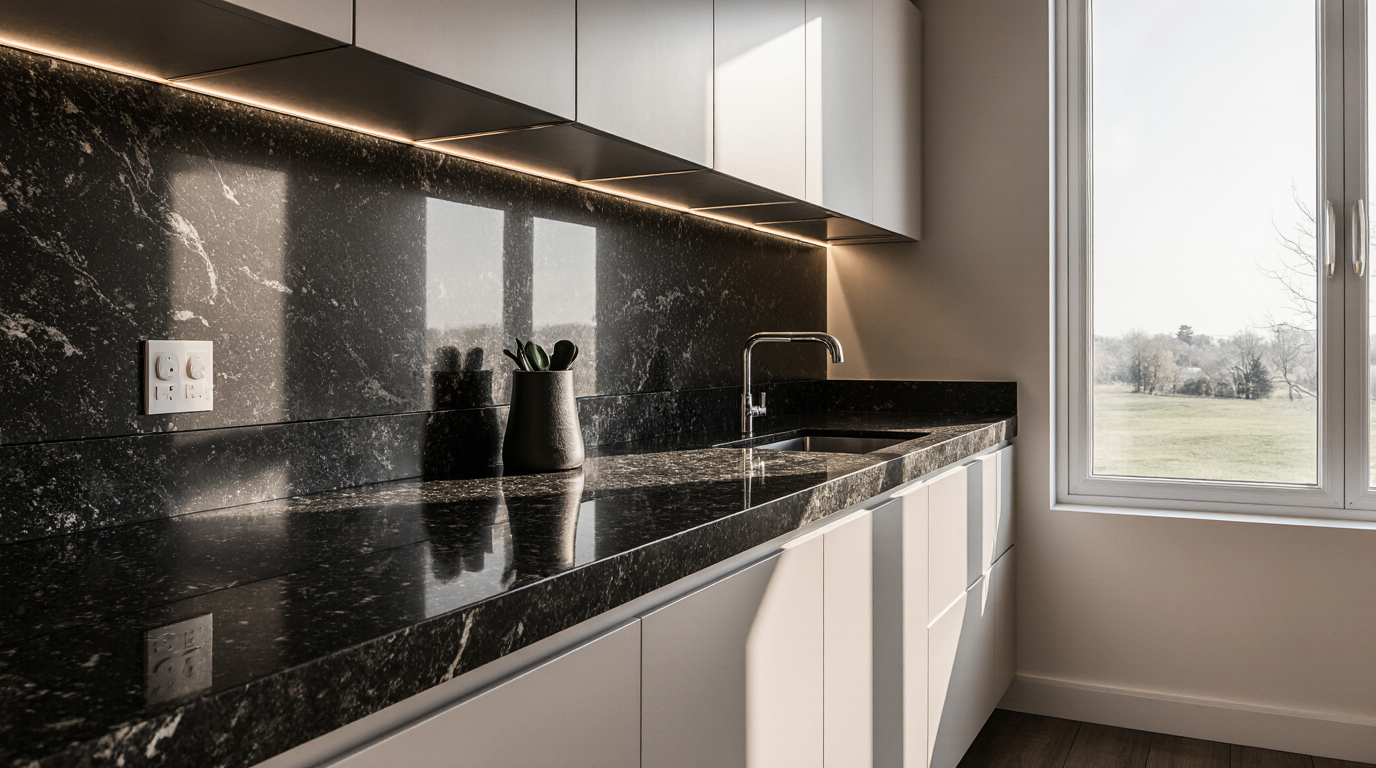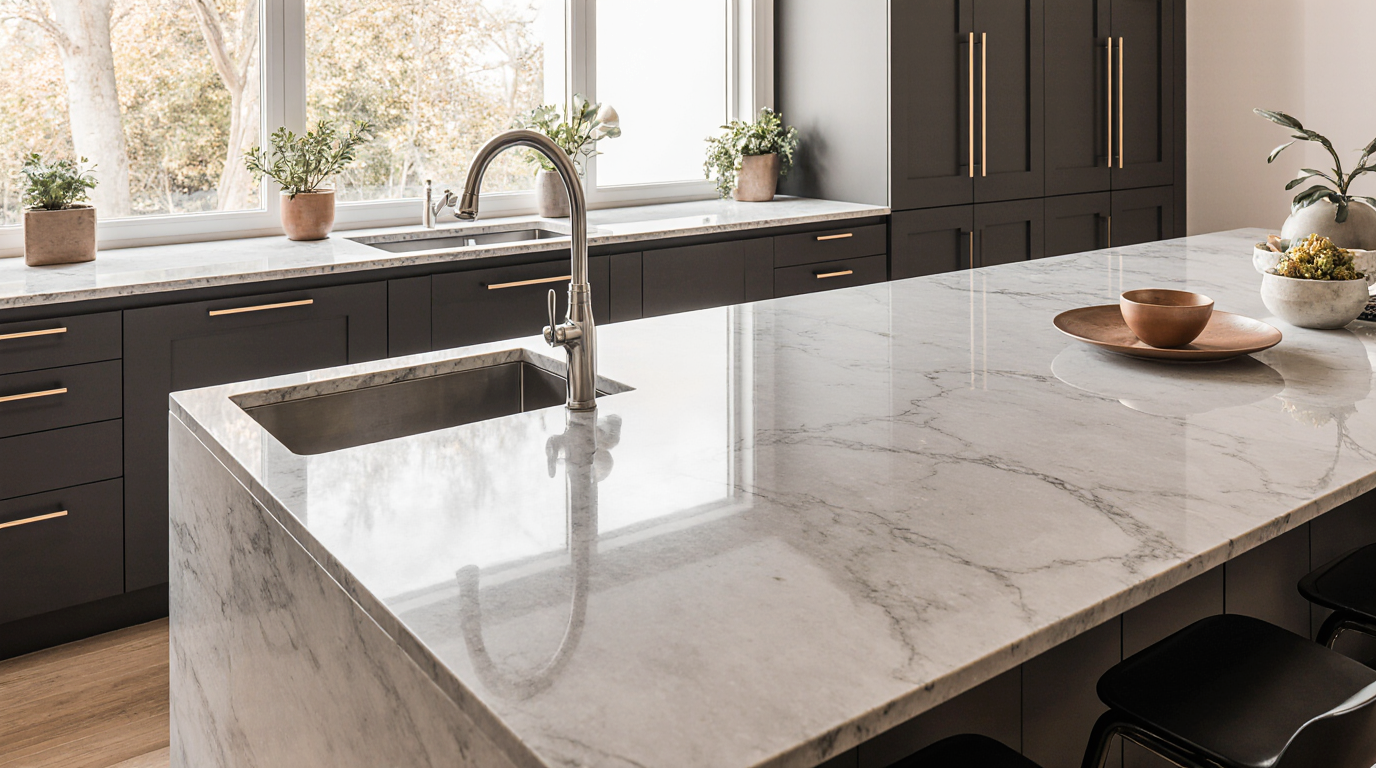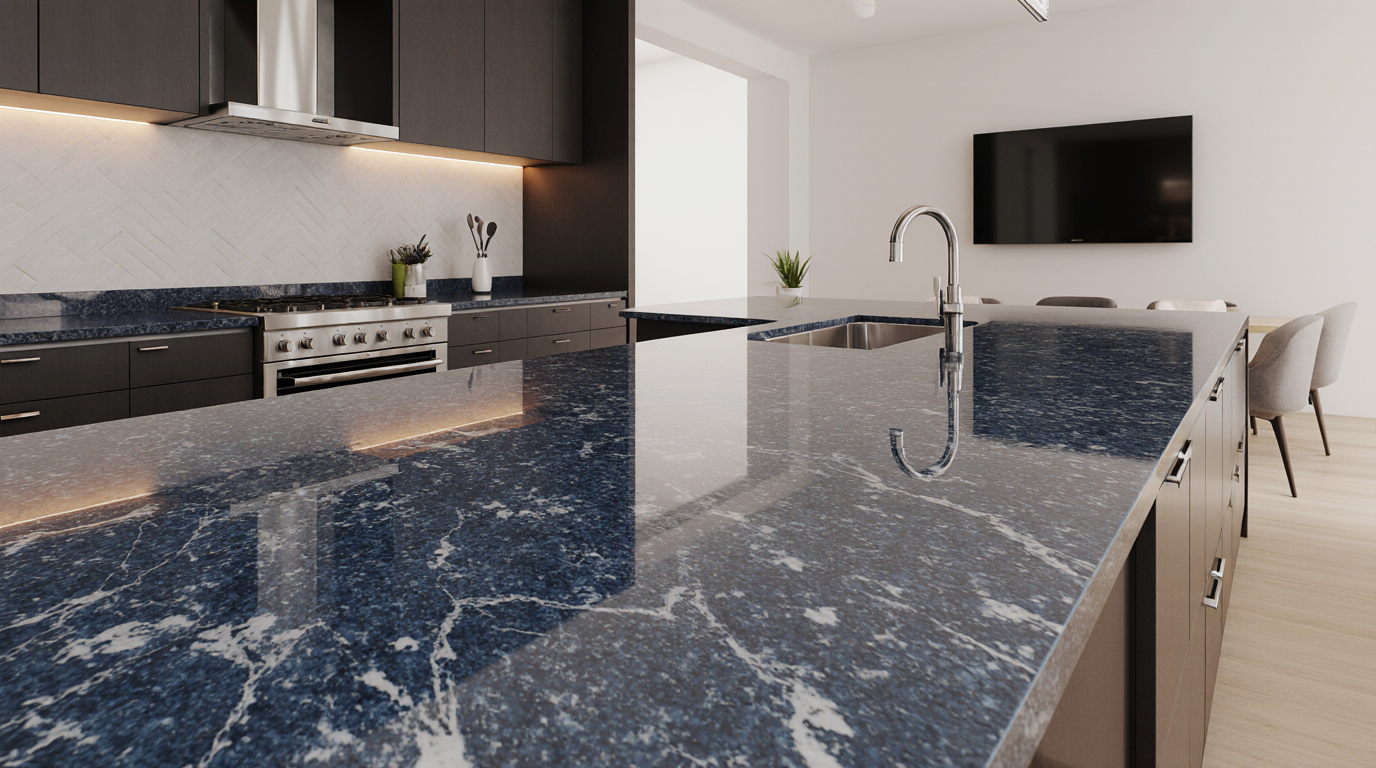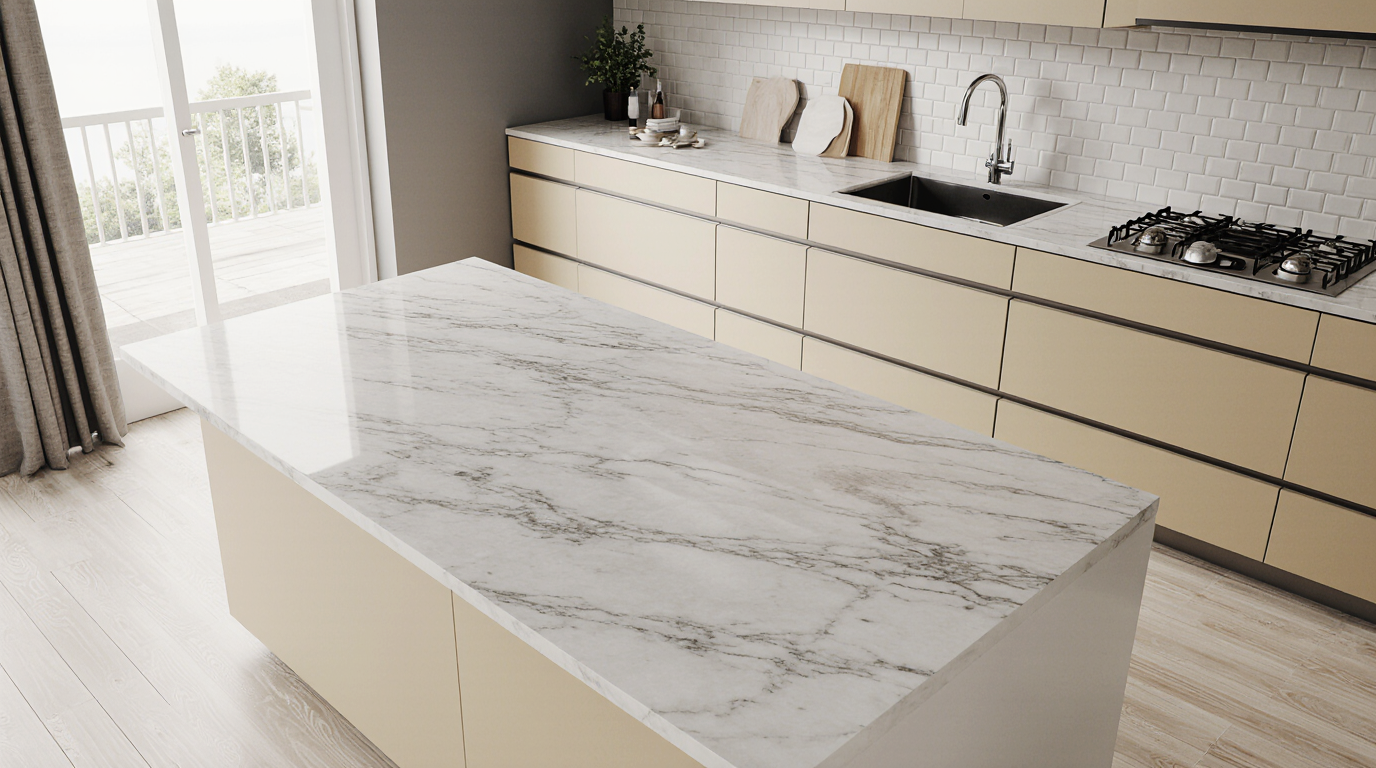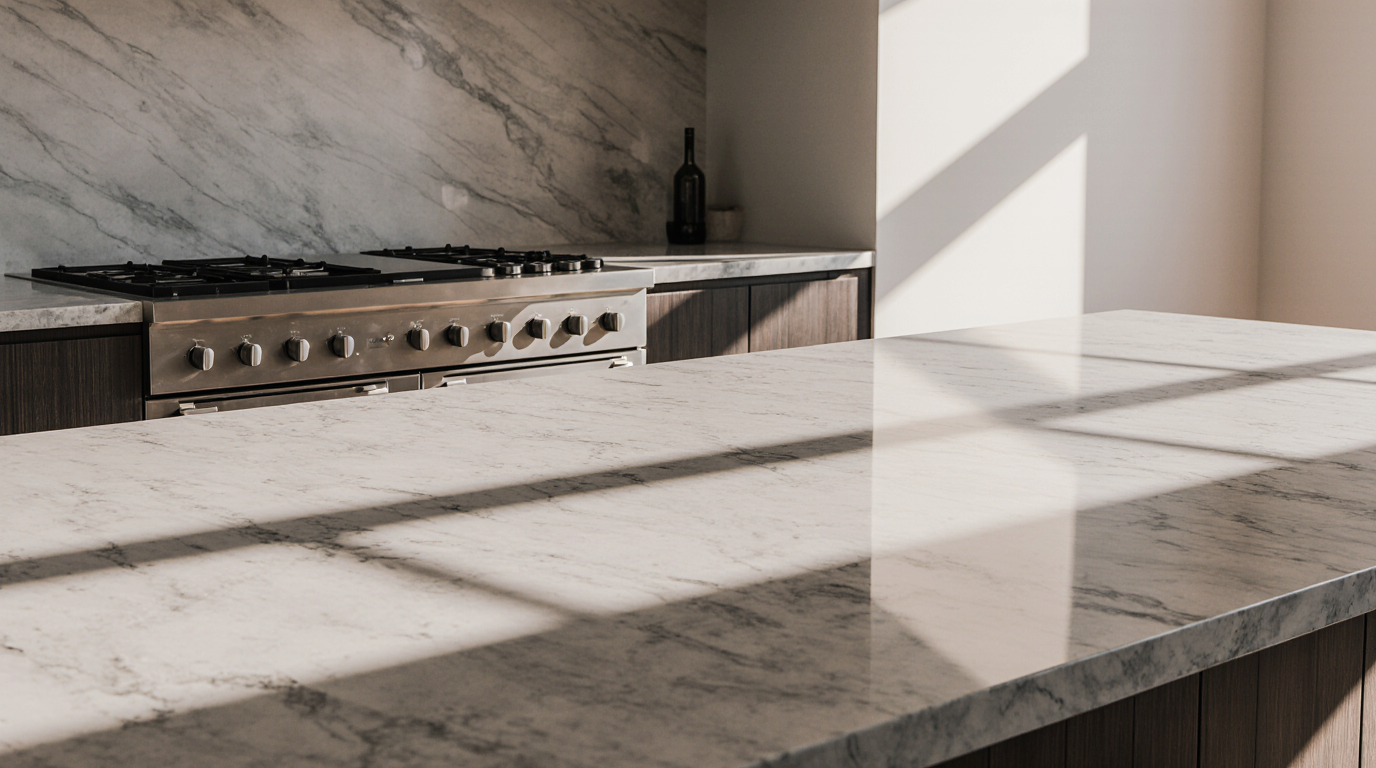
Why do some “stain-proof” white quartz countertops in Sarasota kitchens start to look faintly yellow near the windows after just a couple of years, while others remain pristine? The answer isn't a cleaning issue. It's about a technical detail most homeowners overlook: the quality and UV stability of the polymer resin used in the slab, a critical factor in a city bathed in relentless Florida sun.
Executive Summary: Quartz Selection in a Coastal Climate
From my direct experience installing countertops from The Landings to Lakewood Ranch, the primary challenge in Sarasota
From my direct experience installing countertops from The Landings to Lakewood Ranch, the primary challenge in Sarasota isn't finding a beautiful quartz slab; it's selecting one engineered to resist our specific environmental stressors. The intense UV exposure can degrade lower-quality resins, and the high humidity demands meticulous installation to prevent seam separation. The most critical mistake is treating all quartz brands as equals, assuming the visual appeal in a showroom translates directly to long-term performance in a coastal home.
- UV Resistance Rating: Prioritize quartz with superior UV-inhibiting resins, especially for kitchens with large windows or for outdoor use. Ask for the technical data sheet.
- Slab Origin and Consistency: Sourcing multiple slabs from the same batch is non-negotiable to avoid color and pattern mismatches, a common issue with large island projects.
- Installer's Seaming Method: A high-quality mechanical seaming tool (like a Gorilla Grip) combined with a color-matched, UV-stable epoxy is essential for nearly invisible and durable seams.
- HOA Design Review Board (DRB) Approval: For communities like those in Palmer Ranch, have your slab selection and finish pre-approved to avoid costly delays; their review can take up to 30 days.
The Unseen Risks in Sarasota Quartz Installations
The most significant planning failures I see stem from a disconnect between a slab's showroom appearance and its real-world performance in a Sarasota environment. Clients fall in love with a brilliant white or a deep, rich dark quartz countertop, assuming its durability is a given. The reality is that the polymer resins binding the quartz crystals are the weak link, and not all are formulated to handle our climate.
Another common oversight is underestimating the logistics of slab delivery and installation on barrier islands like Lido Key or Siesta Key. Access can be tight, and large, single-piece islands may be impossible without a crane, adding thousands to the budget. This is a conversation that must happen before a deposit is ever paid, not on installation day. These logistical challenges are a direct result of Sarasota's coastal geography.
The Most Expensive Failure: Ignoring UV-Induced Yellowing
The costliest mistake I’ve consistently observed is selecting a standard-grade white quartz for a kitchen flooded with natural light. I was called to a project on Longboat Key where a client had installed a beautiful, pure white waterfall island less than three years prior. The side facing a large wall of west-facing windows had developed a distinct, uneven yellow tint. The original installer was gone, and the manufacturer's warranty explicitly excluded discoloration from UV exposure. The fix was a complete replacement, as the yellowing is irreversible. This happens because lower-cost resins react to UV radiation, a factor that's an afterthought in less sunny climates but a primary concern here.
How Quartz Countertop Projects Unfold in Sarasota
A typical quartz project begins with material selection, but the crucial first step should be an on-site evaluation by the fabricator. We measure, assess structural support for the cabinets, check for levelness, and identify any access issues. Once you select a slab—whether it's a popular white quartz or a dramatic brown or dark quartz—the fabricator puts a hold on it at a local supplier like UMI or MSI.
Next comes the template. We create a precise digital or physical model of your countertops. This template is used to program the CNC (Computer Numerical Control) saw for cutting. After cutting, the edges are profiled and polished, and any sink cutouts are made. The final phase is installation, a process that can take a full day and requires meticulous attention to leveling and seaming, especially given Florida's tendency for slab foundations to shift slightly over time.
Selection Criteria for Sarasota Homeowners
- Outdoor Kitchen Suitability: If you're considering quartz for an outdoor kitchen, you MUST select a product specifically engineered for exterior use, like Caesarstone's Solaris Outdoor Collection. Standard quartz will fail.
- Hurricane Code Compliance: For new construction or substantial remodels, ensure the cabinet and countertop installation methods meet anchorage requirements specified in the Florida Building Code, particularly in wind-borne debris zones.
- Salt Air Resistance (for Prefab Options): If considering prefabricated quartz countertops, scrutinize the quality of the factory-polished edge. A less dense polish can be more susceptible to microscopic pitting from salt air over many years, making it harder to clean.
- Warranty Scrutiny for Discoloration: Read the fine print of the manufacturer's warranty. Most exclude UV damage. A premium brand might offer better resin technology, even if the warranty language is similar.
Comparing Quartz with Other Coastal-Friendly Surfaces
In Sarasota, the choice often comes down to quartz, granite, or quartzite. Each has distinct advantages and disadvantages in our specific high-humidity, high-UV environment. While quartz is marketed as the low-maintenance champion, that claim comes with caveats here. For instance, some granites are virtually immune to UV fading, making them a safer bet for sun-drenched areas.
The trend towards large, seamless islands also plays a role. Quartz slabs come in standard and jumbo sizes (typically around 120" x 56" and 130" x 65"), which can often accommodate islands without seams, a major aesthetic driver. Natural stone slab sizes can be more variable.
When Quartz Isn't the Right Choice
I advise clients against quartz in two specific Sarasota scenarios. First, for true outdoor kitchens that are fully exposed to rain and sun, even outdoor-rated quartz has its limits. High-end sintered stone (like Dekton) or certain dense granites offer superior long-term durability in direct weather. Second, for clients who want a truly unique, one-of-a-kind surface with natural, unpredictable veining, the controlled patterns of engineered quartz can feel repetitive. The beauty of a natural quartzite slab is its geologic artistry, something engineered stone can only imitate.
| Feature | Engineered Quartz | Granite | Quartzite |
|---|---|---|---|
| UV Resistance | Varies by brand; lower-end resins can yellow. Requires verification. | Excellent; colors are generally stable in sunlight. | Excellent; mineral composition is stable. |
| Stain Resistance | Excellent (non-porous). | Good to Excellent; requires sealing every 1-3 years. | Good; requires sealing, can be more porous than granite. |
| Maintenance in High Humidity | Low; no sealing needed. Seams are the main point of focus. | Requires periodic sealing to prevent moisture intrusion. | Requires diligent sealing to avoid issues. |
| Cost | Mid to High. | Low to High. | High to Very High. |
Safe Hiring Checklist for Your Sarasota Project
Finding a qualified fabricator and installer is more critical than finding the perfect slab. A masterful installation can make a mid-range quartz look spectacular, while a poor installation can ruin the most expensive material. The stakes are high, so diligence is key.
- Verify the fabricator holds a current and valid license with Sarasota County and appropriate liability and workers' compensation insurance.
- Ask to see examples of their seam work, specifically on light-colored quartz where flaws are most visible.
- Confirm they use a digital templating and CNC cutting process for maximum precision.
- Request a detailed quote that breaks down the cost of the material, fabrication, and installation, including any fees for sink cutouts or edge profiles.
- Discuss their protocol for handling slabs with color inconsistencies, which is a real risk with quartz stone countertops from different production lots.
- For condo renovations (e.g., downtown Sarasota or on the keys), ensure the installer is familiar with building management rules regarding service elevator use, work hours, and debris removal.
- Ask what specific brand of adhesive they use for seams and confirm it is rated for UV stability.
Decisions That Determine the Final Outcome
The success of a quartz countertop project is defined by a few key decisions made early in the process. The first is committing to a high-quality material from a reputable manufacturer known for stable resin technology. In our market, this is not the place to cut corners. A slightly cheaper slab from an unknown source is a massive gamble against the Florida sun.
The second critical decision is approving the template layout directly on the slab. This is where you, the homeowner, can see exactly where the veins will flow, where the seams will be, and which parts of the stone's pattern will be featured or cut away. I've seen clients skip this step and be devastated that a beautiful feature of their chosen slab ended up in the sink cutout. A good fabricator will insist on this review.
The Exact Moment the Majority Gets It Wrong
The most common misstep occurs right at the beginning: homeowners select their slab before they've finalized their cabinet layout, lighting plan, and paint colors. They treat the countertop as an isolated element. The correct approach is to view the slab under your home's actual lighting conditions with samples of your cabinet doors and wall paint. A quartz that looks like a soft, warm white under showroom fluorescents can look stark and cold in a home with cooler LED lighting and northern exposure. Bringing a large sample home is not a suggestion; it is a mandatory step for a successful outcome.
Practical Answers About Operations in Sarasota
Navigating the local specifics of a countertop installation can be complex. Beyond just choosing a color, you're dealing with building codes, community rules, and logistical realities that are unique to our area. Understanding these can prevent significant delays and unexpected costs.
Navigating HOA and Condo Association Approvals
In many of Sarasota's planned communities and condo buildings, you cannot simply start work. Most require a formal application for any renovation, including countertop replacement. You will typically need to submit the contractor's license and insurance, a description of the work, and the material selection. For exterior projects like outdoor kitchens, the DRB will scrutinize the color and finish to ensure it aligns with the community's aesthetic. This process can add anywhere from two to four weeks to your project timeline before any work can begin.
Florida Building Code and Countertop Installation
While a simple countertop swap doesn't usually require a permit from Sarasota County, it changes if you alter plumbing or electrical layouts. More importantly, in new builds or major renovations within the High-Velocity Hurricane Zone (HVHZ), which includes the barrier islands, cabinet and countertop anchoring is subject to stricter codes. The goal is to prevent them from becoming projectiles in a storm. Your installer must be familiar with these requirements, as a failed inspection will halt your entire project.
The Reality of Slab Availability and Logistics
While Sarasota has excellent slab suppliers, not every quartz style you see online is stocked locally. Special-ordering a specific brand or design can add 4-8 weeks of lead time. For seasonal residents, this can be a deal-breaker. Furthermore, getting that slab to a 10th-floor condo on Longboat Key or a home on a narrow street in Siesta Key Village involves logistical planning. I always confirm site access and elevator capacity before finalizing a contract to ensure the chosen slab can physically be delivered to the kitchen.