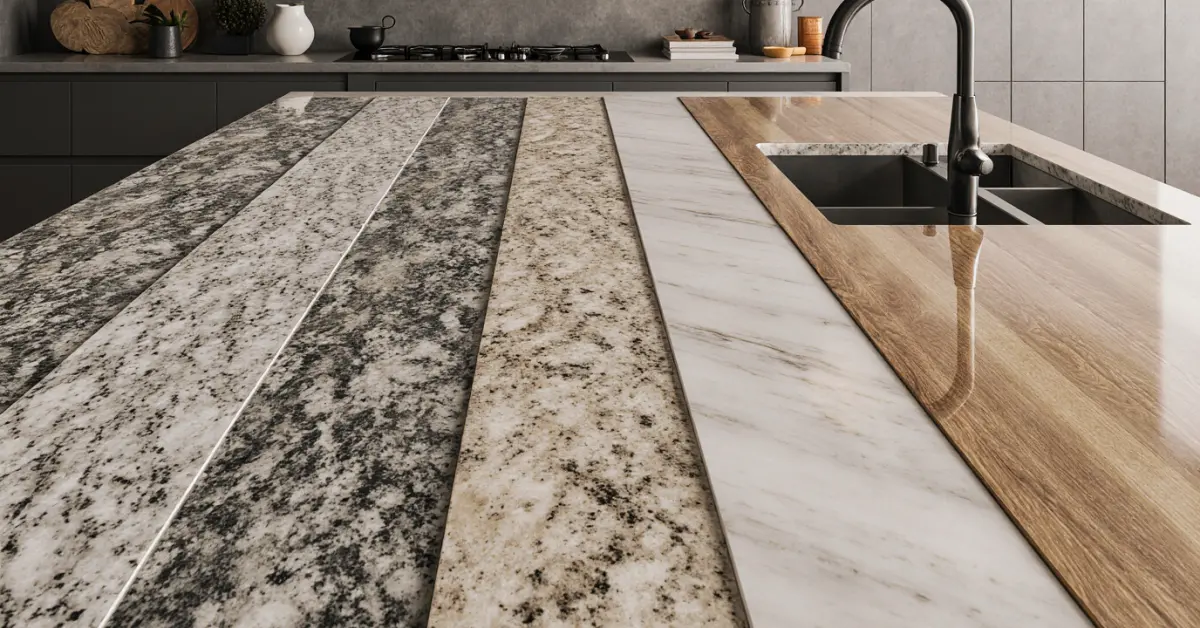
Executive Summary: Countertop Selection in a Coastal Environment
In my 15 years working on projects from historic downtown Sarasota to new builds in Lakewood Ranch, the primary
In my 15 years working on projects from historic downtown Sarasota to new builds in Lakewood Ranch, the primary differentiator for countertop success is its resilience to our specific environmental pressures. The decision matrix is not about which material is 'best' in a vacuum, but which one performs optimally against high humidity, intense sunlight, and salt air. An indoor countertop in a shaded condo has vastly different requirements than an outdoor bar top on Casey Key.
- UV Stability is Non-Negotiable: Materials that fade or yellow under intense sunlight, like many resins in engineered quartz, are poor choices for areas with direct sun exposure, especially outdoor kitchens.
- Porosity Determines Maintenance: In our humid climate, porous stones like certain marbles and granites can harbor moisture and are more susceptible to staining if not impeccably sealed and maintained.
- HOA Compliance is a Project Stage: For communities like The Founders Club or University Park, material and color palettes for outdoor applications often require pre-approval, a step that can add weeks to a project timeline.
- Salt Air Corrosion is Real: For waterfront properties, even indoor materials can be affected by airborne salinity. Non-porous, chemically inert surfaces offer a distinct advantage over time.
The Planning Failures That Lead to Premature Replacement
The most common missteps I see in Sarasota are rooted in prioritizing showroom aesthetics over local performance realities. Clients fall in love with a stunning slab of Italian marble under perfect showroom lighting, failing to account for the harsh afternoon sun that will pour through their west-facing windows or the demands of an outdoor living space.
Another frequent error is underestimating the structural requirements for ultra-heavy materials. A thick slab of quartzite or a unique agate countertop requires robust cabinet construction and sometimes even sub-floor reinforcement. Factoring this in after the cabinets are ordered creates costly delays and change orders, turning a dream project into a logistical headache.
The Most Expensive Failure: Ignoring Outdoor Material Specs
The costliest mistake is using an indoor-rated countertop in an outdoor kitchen. I witnessed a client install a beautiful, dark engineered quartz for their outdoor bar and grill area on Lido Key. Within 18 months, the resin binders had yellowed from UV exposure, and the surface had developed a chalky, faded appearance. The warranty was voided because the material was not rated for outdoor use. The cost to tear out and replace it was nearly 1.5 times the original installation cost due to demolition and a new, appropriate material like Dekton or a UV-stable granite.
How Countertop Selection and Installation Works in Practice
The process begins with a material consultation that must honestly address your lifestyle and the home's specific location in Sarasota County. We discuss sun exposure, proximity to saltwater, and how you use the space—is it a high-traffic family kitchen or a pristine showpiece? From there, we move to templating, where a precise digital or physical model of your cabinet layout is created.
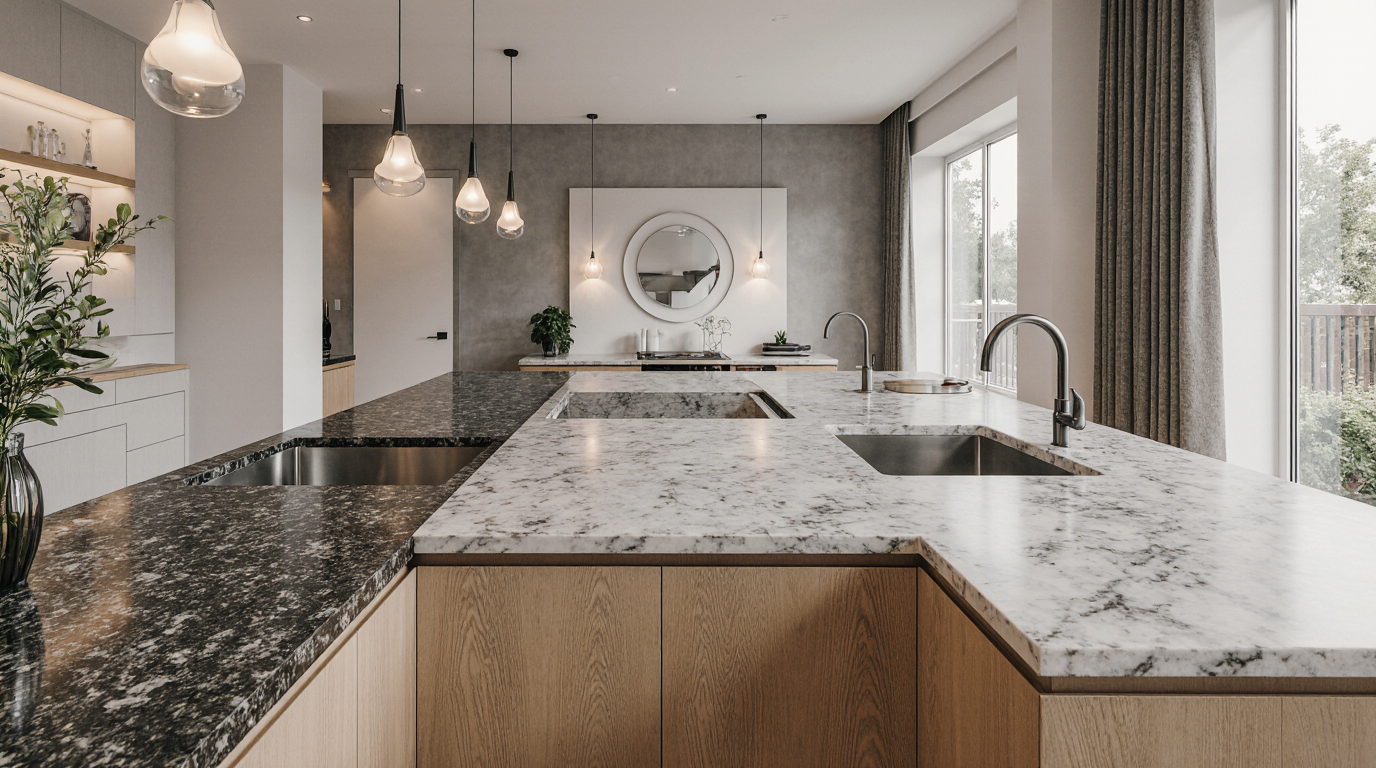
Once you select a specific slab from a local supplier like Oracle Surfaces or Granite Sarasota, it is transported to a fabrication facility. Here, it's cut to the exact template specifications using CNC machinery and hand-finished. Installation is the final, critical step. A large, complex piece, like an L-shaped kitchen counter with a waterfall edge, requires a skilled team to manage the weight and ensure perfectly level, nearly invisible seams.
Selection Criteria for Sarasota Homeowners
- Outdoor Viability: Does the manufacturer explicitly warranty the material for outdoor use in a high-UV, humid climate like Florida's? Ask for the technical data sheet.
- HOA Design Guideline Compatibility: Review your community’s architectural review board (ARB) guidelines before falling in love with a material. Many have restrictions on reflectivity, color, and texture for exterior applications.
- Sealing Requirements vs. Maintenance Tolerance: Be realistic about your willingness to perform annual or semi-annual sealing on natural stone. If you want a zero-maintenance surface, a non-porous material like porcelain or sintered stone is a better fit.
- Wind Load and Impact Considerations: For homes in wind-borne debris regions, how the countertop is secured, especially in outdoor kitchens, can be a factor. The Florida Building Code has stringent requirements for any exterior components.
Comparing Top Countertop Materials for the Sarasota Climate
Choosing a countertop involves balancing aesthetics, budget, and, most importantly in our region, environmental resilience. The ideal material for a downtown penthouse may be entirely unsuitable for a beachfront home. The following table compares common choices based on criteria that are critical for local homeowners.
| Material | UV & Heat Resistance (Outdoor Suitability) | Salt Air & Humidity Resistance | Typical Installed Cost per Sq. Ft. (Estimate) |
|---|---|---|---|
| Granite | Excellent (darker colors absorb more heat) | Good to Excellent (depends on density and proper sealing) | $75 - $150+ |
| Engineered Quartz | Poor to Fair (most are not warrantied for outdoor use; resins can yellow) | Excellent (non-porous) | $80 - $175+ |
| Sintered Stone (e.g., Dekton, Neolith) | Excellent (highly UV resistant, withstands thermal shock) | Excellent (zero porosity) | $95 - $200+ |
| Quartzite | Excellent (natural stone, very durable) | Excellent (very dense, but sealing is still recommended) | $90 - $220+ |
When a High-End Stone Is Not the Right Choice
A unique and visually stunning material like an agate countertop is a piece of art, but it's not the right choice for a high-use family kitchen. These materials can be softer, prone to etching from acids like lemon juice, and carry a premium price tag that is often unjustifiable for the performance they offer in a working kitchen. I advise clients that if the primary goal is durability and low maintenance for a busy family, function must precede form, and materials like quartzite or even a high-quality granite are a more practical investment.
Safe Hiring Checklist for Your Countertop Project
Hiring an installer or fabricator in Sarasota goes beyond just looking at a portfolio. The technical competence to handle materials correctly in our climate is paramount. A beautiful installation that fails in two years is not a success. Use this checklist to vet potential partners.
- Verify they are licensed and carry both general liability and worker's compensation insurance specific to Florida. Ask to see the certificate.
- Confirm their experience with projects on the barrier islands. Ask for addresses of past installations in areas like Lido Key or Longboat Key to understand their familiarity with logistical and environmental challenges.
- Ask how they template. Digital templating is more precise and can better anticipate issues with out-of-square walls, common in older homes.
- Inquire about their seam-setting process. A quality installer uses mechanical seam setters (e.g., Gorilla Grips) to create tight, level, and nearly invisible joints.
- For outdoor kitchens, demand to see the technical specifications sheet proving the material is warrantied for exterior use in Florida.
- Discuss their protocol for working within an HOA. An experienced local firm will know to ask for the ARB guidelines upfront.
Decisions That Determine the Outcome
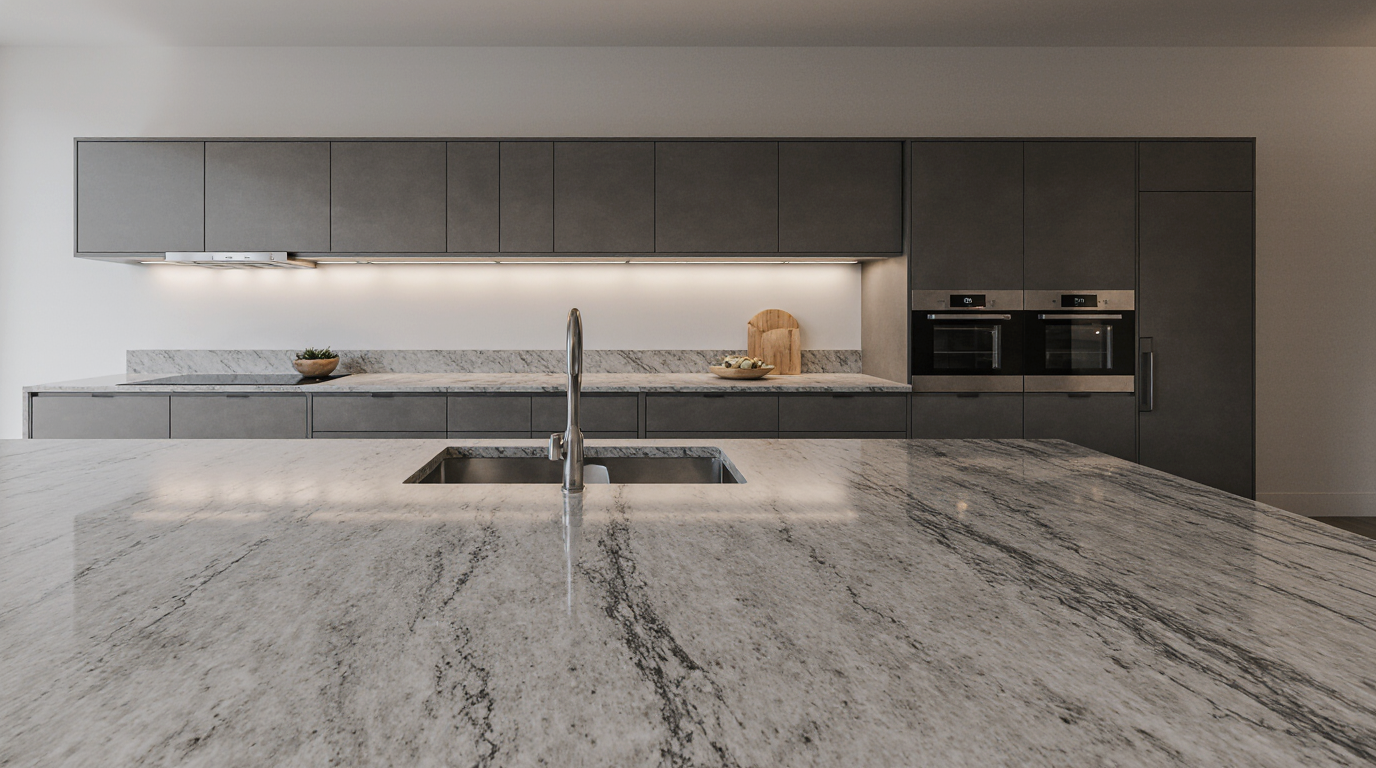
The final quality of your countertop installation is determined by a few key decisions made long before the installers arrive. The first is choosing the actual slab yourself. Never approve a countertop based on a small sample. Natural stone has vast variations, and you should inspect and reserve the specific slab for your project.
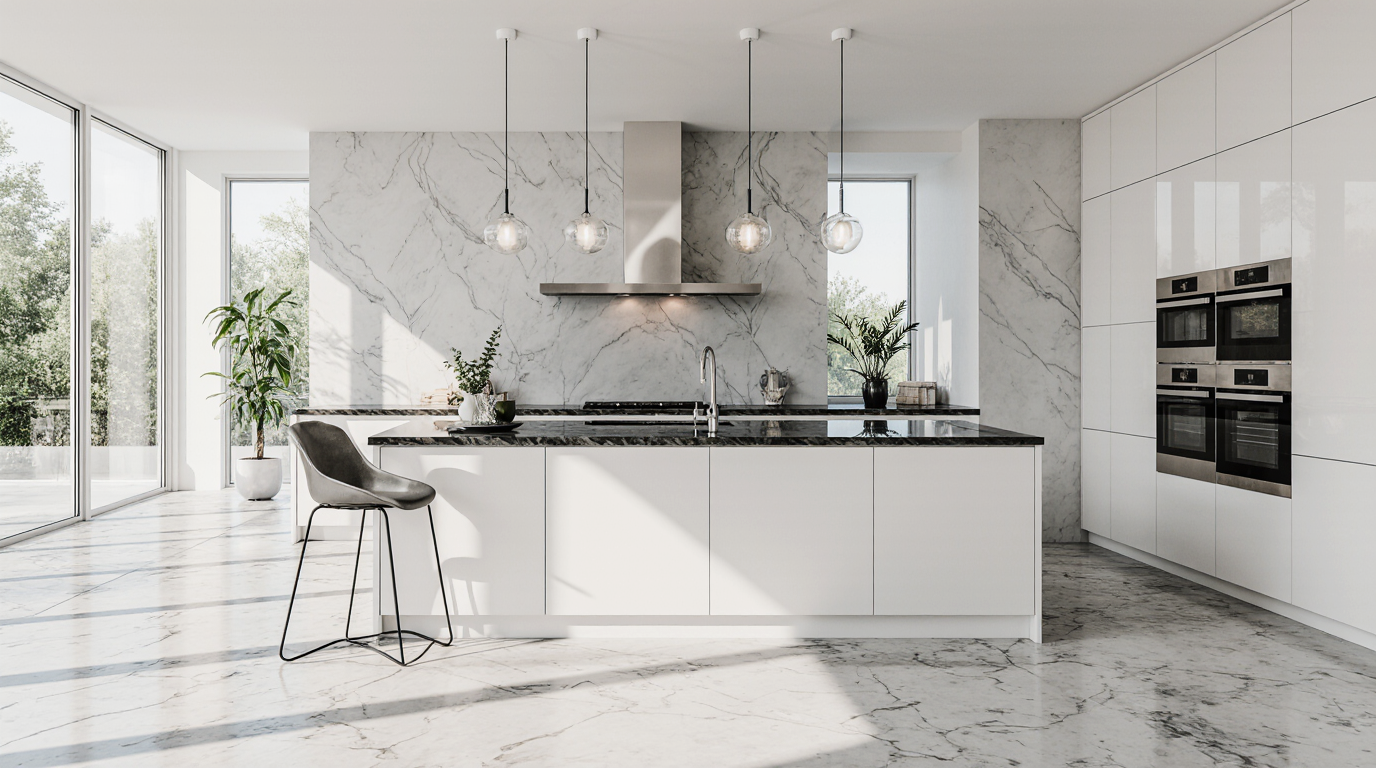
The second critical decision is the fabricator. Not all fabricators are equal. A low-cost provider may save money by cutting corners on edge polishing, seam quality, or support requirements for overhangs. A complex L-shaped kitchen counter or a modern black countertop kitchen design with a waterfall edge requires a high-skill fabricator to execute flawlessly.
The Exact Moment the Majority Gets It Wrong
The most common mistake happens at the stoneyard. A client, overwhelmed by hundreds of beautiful slabs, makes a quick decision based on color and veining alone. The right approach is to take a sample of your chosen cabinet door and flooring with you to the yard. View the slab you are considering outside in natural light, not under the warehouse fluorescents. This is the only way to see its true color and character and how it will interact with the other finishes in your home and the intense Florida sun.
Practical Answers About Operations in Sarasota
Navigating a countertop project involves more than just material selection. Local regulations, building codes, and community rules can significantly impact your project's timeline and budget. Understanding these factors is key to a smooth process.
What Are HOA Requirements for Outdoor Countertops?
In master-planned communities like Lakewood Ranch, HOA Architectural Review Boards (ARBs) often have specific rules for exterior finishes. For an outdoor kitchen countertop, this can include restrictions on color (e.g., no highly reflective or pure black surfaces) and material. You typically need to submit the material sample, a site plan, and the fabricator's information for approval, a process that can take 30-60 days. Proceeding without approval can result in a stop-work order and fines.
Do I Need a Permit for Just a Countertop Replacement?
In Sarasota County, replacing a countertop is generally considered a cosmetic upgrade and does not require a building permit, provided you are not altering plumbing or electrical layouts. However, if your project involves moving a sink, adding an outlet to an island, or changing the gas line for a cooktop, then plumbing and electrical permits are absolutely required. A reputable contractor will handle this as part of their service.
How Does the Florida Building Code Affect My Kitchen Island?
The Florida Building Code (FBC) has specific requirements for electrical outlets in kitchen islands and peninsulas to prevent hazards from extension cords. If your countertop project includes a new or modified island, you must ensure it complies with the code's outlet spacing rules. This often means integrating outlets into the cabinet base or using a pop-up outlet system on the countertop itself, which must be planned for during the countertop fabrication stage.