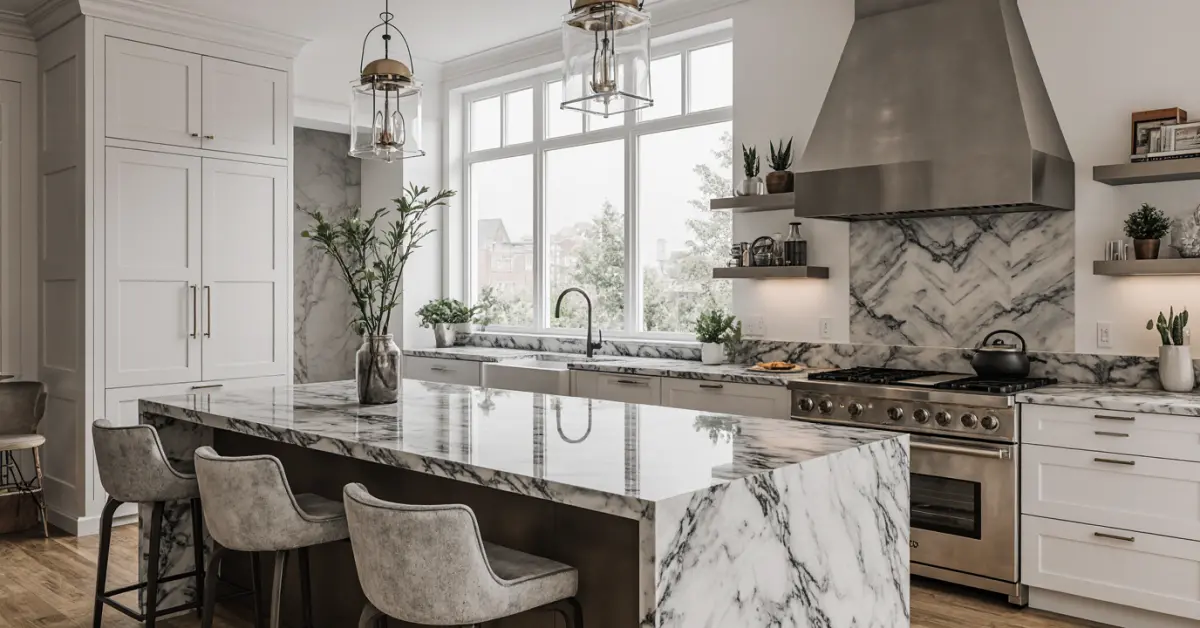
Executive Summary: Countertop Design in Sarasota
From my direct experience executing projects from Palmer Ranch to the barrier islands, the most successful countertop
From my direct experience executing projects from Palmer Ranch to the barrier islands, the most successful countertop designs in Sarasota are not driven by aesthetics alone, but by a rigorous assessment of environmental performance. The intense UV light, high humidity, and salt air are not minor considerations; they are the primary factors that dictate material longevity. A countertop that performs flawlessly in a dry, northern climate can fail spectacularly here within a few years. The key is to balance the desired look with materials engineered to withstand our specific coastal challenges.
- UV Stability is Non-Negotiable: Many engineered quartz products with high resin content can yellow when exposed to direct sunlight, a common issue in Sarasota's open-plan, sun-drenched homes.
- Porosity and Humidity: Natural stones like certain marbles and limestones require diligent sealing and are vulnerable to moisture damage, especially in homes that are closed up for part of the year.
- HOA and Condo Association Compliance: Material choices, fabrication noise, and installation schedules are often governed by strict association rules, particularly in high-rise buildings and planned communities.
- Outdoor Kitchen Performance: For the popular lanai kitchens, material selection is even more critical. Only specific materials like sintered stone, granite, or UV-stable porcelain are suitable for outdoor exposure.
The Critical Planning Failures I See in Sarasota
The most common planning failures stem from treating a Sarasota project like one anywhere else. Homeowners fall in love with a material online or in a magazine without understanding its performance limitations in a subtropical, coastal environment. This oversight leads to disappointment and costly replacements down the line.
The Most Expensive Failure: Ignoring UV Impact on Indoor Spaces
The costliest mistake is selecting an indoor countertop material without considering UV degradation from large windows. I worked on a project in a beautiful home near The Ringling where the client chose a brilliant white quartz for their large kitchen island, which sat directly in the path of an afternoon sunbeam from a large western-facing window. Within three years, a distinct yellowish rectangle appeared on the surface, perfectly outlining the sun's daily path. The manufacturer's warranty explicitly excluded UV damage, leaving the homeowner with a permanently discolored, high-end countertop that had to be replaced at their own expense. We now use UV-filtering film on windows as a standard recommendation for such cases.
The Practical Process for Countertop Selection and Installation
A well-managed countertop project follows a clear, multi-stage process that begins long before the old surface is removed. It involves careful material vetting, precise field measurements, and coordination with plumbers, electricians, and sometimes even structural engineers, especially for heavy materials like thick agate slabs.
Selection Criteria for a Sarasota Home
When I consult with clients here, the selection process is a systematic evaluation. We don't just look at samples; we discuss the specific context of their home and lifestyle.
- Home Occupancy Pattern: Is this a full-time residence or a seasonal vacation home? An unoccupied home in the summer needs materials highly resistant to humidity and potential mildew.
- Proximity to Saltwater: For homes on Siesta Key or Lido Key, we prioritize materials that won't etch or degrade from airborne salt. Some granites and quartzites are far more resilient in this regard.
- HOA Design Guidelines: Communities like Lakewood Ranch have Architectural Review Committees that may have specific requirements or prohibitions on materials, colors, and edge profiles. We must get this approval before ordering.
- Hurricane Code Compliance: While countertops themselves are not structural, their installation in new construction or substantial renovations must not compromise the integrity of cabinetry anchoring, which is subject to Florida Building Code wind-load requirements.
Comparing Top Countertop Materials for the Sarasota Climate
Choosing the right material involves weighing aesthetics, maintenance, and durability against our local environmental pressures. A side-by-side comparison clarifies the trade-offs for the typical Sarasota homeowner.
When a Popular Material is the Wrong Choice
Butcher block or other porous wood countertops are generally a poor choice for primary kitchens in Sarasota. While beautiful, the constant high humidity makes them exceptionally prone to warping, mildew, and staining, even with diligent sealing. For a client who loves the look, I recommend it only for small, low-moisture accent areas like a dry bar, but never around a primary sink or in a home that will be closed for the summer. It's a maintenance battle you are unlikely to win here.
| Material | UV Stability (Indoor) | Humidity/Stain Resistance | Best Use Case in Sarasota |
|---|---|---|---|
| Granite | Excellent | High (when sealed) | High-traffic kitchens, outdoor lanais, homes with direct sun exposure. |
| Engineered Quartz | Varies (Resin can yellow) | Excellent (Non-porous) | Busy family kitchens, but must shield from direct, prolonged sunlight. Not for outdoor use. |
| Sintered Stone (e.g., Dekton) | Excellent (UV-proof) | Excellent (Near zero porosity) | Indoor/outdoor kitchens, modern designs, waterfront properties. A top performer for black countertop designs. |
| Marble | Good | Low (Porous and etches easily) | Low-traffic areas like guest baths in full-time residences; requires significant commitment to maintenance. |
Your Safe Hiring and Vetting Checklist
Ensuring your project is a success starts with choosing the right fabricator and installer. Their local experience is as important as their technical skill. A team that understands the nuances of working in Sarasota's specific housing stock—from historic bungalows to modern waterfront towers—is invaluable.
- Verify they carry both General Liability and Workers' Compensation insurance specific to Florida. Ask for the certificate.
- Confirm their experience with high-rise condo installations, which involves navigating service elevators, strict work hours, and protecting common areas.
- Ask for at least three recent Sarasota-based references for projects similar to yours (e.g., an outdoor kitchen, a small kitchen remodel).
- Ensure the contract specifies who is responsible for plumbing and electrical disconnection/reconnection. This is a common point of contention.
- For projects in a coastal construction control zone, ask how they ensure their installation methods comply with the Florida Building Code requirements.
- Review their policy on remnant management. Can you use the leftover pieces from your slab for a smaller project, like a vanity top?
Decisions That Define Your Project's Success
The final outcome of your countertop project hinges on a few key decisions made early in the process. It's less about the final color and more about the foundational choices of material type and fabrication details that align with your life in Florida.
The Moment Most People Get It Wrong
The critical error is choosing your exact slab from a small sample or online photo. I’ve seen clients approve a 4x4-inch sample of a granite with beautiful veining, only to be shocked when the installed island reveals a large, dark mineral deposit they find unsightly. You must view and approve the *actual full slabs* that will be used for your project at the stone yard. Go with your designer or fabricator, place templates on the slab to visualize your island and counters, and sign off on that specific piece of stone. This single step eliminates the biggest source of post-installation disappointment.
Practical Answers for Sarasota Countertop Projects
Navigating the local logistics is key to a smooth project. Here are the answers to operational questions I handle weekly with clients in the Sarasota area.
What Are Typical Condo Association Requirements?
Most downtown Sarasota and barrier island condo associations require a formal project submission. This typically includes proof of the installer's insurance (often with minimums of $1 million), a detailed work schedule restricted to specific hours (e.g., 9 AM to 4 PM, Monday-Friday), and plans for protecting elevators and hallways. The approval process can take anywhere from two to four weeks, so this must be factored into your timeline. For eco-friendly countertops, some boards may require material safety data sheets (MSDS) to ensure low VOCs.
How Does Slab Selection Work with Local Yards?
Sarasota is served by several large stone distributors. The process is that your chosen fabricator will direct you to their partner yards. You are not buying directly from the yard; you are selecting the material that your fabricator will then purchase and transport. It's crucial to understand that slab prices can vary significantly even for the same named stone based on the lot's quality, origin, and rarity. This is especially true for exotic materials like agate or quartzite.
Is a Permit Needed for Just Replacing Countertops?
In Sarasota County, simply replacing countertops with no changes to plumbing or electrical layouts generally does not require a building permit. However, the moment you move a sink, add an outlet to an island, or alter a gas line for a cooktop, you cross the threshold into work that requires a permit. Failure to pull a required permit can create significant issues, including problems during a future sale of the property. Always confirm the scope with your contractor and the Sarasota County Building Department before work begins.