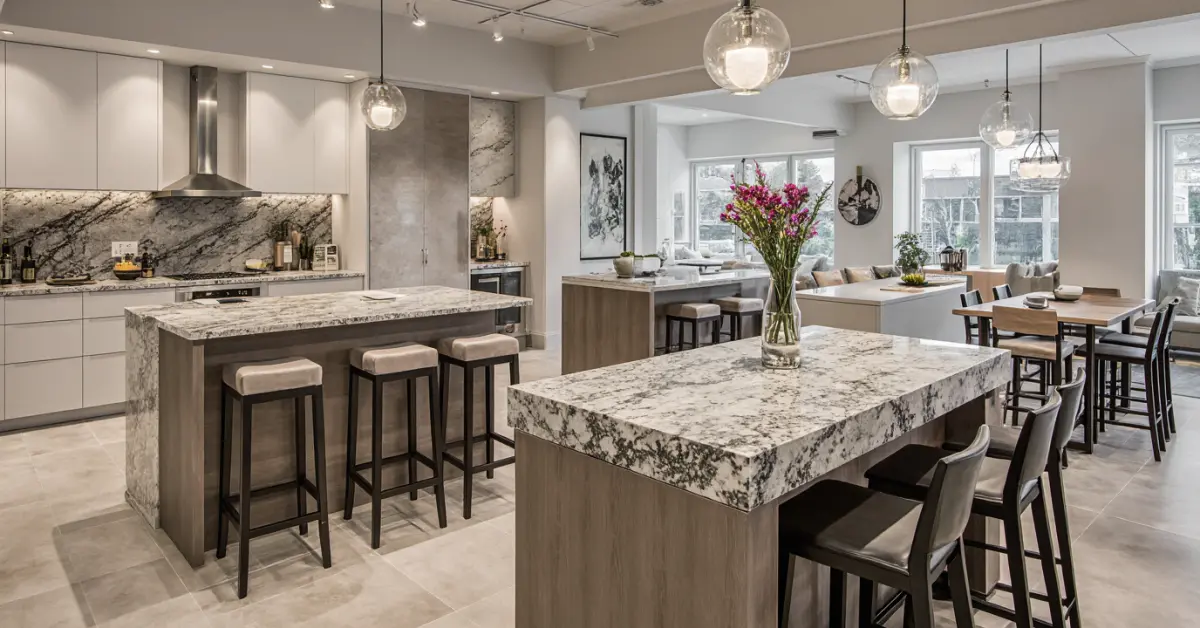
A client with a beautiful waterfront home on Bird Key called me six months after their outdoor kitchen was completed. The brilliant white quartz countertops, which looked stunning initially, now had a distinct, blotchy yellow tinge across the surfaces most exposed to the sun. The installer, a general contractor from out of state, had recommended a popular quartz brand without considering its UV stability. This is a scene I've witnessed too many times in Sarasota—a decision based on indoor logic applied to our unforgiving coastal environment, resulting in a five-figure mistake.
Executive Summary: Countertop Selection in Sarasota
From my direct experience installing countertops from Palmer Ranch to Longboat Key, the primary driver of long-term
From my direct experience installing countertops from Palmer Ranch to Longboat Key, the primary driver of long-term value is not the brand name, but the material's specific composition and its resilience to Sarasota's unique environmental stressors. A successful project hinges on choosing a material that resists UV degradation, moisture absorption, and salt air corrosion, while also complying with local building codes, especially in high-velocity hurricane zones. The focus must shift from a purely aesthetic choice to a technical performance evaluation.
- Material Performance Under UV and Salt Air: Assess the UV stability of resins in engineered stone and the porosity of natural stone, as these are the top failure points in coastal Florida.
- HOA and Condo Association Compliance: Verify specific material and color palette restrictions in communities like The Meadows or downtown condos before purchase; approval can take 4-6 weeks.
- Outdoor Kitchen Viability: Only a select few materials, like specific grades of granite, quartzite, and ultra-compact surfaces (e.g., Dekton), are genuinely warranted for outdoor use in this climate.
- Installation and Building Codes: Ensure your fabricator understands and complies with the Florida Building Code requirements for anchoring countertops, particularly for outdoor islands in wind-borne debris regions.
The Most Common Planning Failures in Sarasota
The most significant mistakes I see are rooted in underestimating our local environment. Clients often rely on advice or trends that are perfectly valid in other parts of the country but fail spectacularly here. The belief that all “high-end” materials are inherently durable in all conditions is a costly misconception.
Treating an Outdoor Kitchen Like an Indoor One
This is, by far, the most expensive planning failure. A client will select a beautiful, veined quartz for their lanai's summer kitchen, unaware that the epoxy or polyester resins binding the quartz particles will yellow and become brittle under constant UV exposure. The warranty for virtually all standard quartz products is voided the moment they are installed outdoors. I've seen homeowners forced to replace a $15,000 outdoor countertop island within two years because the material simply wasn't designed for the intense Florida sun. Proper outdoor granite countertops or sintered stone are the only reliable long-term solutions.
The Countertop Process: From Slab to Installation
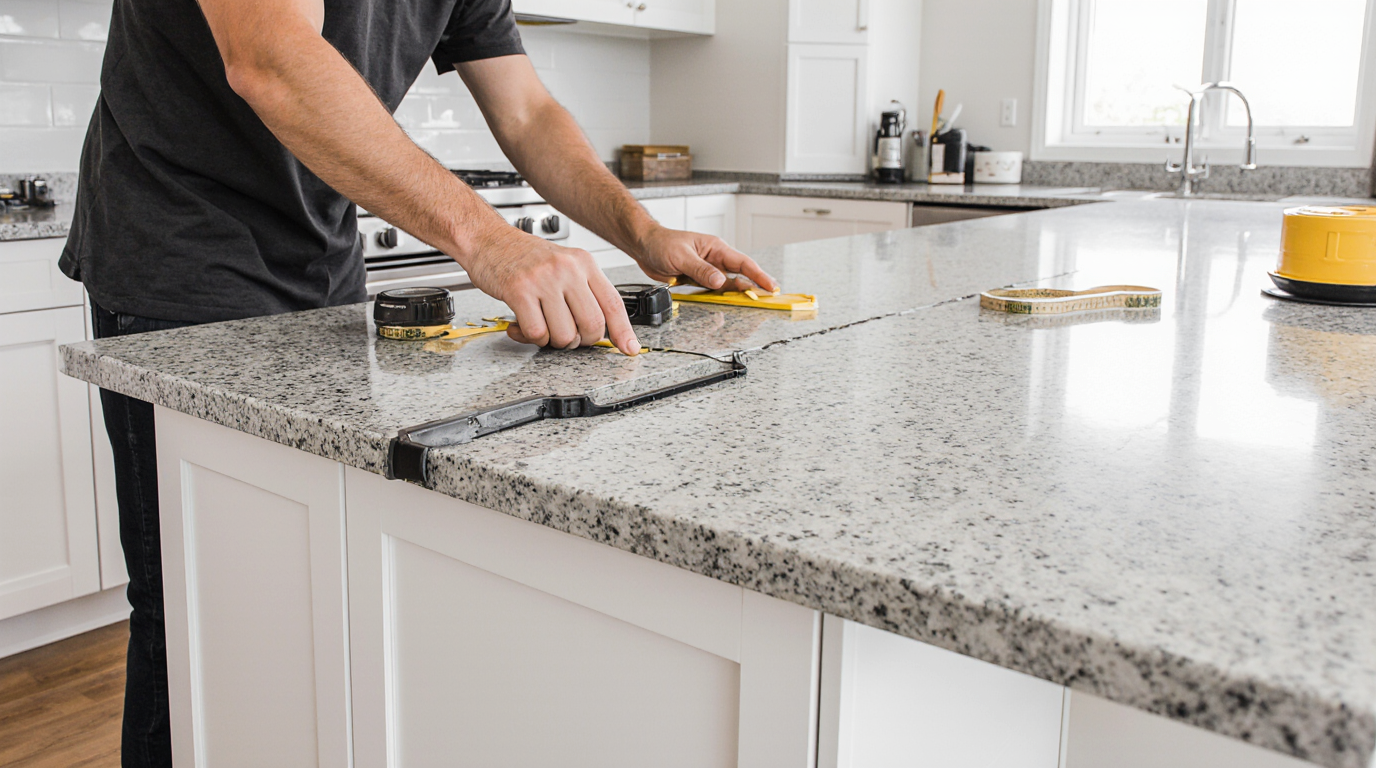
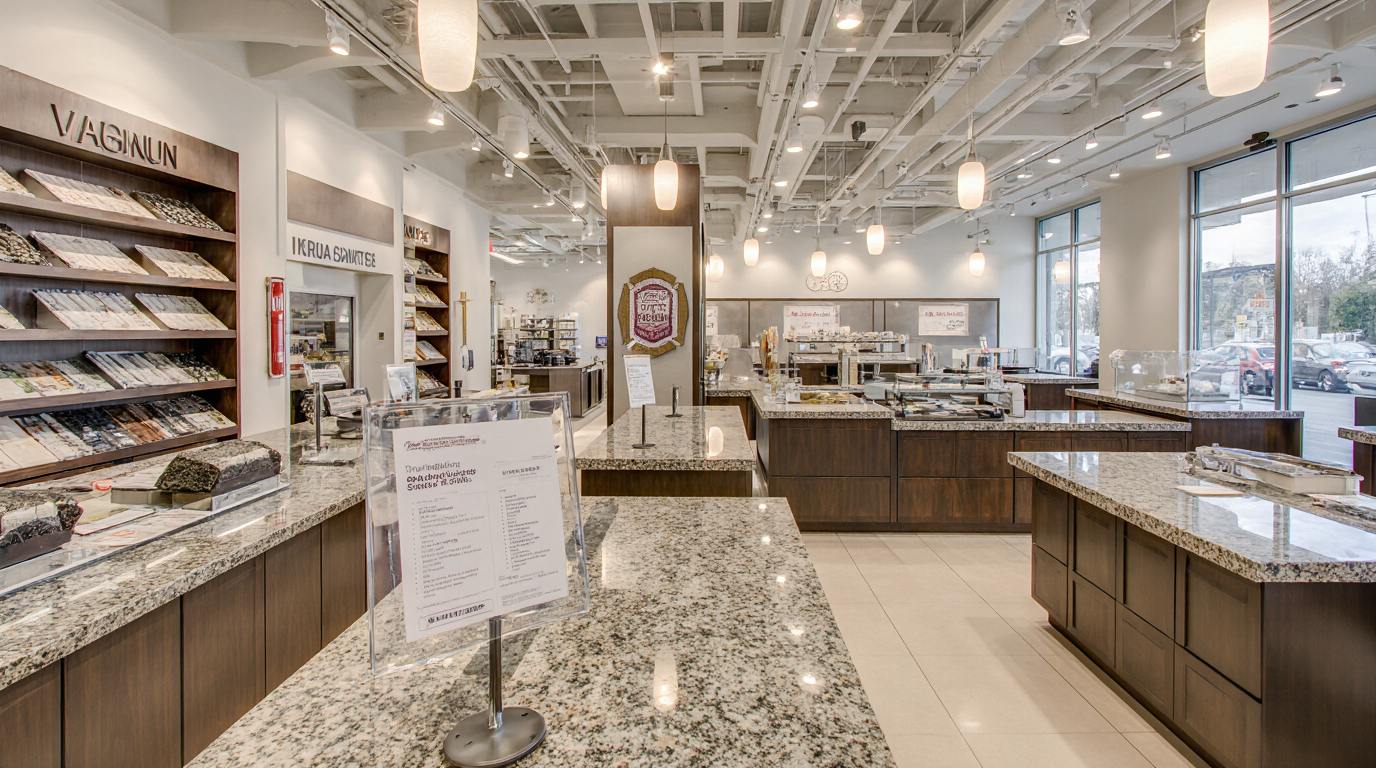
The process is more involved than just picking a color. It starts with a site evaluation, moves to material selection at a local slab yard (not just from a small sample), and then proceeds to digital templating, fabrication, and finally, installation. In Sarasota, this process is often intersected by external review cycles.
For a typical kitchen, from template to install, the timeline is usually 7-10 business days. However, for projects within many planned communities or condo buildings, you must factor in an additional 4-6 weeks for the Architectural Review Board (ARB) or HOA design committee approval. This buffer is critical for seasonal residents who have a fixed window for renovations.
Material Selection Criteria for Sarasota Homeowners
- UV Resistance: Is the material rated for exterior use or for areas with direct, prolonged sunlight through large windows? Ask for the manufacturer's specific UV warranty language.
- Porosity and Sealant Requirements: How often will a natural stone need to be sealed to prevent staining from humidity and salt air moisture? Low-porosity granite or quartzite is often a better choice than marble.
- Condo Weight and Access Restrictions: For high-rise condos downtown or on Longboat Key, verify elevator weight limits and freight elevator access. Some large, single-piece stone islands are simply not feasible to transport and require booking service elevators weeks in advance.
- Hurricane Code Compliance: Does the installation plan for an outdoor kitchen's counter top island include mechanical anchoring that meets the Florida Building Code's wind load requirements? This is not optional.
Comparing Top Countertop Material Choices for Our Climate
Choosing the right material involves balancing aesthetics, budget, and, most importantly, performance in our specific environment. An informed decision requires understanding the trade-offs beyond what you see in a showroom.
| Material | UV & Salt Air Resistance | Maintenance Level in Sarasota | Typical Installed Cost (per sq. ft.) |
|---|---|---|---|
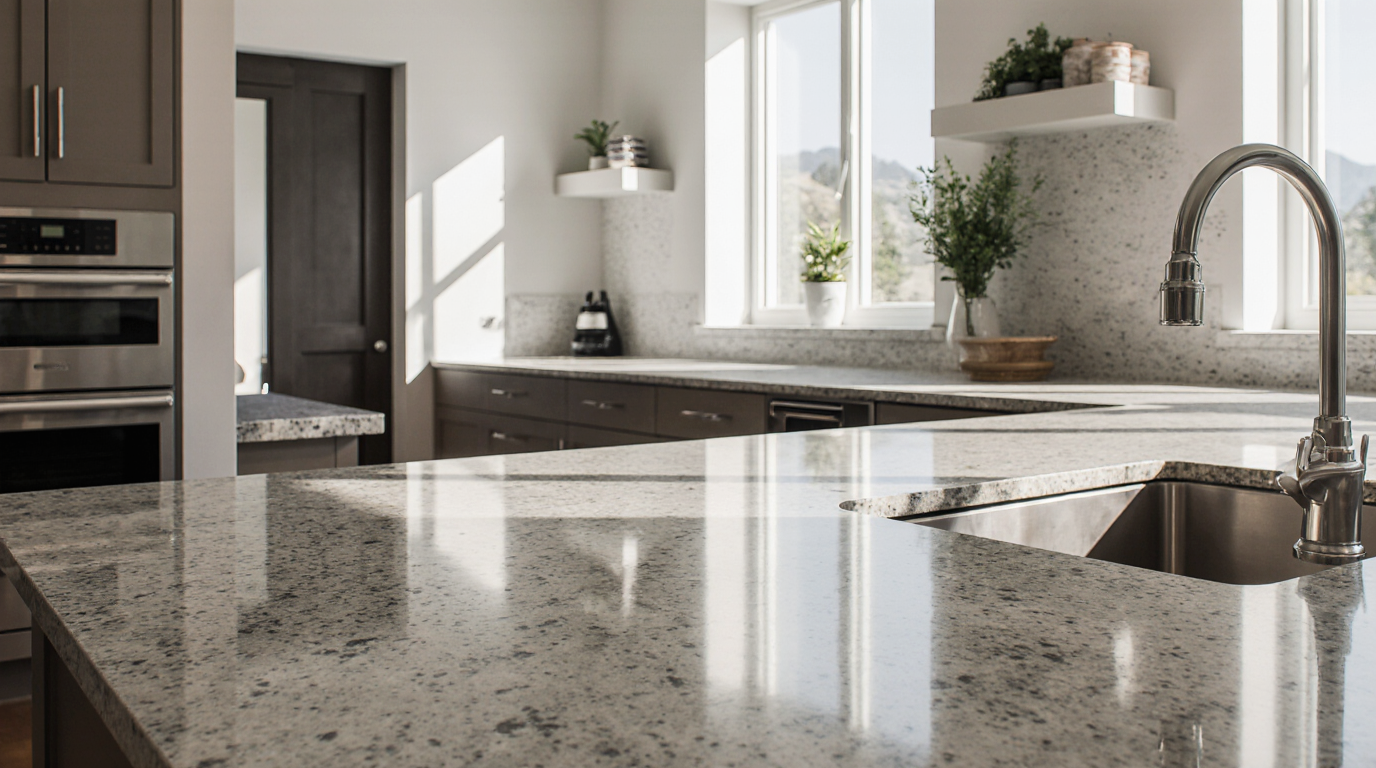
| Granite (High-Grade) | Excellent | Low (requires sealing every 1-3 years) | $65 - $130 |
| Quartz (Engineered Stone) | Poor to Moderate (Varies by brand/color) | Very Low (for indoor use only) | $75 - $150 |
| Quartzite (Natural Stone) | Excellent | Low to Moderate (sealing required) | $85 - $200+ |
| Ultra-Compact Surface (e.g., Dekton) | Excellent (warranted for outdoor use) | Very Low | $90 - $160 |
When a High-End Stone Countertop Is the Wrong Choice
A luxury countertop is not always the best solution. For a rental property on Siesta Key, for example, the primary concern is durability against tenant misuse and low maintenance. In this scenario, a high-end, porous quartzite that requires diligent sealing and care is a poor investment. A mid-range, durable granite or even a high-quality laminate would provide a better return and fewer headaches, despite being less glamorous. The goal is matching the material to the use case, not just the property value.
A Safe Hiring and Purchasing Checklist
Vetting a fabricator and supplier in Sarasota goes beyond looking at their gallery. You need to ensure they have the technical expertise to handle projects in a coastal, hurricane-prone region and the administrative experience to deal with our local jurisdictions and HOAs.
- Verify the fabricator is licensed and carries proper liability and workers' compensation insurance valid in Florida.
- Ask for specific examples of projects completed in your neighborhood or a similar environment (e.g., waterfront, high-rise condo).
- Request a written confirmation that the chosen material is warranted by the manufacturer for your specific application (e.g., outdoor, direct sunlight).
- Ensure the contract specifies who is responsible for securing HOA/ARB approval and that the timeline reflects this process.
- Confirm their templating process is digital (e.g., using a laser system) for precise fits, especially for complex l shaped counter kitchen layouts.
- Ask how they handle seam placement and whether you can approve the seam layout on the digital template before cutting the slab.
- For outdoor projects, demand a clear explanation of how the countertops and any associated structures will be anchored to meet wind load requirements.
Decisions That Determine the Final Outcome
The success of a countertop project is often sealed long before the installation team arrives. The most critical decisions are made during the planning and material selection phase, and they require a mindset focused on long-term performance over short-term trends.
I worked with a client in Lakewood Ranch building a high-end custom home. They fell in love with a stunning Italian marble for their large kitchen countertops and a massive island. Despite my caution about its softness and susceptibility to etching, they were set on the look. We proceeded, but I insisted on applying a premium, multi-year sealer and provided a detailed care guide. Within a year, the area around the sink was visibly etched from citrus juice and wine, and the client was frustrated. The outcome wasn't a failure of the material, but a mismatch between the material's properties and the family's lifestyle. A hard quartzite would have provided a similar aesthetic without the intense maintenance burden.
The Moment Most Homeowners Get It Wrong
The critical mistake happens when a homeowner falls in love with a 12x12 inch sample in a showroom. That small square tells you nothing about the slab's overall pattern, potential fissures, or how its color will look in your home's natural light. The single most important decision is to personally select and approve the exact slab(s) at the stone yard before templating. Never let a contractor or designer choose it for you. This is your only chance to see the full canvas, identify imperfections you can't live with, and control how the most dramatic parts of the stone will be featured in your kitchen countertops.
Practical Realities of Countertop Work in Sarasota
Navigating the local landscape involves more than just design choices. It requires an understanding of municipal processes, building regulations, and the unique challenges posed by our community structures.
Handling Design Review with Sarasota County HOAs
In master-planned communities, the HOA's Architectural Review Board has final say on exterior-facing elements, which often includes outdoor kitchens. Submissions typically require samples of all materials, drawings, and a detailed project description. The review process can add a month or more to your timeline. A fabricator experienced with communities like Palmer Ranch or University Park will know how to package the submission for a smoother, faster approval, avoiding common rejection reasons like unapproved color palettes.
Florida Building Code and Wind Load Requirements
For any outdoor kitchen, especially on the barrier islands like Siesta Key or Longboat Key, countertops are subject to regulations within the High-Velocity Hurricane Zone (HVHZ) or wind-borne debris regions. The Florida Building Code (FBC) has specific requirements for anchoring objects that could become projectiles in a hurricane. This means an outdoor countertop island cannot simply rest on its cabinet base; it must be mechanically fastened. A failure to comply can result in a failed inspection and liability issues.
Sourcing Slabs and Managing Lead Times
While Sarasota has several good local slab yards, the most exotic and unique materials are often sourced from distributors in Tampa or Miami. If you select a slab from an out-of-town supplier, you must account for shipping time and cost to your local fabricator, which can add 1-2 weeks to the project timeline. During peak season (October-April), lead times for both material transport and fabrication can extend, so planning ahead is essential for a timely completion.