The client in their South Gate home was thrilled. They found high-gloss, European-style cabinets online for 40% less than any local quote. Six months later, I got the call. The gloss laminate was peeling at the seams near the dishwasher and the sink. The core material, a low-density particleboard, had swollen like a sponge. Their 'cheap' cabinet project was now a gut-and-replace job, illustrating the fundamental risk of prioritizing upfront cost over material science in our humid climate.
The Sarasota Reality of 'Cheap' Kitchen Cabinets
From my years designing and installing kitchens from Gillespie Park to waterfront homes on Siesta Key, I've seen that
From my years designing and installing kitchens from Gillespie Park to waterfront homes on Siesta Key, I've seen that the concept of 'cheap' cabinets here is a dangerous oversimplification. The real goal is long-term value, which means finding cabinets that resist our specific environmental challenges—humidity and salt air—without the premium price tag. The most successful budget projects are not about the lowest initial price, but about smart material choices and understanding the total cost of ownership.
- Core Material is Non-Negotiable: Standard-grade MDF and low-density particleboard are your primary enemies. They will fail. Marine-grade plywood or high-density fiberboard (HDF) are the minimum viable products for our climate.
- Hardware Matters More Here: Salt air corrodes cheap hinges and drawer slides fast. Insist on stainless steel or zinc-coated hardware, even if it adds a small percentage to the cost.
- Stock vs. RTA vs. Surplus: Ready-to-assemble (RTA) cabinets often offer the best balance of cost and quality control, provided you select a reputable brand with plywood box construction. Big box stock cabinets can be a gamble on core materials.
- Installation is Half the Battle: An impeccable installation can make good-quality inexpensive cabinets look and perform like a high-end job. A poor installation will make even the best cabinets fail.
Planning Failures That Inflate Budget Cabinet Costs
The most common mistake I see is a singular focus on the per-cabinet price. Homeowners compare box prices online or from big-box stores and anchor their entire budget to that number, ignoring the three factors that consistently cause budget overruns in Sarasota: assembly, installation, and the inevitable 'while we're at it' scope creep when old cabinets are removed.
The Most Expensive Failure: Ignoring the Substrate
The single costliest error is choosing a cabinet based on its surface look—like a sleek high-gloss finish—while ignoring the core material it's laminated to. I was called to a project in an older Palmer Ranch home where the owner had installed beautiful-looking thermofoil cabinets. The problem was the substrate was standard particleboard. After two years, the steam from the coffee maker and dishwasher caused the thermofoil to delaminate, and the core swelled. The cost to replace them was nearly double the original 'savings' because it required a full tear-out, minor drywall repair, and a new installation, all while the kitchen was unusable.
How Sourcing Inexpensive Cabinets Works in Practice
The process involves more than just shopping. It's a strategic sequence of sourcing, verification, and planning. You're not just buying boxes; you're orchestrating a project. It typically starts with identifying suppliers—online RTA companies, local cabinet outlets, or surplus warehouses—followed by meticulous measurement, layout design, and then coordinating the delivery and installation phases.
Selection Criteria for Sarasota Homeowners
When evaluating budget-friendly cabinet options, your checklist must be localized to our specific conditions. A checklist that works in Arizona will lead to failure here.
- Plywood Box Construction: This is the baseline. Ask for the spec sheet and confirm the box, not just the doors, is made from plywood, not particleboard. Even a 1/2-inch plywood box is vastly superior to 5/8-inch particleboard in our humidity.
- Finish Warranty Against Peeling/Delamination: Read the fine print. Does the warranty cover issues caused by humidity? Many national brands have clauses that void coverage in high-humidity environments.
- Availability of Marine-Grade Upgrades: For homes east of I-75, it's less critical. But for any property on the barrier islands or within a mile of the bay, ask if the supplier offers a marine-grade plywood option. The upcharge, often 15-20%, is your best insurance policy against salt air degradation.
- HOA Compliance in Planned Communities: If you're in Lakewood Ranch or a similar community, your cabinet designer or supplier must understand the Design Review Committee's aesthetic requirements. A cheap cabinet that gets rejected by the HOA is the most expensive one of all.
Comparing Budget Cabinet Options for Sarasota
The term 'cheap' encompasses several distinct categories, each with significant trade-offs in our local market. Understanding these differences is key to making a sound financial decision. A flipper's calculation for a home in Arlington Park will be different from a long-term resident's choice for their home in The Meadows.
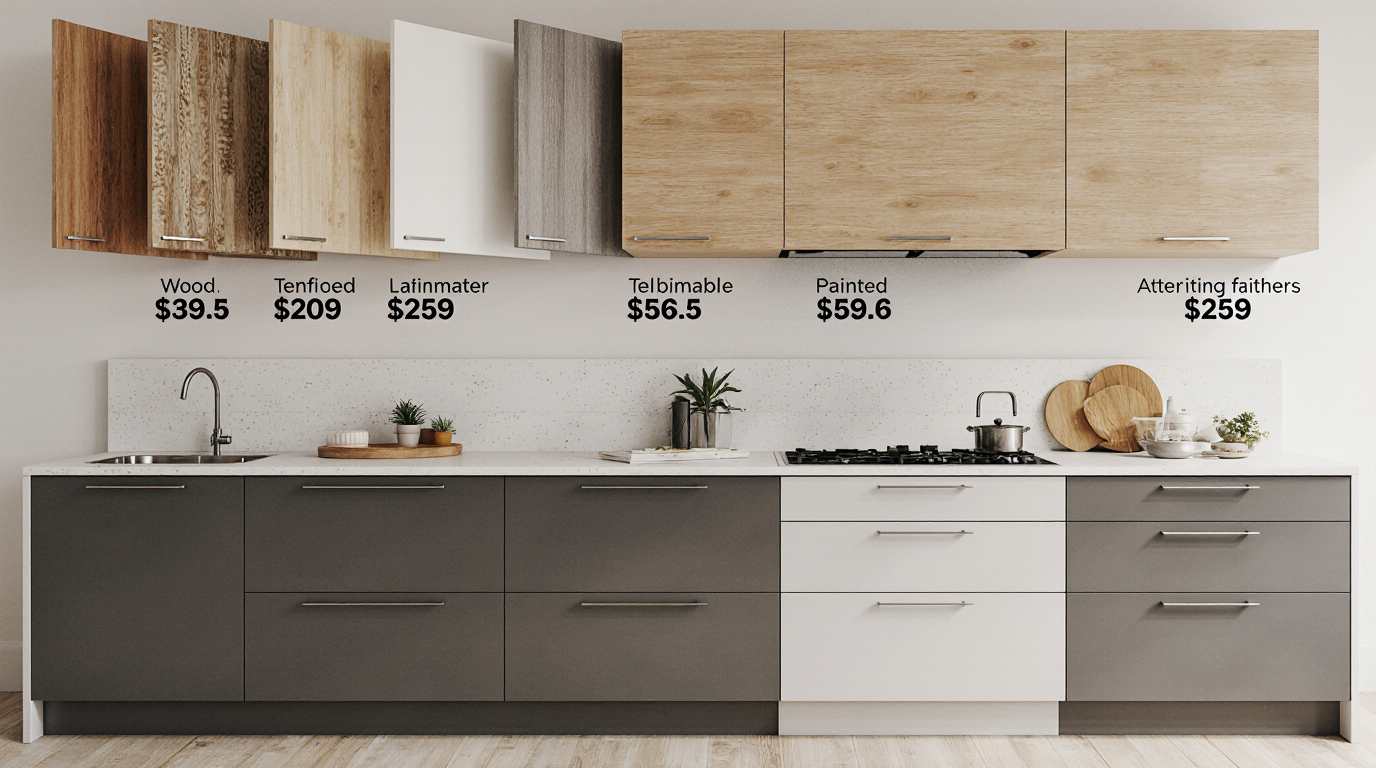
| Cabinet Type | Typical Upfront Cost | Durability in Sarasota Climate (1-10) | Customization Level |
|---|---|---|---|
| Big-Box Store Stock Cabinets | Lowest | 2-4 (Often particleboard core) | None |
| Online RTA (Plywood Box) | Low to Moderate | 6-8 (Material dependent) | Moderate |
| Local Cabinet Surplus/Outlets | Low (Varies) | 5-7 (Check specs carefully) | Low (Limited stock) |
When 'Cheaper' Is the Wrong Choice
This approach is unequivocally wrong for high-end, waterfront properties or historic homes where architectural integrity is paramount. If you own a home on Longboat Key exposed to direct salt spray, forcing a budget RTA cabinet into that environment is fiscal negligence. The salt will destroy the hardware and the humidity will attack any exposed core material, leading to a guaranteed replacement within five years. In these cases, the higher initial investment in semi-custom or custom cabinets with marine-grade construction is the only financially sound path.
Safe Sourcing and Hiring Checklist
Finding the right product and people is crucial. A low price from an unreliable source is a trap. This checklist is tailored to avoid the common pitfalls I've seen trip up homeowners across Sarasota County.
- Verify the supplier has a physical presence or a showroom, even if you buy online. Seeing and touching the product is non-negotiable.
- Request a sample door and inspect the joinery, finish quality, and the core material yourself. Don't rely on photos.
- Confirm the installer is licensed and carries both general liability and worker's compensation insurance. Ask for their Florida license number.
- Check if the project requires a permit from the Sarasota County Building Department. Simple cabinet replacements often don't, but if you're moving plumbing or electrical, they do. A typical minor interior renovation permit can add several hundred dollars and 2-4 weeks to the timeline.
- Get a detailed, itemized quote that separates the cost of materials, assembly, delivery, installation, and hardware.
- Ask for local references—specifically, projects completed at least one year ago to see how the cabinets have held up.
- Ensure any high-gloss or thermofoil product has sealed edges on all six sides of every door and panel to prevent moisture intrusion.
Decisions That Determine the Outcome
Success in a budget kitchen remodel hinges on a few key decisions made before a single dollar is spent. I've observed that the happiest clients are those who allocate their budget strategically, spending a little more on foundational elements and saving on cosmetics. They prioritize plywood construction and quality hardware over a fleetingly trendy door style or finish.
The Exact Moment Most People Get It Wrong
The critical mistake happens during the design phase. A homeowner falls in love with a complex kitchen layout from a magazine—full of specialized cabinets, pull-outs, and decorative panels—and then tries to execute it with the cheapest possible materials. The correct approach is to simplify the design to fit the budget, not cheapen the materials to fit a complex design. A simpler layout with fewer, larger cabinets made of better materials will always outperform and outlast a complicated layout made from particleboard. Reduce the number of boxes, and put that saved money into a plywood upgrade.
Practical Answers About Cabinet Projects in Sarasota
Navigating a cabinet project involves more than just design and installation; it intersects with local regulations and realities. Understanding these operational details saves time and prevents unexpected costs.
Do I Need a Permit for Just Replacing Cabinets?
In Sarasota County, a like-for-like cabinet replacement generally does not require a building permit. However, the moment the project involves altering plumbing (moving a sink), electrical (adding outlets for under-cabinet lighting), or changing the wall structure, a permit is mandatory. This process involves submitting plans and can add significant time and cost, so it's crucial to clarify the full scope with your installer upfront.
How Do Condo Association Rules Impact My Cabinet Choice?
For the numerous condos downtown or along the coast, the condo association is often more restrictive than the city. Their rules can dictate installation hours, debris removal procedures, and even the type of underlayment required if flooring is changed. Before ordering cabinets, get a copy of your association's renovation guidelines. I've seen projects delayed for weeks because an owner failed to get prior approval for a finish or an installer wasn't on the approved vendor list.
What's the Realistic Timeline for an RTA Cabinet Project?
While the cabinets themselves might be 'in stock,' the end-to-end timeline is often underestimated. Factoring in Sarasota's realities, a typical RTA project timeline looks like this: 1-2 weeks for design and ordering, 1-2 weeks for shipping, 1 week for inventory and assembly (if not pre-assembled), and 1 week for installation. This assumes no shipping delays or missing parts. A realistic, safe timeline from order to completion is 4-6 weeks, not the 'one week' some online retailers might imply.