Executive Summary: Achieving a High-Value Cabinet Remodel in Sarasota
From my hands-on work in the Sarasota area, the most successful budget-conscious cabinet remodels are not about using
From my hands-on work in the Sarasota area, the most successful budget-conscious cabinet remodels are not about using the cheapest materials, but about smart, targeted upgrades that withstand our specific climate. The key is to avoid materials like standard-grade MDF for doors, which I've seen fail within two years due to humidity. A truly cost-effective project focuses on preserving the solid cabinet boxes you already have and strategically renewing the visible surfaces—the doors and hardware—for maximum impact and durability.
- Focus on Refinishing and Refacing: The most reliable path to a 'cheap' remodel is working with your existing cabinet structures.
- Prioritize Humidity-Resistant Materials: For any new components like doors, insist on materials designed for high-humidity environments.
- Understand HOA Timelines: In communities like Lakewood Ranch or Palmer Ranch, a simple cabinet door style change can require design review board approval, often taking 30-45 days.
- Labor Quality Over Material Cost: A flawless finish on a repainted door is more valuable than a poorly installed, cheap new door.
The Planning Failures That Inflate a 'Cheap' Remodel
The most common mistake I see is focusing solely on the upfront cost of materials without considering their performance in Sarasota's environment. Homeowners opt for big-box store cabinet doors or low-cost thermofoil finishes, believing they've saved money. But these materials often aren't engineered for our persistent humidity. The result is a project that looks great for a year, then starts showing signs of failure.
Another critical error is underestimating the cost of skilled labor for refinishing. A cheap paint job will chip, peel, and look unprofessional. Proper cabinet painting is a multi-step process involving degreasing, sanding, priming with a high-adhesion primer, and spraying multiple coats of a durable, catalyzed lacquer or urethane trim enamel. Skipping any of these steps to save a few hundred dollars guarantees you will be redoing the project in a fraction of the time, erasing all initial savings.
The Most Expensive Failure: Ignoring Your Cabinet Boxes
The costliest error is assuming your existing cabinet boxes are sound without a thorough inspection. I was called to a project on Siesta Key where the homeowner wanted to reface their cabinets. They had already purchased expensive, custom-made shaker doors. During our prep work, we discovered that the particle board cabinet boxes under the sink had sustained slow, undetected water damage and were swollen and moldy. The 'cheap' refacing project instantly became a much more expensive full replacement of that section. Before spending a dime on doors or paint, check every cabinet box for signs of water damage, delamination, or structural weakness, especially under sinks and around dishwashers.
How a Cost-Effective Cabinet Remodel Unfolds in Sarasota
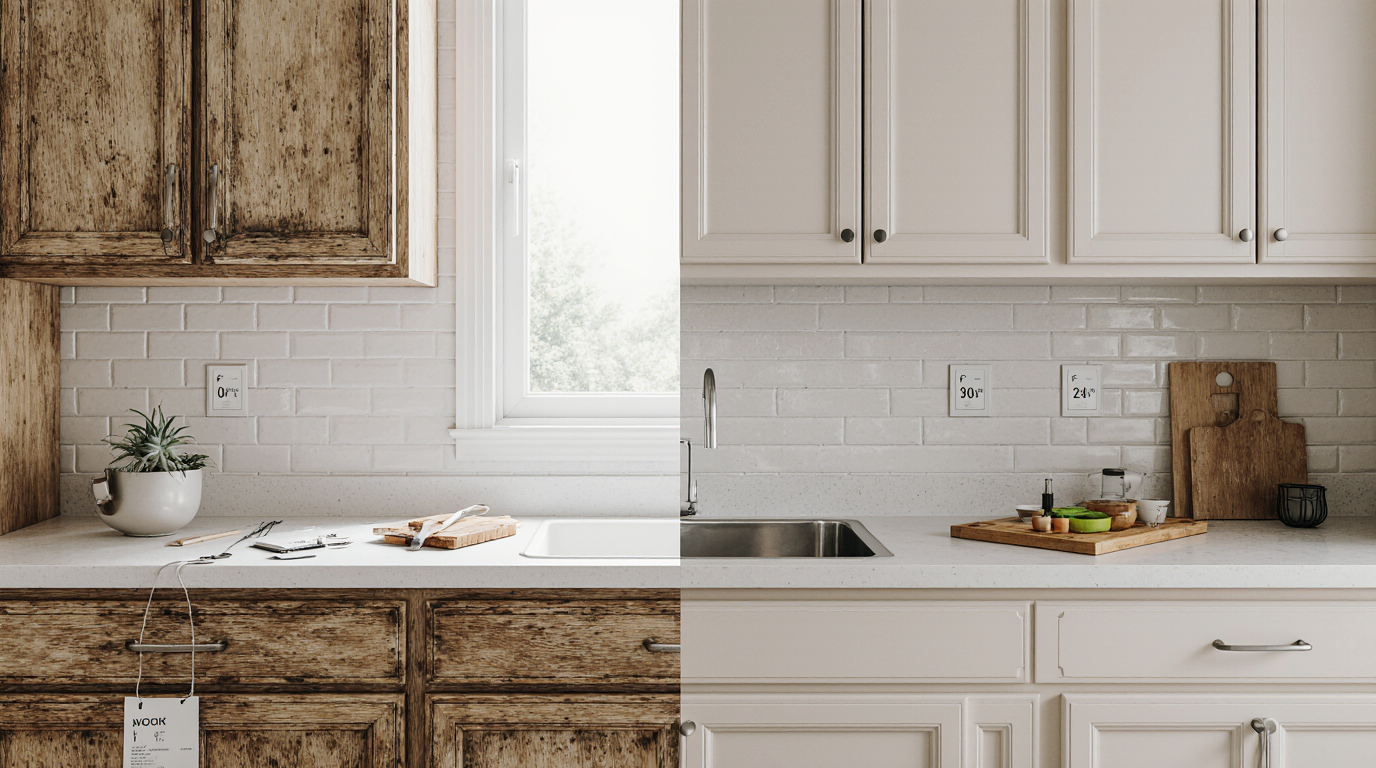
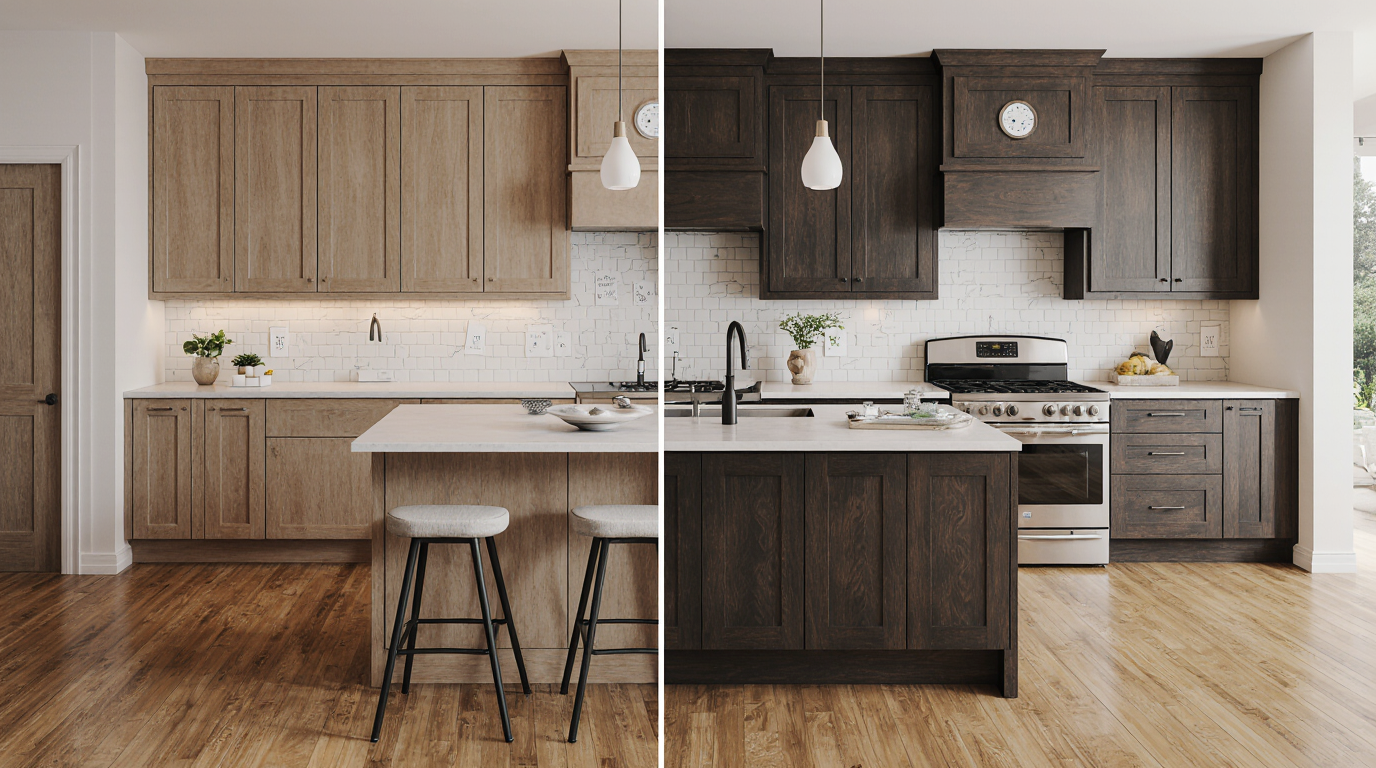
A smart, budget-friendly cabinet remodel leverages the strength of your existing layout and cabinet framework while transforming the look and feel. The process avoids the cost, time, and mess of a full tear-out. It typically involves either refinishing (painting) your current doors and boxes or refacing (replacing the doors and drawer fronts and applying a new veneer to the boxes).
The project starts with a detailed assessment to confirm your cabinet boxes are in good condition. Then, we determine the best approach. Refinishing is often the most affordable and can be completed relatively quickly. Refacing allows for a complete style change—from a dated raised-panel oak to a modern, sleek shaker style—at roughly 40-60% of the cost of a full cabinet replacement. The key is that the core structure remains intact, saving on demolition, plumbing, electrical, and countertop costs.
Selection Criteria for Sarasota Homeowners
When evaluating contractors for a cost-effective remodel, your focus should be on their process and material knowledge, not just the final price. Look for these specific qualifications:
- Experience with Humidity-Resistant Finishes: They should be able to explain the difference between standard latex paint and catalyzed lacquers or urethane enamels and why the latter are essential in our climate.
- Knowledge of Local HOA Rules: Can they navigate the approval process for exterior-facing kitchen window changes or structural modifications in communities like The Meadows or University Park?
- Proof of Proper Ventilation and Dust Control: If they plan to spray-finish on-site, what is their containment strategy? A low-cost provider might create a massive dust problem throughout your home.
- Local Portfolio of Refinishing/Refacing Projects: Ask to see examples of their work in the Sarasota area that are at least two years old to verify the finish has held up.
Comparing Budget Remodel Options
Choosing the right approach depends on your budget, desired outcome, and the condition of your existing kitchen. A simple DIY paint job is the cheapest but often yields the least professional and durable results. Professional refinishing and refacing offer a balance of cost and quality, while a full replacement is the most expensive and disruptive.
| Method | Typical Cost Range (Relative to New Cabinets) | Project Timeline | Durability in Sarasota Climate |
|---|---|---|---|
| DIY Painting | 5-10% | 1-3 weeks | Low (Prone to chipping and humidity damage without professional prep) |
| Professional Refinishing | 25-40% | 5-10 days | High (When using appropriate primers and catalyzed finishes) |
| Cabinet Refacing | 40-60% | 3-7 days | Very High (With moisture-resistant door materials and professional installation) |
When a 'Cheap' Remodel Is the Wrong Choice
This approach is not the right choice if your kitchen layout is fundamentally flawed and inefficient. If you need to move appliances, add an island, or change the footprint of your kitchen, simply refinishing or refacing the existing cabinets is putting a bandage on a bigger problem. In those cases, the money spent on a cosmetic update would be better allocated toward a full remodel that addresses the underlying functional issues. I've seen clients reface a kitchen only to realize two years later they can't stand the workflow, effectively wasting their initial investment.
Safe Hiring Checklist for Your Sarasota Project
Protecting your investment starts with hiring the right professional. A low price from an unqualified individual can lead to a failed finish, damaged property, and more costs down the road. Use this checklist to vet potential contractors in Sarasota.
- Verify they hold a current license with Sarasota County and carry both general liability and worker's compensation insurance. This is non-negotiable.
- Ask for specific product data sheets for the primer and topcoat they intend to use. Look for products explicitly rated for high-humidity areas.
- Request a detailed, written scope of work that outlines every step of the prep process (cleaning, sanding, masking) and the number of primer and finish coats.
- Check for their process on handling HOA approvals if you live in a deed-restricted community. They should be familiar with this.
- Ensure the contract includes a clear warranty on their workmanship and the durability of the finish, typically for at least one to two years.
- Ask how they will handle lead paint if your home was built before 1978. They must be EPA Lead-Safe Certified to work on such properties legally and safely.
Decisions That Determine the Outcome of a Budget Remodel
The success of a cost-effective cabinet remodel hinges on two key decisions: the quality of the preparation and the choice of finish. Everything else is secondary. Homeowners often get fixated on color, but the most beautiful color will fail if it's applied over a poorly prepped surface. I've seen more projects ruined by inadequate degreasing and sanding than by any other single factor.
The second critical decision is resisting the temptation to use standard house paint. Your kitchen cabinets endure more abuse, moisture, and grease than any wall in your home. Investing in a premium, industrial-grade coating like a two-part polyurethane or a catalyzed lacquer is the single most important choice you will make for the longevity of the project. It adds to the cost, but it's the difference between a finish that lasts 10 years and one that starts failing in 18 months.
The Exact Moment the Majority Gets It Wrong
The critical error happens during the bidding process. Most people compare quotes based on the final price, assuming all painting or refacing processes are equal. They are not. A lower bid almost always signifies shortcuts in preparation or the use of inferior materials. The right way to compare is to demand a line-item breakdown of the process. Ask each bidder: What specific chemical will you use to degrease? What grit sandpaper will be used? What is the brand and product line of the primer and the topcoat? A professional who can answer these questions instantly is demonstrating their value. Do not hire the cheapest quote; hire the best process you can afford.
Practical Answers About Cabinet Remodeling in Sarasota
Navigating a remodel involves more than just design choices; it involves understanding local regulations and logistics. Here are answers to common operational questions that arise during cabinet projects in the Sarasota area.
Do I Need a Permit for Cabinet Refacing or Painting?
For cosmetic updates like painting, refinishing, or refacing cabinets where the existing layout is not changed, a building permit from Sarasota County is generally not required. However, the moment your 'cheap' remodel involves moving electrical outlets for under-cabinet lighting, altering plumbing lines, or changing the location of cabinets, you will need a permit. This is a critical distinction; attempting to do minor electrical work without a permit can create issues with insurance and future home sales.
How Do Condo Rules on Lido Key Affect My Project?
Working in a high-rise condo, common on Lido Key or Longboat Key, adds layers of complexity. Most condo associations have strict rules regarding work hours (e.g., no work after 4 PM or on weekends), contractor parking, and elevator use. All debris must be hauled away properly, and contractors must provide proof of insurance to the association management before starting. These logistical constraints can extend the project timeline and slightly increase labor costs compared to a single-family home project.
Are There Special Requirements for Waterfront Homes?
While standard cabinet remodels don't fall under the same stringent Florida Building Code requirements as windows or roofing, material choice is paramount for waterfront properties, especially on the barrier islands. For any new doors or components, I strongly advise using marine-grade plywood or high-density urethane (HDU) instead of standard wood or MDF. The constant exposure to salt air will accelerate the corrosion of hardware and the degradation of lesser materials. Using stainless steel hinges and pulls is not a luxury here; it's a necessity to prevent rust and failure.