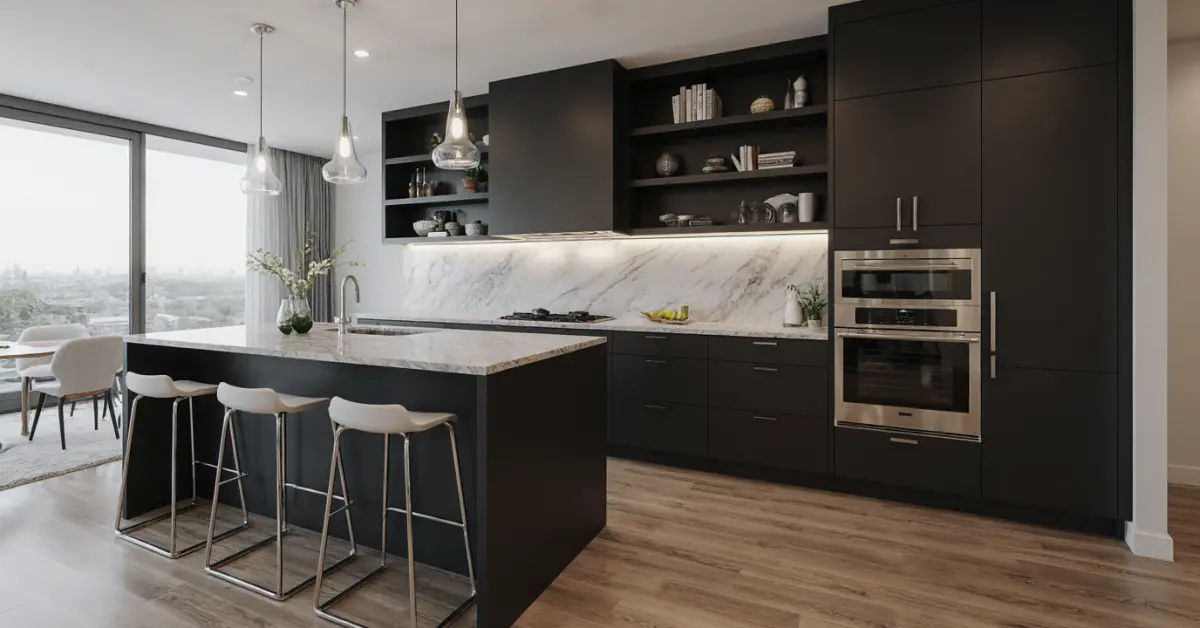
Why Black Modern Cabinets Demand Specialized Planning in Sarasota
From my work on projects from Lakewood Ranch to Bird Key, I've seen firsthand that a successful modern black kitchen in
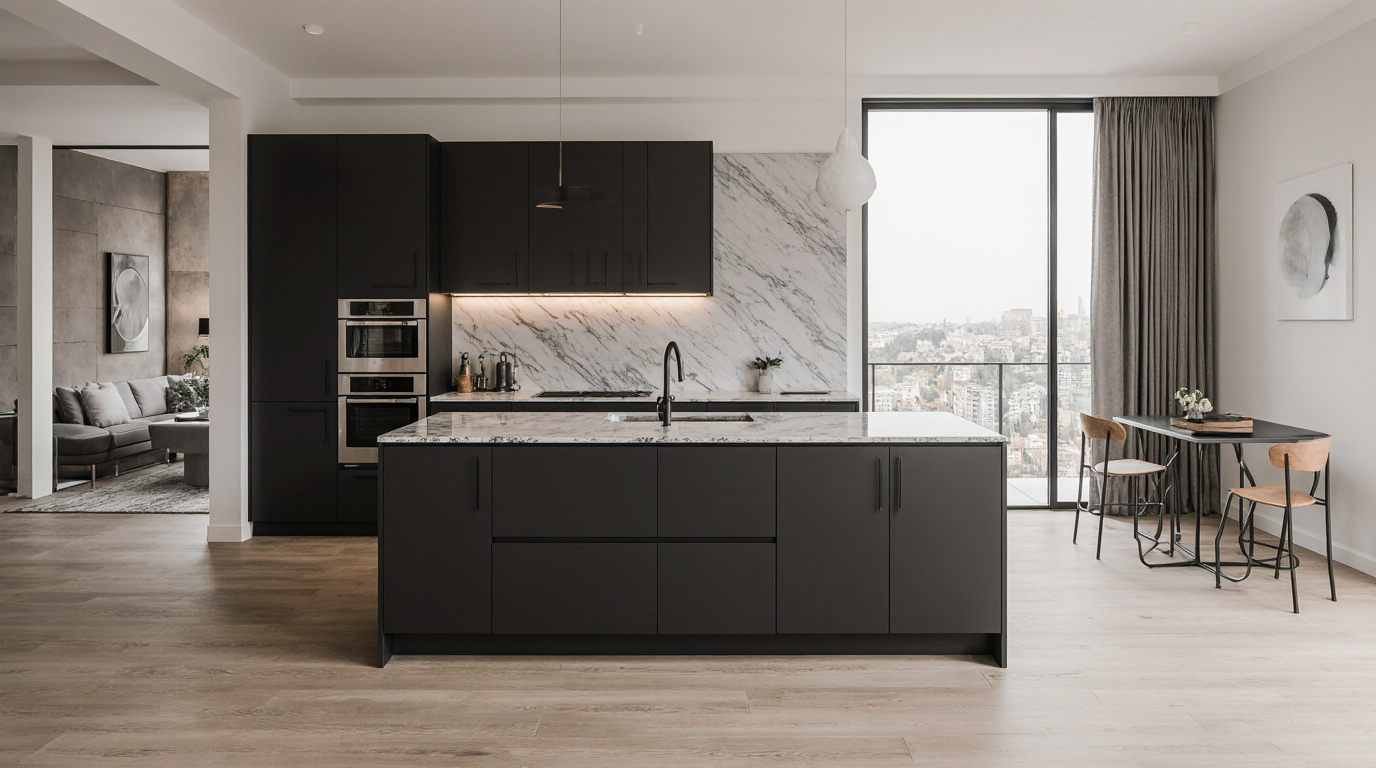
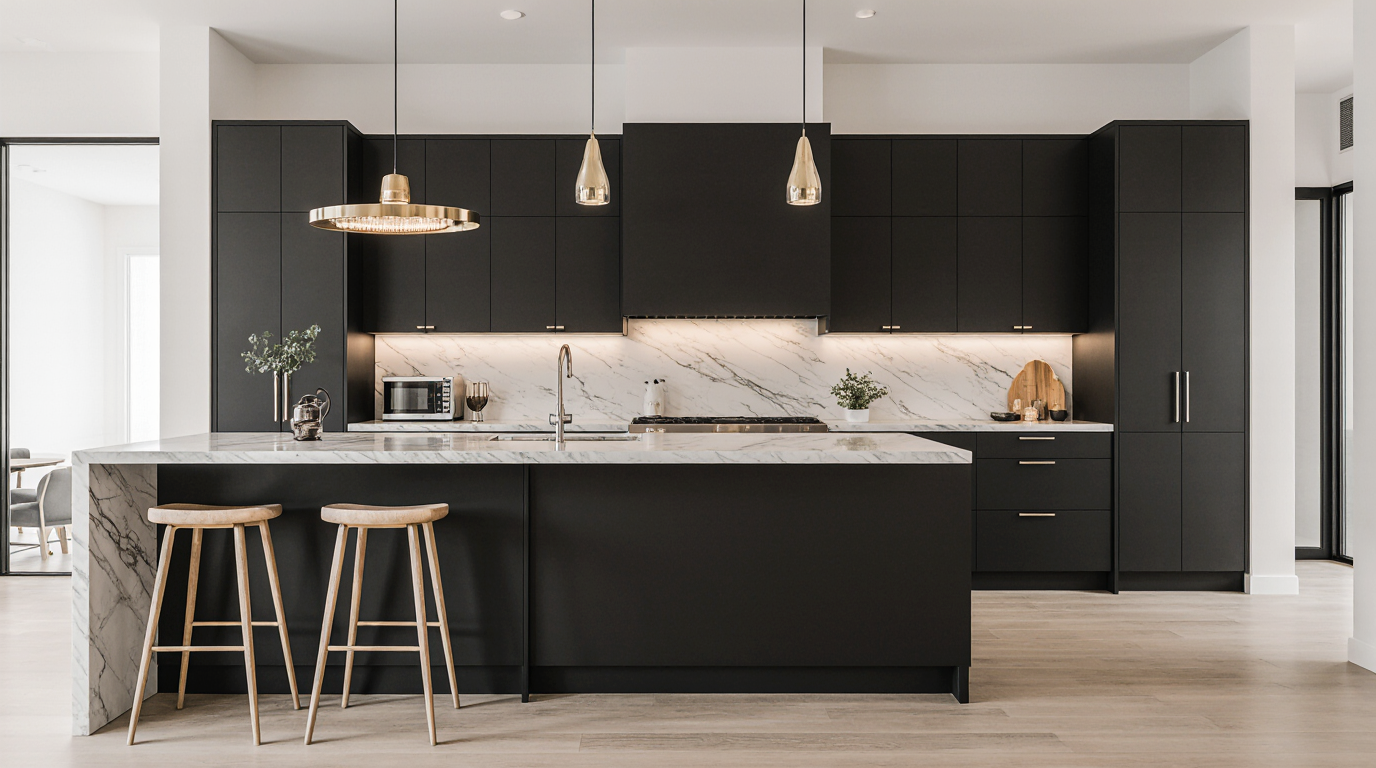
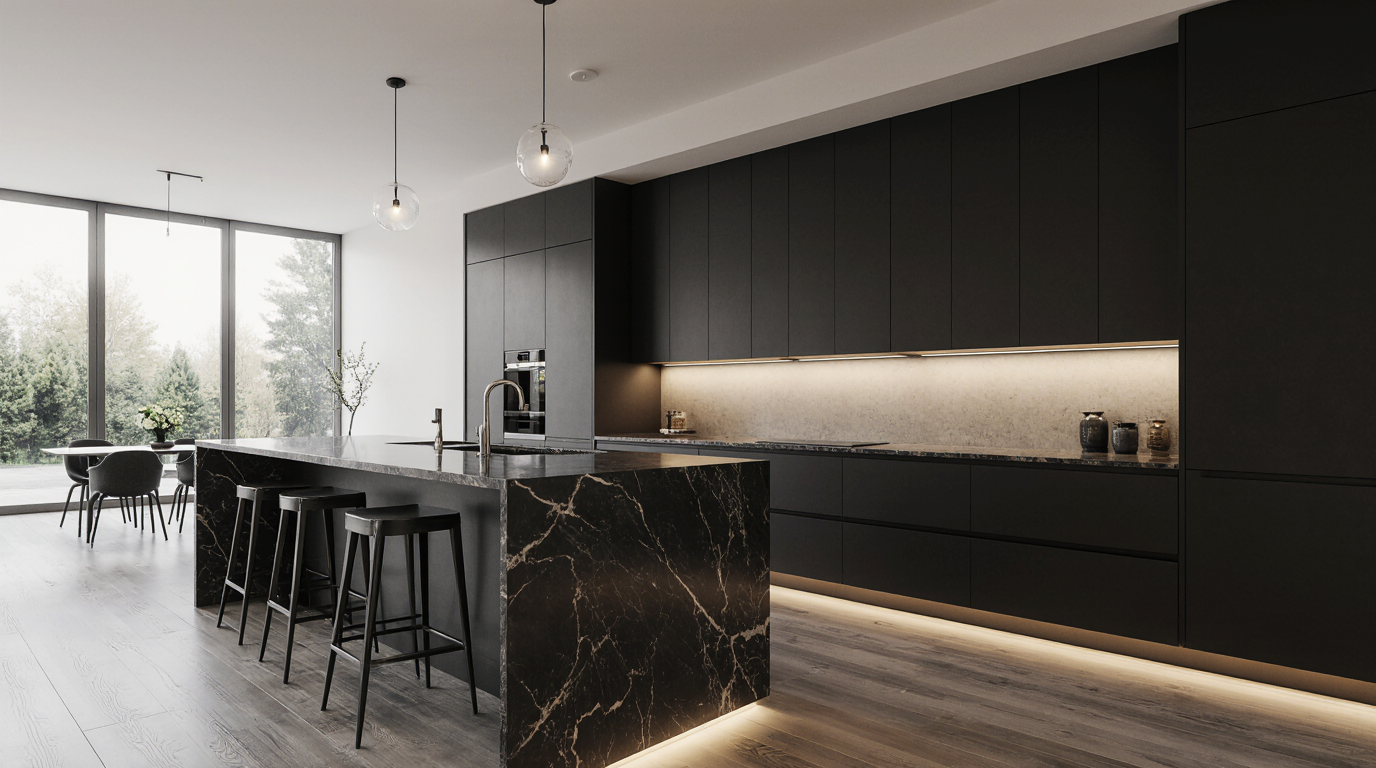
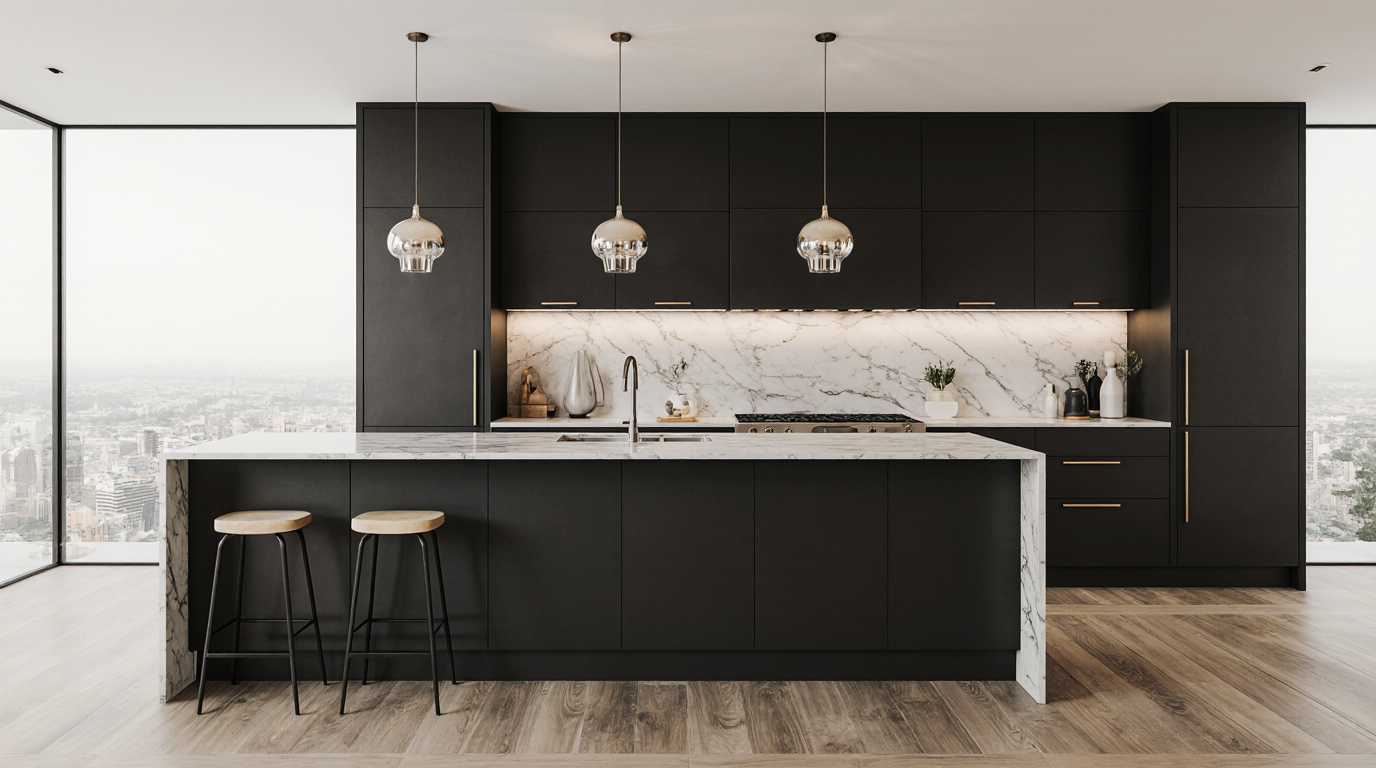
From my work on projects from Lakewood Ranch to Bird Key, I've seen firsthand that a successful modern black kitchen in Sarasota depends less on the brand name and more on the technical specification of the materials. The intense, year-round sun and high humidity create a uniquely challenging environment. A dark, heat-absorbent surface like a black cabinet door will expand and contract significantly more than a white one, and if the core material and finish aren't engineered for this, failure is inevitable. It’s a matter of physics before it's a matter of aesthetics.
- Material Stability: The core material must have exceptional dimensional stability. Standard MDF can swell and warp; marine-grade plywood or high-density engineered composites are non-negotiable for longevity.
- Finish Technology: The finish must be UV-inhibiting and resistant to salt air. I've seen standard lacquers and thermofoils peel or discolor in under five years on waterfront properties.
- Hardware Engineering: Handleless, push-to-open mechanisms must be specified for high-humidity environments to prevent corrosion and sticking, a common failure point I've had to correct.
- HOA Compliance: Many Sarasota communities, particularly in planned developments, have specific review processes for major kitchen renovations that can add 45-60 days to the project timeline before any work begins.
Planning Failures That Compromise a Modern Black Kitchen
The most common mistake is focusing entirely on the visual—the shade of black, the level of sheen—while ignoring the performance characteristics of the materials. Clients fall in love with a European brand's showroom look, not realizing the product was designed for a Milan apartment, not a Casey Key beachfront home. The specifications are fundamentally different.
Another frequent issue is underestimating the impact of lighting. A black kitchen can feel oppressive without a meticulously planned lighting scheme. This isn't just about adding more recessed lights; it's about layering task, ambient, and accent lighting to create depth and prevent the space from feeling like a black hole, especially on overcast days.
The Most Expensive Failure: Ignoring Thermal Expansion
The costliest error I consistently see is selecting a beautiful, monolithic, flat-panel door without accounting for thermal expansion. A client on Longboat Key insisted on a specific brand of high-gloss black acrylic doors for their west-facing kitchen. The afternoon sun hitting those doors caused them to expand just enough that the reveals—the gaps between doors—would disappear, causing them to bind and chip. The entire set of doors had to be remade with a more stable core and a different edge-banding technique, a change order that added nearly 30% to the cabinetry cost and delayed the project by two months. This isn't a defect in the product; it's a failure of application in our specific Sarasota climate.
The Process for a Climate-Resilient Modern Kitchen in Practice
A properly executed modern black kitchen in Sarasota follows a process that prioritizes technical validation over aesthetic selection. The first step is always a site analysis to understand sun exposure, ventilation, and proximity to salt water. This analysis dictates the viable material and finish options, narrowing the field before a single color sample is reviewed.
From there, we move to detailed shop drawings that specify not just dimensions but also core materials, finish systems (e.g., catalyzed polyurethane vs. laminate), and hardware. These drawings are submitted to the homeowner and, if necessary, to their HOA or condo association's design review board. Only after all approvals are secured does fabrication begin, a process that typically takes 8-12 weeks for high-quality custom work.
Selection Criteria for a Sarasota Home
- Core Material: Is it marine-grade plywood or a high-density, moisture-resistant composite? Standard particleboard or MDF is a red flag for base cabinets in any home east of I-75.
- Finish Specification: Request the technical data sheet for the finish. Look for UV inhibitors and specific warranties against delamination or fading, especially for waterfront exposures.
- Ventilation Integration: How does the cabinet plan integrate with kitchen ventilation? Black cabinets show grease and fingerprints more readily, demanding a higher-CFM ventilation hood that is properly ducted, a detail often overlooked in initial designs.
- Installer's Experience: Has the installer worked with large-format, flat-panel doors in this climate? They require specialized techniques to ensure perfectly even reveals that will hold up over time.
Comparing Custom Black Cabinets to Alternatives
Custom-built cabinets are not the only path to a modern black kitchen, but for the Sarasota environment, the control over material specification is a significant advantage. Semi-custom or stock options from big-box stores may offer the look, but rarely the performance needed for our climate, especially in higher-end properties.
| Feature | Custom Modern Cabinets | Semi-Custom Cabinets | Stock (Big-Box) Cabinets |
|---|---|---|---|
| Material & Finish Control | Total control; can specify marine-grade cores and UV-rated finishes. | Limited options; often restricted to standard-grade MDF or plywood. | No control; typically thermofoil or low-grade paint on particleboard. |
| Climate Durability | Engineered for high humidity, salt air, and UV exposure. | Moderate; not designed for direct coastal conditions. Prone to peeling. | Low; high risk of swelling, warping, and finish failure in Sarasota. |
| Design Flexibility | Unlimited. Can accommodate any layout, appliance, or architectural quirk. | Fixed sizes with some modification possible. Limited modern styles. | Very limited. Standard sizes and styles only. |
| Typical Lead Time | 8-16 weeks | 6-10 weeks | 1-3 weeks |
When Custom Work Is Not the Right Choice
Frankly, if the project is a rental property or a flip with a tight budget and timeline, fully custom modern cabinets are likely overkill. The investment required to do it right—with the proper materials and finishes for our climate—won't provide a return in those scenarios. A better choice would be a high-quality semi-custom line with a durable laminate finish, accepting that it may not have the same 20-year lifespan as a custom installation but meets the immediate financial and functional goals.
Safe Hiring Checklist for Sarasota Cabinetry Projects
Verifying a cabinet maker's credentials goes beyond looking at a portfolio of pretty pictures. For a modern black kitchen in Sarasota, the technical questions are what separate a craftsman from a salesman. The photos won't show you if the finish will peel in three years.
- Ask for project references specifically on one of the barrier islands (Siesta, Lido, Longboat Key) and ask that homeowner how the cabinets have performed.
- Request a copy of their Certificate of Insurance, ensuring it includes liability and worker's compensation valid in Florida.
- Verify their contractor's license with the Florida Department of Business and Professional Regulation (DBPR). A cabinet installer performing structural modifications needs the proper license.
- Inquire about their specific material suppliers for marine-grade plywood and UV-inhibiting finishes. Vague answers are a major warning sign.
- Discuss their process for handling HOA design review board submissions in communities like The Founders Club or Lakewood Ranch. An experienced local professional will have a streamlined system for this.
- Ask what specific warranty they offer against warping and finish degradation due to sun and humidity exposure. Get it in writing.
- Confirm they understand and build to the standards of the Florida Building Code, especially regarding anchoring requirements in high-velocity hurricane zones (HVHZ).
Decisions That Determine the Final Outcome
The success of a high-end modern kitchen is determined long before the first piece of wood is cut. The single most important decision is committing to a design and material specification and then sticking to it. Scope creep and mid-project changes, especially with custom fabrication, create exponential cost increases and delays.
I worked with a client in Harbor Acres who was decisive on 95% of the kitchen but wavered on the integrated hardware channel for their flat-panel cabinets. The hesitation delayed the order by three weeks, which pushed our fabrication slot back by nearly two months. The ultimate decision should be made during the design phase, based on full-size mockups and samples reviewed in the actual home, under its specific lighting conditions.
The Exact Moment the Majority Gets It Wrong
Most homeowners make their critical mistake right at the beginning: they collect bids based on a vague concept. They'll ask three cabinet makers to "quote a modern black kitchen" for their space and then compare the bottom-line numbers. This is a recipe for disaster. The bids are meaningless because they aren't comparing the same materials, construction methods, or finish quality. The right way is to first hire a qualified kitchen designer to produce a complete set of drawings and technical specifications. Then, you provide that exact same package to each cabinet maker for bidding. This is the only way to get a true, apples-to-apples comparison and ensure you are buying craftsmanship, not just a low price based on inferior components.
Practical Answers About Cabinetry Projects in Sarasota
Navigating the local requirements is as important as choosing the right shade of black. These are the operational details that often surprise homeowners and can impact timelines and budgets if not planned for properly.
HOA and Condo Association Design Reviews
Most of Sarasota's premier communities and condo buildings have Architectural Review Committees or Design Review Boards. For a full kitchen remodel, you must submit a detailed plan including drawings, material samples, and contractor information. Approval can take anywhere from 30 to 90 days. Starting any demolition before receiving a written approval letter can result in fines and work-stoppage orders.
Florida Building Code and Cabinet Anchoring
In our coastal region, which is a High-Velocity Hurricane Zone (HVHZ), the Florida Building Code has specific requirements for how upper cabinets are anchored to the wall structure. This is not merely a suggestion. The fastening schedule must be adequate to prevent them from detaching during a storm. A qualified installer will know these requirements, which often exceed standard installation practices used elsewhere in the country.
Navigating Permitting with Sarasota County
A simple cabinet replacement often doesn't require a permit. However, if your modern kitchen project involves moving electrical outlets for under-cabinet lighting, changing plumbing locations for a sink or dishwasher, or altering any walls, a building permit from Sarasota County is mandatory. The permit process, including plan review, typically adds 4-6 weeks to the pre-construction timeline. Factoring this in from the start prevents costly delays.